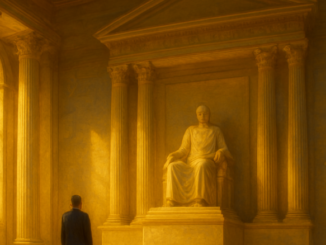
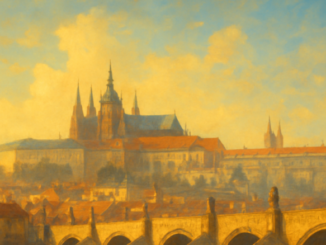
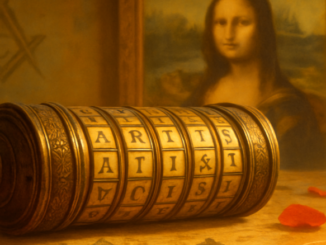
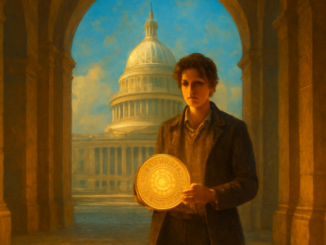
The House of the Temple in Washington D.C., headquarters of the Scottish Rite
Symbolism & Rituals

The Temple of Washington: Fact and Fiction in The Lost Symbol

In Dan Brown’s thriller The Lost Symbol, a mysterious building in Washington, D.C. takes center stage: the so-called Temple of Washington. As protagonist Robert Langdon unravels secrets allegedly hidden within the architecture of the American capital, readers are left wondering — how much of what Brown writes is actually true? And where does the fiction begin? In this fact-check, we explore the real history behind the building, its Masonic connections, and the symbolic claims made in the novel. The House of the Temple: A Very Real Building Let’s start with the most concrete fact: the building Dan Brown calls the Temple of Washington in The Lost Symbol actually exists. Located at 1733 16th Street NW in Washington, D.C., it is officially known as the House of the Temple. This imposing structure has served since 1915 as the headquarters of the Supreme Council of the Scottish Rite, Southern Jurisdiction — one of the oldest Masonic organizations in the United States. Architect John Russell Pope designed the building in a neoclassical style, drawing inspiration from the Mausoleum at Halicarnassus, one of the Seven Wonders of the Ancient World. This is well documented and confirmed by architectural historians. The building features thirteen columns […]
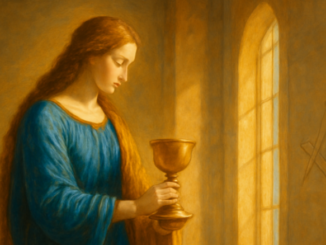
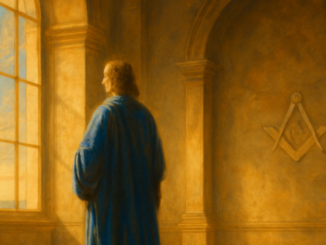
Ancient chalice symbolizing the Holy Grail alongside Masonic and historical imagery
Symbolism & Rituals

Mary Magdalene and the Holy Grail: Fiction or Fact?

Perhaps you’ve experienced it too: you’re halfway through Dan Brown’s The Da Vinci Code, and you find yourself wondering — could any of this actually be true? The claim that Mary Magdalene was the wife of Jesus and that the Holy Grail actually represents their bloodline is so ingeniously constructed that it almost sounds plausible. But how much of this theory holds up under scrutiny? In this article, we examine the historical facts, the exaggerations, and the pure fiction behind one of the most talked-about claims in popular culture. Dan Brown’s Central Claim In The Da Vinci Code, Dan Brown presents the theory that Mary Magdalene was not merely a follower of Jesus, but his wife. According to the novel, she fled to France after the crucifixion while pregnant, and their bloodline continued through the centuries. The Holy Grail, then, is not a chalice at all — it is a metaphor for the womb of Mary Magdalene and the royal lineage that descended from her. It’s a bold hypothesis that has captivated millions of readers around the world. But how does it measure up against what historians and biblical scholars actually know? What the Historical Sources Actually Say The canonical […]

Symbolic representation of noetic science and Freemasonry's pursuit of knowledge
Symbolism & Rituals

Noetic Science: What Does The Secret of Secrets Claim?

Can the human mind alter physical reality? This question, as old as philosophy itself, takes on a new form in Dan Brown’s The Secret of Secrets. The novel introduces readers to a fascinating yet controversial field: noetic science — a discipline that claims human thoughts and intentions can produce measurable effects on matter. But what does this claim actually amount to, and where does it intersect with the age-old quest for hidden knowledge that lies at the heart of Freemasonry? The Premise: Consciousness as a Force In The Secret of Secrets, Dan Brown presents noetic science as a legitimate field of research in which scientists experiment with the measurable influence of human intention on the physical world. According to the novel’s storyline, focused thoughts and collective meditation can actually alter the molecular structure of water, disrupt random number generators, and even accelerate healing processes. The book suggests that these insights have long been suppressed by powerful institutions but are now finally receiving scientific validation. Brown does not present these ideas in isolation. He connects them to a rich tradition of esoteric wisdom — Hermetic philosophy, the Kabbalistic Tree of Life, and the mystical traditions preserved within Freemasonry. The implication is […]

Historic Prague cityscape with Gothic and Baroque architecture at twilight
Symbolism & Rituals

Prague as a Mystic City: Freemasonry and the Facts Behind Fiction

When Dan Brown leads readers through the winding streets of Prague in The Secret of Secrets, he conjures images of alchemists, secret societies, and hidden knowledge. The Czech capital does indeed possess a rich mystical past stretching back to the sixteenth century. But how does Brown’s fiction compare to the actual history of Freemasonry in this city? And which misconceptions deserve to be corrected? A journey through time reveals some surprising insights. The Prague of Rudolf II: A Historical Epicenter To understand Prague’s mystical reputation, we need to travel back to the late sixteenth century. Emperor Rudolf II, who reigned from 1576 to 1612, transformed Prague into the intellectual heart of the Holy Roman Empire. He invited astronomers, alchemists, and scholars from across Europe to his court. Tycho Brahe and Johannes Kepler both conducted their groundbreaking astronomical research in Prague. The famous English occultist John Dee visited the city alongside Edward Kelley, seeking alchemical knowledge. This historical reality laid the groundwork for later mystification. The Golden Lane on Prague Castle’s grounds — where, according to legend, alchemists once labored — still draws visitors today. However, it is essential to recognize that these early esoteric activities predate organized Freemasonry as we […]

Masonic square and compasses contrasted with fictional secret society symbols
Symbolism & Rituals

The Priory of Sion: Fiction Unmasked from a Masonic Perspective

It’s a quiet evening after lodge. A brother settles into his chair, coffee in hand, and asks with a half-smile: “So, that Priory of Sion from Dan Brown’s book — is that basically the same thing as Freemasonry?” The question lingers. It’s one many Freemasons have heard before, because ever since The Da Vinci Code hit bookshelves, all secret societies tend to get lumped together in the public imagination. But does that picture hold up? And what can Freemasons learn from the stubborn confusion between fiction and reality? The Origins of a Modern Myth In The Da Vinci Code, Dan Brown presents the Priory of Sion as an ancient secret society dating back to the Crusades. According to the novel, this organization guards an explosive secret about the bloodline of Jesus Christ. Illustrious figures from art and science are listed as its supposed Grand Masters: Leonardo da Vinci, Isaac Newton, Victor Hugo. It sounds fascinating — almost too good to be true. And that is precisely the point. The historical reality is far more mundane. The Priory of Sion was founded in 1956 in the small French town of Annemasse by Pierre Plantard, a man with a highly questionable reputation. […]

Ambigram design illustrating the relationship between fiction and Masonic symbolism
Angels & Demons

Ambigrams in Angels & Demons: Fiction vs. Real Symbolism

Imagine a word that reads exactly the same when you flip it upside down — symmetrical, mysterious, and seemingly impossible. In Dan Brown’s bestselling thriller Angels & Demons, these typographic designs called ambigrams play a starring role as alleged secret symbols of an ancient brotherhood. But what does the novel actually claim? And how do those claims hold up against what we genuinely know about symbols, secret societies, and Freemasonry? What Exactly Are Ambigrams? Let’s start at the beginning. The word “ambigram” derives from the Latin ambi (both sides) and gramma (letter). An ambigram is a typographic design that can be read in more than one way — most commonly by rotating it 180 degrees. It is an art form that truly came into its own during the twentieth century, developed by graphic designers and calligraphers experimenting with symmetry and legibility. Here’s the critical question: if ambigrams are a modern invention, how could they possibly be the secret signs of an eighteenth-century secret society? That contradiction takes us straight to the heart of what the novel claims. What Does the Novel Actually Claim? In Angels & Demons, ambigrams are presented as authentic, historical symbols of the Illuminati — the Bavarian […]

The Da Vinci Code movie scene featuring symbolism and secret society themes
Culture & Media

The Da Vinci Code (2006): Symbolism, Secrets & Freemasonry

The Da Vinci Code (2006), directed by Ron Howard, is a thrilling adaptation of Dan Brown’s blockbuster novel. The film takes viewers on a gripping journey through hidden symbolism, ancient secrets, and the shadowy world of secret societies. Starring Tom Hanks as professor Robert Langdon and Audrey Tautou as cryptologist Sophie Neveu, it masterfully weaves together history and mystery in a way that continues to captivate audiences nearly two decades after its release. The Story: Unlocking Hidden Truths When the curator of the Louvre, Jacques Saunière, is mysteriously murdered, he leaves behind a trail of cryptic clues. Robert Langdon and Sophie Neveu are drawn into a dangerous quest to uncover a hidden truth — one that could shake the very foundations of Christianity. Their journey takes them through iconic locations and layers of historical secrets, revealing hidden symbolism and the workings of ancient secret societies. The tension escalates as they come into contact with powerful organizations such as the Priory of Sion and Opus Dei, each with their own agenda and centuries-old mission. Freemasonry Connections in The Da Vinci Code While the film focuses specifically on the Priory of Sion, there are unmistakable parallels with Freemasonry. Themes such as hidden […]

The Lost Symbol TV series featuring Masonic symbols in Washington D.C.
Culture & Media

The Lost Symbol (2021): Mystery, Codes & Freemasonry Explored

The Lost Symbol (2021) is a television series based on Dan Brown’s bestselling novel of the same name. Set in the heart of Washington D.C., the show immerses viewers in a world of secrets, codes, and ancient rituals. If you’re fascinated by mystery, symbolism, and secret societies — particularly Freemasonry — this series deserves a spot on your watchlist. The Story: Robert Langdon’s Quest A young Robert Langdon (played by Ashley Zukerman), the Harvard symbologist fans of Dan Brown’s novels know well, is drawn into a CIA operation when his mentor, Peter Solomon, is kidnapped. What begins as a desperate search for Solomon quickly escalates into a race against time. Langdon must decipher complex symbols and follow cryptic clues to prevent a far-reaching conspiracy from unfolding. His journey takes him through iconic historical sites across Washington D.C., where ancient Masonic symbols and rituals reveal hidden truths buried beneath the surface of the nation’s capital. Armed with his sharp intellect and deep knowledge of ancient mysteries, Langdon sets out not only to rescue his mentor but also to protect humanity from an imminent threat. Freemasonry at the Heart of the Series Freemasonry plays a pivotal role in The Lost Symbol. From […]