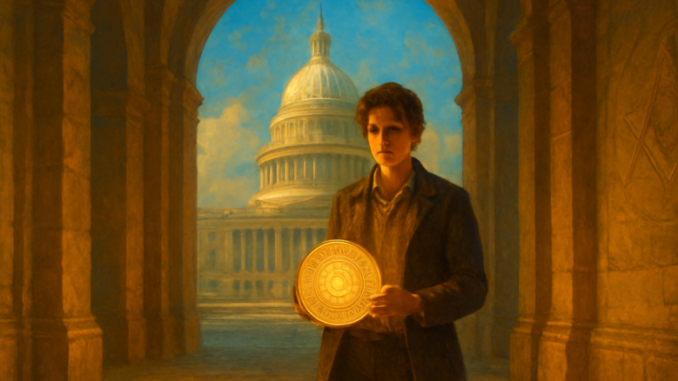
The Lost Symbol (2021) is a television series based on Dan Brown’s bestselling novel of the same name. Set in the heart of Washington D.C., the show immerses viewers in a world of secrets, codes, and ancient rituals. If you’re fascinated by mystery, symbolism, and secret societies — particularly Freemasonry — this series deserves a spot on your watchlist.
The Story: Robert Langdon’s Quest
A young Robert Langdon (played by Ashley Zukerman), the Harvard symbologist fans of Dan Brown’s novels know well, is drawn into a CIA operation when his mentor, Peter Solomon, is kidnapped. What begins as a desperate search for Solomon quickly escalates into a race against time. Langdon must decipher complex symbols and follow cryptic clues to prevent a far-reaching conspiracy from unfolding.
His journey takes him through iconic historical sites across Washington D.C., where ancient Masonic symbols and rituals reveal hidden truths buried beneath the surface of the nation’s capital. Armed with his sharp intellect and deep knowledge of ancient mysteries, Langdon sets out not only to rescue his mentor but also to protect humanity from an imminent threat.
Freemasonry at the Heart of the Series
Freemasonry plays a pivotal role in The Lost Symbol. From the architecture of Washington D.C. itself to the secret rituals depicted throughout the show, the symbolism of the Craft is woven into nearly every scene. The series shines a light on how deeply rooted Freemasonry is in American history — a connection that has fascinated scholars, conspiracy theorists, and curious minds for centuries.
Key Masonic symbols such as the Square and Compasses, the All-Seeing Eye, and the number 33 appear repeatedly throughout the series. The rituals portrayed are inspired by actual Masonic practices, offering a compelling — if dramatized — glimpse into the traditions of this centuries-old fraternity.
Beyond the visual symbolism, the philosophical core of Freemasonry — the pursuit of light, knowledge, and self-improvement — plays a crucial role in the narrative. Langdon is repeatedly confronted with moral dilemmas that closely align with the ideals Freemasons hold dear, making the series resonate on a deeper level for those familiar with the Craft.
Why You Should Watch The Lost Symbol
The Lost Symbol is far more than a standard thriller series — it’s a journey through history, mystery, and esoteric knowledge. For anyone with an interest in Freemasonry, the show offers a unique opportunity to explore the symbolism and rituals of this influential brotherhood in an accessible and entertaining way.
The carefully layered puzzles and codes keep you engaged from episode to episode. The rich cinematography and authentic historical locations amplify the atmosphere of intrigue and discovery. Moreover, the series provides thought-provoking insight into how Freemasonry‘s influence can still be felt in the modern world — from the layout of city streets to the symbols hidden in plain sight on government buildings and currency.
Masonic Symbolism in Washington D.C.
One of the most captivating aspects of The Lost Symbol is how it uses Washington D.C. as more than just a backdrop. The city itself becomes a character in the story. Many of the Founding Fathers were Freemasons, and their influence on the design and architecture of the capital is well documented. The series draws on this historical reality to weave a narrative that blurs the line between fact and fiction.
From the Washington Monument to the Capitol Building, the show highlights real architectural elements that carry Masonic significance. For viewers who are Freemasons themselves — or who are simply curious about the Craft — these details add a rich layer of authenticity to the storytelling.
The Lost Symbol is a series that captivates on multiple levels. It masterfully combines suspense and mystery with profound symbolism and a genuine tribute to Freemasonry. Whether you’re a devoted fan of Dan Brown’s work or simply fascinated by secret societies and the hidden history behind them, this series will not disappoint. It’s a reminder that sometimes the greatest mysteries aren’t hidden at all — they’re carved into the very stones we walk past every day.
Copyright text & image: devrijmetselaar.nl
Texts are based on the ideas and content of the author of devrijmetselaar.nl, reviewed, corrected, and supplemented with the assistance of OpenAI. Images are created based on the ideas of the author of devrijmetselaar.nl using OpenAI/DALL-E.
Frequently Asked Questions
Is The Lost Symbol (2021) based on a true story?
The Lost Symbol is a fictional television series based on Dan Brown's bestselling novel, so while it's not a true story, it's inspired by real historical locations, actual Masonic symbolism, and genuine architectural elements found throughout Washington D.C. The series weaves together factual Masonic traditions and philosophy with fictional mystery and intrigue to create an entertaining narrative that explores the authentic influence of Freemasonry on American history.
How accurately does the show portray Freemasonry?
While The Lost Symbol dramatizes many elements for entertainment purposes, it draws inspiration from real Masonic symbols, rituals, and philosophical principles that are central to the Craft. The series authentically represents key Masonic ideals such as the pursuit of knowledge, self-improvement, and enlightenment, though viewers should understand that some rituals and plot points are fictionalized for dramatic effect. The show serves as an engaging introduction to Freemasonry's symbolism and its historical significance in American culture.
What Masonic symbols appear in The Lost Symbol?
The series features several important Masonic symbols including the Square and Compasses, the All-Seeing Eye, and the number 33, which appear throughout the narrative and Washington D.C.'s architecture. These symbols are woven into puzzles and clues that Robert Langdon must decipher, making them central to both the mystery and the exploration of Freemasonry's influence. The show effectively demonstrates how these ancient symbols of light and knowledge continue to hold meaning in the modern world.
Why is Washington D.C. important to the story?
Washington D.C. is the perfect backdrop for The Lost Symbol because many of the city's most iconic buildings and streets were designed with Masonic principles and symbolism in mind, making it a living testament to Freemasonry's influence on American history. The series takes viewers on a journey through these historically significant locations, revealing how the city's layout and architecture contain hidden Masonic symbols that have fascinated scholars for centuries. This authentic connection between the nation's capital and the Craft makes the mystery all the more compelling and historically grounded.
Who is Robert Langdon and why does he matter to the story?
Robert Langdon, played by Ashley Zukerman, is a Harvard symbologist who uses his deep knowledge of ancient mysteries, codes, and symbols to unravel a dangerous conspiracy in Washington D.C. His expertise in deciphering Masonic and historical symbolism makes him the ideal protagonist to explore Freemasonry's hidden influence, as he confronts moral dilemmas that align with the Craft's core values of light, knowledge, and self-improvement. Langdon's intellectual journey through the series provides viewers with an engaging lens through which to discover the philosophical and practical significance of Freemasonry.


Be the first to comment