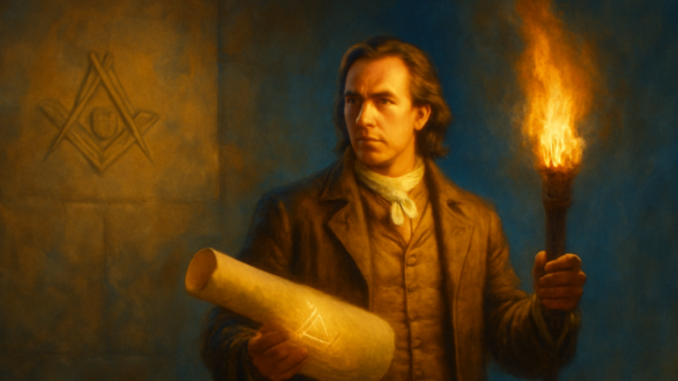
Freemasonry has captivated the imagination of people for centuries, and Hollywood has never been shy about tapping into that mystique. Few films have done it quite as memorably as National Treasure (2004), directed by Jon Turteltaub and starring Nicolas Cage. The movie places Freemasonry at the heart of an epic adventure that blends real history with thrilling fiction — and in doing so, it introduced millions of viewers to the symbols and legacy of the Craft.
The Plot: A Quest for Lost Treasures
In National Treasure, we follow Benjamin Franklin Gates, a historian and treasure hunter who has devoted his life to solving a centuries-old mystery. According to his family’s legend, an immense treasure was hidden by the Founding Fathers of the United States — many of whom were Freemasons. The treasure was concealed to keep it from falling into the wrong hands, and only those who can decipher the cryptic clues will ever find it.
The adventure kicks off with a pivotal discovery: an invisible map hidden on the back of the Declaration of Independence. This revelation sets off a chain of events that takes Gates through historic landmarks, intricate puzzles, and cryptic symbols. The story is steeped in Masonic imagery, from the All-Seeing Eye to pyramids and secret codes embedded in America’s most iconic documents and monuments.
The Role of Freemasonry in the Film
Freemasonry plays a central role in the narrative of National Treasure. The Founding Fathers — including George Washington, Benjamin Franklin, and Thomas Jefferson — were indeed prominent members of the fraternity in real life. The film builds on this well-documented historical connection and takes it a step further, suggesting that the Freemasons were not only instrumental in founding the United States but also in safeguarding a treasure of immeasurable value.
While the film obviously takes creative liberties, it presents Masonic symbolism in a way that feels both accessible and intriguing. The use of familiar symbols such as the square and compasses, the All-Seeing Eye, and the unfinished pyramid lends an air of authenticity that is as mysterious as it is educational. This approach inspired countless viewers to dig deeper into the history of Freemasonry and its influence on American history.
Historical Facts Meets Creative Liberty
While National Treasure does portray certain historical elements with reasonable accuracy, it also takes significant creative liberties. The connection between Freemasonry and hidden physical treasures, for example, is far more of a Hollywood fantasy than a historical reality. The Craft’s true treasures have always been philosophical and moral rather than material. Still, it is fascinating to see how the mystical image of Freemasonry is leveraged to bring the story to life on screen.
The film highlights themes such as secrecy, brotherhood, and the importance of passing down knowledge through generations. These are genuine core values within Freemasonry, and their inclusion adds a meaningful layer to the narrative that elevates it beyond a standard action-adventure flick. It encourages viewers to think about what lies beneath the surface of the history they thought they knew.
Why This Film Is a Must-See
National Treasure is more than just an exciting popcorn movie — it is a celebration of history and symbolism. It offers viewers an accessible introduction to Masonic concepts and sparks curiosity about the role secret societies may have played in shaping major historical events. The film expertly combines action, adventure, and a touch of intellectual mystery, making it appealing to a wide audience.
For anyone with an interest in Freemasonry, or fans of adventure films like Indiana Jones and The Da Vinci Code, National Treasure offers a unique blend of historical detective work and cerebral challenge. It is the kind of film that not only entertains but also inspires you to look more closely at the hidden layers of the world around you.
Watch the trailer below:
Whether you are a Freemason, a history enthusiast, or simply someone who enjoys a well-crafted adventure, National Treasure remains a thoroughly entertaining film that shines a spotlight on the enduring mystique of the Craft. It may take liberties with the facts, but it captures something essential about why Freemasonry continues to fascinate — the promise that there is always more to discover beneath the surface of what we see.
Copyright text & image: devrijmetselaar.nl
Texts are based on the ideas and content of the author of devrijmetselaar.nl, reviewed, corrected, and supplemented with the assistance of OpenAI. Images are created based on the ideas of the author of devrijmetselaar.nl using OpenAI/DALL-E.
Frequently Asked Questions
Were the Founding Fathers really Freemasons?
Yes, many prominent Founding Fathers were indeed Freemasons, including George Washington, Benjamin Franklin, and Thomas Jefferson. While National Treasure takes creative liberties with the treasure plot, this historical connection is well-documented and reflects the genuine influence Freemasonry had on early American history and the principles of brotherhood and enlightenment that shaped the nation.
What are the real symbols of Freemasonry shown in the movie?
The film accurately depicts authentic Masonic symbols such as the square and compasses, the All-Seeing Eye, and the unfinished pyramid. These symbols carry deep philosophical meaning within the Craft, representing principles like integrity, guidance, and the continuous pursuit of knowledge rather than material wealth.
Is Freemasonry really about hiding treasure?
No, National Treasure's treasure-hunting premise is a creative Hollywood invention. The true treasures of Freemasonry are philosophical and moral in nature, centered on self-improvement, brotherhood, and the passing down of ancient wisdom and ethical values through generations.
Did National Treasure accurately represent Freemasonry?
While the film takes significant creative liberties with its fictional plot, it does present genuine Masonic symbols and accurately reflects real historical connections between Freemasons and America's Founding Fathers. The movie successfully captured authentic themes like secrecy, brotherhood, and the importance of preserving knowledge, which remain central to Freemasonry today.
Has National Treasure increased interest in Freemasonry?
Absolutely—the film has inspired millions of viewers to learn more about Freemasonry and its rich history. By presenting Masonic symbols and principles in an engaging and accessible way, National Treasure has piqued genuine curiosity about the Craft and its significant influence on American heritage and values.



Be the first to comment