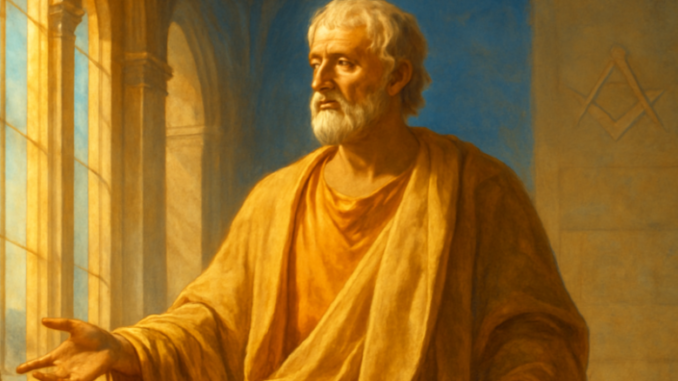
Why did Lucius Annaeus Seneca so emphatically warn his student Lucilius against the crowd? And what does this two-thousand-year-old wisdom have to do with the way Freemasons shape their brotherhood? In his seventh letter to Lucilius, the Roman philosopher writes something that seems, at first glance, to contradict the very idea of human connection: withdraw from the masses. But is that truly what he means — or does a deeper truth lie beneath the surface, one that speaks directly to how we can live together authentically?
What Does Seneca Actually Mean by ‘the Crowd’?
When Seneca writes about the crowd, he is not simply talking about large groups of people. He is pointing to a specific phenomenon: the unthinking mass in which individual judgment dissolves. In the Roman arena, he watched civilized citizens transform into bloodthirsty spectators. The crowd, he argues, amplifies our worst impulses and weakens our best. His warning is not against gathering together as such, but against surrendering your own moral compass to the whims of the group.
This distinction is crucial. Seneca is not calling for hermitage. He is calling for awareness. Who do you spend your time with? What influence does that company have on your character? These are questions every serious seeker of wisdom must ask — and they are precisely the questions that Freemasonry continually raises.
How Freemasonry Chooses Its Company
Freemasonry is known for its remarkably deliberate admission process. A candidate is not simply accepted. There are conversations, periods of reflection, and a ballot. Why such care? Because the quality of the brotherhood depends on the quality of its members. This is not elitism in any superficial sense — it is an acknowledgment of what Seneca already knew: the people around you help shape who you become.
In the lodge, men come together who have consciously chosen self-reflection and personal growth. They do not seek the anonymity of the crowd but the recognition of kindred spirits. This is something fundamentally different from the mob Seneca describes. Here, no one howls with the wolves. Instead, each individual is invited to discover what he can contribute to the whole.
Isn’t Withdrawal the Opposite of Brotherhood?
This seems like a fair question. Seneca recommends withdrawal, while Freemasonry revolves around connection and brotherhood. But here a subtle yet essential insight reveals itself. Withdrawing from the unthinking crowd is not the same as withdrawing from human contact. It is the creation of space for deeper, more meaningful engagement.
True connection does not arise in the crowd. It arises in the conscious choice for shared values and mutual elevation.
When a Freemason enters the lodge, he steps away from the noise of the world. But he does not do so to be alone. He does it to be truly present with his brothers — to listen, to reflect, and to grow. This is exactly what Seneca means when he advises Lucilius to choose his friends carefully and not waste his time on superficial associations.
What Does This Mean for Our Modern Search for Connection?
We live in an era of unprecedented connectivity and, paradoxically, widespread loneliness. Social media promises us thousands of friends but often delivers nothing more than thousands of spectators. We are constantly in contact, yet rarely truly connected. Seneca’s warning is more relevant than ever: the crowd, in whatever form it takes, can distract us from what truly matters.
Freemasonry offers a counterweight — not by shutting itself off from the world, but by creating a space where quality takes precedence over quantity. Where a handshake means more than a thousand likes. Where silence is valued because it makes room for thought. This is the kind of connection Seneca would recognize and appreciate: not the bond of the masses, but the bond of souls searching together for wisdom.
How Can We Apply Seneca’s Lesson Every Day?
The practical wisdom of Seneca invites us to make concrete choices. With whom do you share your precious time? Which conversations do you engage in, and which do you avoid? These are not abstract philosophical questions — they are daily decisions that shape your character. The Freemason learns in the lodge to take these questions seriously, but the answers must be lived outside the lodge.
Choose conversations that elevate you rather than diminish you. Seek company that challenges you toward self-reflection. Have the courage to withdraw when your surroundings bring out your worst tendencies. Value the quality of your connections over their frequency.
This is not a recipe for loneliness — it is a recipe for richness. It is the recognition that genuine connection requires time, attention, and intention. This is precisely what both Seneca and Freemasonry teach us.
Seneca’s seventh letter to Lucilius is not a plea for isolation but for conscious connection. The crowd he warns against is not a gathering of kindred spirits — it is the anonymous mass in which we lose ourselves. Freemasonry embodies this wisdom by forming a brotherhood built on shared values, mutual respect, and a collective search for light. In a world that overwhelms us with superficial connections, both the ancient Stoic and the centuries-old fraternity remind us that true connection begins with the courage to choose.
Copyright text & image: devrijmetselaar.nl
Texts are based on the ideas and content of the author of devrijmetselaar.nl, reviewed, corrected, and supplemented with the assistance of OpenAI. Images are created based on the ideas of the author of devrijmetselaar.nl using OpenAI/DALL-E.
Frequently Asked Questions
What does Seneca mean when he warns against 'the crowd'?
Seneca is not warning against large groups of people gathering together. Rather, he is cautioning against the unthinking mass where individual moral judgment dissolves and people surrender their personal compass to group impulses. He observed how civilized citizens in the Roman arena became bloodthirsty spectators when caught up in crowd mentality. His warning is fundamentally about maintaining personal awareness and integrity within social settings.
How does Freemasonry's admission process relate to Seneca's philosophy?
Freemasonry's deliberate admission process—involving conversations, periods of reflection, and balloting—reflects Seneca's understanding that the people around you shape who you become. By carefully selecting members who have consciously chosen self-reflection and personal growth, Freemasonry ensures that the brotherhood consists of kindred spirits committed to individual development rather than mob anonymity. This selectivity is an acknowledgment of what Seneca already knew about human influence.
Is Seneca's advice to withdraw from crowds incompatible with Freemasonry's emphasis on brotherhood?
No. Seneca's recommendation to withdraw from the unthinking crowd is fundamentally different from withdrawing from authentic human connection. In a Masonic lodge, men gather not for mob anonymity but for genuine brotherhood with others who share similar values. This selective, intentional community represents a deeper form of connection—one where each individual maintains his integrity while contributing meaningfully to the whole, which is the opposite of surrendering oneself to crowd mentality.

Be the first to comment