A solitary chair on a windswept barrier island beach at golden hour
Spiritual Traditions

The Coast as Temple: Spiritual Lessons from a Barrier Island

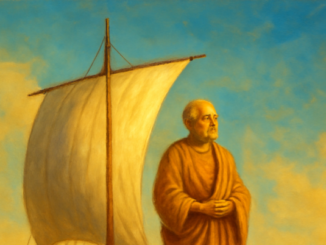
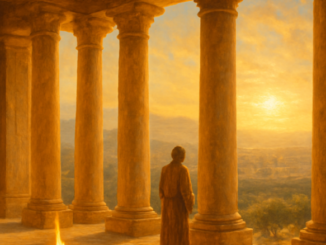
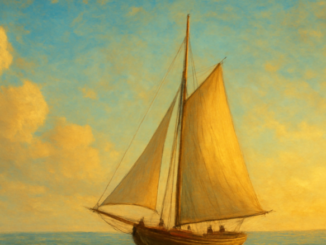
A chair slowly sinks into the sand as the eyes wander across the water. In the distance, boats approach — tiny specks growing larger on the horizon. Other vessels sail away, shrinking until they vanish entirely. Behind the dunes, the land shields against the wind, while barefoot walkers stroll along the shore and the occasional brave soul takes a quick plunge into the cold sea. This simple scene on a barrier island holds more spiritual wisdom than many a thick volume of philosophy. The Beach as a Contemplative Space There is something extraordinary about sitting on a beach, gazing at the endless horizon. The boundary between water and sky blurs, time seems to slow, and the mind comes to rest. This is no accident. For centuries, people have sought out places where the elements converge — where land gives way to water and the heavens touch the earth. In many traditions, such places are regarded as threshold spaces, liminal areas where ordinary life pauses and room opens up for deeper reflection. Freemasonry understands this principle well. The lodge itself is precisely such a set-apart space, deliberately separated from the outside world to make reflection possible. But beyond the ritual environment, […]

Ruth gleaning in the cornfields symbolizing loyalty and Masonic transformation
Christianity

Ruth and the Cornfield: Loyalty and Symbolism in Freemasonry

Loyalty is a word that rolls easily off the tongue, but it only reveals its true nature when everything else falls away. What remains of a promise when there is nothing left to gain? When following someone leads not to prosperity but to uncertainty, poverty, and exile? The Book of Ruth poses exactly this question — and the answer it gives is so radical that it still unsettles us three thousand years later. Ruth does not choose loyalty because it is wise. She chooses loyalty because it is essential. The Paradox of Gaining Through Loss Let us begin at the beginning — which is to say, at the end. The Book of Ruth opens with a cascade of loss. Naomi loses her husband, then both her sons. She stands in a foreign land without protection, without a future, without a name that still carries weight. She renames herself Mara — the bitter one. It is a gesture of total surrender to emptiness. And precisely at that lowest point, in that absolute desolation, something takes root that proves stronger than any material certainty: the loyalty of a daughter-in-law who refuses to leave. Here we touch a paradox that Freemasonry knows intimately. […]

Masonic gavel on a workbench symbolizing the cycle of growth and renewal
Christianity

Judges and the Cycle of Falling and Rising: Symbols of Growth

A hammer rests on the workbench. It is motionless, yet it carries within it the potential for both creation and destruction. In much the same way, the Book of Judges lies before us — a collection of stories about leaders who rise and vanish, about a people who fail and recover, fail and recover again. What does this ancient text tell us about the human soul? And how does the symbolism of this seventh book of the Old Testament mirror the path that every Freemason walks? The Cycle as an Archetypal Pattern The Book of Judges does not describe a linear history — it traces a spiral. The people turn away from their path, fall into oppression, cry out for help, and a leader emerges to deliver them. After a period of peace, the cycle begins anew. This pattern repeats itself twelve times, like a mantra carved into the very fabric of the text. For the Freemason, this cycle is deeply familiar. The rough ashlar is not shaped into a perfect cube in a single stroke. It is a process of failure and correction, of straying and returning to center. The cycle in Judges is not a sign of weakness […]

A candle flame burning on a Masonic altar symbolizing hope and renewal
Freemasonry & Society

Fire and Oil: On Destruction and the Courage to Rebuild

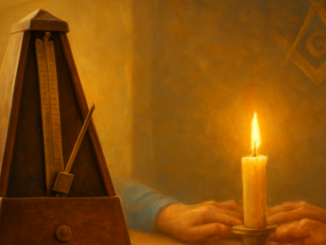
The old Master gazed at the candle on the altar. The flame danced restlessly, as though it had something to say. That morning, he had read the news — burning storage tanks, columns of smoke rising miles into the sky, a refinery consumed by fire. He reflected on the strange paradox of fire: the very element that illuminates the temple can also devour everything in its path. When Fire Destroys Instead of Illuminates This week, images emerged of a large-scale attack on an oil refinery near Moscow — reportedly the largest in the region. Massive walls of flame, thick black smoke, and the unmistakable sense of destruction that seems to seep through the screen itself. For many, this is simply another piece of war news to scroll past. But for those who look with a contemplative eye, there is more to see than strategic targets and economic damage. Fire has always carried a dual meaning in human history. It is the symbol of civilization — of warmth and community gathered around the hearth. But it is equally the instrument of devastation, of cities reduced to ash. In Freemasonry, fire stands as one of the most powerful symbols we know: the […]

Underground gas pipeline symbolizing hidden Masonic connections and flowing energy
Freemasonry & Society

The Gas Pipeline as Symbol: When Energy Flows Freely Again

A pipe buried underground. Invisible, forgotten — until the news reminds us it exists. European gas prices drop following a peace agreement between the United States and Iran, and suddenly the pipeline becomes what it always was: a vein in the body of civilization. But what do we truly see when we look at that pipe? A piece of infrastructure? Or an invitation to reflect more deeply on what it means when energy flows freely once again? The Invisible Network Beneath our feet lies a world we rarely consider. Pipes, cables, conduits — they form a network that makes daily life possible without us sparing it a second thought. Only when the flow stops, when the warmth fails to arrive, do we realize how dependent we are on this hidden infrastructure. The peace accord now calming the energy markets makes visible something that was always there: our profound interconnectedness. Freemasonry has a rich tradition of contemplating what is hidden and what is revealed. The building of the Temple, so central to our symbolism, is not merely about stones and columns. It is about the invisible structures that support a building — the foundations no one sees, but without which nothing […]

Masonic square and compasses symbolizing the balance of justice and wisdom
Freemasonry & Society

Justice and Retribution: Two Perspectives on Fairness

When news reaches us of a violent crime committed far from home, something ancient stirs within us. A life is taken, a suspect is arrested, and emotions ignite almost instantly. Calls for harsh punishment, outrage over injustice, a deep yearning for retribution. Yet alongside this visceral response, there exist traditions and communities that have looked at such moments differently for centuries — traditions that ask questions before passing judgment. This article explores two perspectives on justice: that of the outraged citizen and that of the searching Freemason. The Perspective of Outrage For most people, the first reaction to a violent crime is entirely understandable and deeply human: horror, anger, and an overwhelming desire for justice. When we hear that a fellow citizen has been killed in a distant land, we feel the pain as if the victim were someone we knew personally. The community closes ranks, the victim is given a face and a story, and the perpetrator becomes a symbol of the evil that must be fought. This perspective is rooted in a fundamental human need for order and safety. Society functions on the basis of shared agreements, and those who violate those agreements in the most horrific manner […]

A darkened chamber with Masonic symbols representing reflection and inner wisdom
Freemasonry & Society

The Power of Departure: Why Walking Away Can Be the Best Move

A race car sits idle in the pit lane. The driver climbs out, leaves the circuit, and seeks silence. Hours later, he returns and delivers the qualifying lap of his lifetime. The story made headlines around the world yesterday: sometimes you have to leave in order to truly arrive. For those familiar with the symbolism of Freemasonry, an ancient truth resonates here — one that reaches far deeper than any racetrack. The Circuit as a Mirror of Society A racing circuit is more than asphalt and crash barriers. It is a closed system where pressure, expectation, and performance converge in a relentless rhythm. Lap after lap, second after second — everything is measured, compared, and judged. In many ways, this mirrors the society in which we all operate: a world of deadlines, targets, and the unceasing demand for more, faster, better. The driver who chose to temporarily step away from this system did something that defies every rule of our performance-driven culture. He stopped when pushing forward was expected. He sought distance when proximity was demanded. And yet, it was precisely this departure that became the key to his finest performance. The Chamber of Reflection: The Symbolism of Withdrawal In […]

Compasses and square on a stone surface symbolizing Masonic trust and balance
Freemasonry & Society

Interest Rates as a Measure of Trust: A Masonic Perspective

When a central bank announces an interest rate hike, financial markets react, economists debate, and homeowners recalculate their budgets. But behind the numbers lies a deeper question that has fascinated Freemasons for centuries: what is the true nature of trust in a society, and how do we build foundations strong enough to endure when the winds change direction? The Invisible Architect of Value Money is, in essence, crystallized trust. A banknote has no intrinsic value — it is a promise, a symbol of collective belief in a system. When central banks adjust interest rates, they are turning dials designed to regulate that trust. Too much money in circulation undermines value; too little stifles growth. It is a delicate dance between abstract concepts that carries very real consequences for millions of people. For Freemasons, this terrain is not unfamiliar. The Craft has a rich symbolic language built around construction, measurement, and balance. The compasses and the square are not merely tools of the stonemason — they are metaphors for finding equilibrium and measuring proportions. In a broader societal context, they invite us to reflect: what invisible structures support our civilization, and who safeguards their integrity? Trust as the Foundation A rate […]

Masonic square and compasses symbolizing foresight and community preparedness
Freemasonry & Society

Gas Shortages and Foresight: Masonic Lessons on Preparedness

Reports of dwindling gas reserves ahead of winter raise a fundamental question that reaches far beyond the energy sector. What does it truly mean for a society to look ahead? And what can we learn from a tradition that has placed preparation, responsibility, and community at its core for centuries? Freemasonry offers a surprisingly relevant perspective on this very modern challenge. The Art of Anticipation When a major energy authority publicly voices concerns about winter gas supplies, it touches on something deeper than statistics and cubic meters. It speaks to our collective ability — or inability — to look beyond the present moment and anticipate what lies ahead. This art of foresight has been a central theme in philosophical traditions for centuries, and Freemasonry is no exception. In the symbolic language of Freemasonry, the Master Builder plays a crucial role. A Master Builder does not simply start stacking stones. He first draws a plan, calculates the required materials, and accounts for the changing seasons. The great cathedrals of old were not built in a single year — they were raised over generations. That long-term vision, the capacity to labor on something whose fruits will only ripen far in the future, […]

Ancient temple vision symbolizing Ezekiel's connection to Masonic philosophy
Christianity

Ezekiel and Freemasonry: Visions as Inner Building Blocks

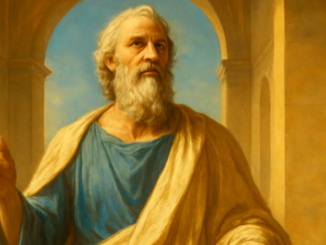
What can the enigmatic visions of a sixth-century BCE prophet possibly teach us today? The Book of Ezekiel brims with images that stir the imagination: wheels within wheels, a valley of dry bones, and a temple described down to the smallest measurement. For those who read with a Masonic eye, these ancient texts open up a world of symbolism that turns out to be remarkably relevant. Let’s enter into conversation with this ancient book and discover what it has to offer the modern Freemason. Who Was Ezekiel, and Why Should Freemasons Care? Ezekiel was a priest who was carried into exile in Babylon around 597 BCE, along with many other inhabitants of Judah. There, far from the destroyed Temple in Jerusalem, he received a series of extraordinary visions that he recorded in meticulous detail. But why should a modern person — and especially someone interested in Freemasonry — spend time with these ancient texts? The answer lies in the universal themes woven throughout the book. Ezekiel speaks of destruction and rebuilding, of personal responsibility, of the possibility of starting anew. These are themes that sit at the very heart of Freemasonry: the idea that a human being is like a […]

Cathedral foundation stones symbolizing Masonic stewardship and sustainability
Philosophy & Ethics

Sustainability as Philosophy: The Freemason as Steward

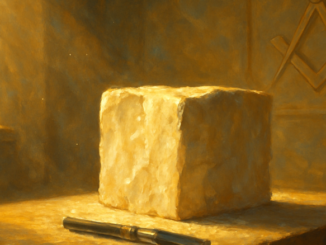
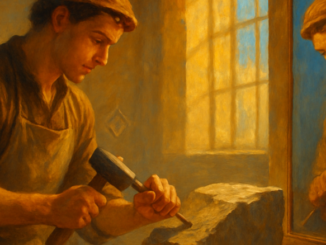
Imagine this: a cathedral whose first stone was laid by someone who knew they would never live to see it finished. Medieval master builders didn’t work for themselves — they worked for generations yet to come. In an age where sustainability is largely defined by carbon targets and climate goals, Freemasonry invites us to ask a deeper question: what does it truly mean to build for eternity? The Operative Roots of Sustainable Thinking Freemasonry traces its origins to the guilds of stonemasons and master builders. These craftsmen didn’t build disposable architecture. Every stone was carefully selected, every joint crafted to endure for centuries. This wasn’t romantic idealism — it was necessity. A cathedral that collapsed meant the end of a reputation, and often the end of a life. When Freemasonry evolved from operative to speculative in the eighteenth century, it carried this mentality with it. The physical building blocks became symbols, but the philosophy remained intact: what you create must stand the test of time. Not because someone forces you, but because you understand that your work is part of something far greater than yourself. Stewardship: A Forgotten Philosophical Concept In modern sustainability discussions, you rarely hear the word stewardship. […]

Ruined temple stones with light breaking through symbolizing Masonic rebuilding
Christianity

Lamentations and Freemasonry: Building After Destruction

You probably know the feeling: something valuable has been lost, and the void left behind seems impossible to bridge. A relationship, a dream, a certainty you always took for granted. In moments like these, you wonder whether anything new can ever grow on the rubble of what once was. The ancient Book of Lamentations speaks to exactly this kind of devastation — and yet, hidden within its raw poetry lies a surprising message that has inspired Freemasons for centuries: it is precisely in the ruins that rebuilding begins. A City in Ruins, a Soul in Mourning Lamentations is a collection of five poems describing the destruction of Jerusalem. Written after the fall of the city in 586 BCE — when the Temple was razed and the people driven into exile — the texts are raw, unpolished, and filled with despair. Streets that once bustled with life lie abandoned. The Temple, the spiritual heart of an entire people, is reduced to scorched stone. But here is something remarkable: these laments are not chaotic wailing. They follow a strict alphabetical structure — an acrostic in which each verse begins with a successive letter of the Hebrew alphabet. In the midst of the […]

Symbolic representation of Freemasonry's role in developing the probation system
Freemasonry & Society

Probation and Freemasonry – A Foundation for Rehabilitation

Probation is now an integral part of the Dutch justice system, offering people who have run afoul of the law a second chance and a path back into society. What many people don’t realize is that Freemasonry played a significant role in the development of probation services in the Netherlands. Driven by ideals of humanity and justice, Freemasons helped establish a system focused on rehabilitation rather than punishment alone. The Origins of Probation in the Netherlands The probation system as we know it today traces its roots to the 19th century. This was an era in which social reformers — many of them Freemasons — pushed back against the harsh punishments that dominated the justice system. They believed that people who had made mistakes deserved not only to face consequences but also to receive help in rebuilding their lives. Freemasons took an active role in establishing organizations that supported prisoners after they had served their sentences. These initiatives were rooted in the Masonic principle of the improvement of the individual. The goal wasn’t simply to help individuals; it was to strengthen society as a whole by reducing reoffending and giving former prisoners a realistic path forward. The Philosophy Behind Probation […]

Football hitting the net symbolizing a decisive Masonic moment of meaning
History

The Decisive Moment: Symbolism of the Winning Goal

A ball rolls into the net. A stadium erupts. A name is etched into club history. Then, years later, that same name surfaces again — this time surrounded by silence. The story of a young footballer who scored a decisive goal against a powerhouse and then passed away at the age of twenty-eight raises questions that reach far beyond sport. What remains of a person after they are gone? What is the true value of that single, seemingly fleeting moment when everything comes together? Freemasonry, with its centuries-old contemplation of mortality and meaning, offers a surprisingly illuminating perspective on these questions. The Ball as a Symbol of Fate On the surface, a football is nothing more than an object of leather and air. Yet it carries within it the potential for triumph and defeat, for heroes and forgotten names. In Freemasonry, we are familiar with the concept of working tools that transcend their material form. The gavel, the compasses, the square — they represent inner qualities and life lessons. In much the same way, the ball can be seen as a symbol of fate itself: round, without beginning or end, unpredictable in its movements, yet ultimately subject to the laws […]

Ancient temple ruins symbolizing the Masonic journey of inner rebuilding
Christianity

Ezra and the Rebuilding of the Temple: A Symbolic Journey

In 538 BCE, something remarkable happened. After decades of exile in Babylon, thousands of people returned to Jerusalem with a single sacred purpose: to rebuild the destroyed temple. The biblical Book of Ezra tells this story of return and reconstruction. But beneath the historical narrative lies a deeper layer — a symbolic journey that still resonates within Freemasonry and in the heart of every person striving for inner renewal. The Historical Context of Ezra The Book of Ezra describes a pivotal period in the history of the Jewish people. King Cyrus of Persia issued a remarkable decree in 538 BCE: the exiles were permitted to return to their homeland and rebuild their temple. This was no ordinary political maneuver — the returning exiles experienced it as divine intervention. Ezra, a scribe and priest, played a key role in this return and the spiritual reformation that followed. The returning exiles found a desolate landscape. The temple, once the spiritual center of their existence, lay in ruins. What followed was a years-long process of reconstruction, plagued by opposition, doubt, and internal conflict. Yet they persevered. Stone by stone, the sanctuary rose once more from the dust. It is this image of patient, […]