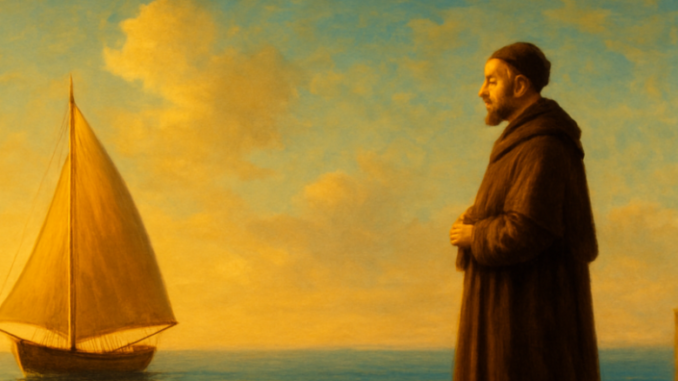
You’ve probably experienced it: someone delivers a seemingly impressive speech, full of grand words and polished phrases, yet afterward you find yourself wondering what was actually said. That nagging sense that words can conceal more than they reveal — that eloquence can serve as a mask for emptiness — lies at the very heart of a short but razor-sharp essay by Michel de Montaigne. In ‘Of the Vanity of Words,’ the fifty-first essay in Book One of his Essays, Montaigne confronts this discomfort head-on. His observations about hollow rhetoric remain strikingly relevant today, especially within the practice of Freemasonry.
The Core of the Essay: Words Without Substance
In this concise essay, Montaigne takes direct aim at rhetoric — the art of persuasive speech. He poses an uncomfortable question: what is eloquence worth when it serves neither truth nor virtue? Montaigne observes that many speakers and writers, both in his own time and in antiquity, enchanted their audiences with form while the content amounted to almost nothing. He warns that the beauty of language can mislead us. We become so impressed by the packaging that we forget to ask what’s actually inside.
This is not an attack on language or literature as such. Montaigne loved language — he was himself a master of it. But he draws a sharp distinction between words that serve as vehicles for thought and words that exist solely to impress. In the first case, language is a tool of honesty. In the second, it becomes an instrument of vanity.
Montaigne’s Examples: From Rome to His Own Era
As he so often does throughout the Essays, Montaigne reaches back to classical antiquity for his illustrations. He references the Roman tradition of rhetoric, in which orators like Cicero elevated the art of persuasion to extraordinary heights. But he also notes that even in Rome, critics existed who distrusted the rhetorical arts. The famous example of the Spartans — known for their brief, direct manner of speech — serves as a powerful counterpoint. Where the Athenian orator would elaborate and embellish, the Spartan said precisely what was needed and not a word more.
Montaigne also recounts the story of a rhetorician who delivers a long, flowery speech in praise of the art of war. A seasoned military commander responds with characteristic bluntness: the words sound magnificent, but anyone who has actually fought recognizes nothing of their own experience in them. It’s a striking image — the gulf between one who speaks about something and one who has lived it. Montaigne sides unequivocally with experience over ornamentation.
The Difference Between Appearance and Reality
What Montaigne exposes here touches on a deeper philosophical theme: the distinction between appearance and reality. Words can create a world of illusion. They can make someone appear wise, courageous, or virtuous without any real wisdom, courage, or virtue behind them. Montaigne calls this ‘vanity’ — a word that in his time meant both emptiness and self-satisfaction. The vain speaker is therefore doubly impoverished: his words are hollow, and he is proud of them.
This theme connects Montaigne to thinkers like Plato, who criticized the Sophists in his dialogues — speakers who manipulated truth through rhetorical tricks. Seneca, the Stoic philosopher whom Montaigne frequently invoked, also warned that style must never take precedence over substance. This thread of critical thinking about language and sincerity runs like a through-line in Western philosophy, and Montaigne grasps it firmly.
True eloquence serves truth. The moment words serve only themselves, they become a form of deception — no matter how beautifully they sound.
What This Essay Means for Freemasonry
You might wonder what an essay about empty rhetoric has to do with Freemasonry. The answer runs deeper than it might first appear. Within Freemasonry, ritual plays a central role, and ritual language is by its very nature a form of carefully chosen words. But those words do not derive their power from their sound or their style. They derive their power from the meaning that the participant invests in them — from the inner experience they evoke.
A Freemason learns early on that it is not about what you say, but about what you do and who you are. The rituals invite self-reflection, not display. In this sense, Montaigne’s warning aligns seamlessly with one of the brotherhood’s foundational principles: sincerity above outward show. The working tools in the lodge do not point to the exterior — they point to the inner architecture of the human being. It is about the rough ashlar that you smooth through honest labor, not about the fine words with which you claim the work is already done.
Why This Essay Still Matters Today
We live in an age of unprecedented verbal abundance. Social media, news outlets, podcasts, and speeches flood us daily with language. The question Montaigne posed in the sixteenth century may be more urgent than ever: how many of those words truly serve truth, and how many serve only the speaker? The ability to distinguish between substance and empty rhetoric is a skill that everyone needs — in the workplace, in politics, and in personal relationships.
Montaigne offers no complicated theory, but a simple touchstone: with every argument or speech, ask yourself whether the words add to your understanding or whether they are primarily designed to impress. That question is not merely philosophically interesting. It is a daily exercise in honesty — toward others and toward yourself.
Key Insights Summarized
Eloquence is only valuable when it serves truth and substance. Rhetoric can become a tool of deception when form overshadows content. Experience outweighs words — those who have truly lived something need no embellishment. Montaigne’s critique of hollow language connects him to a long philosophical tradition stretching from Plato through Seneca, and his insights resonate profoundly with Masonic principles of sincerity, self-knowledge, and the primacy of inner work over outward appearance.
Montaigne’s brief essay on the vanity of words is a timeless reminder that language is a double-edged sword. It can illuminate truth or obscure it, build genuine understanding or construct elaborate facades. For Freemasons, this message carries particular weight: the Craft teaches us that the real work happens within, and that no amount of eloquent speech can substitute for authentic self-improvement. In a world drowning in words, Montaigne’s invitation to look beyond the surface — to seek substance over style — remains one of the most valuable lessons we can practice, both inside and outside the lodge.
Copyright text & image: devrijmetselaar.nl
Texts are based on the ideas and content of the author of devrijmetselaar.nl, reviewed, corrected, and supplemented with the assistance of OpenAI. Images are created based on the ideas of the author of devrijmetselaar.nl using OpenAI/DALL-E.
Frequently Asked Questions
What is the main argument of Montaigne's 'Of the Vanity of Words' essay?
Montaigne argues that eloquent rhetoric and beautiful language can mask empty content and serve vanity rather than truth. He distinguishes between words used as honest vehicles for thought and words used solely to impress, warning that audiences often become so enchanted by the form and packaging of speech that they forget to examine what is actually being said.
How does Montaigne use classical examples to support his critique of rhetoric?
Montaigne draws on classical antiquity to illustrate his point, contrasting the elaborate rhetoric of Roman orators like Cicero with the direct, economical speech of the Spartans. He also recounts an anecdote about a rhetorician who delivers a flowery speech about warfare, only to be corrected by a seasoned military commander who points out that the eloquent words bear no resemblance to actual combat experience.
Why is Montaigne's essay on the vanity of words relevant to Freemasonry?
The article suggests that Montaigne's observations about hollow rhetoric and the distinction between authentic communication and impressive but empty speech remain strikingly relevant to Freemasonry. His critique of words that conceal rather than reveal truth, and his emphasis on honesty over vanity, align with Masonic principles regarding genuine knowledge and authentic virtue versus superficial displays.


Be the first to comment