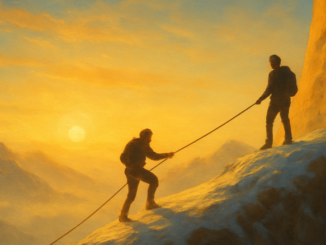
Mountain climbers roped together ascending a snowy peak at dawn
Freemasonry & Society

The Mountain as Mirror: Climbing Tragedy and Brotherhood

Somewhere high in the Karakoram, bodies lie beneath the snow. A renowned climber is missing, and the world waits in uncertainty. The mountain refuses to reveal who it has taken. In the tension between hope and grief, between knowing and not knowing, there lies a deeper lesson about what connects us as human beings — a lesson that reaches far beyond any summit, straight into the heart of every community built on trust. The Rope That Binds Mountaineers know a simple truth: you are only as strong as the weakest link on your rope. The line that connects climbers is more than a safety device. It is a promise — a promise not to let go when the abyss beckons, when the storm rises, when strength begins to fail. In that promise, Freemasons recognize something deeply familiar. We too are bound by an invisible cord, woven from ritual, trust, and mutual devotion. The tragedy in Pakistan confronts us with the fragility of that bond. When one link in the rope falls, the entire group feels the shock. The bodies in the snow are not merely individuals — they are links in a chain of relationships: families, friends, climbing partners who […]
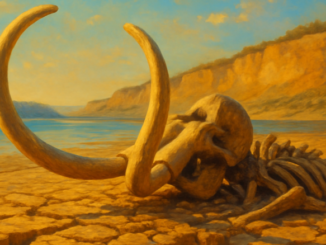
Mammoth bones exposed along the Danube River banks during low water levels
Freemasonry & Society

Mammoth Bones in the Danube: What the Depths Reveal About Us

Imagine walking along the banks of the Danube River in Bulgaria and spotting something protruding from the mud — something that last saw the light of day tens of thousands of years ago. Mammoth bones, exposed by historically low water levels this summer. It’s the kind of discovery that stops you in your tracks and makes you wonder: what lies hidden beneath the surface of our world, our society, and ourselves? And what happens when those hidden layers are unexpectedly revealed? When the River Reveals Its Secrets The Danube has flowed through the heart of Europe for millennia, carrying far more than water. It carries history, culture, and apparently the remains of creatures that roamed these plains long before the first human ever set foot on its banks. This summer’s extreme drought dropped water levels so dramatically that these ancient relics became visible once more. It’s a striking image: what normally stays hidden beneath the current of daily life suddenly surfaces when conditions change. You may recognise this feeling from your own experience. There are moments in life when something forces you to look deeper than you’re accustomed to — a crisis, a loss, an unexpected event. Suddenly you see […]

Electric car charging station where travelers meet and connect like brothers
Personal Development & Leadership

The Electric Road Trip: What Charging Teaches About Brotherhood

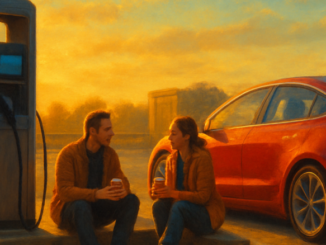
A quiet new ritual is emerging at rest stops along Europe’s motorways. People stand beside their cars, waiting for the charging station to do its work. They nod to one another, exchange tips, share a coffee. In this seemingly mundane act of waiting lies a deeper layer — an unexpected echo of something Freemasons have understood for centuries: that standing still and waiting together plants the seeds of genuine human connection. The Charging Station as a Meeting Place More and more drivers are choosing electric vehicles for their long-distance travel. The numbers grow each year, and the charging infrastructure along major routes is expanding to match. But behind the statistics lies a human story that rarely gets told. At every charging station, a temporary community forms. Strangers who share the same destination — not a geographic one, but a shared need: the need for energy to carry on. In Freemasonry, we speak of the Lodge as a place where people come together stripped of their daily roles and social positions. The charging station functions in a remarkably similar way. It doesn’t matter whether you’re a company director or a nurse, whether you drive a luxury sedan or a modest city […]

Historical illustration representing the Enlightenment and Freemasonry connection
History

The Enlightenment and Freemasonry: Two Related Movements

When people learn you’re a Freemason, the same question often comes up: doesn’t that have something to do with those secret societies from the eighteenth century? It’s an understandable question. The Enlightenment and Freemasonry emerged during the same period and shared similar ideals. Yet the two movements are frequently conflated or even treated as one and the same. In this article, I’ll clearly explain what each movement represents, where they intersect, and where they fundamentally differ — because placing them side by side is one of the best ways to understand what Freemasonry truly is. The Enlightenment: An Intellectual Revolution The Enlightenment was a philosophical movement that emerged across Europe during the seventeenth and eighteenth centuries. Thinkers such as Voltaire, Jean-Jacques Rousseau, Immanuel Kant, and John Locke challenged superstition, religious dogma, and absolute power. They believed that through reason and science, humanity could arrive at a better understanding of the world. Kant’s motto — Sapere aude, or “dare to think” — captured this attitude perfectly. This intellectual movement led to concrete societal changes. The separation of church and state, the rise of democratic ideals, and the emphasis on human rights can all be traced directly back to Enlightenment thinkers. It […]

Three symbolic Masonic temples representing history, humanity, and inner growth
Symbolism & Rituals

Three Temples, One Journey: What’s the Difference?

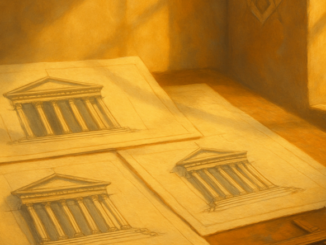
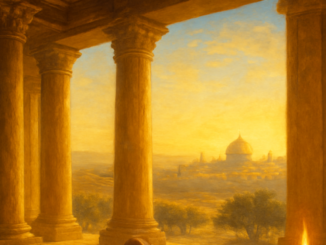
When Freemasons speak of “the temple,” they rarely mean the same thing. One refers to a biblical structure erected thousands of years ago. Another speaks of a collective ideal that encompasses all of humanity. And yet another points inward, toward something only he can build. Three temples, three perspectives — and yet they seem inseparably linked. So what exactly is the difference? And more importantly, what does that difference tell us about the journey every seeker undertakes? Solomon’s Temple: The Historical Foundation The first temple at the heart of Masonic symbolism is Solomon’s Temple. According to biblical tradition, this structure was built in tenth-century Jerusalem, and it serves as the backdrop against which the ritual work of Freemasonry unfolds. Here, stonemasons, architects, and craftsmen worked together on something greater than themselves. Solomon’s Temple represents the external, the visible, the tangible result of human cooperation. For those outside the Craft, this temple is often the most recognizable symbol. It is a story of stone, cedarwood, and gold — of King Solomon who sought wisdom and the master builder Hiram who applied his skill. From this perspective, the temple is treated as a historical given, a place that once existed and now […]

A moving train symbolizing the shared human journey and Masonic brotherhood
Personal Development & Leadership

When Connection Breaks: Lessons From a Train Incident

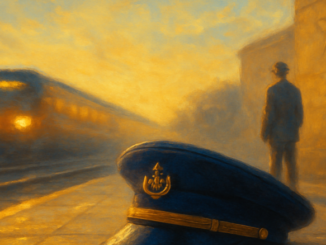
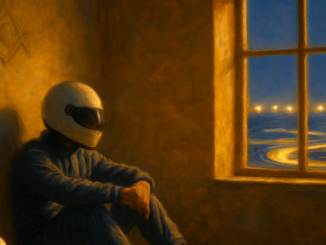
Picture this: you’re standing in a moving train, tensions rising, words turning into weapons, and before you know it, the unthinkable happens. A railway employee falls from the train during an altercation with a passenger. The news from Germany is shocking — but it also raises deeper questions. How can an everyday encounter spiral so far out of control? And what does it tell us about the fragile threads that bind us together as human beings? The Thin Line Between Order and Chaos You’ve probably experienced it yourself: standing in a crowded train, someone pushes, another grumbles, and you feel the atmosphere shift. Most of the time, it ends with an angry glance or a muttered remark. But sometimes — very rarely — it escalates. The incident involving a German railway worker who fell from a moving train during a dispute with a passenger shows just how quickly the thin line between order and chaos can vanish. It reminds us that every encounter, no matter how fleeting, carries the potential to heal or to wound. In Freemasonry, we often speak of building a better world, stone by stone. But what happens when those stones collide? What happens when the structure […]

Firefighter helmet and Masonic square and compasses symbolizing brotherhood
Personal Development & Leadership

Arsonist in Uniform: When Brotherhood Fails

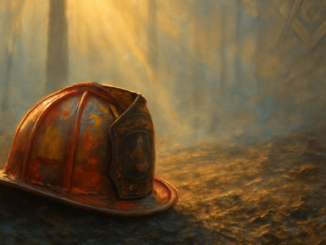
The siren wails through the night. A firefighter pulls on his jacket, jumps on the engine, and races toward a blaze he himself has set. Six arrests later — including one of their own — France is left in shock. This isn’t just a story about fire. It’s a story about trust going up in smoke, and about the urgent question of how we protect brotherhood when someone undermines it from within. The Shock of Betrayal From Within When we learn that someone who swore an oath to protect has become the very source of destruction, it shakes our faith in institutions to the core. For most people, the fire service is a symbol of unconditional service. These are the men and women who run into burning buildings while everyone else runs out. They form a tightly knit community — a brotherhood in every sense of the word. And yet, one of them betrayed the trust of colleagues and citizens in the most fundamental way imaginable. Events like these don’t just affect the people directly involved. They sow doubt in every community built on mutual loyalty. How can any group function when the bonds of trust can no longer be […]

A painter in a Masonic lodge contemplating a canvas at twilight
History

When Time Catches Up: Lessons From Vanished Worlds

A lodge painter sets down his brush and stares at the canvas. He has just learned that an actor has died — someone who once played a paleontologist surrounded by prehistoric creatures. How strange, he thinks, that certain people remind us of forgotten ages, of what once was and will never return. In the silence of his studio, a question lingers: what remains when the last echo of a voice fades away? The Echo of Extinct Worlds There is something deeply fascinating about stories of extinct creatures. When we immerse ourselves in prehistoric times, we realize just how brief our human existence truly is. Millions of years passed before the first humans ever set foot on this earth. And yet, generation after generation, we strive to leave behind something that outlasts us. This longing for a legacy that defies time touches the very heart of what Freemasons have contemplated for centuries. Freemasonry has always maintained a special relationship with the past. Lodges preserve traditions stretching back to the medieval stonemasons’ guilds — and perhaps even further. Not because the past was better, but because there is wisdom in continuity. Every Freemason who enters a lodge joins a chain of brothers […]

Rough ashlar stone beside a calm candle symbolizing Masonic inner strength
Personal Development & Leadership

Artificial Energy vs Inner Strength: A Masonic Perspective

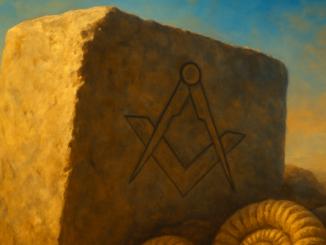
As more people report heart palpitations, insomnia, and anxiety from stimulant supplements, a fundamental question emerges: where do we truly draw our energy from? The modern individual reaches for pills and powders to get through the day. The Freemason seeks something different — a force that doesn’t come from a bottle, but from within. Two paths, two views of human nature, yet both share the same search for vitality and meaning. The Modern Quest for Energy In a world that never stops, many feel the pressure to be perpetually switched on. Employers demand alertness, social media calls for constant engagement, and the body is simply expected to keep up. Stimulant supplements in powder or capsule form promise an easy fix: focus without effort, energy without rest. But reality tells a different story. Users increasingly report nervousness, a racing heart, or a restless mind. The promise of artificial energy carries a shadow side that no label warns you about. These complaints are not merely physical. They touch on something deeper: the feeling of losing control over one’s own body. When someone becomes dependent on external substances to function, they gradually lose contact with their natural rhythms. The question then shifts from […]

Crowbar as a Masonic symbol representing spiritual leverage and inner transformation
Spiritual Traditions

The Crowbar Symbol and Its Meaning: A Lever for the Soul

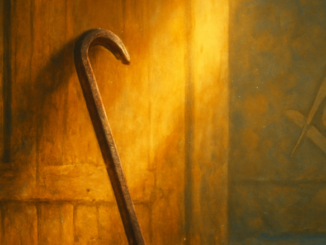
Sometimes you need a crowbar to pry something open — not just in the physical world, but in your inner life as well. The crowbar symbol and its meaning reach far beyond the practical tool we know from construction sites. This simple instrument carries a powerful spiritual message: some doors in our lives only open when we are willing to apply real force. In Freemasonry, where working tools serve as central symbols, the crowbar offers a surprisingly compelling perspective on personal transformation. What the Crowbar Symbol Tells Us About Resistance You probably know the feeling. Something in your life has rusted shut. A habit you cannot let go of. A belief that limits you but that you cannot seem to break through. A relationship that no longer works but that you cling to anyway. In moments like these, the image of the crowbar acts as a mirror. The pry bar does not ask for subtlety — it asks for honesty about what is truly needed. The meaning of this tool lies in its directness. Where other instruments perform fine, delicate work, the crowbar is designed for one purpose: overcoming resistance. In a spiritual sense, it represents those moments when a […]

Open book with Montaigne essays and candlelight evoking quiet contemplation
Content & Summary

Montaigne on Idleness: An Essay on the Restless Mind

You may recognise this: a day off with no obligations, a chance to finally relax — and yet your thoughts race in every direction. Your mind feels busier than ever. The sixteenth-century philosopher Michel de Montaigne described exactly this phenomenon in his short but powerful essay On Idleness. He discovered that an empty mind does not lead to peace, but to chaos. What begins as a search for rest turns out to be a confrontation with ourselves. The Core Idea of the Essay In this eighth essay from his first book, Montaigne examines a paradox that remains strikingly familiar today: when we fail to engage our mind with purposeful activity, it does not settle into calm — it runs wild. Montaigne writes that an unoccupied mind gallops off in every direction, like a horse without a rider. Thoughts multiply, take on bizarre shapes, and produce what he calls “monsters” and “chimeras.” The essay is deeply personal in tone. Montaigne describes how, after retiring from public life, he settled on his country estate fully expecting his mind to find peace. The opposite happened. Without the discipline of daily obligations, his thoughts began to churn uncontrollably. This unsettling experience became the very […]

Thessaloniki cityscape symbolizing historical reflection on political violence
History

Thessaloniki and Political Violence: Lessons from History

When news breaks of attacks on politicians in Thessaloniki — attacks that claim the lives of innocent bystanders — an unavoidable question surfaces: why does violence keep returning to the political arena? And perhaps more importantly, what can centuries of human civilization teach us about the roots of such acts? Why Does Political Violence Strike So Deep? The answer lies in what violence against political figures represents. It does not merely harm individuals — it tears at the very fabric of society. When someone attacks an elected representative, they are indirectly attacking the voice of every citizen that representative serves. And the innocent victims caught in the crossfire represent something equally disturbing: the sheer randomness of blind violence, the tragic collateral damage of ideological rage. Freemasonry has reflected on these dynamics for centuries. Not as a political movement, but as a philosophical tradition that seeks to understand the causes of human conflict. In the Lodge, Brethren regularly contemplate a fundamental question: how do we build a civilization in which violence no longer has the final word? What Does the History of Thessaloniki Reveal? Thessaloniki is no stranger to political violence. This Greek port city was the scene of a series […]

Symbolic representation of agnosticism and Freemasonry paths converging
Freemasonry & Society

Agnosticism and Freemasonry: Two Paths Toward the Unknowable

Agnosticism is often understood as a position of not-knowing — a philosophical stance that acknowledges certain questions about existence may be unanswerable. Freemasonry, on the other hand, is sometimes perceived as a fraternity defined by its rituals and symbols. But what happens when we place these two worlds side by side? Both share a fundamental recognition: that the human mind cannot fathom everything, and that within that very recognition lies a particular kind of wisdom. In this article, we explore how the agnostic outlook and Masonic philosophy mirror and enrich each other. The Agnostic Perspective: Living With Uncertainty The agnostic does not claim to know whether a higher power exists. This is not a weakness or a lack of conviction — it is a deliberate intellectual position. The term was coined in the nineteenth century by the British biologist Thomas Henry Huxley, who wanted to express that certain metaphysical questions lie beyond the reach of human knowledge. The agnostic stance demands humility: the ability to say “I don’t know” without abandoning the search for meaning. In modern society, agnosticism is frequently confused with indifference or atheism. Nothing could be further from the truth. Where the atheist asserts that no god […]

A solitary chair on a windswept barrier island beach at golden hour
Spiritual Traditions

The Coast as Temple: Spiritual Lessons from a Barrier Island

A chair slowly sinks into the sand as the eyes wander across the water. In the distance, boats approach — tiny specks growing larger on the horizon. Other vessels sail away, shrinking until they vanish entirely. Behind the dunes, the land shields against the wind, while barefoot walkers stroll along the shore and the occasional brave soul takes a quick plunge into the cold sea. This simple scene on a barrier island holds more spiritual wisdom than many a thick volume of philosophy. The Beach as a Contemplative Space There is something extraordinary about sitting on a beach, gazing at the endless horizon. The boundary between water and sky blurs, time seems to slow, and the mind comes to rest. This is no accident. For centuries, people have sought out places where the elements converge — where land gives way to water and the heavens touch the earth. In many traditions, such places are regarded as threshold spaces, liminal areas where ordinary life pauses and room opens up for deeper reflection. Freemasonry understands this principle well. The lodge itself is precisely such a set-apart space, deliberately separated from the outside world to make reflection possible. But beyond the ritual environment, […]

Ruth gleaning in the cornfields symbolizing loyalty and Masonic transformation
Christianity

Ruth and the Cornfield: Loyalty and Symbolism in Freemasonry

Loyalty is a word that rolls easily off the tongue, but it only reveals its true nature when everything else falls away. What remains of a promise when there is nothing left to gain? When following someone leads not to prosperity but to uncertainty, poverty, and exile? The Book of Ruth poses exactly this question — and the answer it gives is so radical that it still unsettles us three thousand years later. Ruth does not choose loyalty because it is wise. She chooses loyalty because it is essential. The Paradox of Gaining Through Loss Let us begin at the beginning — which is to say, at the end. The Book of Ruth opens with a cascade of loss. Naomi loses her husband, then both her sons. She stands in a foreign land without protection, without a future, without a name that still carries weight. She renames herself Mara — the bitter one. It is a gesture of total surrender to emptiness. And precisely at that lowest point, in that absolute desolation, something takes root that proves stronger than any material certainty: the loyalty of a daughter-in-law who refuses to leave. Here we touch a paradox that Freemasonry knows intimately. […]

Masonic gavel on a workbench symbolizing the cycle of growth and renewal
Christianity

Judges and the Cycle of Falling and Rising: Symbols of Growth

A hammer rests on the workbench. It is motionless, yet it carries within it the potential for both creation and destruction. In much the same way, the Book of Judges lies before us — a collection of stories about leaders who rise and vanish, about a people who fail and recover, fail and recover again. What does this ancient text tell us about the human soul? And how does the symbolism of this seventh book of the Old Testament mirror the path that every Freemason walks? The Cycle as an Archetypal Pattern The Book of Judges does not describe a linear history — it traces a spiral. The people turn away from their path, fall into oppression, cry out for help, and a leader emerges to deliver them. After a period of peace, the cycle begins anew. This pattern repeats itself twelve times, like a mantra carved into the very fabric of the text. For the Freemason, this cycle is deeply familiar. The rough ashlar is not shaped into a perfect cube in a single stroke. It is a process of failure and correction, of straying and returning to center. The cycle in Judges is not a sign of weakness […]

A candle flame burning on a Masonic altar symbolizing hope and renewal
Freemasonry & Society

Fire and Oil: On Destruction and the Courage to Rebuild

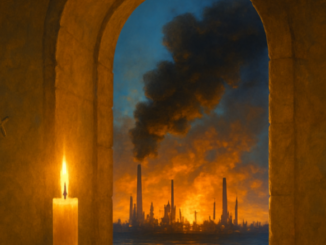
The old Master gazed at the candle on the altar. The flame danced restlessly, as though it had something to say. That morning, he had read the news — burning storage tanks, columns of smoke rising miles into the sky, a refinery consumed by fire. He reflected on the strange paradox of fire: the very element that illuminates the temple can also devour everything in its path. When Fire Destroys Instead of Illuminates This week, images emerged of a large-scale attack on an oil refinery near Moscow — reportedly the largest in the region. Massive walls of flame, thick black smoke, and the unmistakable sense of destruction that seems to seep through the screen itself. For many, this is simply another piece of war news to scroll past. But for those who look with a contemplative eye, there is more to see than strategic targets and economic damage. Fire has always carried a dual meaning in human history. It is the symbol of civilization — of warmth and community gathered around the hearth. But it is equally the instrument of devastation, of cities reduced to ash. In Freemasonry, fire stands as one of the most powerful symbols we know: the […]

Underground gas pipeline symbolizing hidden Masonic connections and flowing energy
Freemasonry & Society

The Gas Pipeline as Symbol: When Energy Flows Freely Again

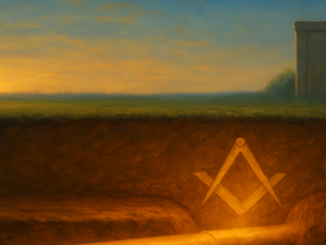
A pipe buried underground. Invisible, forgotten — until the news reminds us it exists. European gas prices drop following a peace agreement between the United States and Iran, and suddenly the pipeline becomes what it always was: a vein in the body of civilization. But what do we truly see when we look at that pipe? A piece of infrastructure? Or an invitation to reflect more deeply on what it means when energy flows freely once again? The Invisible Network Beneath our feet lies a world we rarely consider. Pipes, cables, conduits — they form a network that makes daily life possible without us sparing it a second thought. Only when the flow stops, when the warmth fails to arrive, do we realize how dependent we are on this hidden infrastructure. The peace accord now calming the energy markets makes visible something that was always there: our profound interconnectedness. Freemasonry has a rich tradition of contemplating what is hidden and what is revealed. The building of the Temple, so central to our symbolism, is not merely about stones and columns. It is about the invisible structures that support a building — the foundations no one sees, but without which nothing […]

Masonic square and compasses symbolizing the balance of justice and wisdom
Freemasonry & Society

Justice and Retribution: Two Perspectives on Fairness

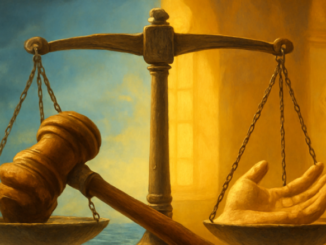
When news reaches us of a violent crime committed far from home, something ancient stirs within us. A life is taken, a suspect is arrested, and emotions ignite almost instantly. Calls for harsh punishment, outrage over injustice, a deep yearning for retribution. Yet alongside this visceral response, there exist traditions and communities that have looked at such moments differently for centuries — traditions that ask questions before passing judgment. This article explores two perspectives on justice: that of the outraged citizen and that of the searching Freemason. The Perspective of Outrage For most people, the first reaction to a violent crime is entirely understandable and deeply human: horror, anger, and an overwhelming desire for justice. When we hear that a fellow citizen has been killed in a distant land, we feel the pain as if the victim were someone we knew personally. The community closes ranks, the victim is given a face and a story, and the perpetrator becomes a symbol of the evil that must be fought. This perspective is rooted in a fundamental human need for order and safety. Society functions on the basis of shared agreements, and those who violate those agreements in the most horrific manner […]

A darkened chamber with Masonic symbols representing reflection and inner wisdom
Freemasonry & Society

The Power of Departure: Why Walking Away Can Be the Best Move

A race car sits idle in the pit lane. The driver climbs out, leaves the circuit, and seeks silence. Hours later, he returns and delivers the qualifying lap of his lifetime. The story made headlines around the world yesterday: sometimes you have to leave in order to truly arrive. For those familiar with the symbolism of Freemasonry, an ancient truth resonates here — one that reaches far deeper than any racetrack. The Circuit as a Mirror of Society A racing circuit is more than asphalt and crash barriers. It is a closed system where pressure, expectation, and performance converge in a relentless rhythm. Lap after lap, second after second — everything is measured, compared, and judged. In many ways, this mirrors the society in which we all operate: a world of deadlines, targets, and the unceasing demand for more, faster, better. The driver who chose to temporarily step away from this system did something that defies every rule of our performance-driven culture. He stopped when pushing forward was expected. He sought distance when proximity was demanded. And yet, it was precisely this departure that became the key to his finest performance. The Chamber of Reflection: The Symbolism of Withdrawal In […]