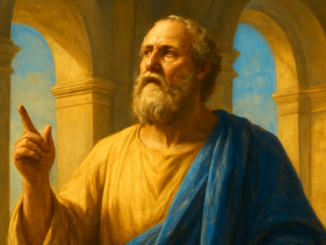
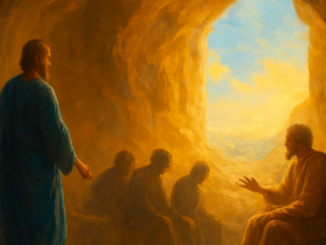
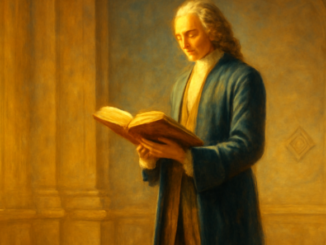
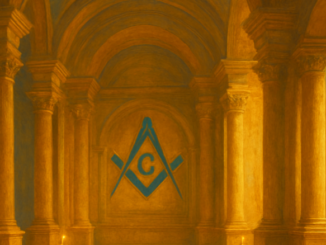
Ancient Greek philosophical dialogue symbolizing truth and Masonic justice
Plato – Philosophical Background

Plato’s Gorgias: Truth, Power, and Freemasonry’s Quest

Imagine finding yourself in a debate where your opponent has no interest in truth — only in winning. How do you respond? This is precisely the situation Socrates faces in Plato’s dialogue Gorgias. It is a text that challenges you to confront a fundamental question: what matters more, persuasive speech or righteous action? This question has echoed through the centuries and strikes at the very heart of what Freemasons pursue in their rituals and labour. The Sophists and Their Challenge to Philosophy To understand Plato’s Gorgias, you need to transport yourself to fifth-century Athens. The city was alive with intellectual activity, and one group of thinkers commanded particular attention: the Sophists. These were itinerant teachers who, for a fee, instructed young Athenians in the art of speaking and persuading. Figures such as Protagoras, Hippias, and of course Gorgias of Leontini were celebrated for their eloquence. The Sophists represented a radically new perspective. Protagoras declared that “man is the measure of all things,” suggesting that truth is relative. For them, rhetoric was not a means of discovering truth but a technique for persuading others, regardless of the content. This relativism posed the direct intellectual challenge against which Plato, through the voice […]

Ancient Roman bust of Marcus Aurelius symbolizing Stoic inner retreat
Marcus Aurelius – Content & Summary

Marcus Aurelius Book IV: The Art of Retreating Into Yourself

Picture a Roman emperor — surrounded by court intrigues, military campaigns, and the endless demands of governing an empire — writing by candlelight about the art of inner stillness. Marcus Aurelius never sought refuge in mountain cabins or coastal villas. Instead, he discovered a sanctuary that no one could ever take from him: the retreat into his own mind. In the fourth book of his Meditations, he unfolds this insight with a clarity that still resonates nearly two thousand years later. The Inner Chamber as Sanctuary Marcus Aurelius opens Book IV with an observation that strikes at the heart of his philosophy: people seek retreats in the countryside, at the seashore, or in the mountains, yet the truest sanctuary is always within reach. The human mind, when properly trained, offers a space where external chaos cannot enter. This is not escapism — it is a deliberate choice to locate the source of peace within rather than without. The emperor compares this inner space to a citadel that stands firm regardless of what unfolds beyond its walls. The image of the citadel serves as a powerful symbol: not a fortress against the world, but a place of order and reflection. Those […]

Ancient Greek columns symbolizing Plato's Gorgias and Masonic philosophy
Plato – Content & Summary

Plato’s Gorgias: Rhetoric, Justice, and the Good Life

What is the value of persuasion when it is not rooted in truth? This question lies at the beating heart of Plato’s dialogue Gorgias, a work in which the Greek philosopher examines the very foundations of rhetoric and exposes its relationship to justice. The dialogue invites us to reflect on a timeless dilemma: is it better to suffer injustice or to commit it? For those familiar with the symbolic language of Freemasonry, this ancient text opens a fascinating door to deeper reflection on inner righteousness and the architecture of the soul. The Setting and the Interlocutors The dialogue takes place in Athens, where Socrates engages with three distinctive figures: Gorgias, the famous orator from Leontini; Polus, his fiery student; and Callicles, an ambitious Athenian aristocrat. Each represents a different attitude toward power, persuasion, and morality. Gorgias presents himself as a master of the art of speaking, capable of convincing any audience regardless of the subject. Polus glorifies the power that rhetoric bestows. Callicles goes furthest of all, openly defending the right of the strongest to rule. Socrates assumes the role of the searching questioner — the one who, through apparent ignorance, systematically dismantles the certainties of his conversation partners. What […]

Marcus Aurelius bust symbolizing Stoic philosophy and Masonic virtue
Marcus Aurelius – Freemasonry & Connection

Marcus Aurelius on the Good: Living According to Nature

What did Marcus Aurelius actually mean when he wrote about living in accordance with nature? And why does this ancient idea resonate so deeply with what Freemasons strive for? In the third book of his Meditations, the Roman emperor unfolds a vision of the good that remains strikingly relevant today. These are thoughts worth exploring together — as seekers of truth have always done. What Did Marcus Aurelius Mean by ‘Nature’? This is perhaps the first question that arises when reading Book III. Marcus Aurelius speaks constantly about living according to nature, but he does not mean the romantic ideal of untouched forests and flowing rivers. For the Stoics, nature carried a far deeper meaning: the rational order that permeates the universe, the logos that connects all things. The emperor saw each person as part of a greater whole. When we act in harmony with our rational nature, we act rightly — almost by definition. This may sound abstract, but its practical implication is remarkably clear: to live virtuously means to recognize and fulfill your role in the larger fabric of existence. Is this not precisely what a Freemason pursues when working on his rough ashlar? The Connection Between Stoic […]

Symbolic Masonic tools with light representing Montaigne's philosophy of connection
Michel de Montaigne – Freemasonry & Connection

Montaigne on Laughter and Tears: Connection in Freemasonry

A tear can express joy. A smile can conceal sorrow. Michel de Montaigne understood this paradox of the human soul when he observed that we do not laugh and cry about the same thing. Hidden within this sixteenth-century essay lies a timeless truth that resonates deeply with Masonic thought: genuine connection between people requires us to look beyond the surface of expressions and gestures, into one another’s inner landscape. The Surface Deceives Montaigne opens his essay with a seemingly simple observation: the same event can evoke opposite emotions in different people. More than that, within the same person, laughter and tears can lie remarkably close together — sometimes even occurring simultaneously. What does this mean for how we understand one another? Montaigne suggests that we judge far too quickly based on what we see. The tear on someone’s cheek does not tell the whole story. The smile on someone’s lips may well be a mask. This insight touches on a fundamental Masonic principle: the distinction between the exoteric and the esoteric, between the outer form and the inner truth. In the lodge, we learn that symbols carry multiple layers of meaning. A square is not merely a tool. A level […]

Ancient philosophical texts symbolizing Seneca's teachings on inner freedom
Lucius Annaeus Seneca – Letters to Lucilius

Seneca’s Letter VII: The Philosophical Roots of Inner Freedom

You know the feeling: after a day spent in traffic, crowds, or back-to-back meetings, you come home feeling drained and irritable. Lucius Annaeus Seneca described this exact phenomenon two thousand years ago in his seventh letter to Lucilius. But where did his ideas come from? Which philosophical traditions shaped his thinking about the influence of the crowd on our inner life? This article uncovers the intellectual roots behind Seneca’s warning — and shows how these insights remain remarkably applicable today, not least within the practice of Freemasonry. The Stoic Foundation: Mastery Over the Inner World Seneca wrote from within the Stoic tradition, a philosophical school founded by Zeno of Citium around 300 BCE. At the heart of Stoicism lies a simple but powerful distinction: some things are within our control, and others are not. Our thoughts, judgments, and responses belong to the first category. The behavior of others — the crowd included — belongs to the second. In Letter VII, Seneca applies this principle to an everyday situation. He describes how attending gladiatorial games left him morally damaged. The excitement of the mob, the cries for blood, the collective cruelty — all of it invaded his mind without his consent. […]

Ancient Greek temple columns symbolizing Plato's philosophy and Freemasonry
Plato – Philosophical Background

Plato’s Protagoras and the Masonic Quest for Virtue

In fifth-century Athens, an intellectual battle was raging that would permanently reshape Western civilization. On one side stood the Sophists — traveling teachers of wisdom who claimed they could teach virtue for a fee. On the other stood Socrates, a man who questioned every certainty. Their clash, immortalized by Plato in the dialogue Protagoras, touches on a question that remains central to Freemasonry today: can a person truly learn to become virtuous, or is moral excellence something that must grow from within? The Sophists and the Teaching of Virtue To understand the Protagoras, we need to return to Greece around 450 BCE. Athenian democracy was flourishing, and with it arose a new demand: citizens wanted to learn the arts of rhetoric, persuasion, and political participation. The Sophists stepped in to fill this gap. Protagoras of Abdera was the most famous among them. He openly claimed that he could teach young men political virtue — the art of good citizenship. This was revolutionary. Traditionally, the Greeks believed that virtue was inherited through noble birth or bestowed by the gods. Protagoras broke with this view entirely. He argued that virtue was a skill, comparable to carpentry or playing music, that anyone could […]

Open book of Montaigne's Essays with Masonic symbols and philosophical imagery
Michel de Montaigne – Philosophical Background

Montaigne on Laughter and Tears: Philosophical Roots Exposed

Why do we sometimes laugh when we really want to cry? And why can tears of grief suddenly give way to a liberating burst of laughter? Michel de Montaigne posed this very question in his eighteenth essay, but he was far from the first thinker to wrestle with the capriciousness of human emotion. Behind his elegant prose lies a rich philosophical tradition reaching back to the ancient Greeks and Romans. Let us explore the thinkers and intellectual currents that inspired Montaigne when he wrote this fascinating essay — and consider what their insights mean for Freemasons committed to the work of self-knowledge. Which Classical Thinkers Whispered in Montaigne’s Ear? Montaigne was a voracious reader of classical antiquity. His library, housed in the tower of his château, contained hundreds of works, and the ceiling beams of his study were inscribed with quotations from his favourite authors. For this particular essay, he drew heavily on the writings of Seneca, the Roman philosopher who wrote so penetratingly about the instability of human feelings. Seneca described how the very same event can provoke completely opposite reactions in different people — or even in the same person at different moments. But there was another voice […]

Ancient Roman bust of Marcus Aurelius representing Stoic philosophy and wisdom
Marcus Aurelius – Content & Summary

Marcus Aurelius Book III: The Good and Nature Summarized

In the year 170 AD, somewhere along the northern frontier of the Roman Empire, an emperor wrote words that still resonate almost two millennia later. Marcus Aurelius — the philosopher on the throne — was not keeping a diary for posterity. He was writing for himself, as an exercise in self-discipline and wisdom. Book III of his Meditations offers a profound exploration of what it means to live well according to the laws of nature. This text provides not only a window into the mind of a Stoic emperor, but also a mirror for anyone searching for meaning and inner peace. The Historical Context of Book III Marcus Aurelius composed his Meditations during one of the most turbulent periods of his reign. The Marcomannic Wars raged along the empire’s borders, plague devastated the population, and the emperor found himself far from Rome, stationed at the Danube frontier. It was precisely amid this chaos and uncertainty that Book III came into being — a collection of reflections on the transience of life and the urgency of living each moment with full awareness. The Meditations were originally titled Ta eis heauton, which translates literally as “to himself.” This deeply personal character is […]

A sunlit garden symbolizing Voltaire's Candide and the Masonic path of self-cultivation
Symbolism & Rituals

Voltaire’s Candide: The Garden as a Key to the Art of Living

After an odyssey of disasters, wars, and bitter disillusionment, Candide finally arrives at a small garden. There he speaks the famous words: “We must cultivate our garden.” This deceptively simple conclusion to Voltaire’s satirical masterpiece contains a philosophy of life that is both profoundly practical and deeply meaningful. What does it truly mean to tend your own garden? And how can this insight be applied concretely in your life today? Candide’s Journey: A Whirlwind Overview Voltaire wrote Candide in 1759 as a razor-sharp attack on the philosophical optimism of his era — specifically the doctrine that we live in “the best of all possible worlds.” The protagonist, Candide, grows up under the tutelage of the philosopher Pangloss, who instills this optimism in him with unwavering conviction. Voltaire then proceeds to plunge his hero into a relentless cascade of misfortunes: war, earthquake, the Inquisition, slavery, and betrayal. Every time Candide believes things cannot possibly get worse, reality proves him wrong. The story takes the reader from Lisbon to South America, from Paris to Constantinople. Along the way, Candide encounters a gallery of characters who each embody the absurdity of human existence in their own way. Cunégonde, his beloved, loses both her […]

Ancient Greek philosophers debating virtue in a classical setting
Plato – Content & Summary

Plato’s Protagoras: Can Virtue Be Taught?

Before dawn, young Hippocrates pounds on the door of Socrates, his eyes blazing with excitement. The famous sophist Protagoras has arrived in Athens, and Hippocrates is desperate to become his student. But Socrates asks a question that changes everything: what exactly do you expect to learn? This moment launches one of Plato’s most vivid dialogues — a work that wrestles with a question as urgent today as it was in ancient Athens: is virtue something that can be taught, or is it an innate quality that some simply possess and others do not? The Encounter Between Socrates and Protagoras In the luxurious home of the wealthy Callias, Socrates meets the renowned sophist Protagoras, surrounded by admiring students and other celebrated thinkers such as Hippias and Prodicus. Protagoras is no ordinary teacher — he charges substantial fees for his instruction and claims he can train young men to become better citizens. Socrates, ever the critical questioner, issues a challenge: if virtue can truly be taught, why do great statesmen consistently fail to make their own sons as virtuous as themselves? This is no mere academic exercise. It strikes at the heart of what it means to be a good person and […]

Ancient sunken temple ruins symbolizing the Atlantis myth and Freemasonry
History

The Lost Island as Mirror: Freemasonry and the Atlantis Myth

What if the most important lesson of a vanished civilization lies not in its existence, but in its destruction? More than two thousand years ago, Plato wrote about a mighty island empire brought low by its own hubris. Since then, the story has captivated philosophers, adventurers, and seekers alike. But for the Freemason, this myth may hold a deeper significance — one that has nothing to do with geography or archaeology, and everything to do with the eternal human quest for wisdom, the dangers of moral decay, and the possibility of rebuilding what was lost. The Origin of an Enduring Mystery In his dialogues Timaeus and Critias, Plato introduced the story of a powerful civilization said to have existed some nine thousand years before his own era. This island empire, located beyond the Pillars of Heracles, reportedly possessed unparalleled knowledge of architecture, mining, and statecraft. Its inhabitants had built temples of silver and gold, carved canals that crisscrossed the entire island, and created a society that initially lived in harmony with the divine order. But here the real lesson begins. Plato did not write this story as history. He used it as a philosophical instrument — a mirror in which […]

Rough ashlar stone in candlelight symbolizing Masonic self-reflection
Michel de Montaigne – Freemasonry & Connection

Montaigne on Fear: Lessons for Today’s Freemason

You’re about to make a major decision. Your stomach tightens, your thoughts race. Fear is a primal force that every human being knows intimately — whether you lived in sixteenth-century France or in the modern world today. Michel de Montaigne, the French thinker celebrated for his profoundly introspective essays, devoted an entire chapter to this very subject. His insights turn out to be remarkably relevant, especially for those committed to personal growth and brotherhood. So what can Freemasons learn from his reflections on fear? How Fear Works According to Montaigne In his essay “Of Fear,” Montaigne describes how anxiety influences our behavior in unpredictable ways. He recounts stories of soldiers who froze on the battlefield, of people who fled without knowing where they were going. Fear can paralyze us, but it can also drive us to reckless action. Montaigne observes that fear often causes more damage than the danger itself. It is not the threat that breaks us — it is our reaction to it. This insight applies directly to everyday life. How many opportunities do we let slip away out of fear of rejection? How many conversations do we avoid because we dread conflict? Montaigne invites us to face […]

Open copy of Voltaire's Candide with Masonic symbols and garden imagery
Symbolism & Rituals

Voltaire’s Candide: Philosophical Roots of Suffering and Hope

When Voltaire published his satirical masterpiece Candide in 1759, he set off a philosophical earthquake. The work confronts the reader relentlessly with human suffering, yet refuses to abandon hope entirely. How can a thinker who depicts misery with such razor-sharp clarity still leave a path open toward meaning? The answers lie in a rich intellectual heritage stretching from the Stoic philosophers to the Enlightenment salons of Paris — and they connect in surprising ways to the ideals cherished by Freemasonry. Two Perspectives on Evil To understand Voltaire’s treatment of suffering, we need to set two fundamentally different worldviews side by side. On one hand stands the optimism of Gottfried Wilhelm Leibniz, the German philosopher who claimed that we live in the best of all possible worlds. According to Leibniz, God — as a perfect being — necessarily created the most harmonious universe. Every evil serves a higher purpose; every instance of suffering fits neatly into a grand cosmic plan. On the other hand stands Voltaire himself, who dissected this optimism with biting irony. After the devastating Lisbon earthquake of 1755, which killed tens of thousands of people, he could no longer accept the notion that all suffering has divine justification. […]

Ancient Greek philosophical dialogue connecting Plato's Meno to Freemasonry
Plato – Philosophical Background

Plato’s Meno: Philosophical Roots of Virtue and Knowledge

Can virtue be taught, or does every person already carry it within? This question, posed by Meno to Socrates in one of Plato’s most celebrated dialogues, touches on fundamental issues that still resonate today. The Meno offers not only a philosophical investigation into the nature of knowledge and morality but also opens a window into the intellectual world in which Plato wrote. For Freemasons, this dialogue strikes a particularly familiar chord: the quest for inner illumination, the role of symbols in unveiling hidden wisdom, and the conviction that true knowledge does not come from without but is awakened from within. The World of Plato: Athens and the Sophists To understand the Meno, we first need to step into the intellectual arena in which Plato operated. Fifth-century Athens was buzzing with philosophical activity. Sophists like Gorgias and Protagoras traveled the Greek world, teaching rhetoric, political skills, and what they called “virtue” to wealthy young men. Their approach was pragmatic: virtue, in their view, was a skill that could be learned, much like writing or arithmetic. Socrates, Plato’s teacher, took a radically different stance. Where the Sophists confidently claimed to sell wisdom, Socrates began every conversation by acknowledging his own ignorance. This […]

Ancient Roman statue of Marcus Aurelius symbolizing Stoic wisdom and inner life
Marcus Aurelius – Content & Summary

Marcus Aurelius Book III: On Reason and the Inner Life

In the year 167 AD, somewhere along the northern frontier of the Roman Empire, Emperor Marcus Aurelius sat down to write his most private reflections. Book III of his Meditations opens with a confronting truth: our bodies decay, but our minds can remain sharp until the very last moment. These thoughts, penned amid the chaos of military campaigns, still offer a compass for anyone seeking inner peace and wisdom — including those of us who walk the path of Freemasonry. The Historical Context of Book III Marcus Aurelius never intended his Meditations to be published as a philosophical treatise. They were personal exercises in the art of living — spiritual journal entries written for an audience of one. Book III was most likely composed during his stay at Carnuntum, a Roman legionary fortress on the Danube, where he directed the Marcomannic Wars. Surrounded by disease, death, and the crushing weight of empire, he turned to the Stoic philosophy he had learned as a young man from his teacher Junius Rusticus. The Stoics, whose intellectual lineage stretches back to Zeno of Citium and was later refined by Epictetus and Seneca, taught that the only thing we truly possess is our own […]

Ancient Greek dialogue scene representing Plato's Meno and the pursuit of virtue
Plato – Content & Summary

Plato’s Meno: Virtue and Knowledge as Foundations for Growth

In fifth-century Athens, a young aristocrat named Meno posed a question that philosophers have grappled with ever since: can virtue be taught, or is it an innate quality? Plato recorded this exchange in a dialogue that not only explores the foundations of ethics but also introduces a revolutionary theory of knowledge. The Meno remains one of the most accessible yet profoundly deep works in Western philosophy — a text that compels us to reflect on what we truly know and how we can become better people. For those on the Masonic path, where self-improvement and the pursuit of wisdom stand at the very heart of the Craft, this ancient dialogue holds remarkable resonance. The Central Question of the Dialogue The Meno opens with a direct and seemingly simple question from its title character to Socrates: is virtue something that can be taught, does it come through practice, or is it naturally present in human beings? True to his method, Socrates refuses to answer the question before first establishing what virtue actually is. This leads to an inquiry characteristic of Plato’s early dialogues — the dismantling of false certainties to create space for genuine understanding. Meno makes several attempts at a […]

Marcus Aurelius statue symbolizing Masonic presence and self-reflection
Marcus Aurelius – Freemasonry & Connection

Marcus Aurelius on the Here and Now: Freemasonry & Connection

You probably know the feeling: you’re sitting in a conversation, but your mind has already drifted to tomorrow. You’re walking through the city, but you’re mentally somewhere else entirely. The present moment sometimes feels like the hardest place to truly inhabit. Marcus Aurelius, the Roman emperor-philosopher, wrestled with exactly the same challenge more than eighteen centuries ago. In the second book of his Meditations, he wrote some of his most penetrating thoughts on presence and connection. For Freemasons, his words touch on something essential — the question of how to be truly present, both for yourself and for your Brothers. The Burden of Past and Future Marcus Aurelius never wrote his Meditations for publication. They were private notes — a conversation with himself. That’s precisely why they feel so raw and honest. In Book II, he confronts himself with the waste that occurs when the mind constantly slips away to what has been or what is yet to come. He reminds himself that the present is the only thing anyone truly possesses. The past is gone, the future uncertain. Only this moment offers space for action, for growth, for genuine connection. This wasn’t idle philosophizing. For Marcus Aurelius, it was […]

Golden city of El Dorado symbolizing Masonic ideals and Voltaire's philosophy
Symbolism & Rituals

Voltaire’s El Dorado: Utopia as a Mirror for Freemasonry

What would a perfect society look like? A place where greed holds no power, where people treat each other with genuine respect, and where wisdom matters more than wealth. Voltaire imagined exactly such a world in his masterpiece Candide, in the legendary kingdom of El Dorado. But was this golden land meant as a blueprint for humanity — or as a sharp mirror reflecting our deepest flaws? And what does an eighteenth-century literary utopia have to do with the ideals that Freemasons continue to cherish today? A Golden City That Doesn’t Exist In Candide, the naïve protagonist stumbles into El Dorado after a long string of misfortunes. It is a hidden kingdom where gold and gemstones litter the streets as though they were ordinary pebbles. The inhabitants laugh at Candide’s astonishment. What value does gold have when everyone already has enough? Voltaire doesn’t present this paradise as a serious proposal for how society should be organized. Instead, he uses it as a stark contrast to the world he saw around him — the cruelty, the wars, the religious intolerance of his era are inverted in El Dorado into their exact opposite. And yet, Candide leaves this paradise voluntarily. He wants […]

Symbolic representation of trust and brotherhood in Freemasonry
Lucius Annaeus Seneca – Freemasonry & Connection

Seneca on True Friendship and Brotherhood in Freemasonry

Have you ever shared a secret with someone you weren’t entirely sure you could trust? Or perhaps you’ve kept someone at arm’s length — someone who actually deserved your full openness? Nearly two thousand years ago, the Stoic philosopher Lucius Annaeus Seneca wrote a short but powerful letter to his friend Lucilius about precisely this dilemma. His reflections on true friendship cut to the heart of what it means to be genuinely connected to another person. And remarkably, they align seamlessly with one of the central values of Freemasonry: brotherhood. Trust Must Come Before Friendship — Not After Seneca opens his third letter with a warning that still resonates today. He argues that you should never trust someone first and only then consider whether they are worthy of that trust. Instead, you must carefully evaluate who you allow into your life — and then give your trust completely. Stopping halfway, Seneca insists, is worse than never beginning at all. This distinction between shallow acquaintances and deep friendships forms the backbone of his argument. For anyone who has ever visited a Masonic lodge, this will sound familiar. Freemasonry has no room for half-hearted bonds. When a candidate is initiated, he enters […]