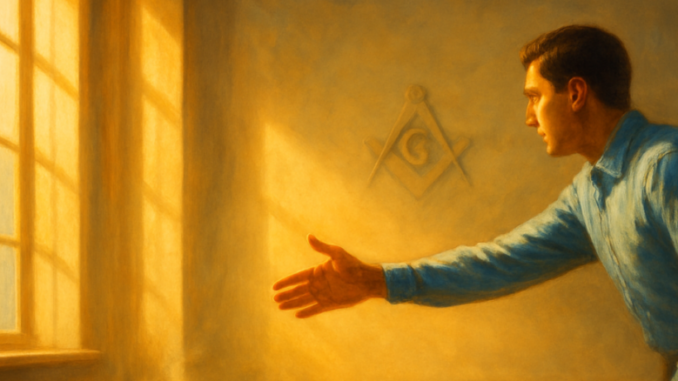
Imagine walking into the office on a Monday morning only to discover that a thousand of your colleagues are gone. The desks are empty, the familiar faces vanished. This scenario played out this week at a major streaming company, which carried out its largest round of layoffs in years. While news coverage focused on numbers and corporate strategy, one question lingered beneath the surface: what happens to human connection when communities fall apart so abruptly?
When the Workplace Community Disappears
For many people, the workplace is far more than a place to earn a paycheck. It’s where you see the same faces every day, where you share joys and sorrows over a cup of coffee, where you sometimes have deeper conversations than you do at home. When a community like that is torn apart overnight, it feels like more than just losing a job. It strikes at something fundamental: our need to belong.
The philosopher Aristotle wrote that human beings are by nature social creatures. He used the term zoon politikon to express the idea that we only truly flourish within a community. So what happens when that community is suddenly ripped away? This question isn’t only relevant for those who were laid off — it matters to anyone who has ever experienced how fragile our sense of connection can be.
Freemasonry as a Response to Impermanence
You may have wondered why people join a Masonic lodge. The answer often lies in precisely this theme: the search for lasting connection that doesn’t depend on external factors like an employment contract or economic conditions. In Freemasonry, we call this brotherhood — a bond that reaches beyond practical usefulness or business interests.
Brotherhood is not a contract that can be terminated; it is a conscious choice to keep showing up for one another, even when circumstances change.
This might sound idealistic, but it is rooted in centuries-old tradition. When the first lodges emerged in the eighteenth century, men from different professions and social classes sought something that connected them beyond their daily work. Johann Wolfgang von Goethe, himself a Freemason, wrote about the lodge as a place where class distinctions dissolved and only human qualities mattered. That idea is just as relevant today as it was then.
What Employers Cannot Offer
Let’s be honest: an employer can offer a great deal, but unconditional connection isn’t part of the package. The employment contract is conditional by definition. You provide labor; you receive a salary. When the numbers don’t add up, that agreement can be ended unilaterally. This isn’t a moral judgment on companies — it is simply the nature of the employment relationship.
The challenge for us as human beings is this: where do we find connection that actually endures? The Stoic philosopher Seneca wrote extensively about the importance of true friendship versus superficial relationships. He warned against confusing useful connections with genuine bonds. That lesson resonates powerfully when we see thousands of people suddenly losing their “work family.”
Brotherhood as a Deliberate Practice
In Freemasonry, brotherhood is not something that simply happens to you — it is something you actively practice. During lodge meetings, rituals are performed that remind brethren of their mutual connection. Conversations explore how members can support one another, not just in practical ways, but in moral and spiritual growth. This requires effort and dedication.
Regular meetings create continuity in relationships. Shared values form a foundation that doesn’t depend on external factors. Rituals and traditions strengthen the sense of belonging across generations. Mutual support is viewed as a duty, not an option.
Wolfgang Amadeus Mozart, also a Freemason, composed works that celebrated these fraternal ideals. His music for the lodge bears witness to the deep sense of connection he experienced there. It was not a side project for him — it was an essential part of his life.
Lessons for Everyone
You don’t have to be a Freemason to learn from this approach. The core question is: are you investing in relationships that go beyond practical utility? Do you have people in your life with whom you share a bond that holds even when circumstances shift? This could be a circle of friends, a club, a faith community — or indeed a lodge.
The mass layoff that made headlines this week is a stark reminder of how vulnerable communities built solely on economic foundations really are. It invites us to reflect on where we seek and find our deepest sense of connection — not to diminish workplace relationships, but to acknowledge that as human beings, we need something more.
Connection as an Art of Living
Michel de Montaigne wrote about friendship as the highest form of human connection. For him, true friendship was rare and precious — something that could not be forced or bought. It had to grow from mutual respect and a genuine interest in each other’s well-being.
This ideal of connection as an art of living is what Freemasonry strives to cultivate. It is not a perfect community — no such thing exists. But it is a deliberate effort to practice brotherhood as a discipline, as something you do rather than merely feel. In a world where connection is often fleeting and conditional, that offers a valuable counterweight.
The thousands of people who lost their jobs this week face the challenge of finding new forms of connection. For them — and for all of us — there is a lesson embedded in the ancient wisdom of Freemasonry: true brotherhood is not granted by an employer or guaranteed by a contract. It is born from the conscious choice to keep seeing one another as fellow human beings, regardless of circumstance. That choice, renewed day after day, is perhaps the most enduring bond we can build.
Copyright text & image: devrijmetselaar.nl
Texts are based on the ideas and content of the author of devrijmetselaar.nl, reviewed, corrected, and supplemented with the assistance of OpenAI. Images are created based on the ideas of the author of devrijmetselaar.nl using OpenAI/DALL-E.


Be the first to comment