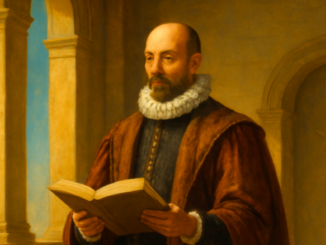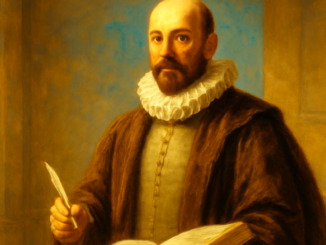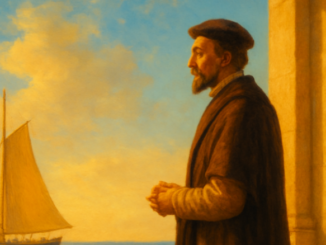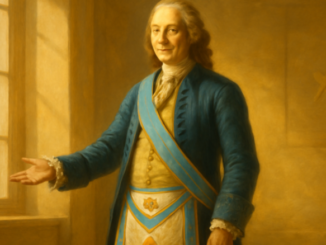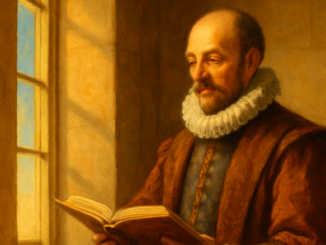
Montaigne and Cicero letters symbolizing Masonic connection and communication
Michel de Montaigne – Freemasonry & Connection

Montaigne on Cicero: Letters as Bridges to True Connection

In the thirty-fourth essay of his first book, Michel de Montaigne casts a critical eye on the correspondence of Marcus Tullius Cicero. Where the Roman orator filled his letters with political intrigue and personal vanity, Montaigne saw a missed opportunity — the possibility of genuine human connection. Written in the sixteenth century, this essay touches on themes that are strikingly relevant to Freemasonry: How do we communicate authentically with our fellow human beings? What transforms a letter, a conversation, or an encounter into a true bridge between two souls? The Letter as a Mirror of Character Montaigne did not approach Cicero’s letters as historical documents. He treated them as windows into the soul of their author — and what he found there left him unimpressed. The Roman statesman used his correspondence primarily to burnish his own reputation, forge political alliances, and secure his name for posterity. The content was often superficial, the intention self-serving. Montaigne poses a fundamental question: do we write to be seen, or to truly connect? For the Freemason, this question resonates deeply. In the lodge, one learns that words carry weight, that communication possesses a ritual dimension. It is no coincidence that silence plays an important […]
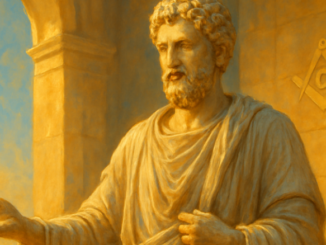
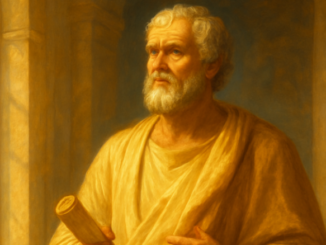
Ancient marble bust of Marcus Aurelius symbolizing Stoic wisdom and completion
Marcus Aurelius – Content & Summary

Marcus Aurelius Book XII: The Completion of a Life Examined

The twelfth and final book of Marcus Aurelius’ Meditations serves as the capstone of his philosophical journal. Here, at the close of his reflections, the Roman emperor confronts the most fundamental question any person can face: how do you prepare for the end of life? Far from being a gloomy meditation on death, Book XII is a powerful call for clarity and inner peace. For those familiar with the Masonic symbolism of the polished stone, much in these thoughts on completion and fulfillment will feel deeply familiar. The Heart of Book XII: Acceptance as Wisdom Marcus Aurelius never wrote his Meditations for publication. They were private exercises in Stoic philosophy — a conversation with himself. Book XII stands apart from the earlier volumes because of its unmistakable thematic focus: the approach of death and the question of how a person can live with dignity while knowing that everything is finite. The emperor reminds himself that dying is not something to be feared but rather understood as a natural process. Just as the seasons turn and rivers flow toward the sea, every life returns to its source. This perspective is not fatalism — it is liberation. By accepting the inevitability of […]

Ancient Roman scroll symbolizing Seneca's Letter LXX on death and Stoic philosophy
Lucius Annaeus Seneca – Content & Summary

Seneca on Death and Its Timing: A Summary of Letter LXX

Few subjects cut as deeply into the human condition as the question of death and the moment it arrives. In his seventieth letter to Lucilius, the Roman philosopher Lucius Annaeus Seneca addresses this theme with a candor that still moves and challenges readers today. Letter LXX stands as one of the most penetrating texts in the Stoic tradition on mortality, dignity, and the question of who ultimately decides when life ends — questions that resonate far beyond the ancient world and into the reflective spaces where seekers of meaning still gather. The Core Idea: Freedom to the Very End Seneca opens Letter LXX with a deceptively simple observation: life is neither good nor bad because of its length, but because of its quality. This thought, echoing throughout the entire letter, forms the foundation of his argument about death. For Seneca, death is not an enemy to be fought but a boundary that gives life its meaning. The wise person does not fear death because he understands that dreading the inevitable is pointless. The central theme of this letter, however, is more controversial than that general wisdom might suggest. Seneca raises the question of whether a person has the right to […]

Open book with classical letters symbolizing Montaigne's philosophical essay
Michel de Montaigne – Philosophical Background

Montaigne on Cicero: The Philosophical Roots of the Essay

A letter is more than ink on paper. For Michel de Montaigne, a letter was a mirror of the soul — a window into the inner life of its writer. In his essay ‘A Consideration upon Cicero,’ he examines what letters reveal about character and authenticity. Behind this seemingly simple reflection lies a rich philosophical tradition stretching from the Roman Stoa to Renaissance humanism. Understanding the sources of Montaigne’s thought unlocks a timeless wisdom about sincerity and self-knowledge — one that speaks directly to the Masonic pursuit of inner truth. The Legacy of Classical Rhetoric Montaigne grew up speaking Latin as his first language — a deliberate choice by his father, who immersed him in the classical world from birth. For Renaissance thinkers, Marcus Tullius Cicero was the supreme model of eloquence and wisdom. His letters to Atticus were celebrated as masterworks of personal correspondence. Yet Montaigne questions their sincerity. Was Cicero truly as candid as he appeared, or was he performing for posterity? This question of authenticity connects Montaigne to the Skeptical tradition. The Pyrrhonists, followers of Pyrrho of Elis, taught that certainty about the true nature of things lies beyond our reach. Sextus Empiricus, whose work Montaigne knew […]

Rough ashlar stone in a Masonic lodge symbolizing self-improvement and reflection
Marcus Aurelius – Freemasonry & Connection

Marcus Aurelius on Evil: The Rough Stone as Mirror

There is a rough stone in every lodge. Unworked, angular, full of irregularities. At first glance, it may look like nothing more than a lump of raw material. But those who truly look will recognize something of themselves in it. It is precisely this dual gaze that Marcus Aurelius teaches us in Book XI of his Meditations, where he writes about evil in human nature — not as condemnation, but as an invitation to understanding. And in that invitation lies a profound kinship with the Masonic path. The Rough Ashlar as a Symbol of Imperfection In Freemasonry, the rough ashlar is not a decorative object. It is a mirror. Anyone who contemplates it with genuine attention is confronted with their own imperfection — the sharp edges of character, the unworked places in the soul. The stone does not ask for shame; it asks for work. It is a symbol that says: your journey begins here. Marcus Aurelius understood this principle, even if he used different words. In Book XI, he writes about people who act out of ignorance or inner confusion. Those who do evil, he argues, often fail to understand what is truly good for them. Their soul is […]

Candle and Masonic symbols representing grief, remembrance, and Brotherhood
Lucius Annaeus Seneca – Freemasonry & Connection

Seneca on Grief and Loss: Wisdom for Freemasons in Sorrow

How do we grieve without losing ourselves in the process? It is a question Lucius Annaeus Seneca posed nearly two thousand years ago in a letter to his friend Lucilius — and it is a question that still resonates in lodges today, wherever Brethren must bid farewell to those they held dear. In Letter LXIII, Seneca explores the delicate balance between sorrow and remembrance, between tears and gratitude. His words touch on something every Freemason instinctively understands: the art of honoring our bonds of fellowship, even after the physical connection has been severed. What Does Seneca Really Mean by Mourning? Seneca opens his letter with a striking claim: grief is natural, but excessive grief is not. He tells Lucilius that we may miss our friends, that we may shed tears, but that we must not allow ourselves to sink into a bottomless pit of anguish. Does that sound cold? Seneca would say it is the opposite — it is an act of love. To mourn endlessly, he argues, is to dishonor the memory of the one we lost. The real question becomes: how do you honor someone by continuing to live? For Seneca, the answer lies in how we hold […]

Ancient bust of Marcus Aurelius representing Stoic philosophy and self-reflection
Marcus Aurelius – Meditations

Marcus Aurelius on Evil: Philosophical Roots of Book XI

Why do people do harm? Not the grand, deliberate evil of tyrants and criminals, but the everyday cruelty, the misunderstandings, the small betrayals that touch all of our lives. The Roman emperor Marcus Aurelius wrestled with this very question more than eighteen centuries ago. In Book XI of his Meditations, he examines the origins of human evil and arrives at insights that remain strikingly relevant for anyone committed to personal growth and the bonds of brotherhood. The Stoic Tradition as Foundation To understand Marcus Aurelius, you first need to understand the philosophical ground he stands on. He is the last great representative of Stoicism, a school of philosophy founded around 300 BCE by Zeno of Citium in Athens. The Stoics believed the world is governed by a rational order — the logos — and that human beings can find happiness by living in harmony with this cosmic reason. Marcus Aurelius did not learn Stoicism from books alone. He had access to the finest teachers of his era and corresponded extensively with philosophers. His most important intellectual mentor was Epictetus, whose teachings survive through his student Arrian. Epictetus, himself a formerly enslaved man, taught that we have no control over external […]

Portrait of Voltaire symbolizing Enlightenment reason and Masonic brotherhood
Symbolism & Rituals

Voltaire and the Enlightenment: Reason and Brotherhood United

Some thinkers cast such a long shadow across history that their influence feels almost timeless. Voltaire is one of them. His name conjures images of a razor-sharp pen, fearless convictions, and an unwavering faith in human reason. What many people don’t realize, however, is that Voltaire was initiated into Freemasonry in 1778, joining the Parisian lodge Les Neuf Sœurs just weeks before his death. The connection between his Enlightenment ideals and the Craft is no coincidence — it’s a story of shared values that still resonate powerfully today. A Thinker Finds His Brothers Picture this: you are 83 years old. You have spent your entire life fighting intolerance and injustice, wielding words as weapons against tyranny. And then you choose to join a brotherhood that upholds the very values you have championed for decades. That is exactly what Voltaire did — barely two months before he died. His decision to become a Freemason was not a passing whim. It was a deliberate affirmation of everything he had stood for throughout his extraordinary life. The lodge Les Neuf Sœurs — named after the nine Muses of Greek mythology — was a gathering place for enlightened minds. Writers, scientists, and philosophers met […]

Ancient Roman bust of Seneca with Masonic square and compasses symbolism
Lucius Annaeus Seneca – Letters to Lucilius

Seneca on Grief: The Philosophical Roots of Letter LXIII

Perhaps you know that moment — standing at an open grave, wondering: how long am I allowed to grieve? Is there a limit to sorrow, or is the question itself somehow inappropriate? Lucius Annaeus Seneca wrestled with exactly these questions two thousand years ago. In his sixty-third letter to his student Lucilius, he unfolds a nuanced vision of grief that still resonates today, rooted in ancient philosophical traditions that have also profoundly influenced Freemasonry. The Stoic School as Foundation Seneca wrote from within the Stoic tradition, a philosophical school founded around 300 BCE by Zeno of Citium in Athens. At its core, Stoicism revolves around the distinction between what lies within our power and what falls beyond it. Emotions such as grief belong to the first category: we cannot control the loss itself, but we can govern our response to it. This insight forms the backbone of Letter LXIII. Yet Seneca was no emotionless rationalist. He departed from early Stoics like Chrysippus, who regarded every emotion as a weakness to be conquered. Seneca acknowledged that grief is a natural response — even a tribute to the one we have lost. His position was more subtle: not the elimination of sorrow, […]

Quill pen and parchment letter symbolising Montaigne's reflections on Cicero
Michel de Montaigne – Content & Summary

Montaigne on Cicero: The Art of Sincere Writing

A letter is more than ink on paper. It is a mirror of the soul, a window into the inner world of its author. In his thirty-fourth essay from the first book, titled ‘A Consideration upon Cicero,’ Michel de Montaigne examines what letters and writings truly reveal about the people who compose them. He holds the famous Roman orator Marcus Tullius Cicero up against other great letter writers and raises fundamental questions about sincerity, vanity, and the real value of the written word. The Starting Point: A Personal Habit Montaigne opens this essay with a candid confession about his own writing habits. He admits that he rarely writes letters and that he would rather visit in person those to whom he ought to write. The written word, he acknowledges, is for him a necessary evil rather than a beloved pursuit. Yet this moment of self-reflection compels him to consider what letters actually are and what they mean in the broader context of human communication. From this personal vantage point, Montaigne leaps back to classical antiquity. He discusses the collected letters of Cicero — the great Roman statesman, philosopher, and orator who lived from 106 to 43 BC. These letters, preserved […]

Marcus Aurelius bust symbolizing Stoic philosophy and Masonic self-reflection
Marcus Aurelius – Content & Summary

Marcus Aurelius on Evil in Humanity: Book XI Summarized

In the eleventh book of his Meditations, Marcus Aurelius turns his attention to one of the most fundamental questions of human existence: how should we deal with the evil that others inflict upon us? The Roman emperor and philosopher never intended these reflections for publication. They were private notes, written during military campaigns and under the weight of imperial responsibility. That is precisely why his words strike so deep. They reveal a man wrestling with the same frustrations and irritations we all know — and searching for a path toward inner peace in a world full of imperfection. The Heart of Book XI: Understanding Over Judgment The central theme of Book XI revolves around a paradoxical truth: the evil that people do arises from ignorance, not from deliberate malice. Marcus Aurelius reiterates the Stoic conviction that reaches back to Socrates and Plato. No one willingly does wrong when they truly understand what is good. The person who lies, steals, or insults acts from a clouded understanding of what is truly valuable. This thought invites compassion rather than anger. This does not mean Marcus Aurelius excuses wrongdoing or naively dismisses it. On the contrary, he fully acknowledges the reality of human […]

A lit candle symbolizing Enlightenment reason and Freemasonry light
Symbolism & Rituals

Voltaire and the Enlightenment: Philosophical Roots of Reason

A candle lit in darkness. This simple image carries a meaning that reaches far beyond the practical utility of light. For Voltaire, the flame of reason was not merely a metaphor — it was a living inheritance drawn from centuries of philosophical thought. To truly understand his vision of reason and brotherhood, we must trace the sources from which he drew: the thinkers who shaped him, the intellectual currents that flowed through his work, and the context in which his ideas blossomed. The Candle and the Legacy of Light When we light a candle, we perform an act that is at once ordinary and deeply symbolic. The flame drives away darkness, but it also brings warmth and community. In Freemasonry, light represents the insight that a seeking Brother acquires step by step. Voltaire — though not a Freemason in the conventional sense until very late in his life — moved in circles where this philosophy of light set the tone. His entire body of work is permeated by the conviction that ignorance lies at the root of human suffering, and that knowledge brings liberation. This conviction did not arise from nothing. Voltaire was a voracious reader and an intellectual sponge. […]

Symbolic representation of fate and reason in Freemasonry philosophy
Michel de Montaigne – Freemasonry & Connection

Montaigne on Fate and Reason: A Masonic Perspective

Picture a die rolling across a table. It comes to rest on a number no one could have predicted. Was it chance? Or did this seemingly random moment serve a deeper purpose we can only recognize in hindsight? Michel de Montaigne, the sixteenth-century philosopher who invented the essay as a literary form, posed a daring thesis in his thirty-third essay: fortune often acts in the service of reason. This idea strikes at the very heart of what Freemasons have been exploring in their lodges for centuries. The Language of Chance When we talk about chance, we tend to reach for words like “luck” or “misfortune.” But Montaigne invites us to look beyond these surface-level labels. In his essay, he describes how events that appear chaotic at first glance often reveal a logical order when viewed in retrospect. It is as if the universe operates according to its own grammar — one we can only read in fragments. This vision aligns seamlessly with Masonic thought. In the lodge, the Brother learns that the Great Architect of the Universe has a plan, even when the individual building blocks of our lives seem disconnected and incoherent. The rough ashlar is not shaped into […]

Ancient scroll and candle symbolizing Seneca's wisdom on grief and loss
Lucius Annaeus Seneca – Content & Summary

Seneca on Grief and Loss: Lessons from Letter LXIII

There are moments when life confronts us with an emptiness that no words can fill. An empty chair at the table, a voice that no longer speaks, a hand we can no longer hold. In his sixty-third letter to his student Lucilius, the Roman philosopher Lucius Annaeus Seneca addresses precisely this subject: how to face grief and loss. Written nearly two thousand years ago, the letter still speaks to us because the sorrow of losing someone we love is timeless. The Stoic philosopher offers no easy comfort — instead, he invites us into a deeper reflection on the nature of human connection and the proper measure of mourning. The Heart of Letter LXIII Seneca writes this letter in response to the death of Flaccus, a mutual friend he shared with Lucilius. He acknowledges that Lucilius is grieving, but gently asks whether the intensity of his sorrow is proportionate to what is fitting. This is not a cold question — it is an invitation to self-reflection. The philosopher fully recognizes the value of tears and the right to mourn. At the same time, he warns against the danger of excessive or contrived grief, which he argues neither honors the dead nor […]

Ancient Roman bust of Marcus Aurelius symbolizing Stoic wisdom and Freemasonry
Marcus Aurelius – Freemasonry & Connection

Marcus Aurelius on Humor and Self-Knowledge: Wisdom for Masons

In the year 175 AD, a Roman emperor surrounded by war and political intrigue sat down to write private notes on the art of living. Marcus Aurelius never intended his Meditations for an audience. Yet nearly two millennia later, his words still speak to anyone seeking inner peace and self-knowledge. In Book XI of this timeless work, he touches on something surprising: the role of humor and lightness in the process of self-discovery. For Freemasons — who likewise strive toward moral refinement and fraternal connection — this book offers a remarkable mirror. The Historical Context of Book XI Marcus Aurelius ruled the Roman Empire from 161 to 180 AD, a period marked by wars along the frontiers, devastating plagues, and internal power struggles. Amid this chaos, he found solace in Stoic philosophy — a school of thought that places personal responsibility and emotional discipline at its core. Book XI of his Meditations was likely written during his military campaigns along the Danube, composed by candlelight in army tents. Here, the most powerful man in the world reflected not on his triumphs, but on his shortcomings. What sets Book XI apart from other passages in the Meditations is its subtle undercurrent […]

Portrait of Voltaire symbolizing Enlightenment reason and Masonic brotherhood
Symbolism & Rituals

Voltaire and the Enlightenment: Reason and Brotherhood United

Why does the thought of François-Marie Arouet — better known as Voltaire — remain so strikingly relevant nearly three centuries later for anyone reflecting on human progress? And what does his vision of reason and brotherhood mean for Freemasonry today? In this exploration, we examine the core ideas of his Enlightenment philosophy and discover how they resonate with the values that Brethren around the world hold dear. Who Was Voltaire and Why Did He Champion Reason? Voltaire lived from 1694 to 1778 and is widely regarded as one of the most influential thinkers of the European Enlightenment. His pen was feared and admired in equal measure. He wrote plays, philosophical treatises, pamphlets, and a vast body of correspondence. But above all else, he was a defender of human reason as a compass for life. Voltaire witnessed firsthand how superstition, dogmatism, and intolerance divided the people of his era. His answer? Reason as a universal bond between human beings, regardless of their origin or creed. In his writings on the Enlightenment, Voltaire argues that true civilization does not spring from blind obedience to tradition, but from the ability to think critically while showing genuine respect for one’s fellow human beings. This […]

Candles illuminating an open book of Seneca's letters in a Masonic lodge
Lucius Annaeus Seneca – Freemasonry & Connection

Seneca on the Nature of Things: Wisdom for Freemasons

Candles flicker in the silence of the lodge. An elder brother leans over a yellowed book, his finger tracing lines written nearly two thousand years ago. They are the words of Seneca, addressed to his friend Lucilius, contemplating the very essence of all that exists. For a moment, time dissolves — and he feels how the same questions that preoccupied Seneca still pulse in the heart of every seeker. The Search for What Is Essential In Letter LVIII of his Letters to Lucilius, Seneca dives deep into a philosophical question that has occupied humanity for centuries: what is the true nature of things? Drawing on categories that trace back to Plato, he examines how we can understand and classify reality. He wrestles with the limitations of language, wondering whether words can ever do justice to the deepest truths. This relentless search for meaning runs remarkably parallel to the journey every Freemason undertakes. For Seneca, philosophy was never an abstract pastime — it was a practical art of living. He wrote not to impress with erudition, but to help Lucilius become a better person. This intention mirrors the very heart of Freemasonry: the pursuit of knowledge not for its own sake, […]

Open book of Montaigne's Essays with Masonic compass and philosophical symbols
Michel de Montaigne – Philosophical Background

Montaigne on Fortune and Reason: Philosophical Roots of Essay 33

When Michel de Montaigne writes in his thirty-third essay that fortune often acts in the service of reason, he touches on a question that has occupied philosophers for centuries. Is chance truly blind, or does some hidden logic lurk beneath the apparent randomness of existence? To fully grasp Montaigne’s thinking on this matter, we must descend to the sources from which he drew: Stoic wisdom, Skepticism, and the Renaissance humanism that shaped his world. The Stoic Legacy: Seneca and Fortune Montaigne’s thinking on fortuna cannot be understood without acknowledging the profound influence of Seneca, the Roman philosopher whose letters and treatises were constant companions on Montaigne’s desk. For Seneca, fortune was not an enemy to be feared but a teacher who compels us toward inner growth. In his Letters to Lucilius, he argues that adversity tests virtue and thereby strengthens it. Fortune thus works, paradoxically, in service of wisdom. This idea resonates powerfully throughout Essay 33. Montaigne adopts the Stoic notion that seemingly random events often lead to outcomes that reason itself might have devised. Where the Stoics spoke of the logos — a cosmic rationality permeating all things — Montaigne translates this into a more human register. He observes […]

Ancient Roman bust of Marcus Aurelius with Stoic philosophical symbols
Marcus Aurelius – Meditations

Marcus Aurelius Book XI: The Philosophical Roots of Humor

In the year 175 AD, a Roman emperor camped at the far edges of his empire wrote personal notes never intended for publication. In what we now know as Book XI of his Meditations, Marcus Aurelius combined sharp self-criticism with gentle humor in a way that still resonates nearly two millennia later. These reflections did not emerge in a vacuum. They flowed from centuries of philosophical thought about the human condition — from the streets of Athens to the slave quarters of Rome. The question this article explores: which thinkers and traditions laid the foundation upon which Marcus Aurelius built his unique connection between humor and self-knowledge? The Stoic Tradition as Foundation The Stoic school, founded by Zeno of Citium around 300 BC, forms the primary intellectual bedrock of Book XI. Zeno developed his teachings in the Stoa Poikile — the Painted Porch in Athens from which the movement takes its name. At the core of this philosophy lies the conviction that virtue is the only true good, and that external circumstances, including fame, wealth, and even physical well-being, belong to the so-called “indifferent things.” Marcus Aurelius inherited this vision, but added something less prominent in earlier Stoics: the ability […]

Voltaire's Masonic initiation at Lodge Les Neuf Sœurs in Paris 1778
Symbolism & Rituals

Voltaire as Freemason: Initiation and Values in Perspective

On April 7, 1778, just weeks before his death, the 83-year-old François-Marie Arouet — better known as Voltaire — was initiated into the Parisian lodge Les Neuf Sœurs. This late entry into Freemasonry was not the impulsive act of a dying man. It was the culmination of a life devoted to the very values that the Craft has cherished for centuries. What drew one of history’s most famous philosophers to Freemasonry, and what resonance did he find between his own convictions and the Masonic tradition? A Historic Initiation in the Paris of 1778 Lodge Les Neuf Sœurs — named after the nine Muses of Greek mythology — was no ordinary Masonic lodge. It attracted the intellectual elite of eighteenth-century Paris: scientists, writers, artists, and philosophers united in their pursuit of enlightenment and progress. When Voltaire entered the lodge room on that April evening, supported by his friend and fellow Brother Benjamin Franklin, he completed a symbolic circle that had spanned his entire life. The initiation ceremony itself was adapted to accommodate Voltaire’s advanced age and fragile health. Yet he underwent the essential rituals that every candidate must experience: the blindfold, the journey from darkness into light, the symbolic rebirth as […]