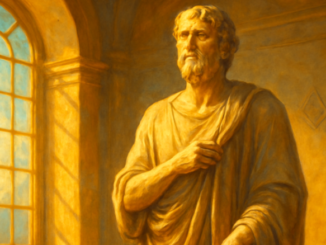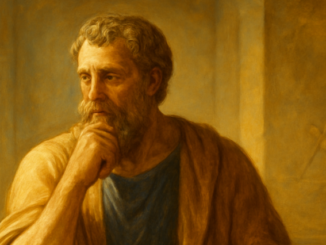
Ancient Roman scroll symbolizing Seneca's philosophy of true freedom
Lucius Annaeus Seneca – Content & Summary

Seneca Letter XVIII: True Freedom and Inner Independence

What does it truly mean to be free? In his eighteenth letter to Lucilius, the Roman philosopher Lucius Annaeus Seneca unfolds a paradox that remains strikingly relevant today: most people who consider themselves free are, in reality, slaves to their desires, fears, and possessions. True freedom, Seneca argues, lies not in the absence of physical chains but in the liberation of the mind. This letter stands as a cornerstone of Stoic ethics and offers a timeless reflection on what it means to be master of yourself — a theme that resonates deeply with anyone engaged in the inner work of self-improvement and moral development. The Central Argument: Slavery of the Mind Seneca opens his letter with a sharp observation: many people who are legally free live in a state of inner captivity. They are governed by cravings for wealth, fame, and pleasure. The Stoic philosopher turns the conventional understanding of freedom on its head. It is not external circumstances that determine whether a person is free, but the inner condition of the soul. A slave who masters his passions is freer than an emperor who surrenders to his appetites. This idea connects to the broader Stoic teaching that Seneca develops […]
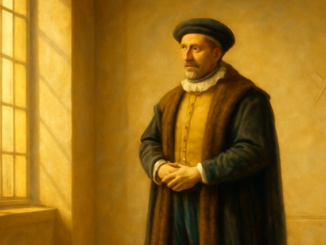

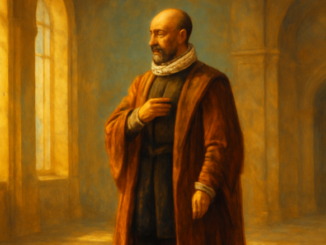
Portrait of Michel de Montaigne with classical philosophical texts and symbols
Michel de Montaigne – Philosophical Background

Montaigne on Custom: Philosophical Roots of a Timeless Essay

In 1580, Michel de Montaigne published his groundbreaking essays, among them a remarkable treatise on the power of custom and the danger of rashly changing established laws. Written against the backdrop of religious wars and political turmoil, this essay drew on a rich philosophical tradition stretching back to classical antiquity. The intellectual sources Montaigne wove together illuminate his unique position between ancient wisdom and early modern doubt — and offer enduring lessons for anyone who values tradition, reflection, and the careful balance between preservation and reform. Pyrrhonian Skepticism as Foundation Montaigne’s thinking about custom finds its deepest roots in the Greek skepticism of Pyrrho of Elis. This fourth-century BC philosopher taught that human judgments are always uncertain because our senses and reason constantly deceive us. Sextus Empiricus, who systematically recorded Pyrrhonian doctrine, emphasized that different peoples regard entirely different customs as self-evident. What was considered barbaric in Greece was honored in Persia. Montaigne owned and intensively studied a copy of Sextus Empiricus in the years leading up to the composition of his essays. The skeptical method of placing opposing customs side by side — without passing final judgment — permeates his essay on custom. He gathers examples from every corner […]

Ancient Roman statue of Marcus Aurelius representing Stoic philosophy and wisdom
Marcus Aurelius – Meditations

Marcus Aurelius Book V: The Philosophy of Overcoming Obstacles

When Marcus Aurelius wrote about overcoming obstacles in the fifth book of his Meditations, he drew on a rich philosophical tradition stretching back to the earliest Stoics in ancient Greece. To the modern reader, his words can feel strikingly relevant. To the Freemason, they carry a particular resonance — echoing the ideal of the rough ashlar that must be shaped and polished through sustained inner effort. But how does the outsider’s reading of these texts differ from that of someone steeped in initiatory traditions? This article compares both perspectives and reveals what they share in the search for meaning. The Stoic Roots of Book V Marcus Aurelius never intended his Meditations for publication. They were personal exercises in the art of living — spiritual journal entries composed, most likely, during gruelling military campaigns along the Danube frontier. Book V breathes the spirit of Stoicism as it was founded by Zeno of Citium around 300 BCE. The core idea is straightforward: we cannot control the external world, but we can control how we respond to it. Obstacles are not enemies — they are teachers. This philosophy reached Marcus Aurelius through a chain of thinkers. Cleanthes and Chrysippus refined Zeno’s teachings, but […]

Prism splitting light into a spectrum symbolizing Masonic pursuit of truth
Symbolism & Rituals

Voltaire on Newton: Light, Science, and Masonic Wisdom

What happens when a philosopher encounters a scientist who changes the world forever? Voltaire posed this question to himself when he wrote about Isaac Newton in his Letters on the English. But why should this matter to a Freemason in 2026? Perhaps because Voltaire’s admiration for Newton illuminates the very values that are cherished in the lodge: the pursuit of light, reverence for truth, and the understanding that knowledge only gains meaning when it is shared. Why Was Voltaire So Fascinated by Newton? In the early eighteenth century, Voltaire spent several years in England, where he encountered an intellectual climate radically different from what he had known in France. While the continent was still deeply immersed in the ideas of René Descartes, Newton had already sparked a revolution across the Channel. His laws of gravity and his groundbreaking work on light left a profound impression on Voltaire. Here was a thinker who did not merely speculate — he measured, proved, and demonstrated. What captivated Voltaire above all was Newton’s method. Newton did not begin with grand theories and then force the facts to fit. He observed, experimented, and let nature speak for itself. For Voltaire, this was a masterclass in […]

Compass and square symbolizing philosophy and Freemasonry guidance
Lucius Annaeus Seneca – Freemasonry & Connection

Seneca’s Letter XVI: Philosophy as a Compass for Connection

Imagine waking up in the morning with the day stretching out before you like an unfamiliar road. You have decisions to make, people to meet, perhaps conflicts to resolve. What helps you choose the right direction? For Lucius Annaeus Seneca, the answer was clear: philosophy. In his sixteenth letter to Lucilius, he describes how philosophy is not merely an intellectual pursuit but a practical guide for daily life. This idea resonates deeply with Freemasonry, where brethren likewise seek an inner compass that connects them to themselves and to others. Philosophy as a Daily Companion Seneca writes to his friend Lucilius that philosophy is not a luxury reserved for quiet moments — it is a necessity for every single day. He compares it to a helmsman guiding his ship through rough waters. Without knowledge of the stars and currents, you are at the mercy of the waves. The same holds true for life: without philosophical reflection, you are swept along by impulses, emotions, and external pressures. This idea can be applied directly to your own life. Instead of reaching for your phone first thing in the morning, begin with a moment of silence. Ask yourself: what do I truly want to […]

Ancient Greek symposium scene symbolizing Plato's philosophy of love
Plato – Philosophical Background

Plato’s Symposium: Philosophical Sources of the Desire for Love

You may have wondered where that deep human urge for connection truly comes from — that pull toward something greater than yourself, toward beauty, toward truth. Plato asked the same question more than two thousand years ago, and his answer in the Symposium has shaped generations of thinkers. But Plato didn’t write in a vacuum. His ideas about love were nourished by a rich philosophical tradition reaching back to the earliest Greek thinkers. Let’s explore the intellectual sources that gave shape to this masterwork — and discover why it resonates so profoundly with the Masonic tradition. The Legacy of the Presocratic Philosophers Before Plato ever put pen to paper, thinkers like Parmenides and Heraclitus had already posed fundamental questions about the nature of reality. Parmenides taught that behind the ever-changing world lies an unchanging truth. This idea echoes powerfully in Plato’s vision of love as a ladder leading upward to the eternal and immutable Beautiful. Heraclitus, by contrast, emphasized the constant flux of existence — the perpetual state of becoming. In the Symposium, both influences are clearly at work: love as a dynamic force that sets us in motion, yet directed toward something that transcends all change. Empedocles, another early […]

Open copy of Marcus Aurelius Meditations beside Masonic rough ashlar stone
Marcus Aurelius – Content & Summary

Marcus Aurelius Book V: Overcoming Obstacles as an Art

Imagine waking up and facing the day ahead like a mountain you must climb. Everything inside you resists. Your mind searches for excuses, and the warm blankets feel like a safe harbour. It is precisely in moments like these that the Roman Emperor Marcus Aurelius addressed himself with words that still resonate nearly two thousand years later. In the fifth book of his Meditations, he explores how we need not see obstacles as enemies — but as the path itself. The Context of Book V Marcus Aurelius never wrote his Meditations for publication. They were personal exercises in the art of living — private reflections set down during some of the most turbulent years of the Roman Empire. Book V was most likely composed during military campaigns along the Empire’s northern frontiers, amid war, plague, and personal loss. These circumstances make the text all the more powerful: this is not a philosopher speaking from an ivory tower, but a man confronting the harshest realities of existence on a daily basis. The book opens with a passage that almost everyone can relate to. Marcus describes the moment of waking, when the temptation to stay in bed is at its strongest. He […]

Voltaire and Newton symbolizing Enlightenment philosophy and Freemasonry
Symbolism & Rituals

Voltaire on Newton: Philosophical Roots of the Enlightenment

Imagine living in Paris in 1733. The salons are buzzing with new ideas, yet the Church and the State maintain a firm grip on what you are allowed to think and say. Then a book appears that turns everything upside down: Voltaire’s Philosophical Letters. His fourth letter, devoted to Isaac Newton, is far more than a tribute to a scientist. It is a philosophical manifesto that lays the foundation for an entirely new way of thinking about humanity, nature, and the cosmos — a way of thinking that resonates powerfully with the principles of Freemasonry. The Intellectual World Voltaire Wrote In To understand why Voltaire’s letter on Newton was so revolutionary, you need to step into the intellectual landscape of early eighteenth-century France. The Cartesian philosophy of René Descartes still dominated the academies. Descartes had promoted a mechanistic worldview in which nature operated like an enormous clock, driven by swirling particles in a filled universe. For the French elite, this was the officially sanctioned framework of thought. Voltaire returned from his English exile carrying a radically different message. During his stay in London, he had encountered the empirical philosophy of John Locke and the scientific revolution set in motion by […]

Ancient Greek symposium scene symbolising the Platonic ascent of love
Plato – Content & Summary

Plato’s Symposium: Love as the Path to the Higher Self

A drinking party in ancient Athens became the setting for one of the most influential conversations about love ever recorded. In Plato’s Symposium, a series of speakers each deliver a speech in praise of Eros, the god of love. What unfolds is not a single definitive answer, but a gradual ascent — from the physical to the spiritual, from the finite to the infinite. This article explores the heart of that masterwork and the symbolic depth it holds, particularly for those who walk a path of inner refinement and self-knowledge. The Setting: A Feast with Philosophical Stakes The Symposium takes place during a banquet held in honour of the poet Agathon, who has just won a prestigious prize. Rather than spend the evening in excessive drinking, the guests agree to take turns delivering a speech in praise of Eros. This is no arbitrary choice. By making love the subject of philosophical inquiry, Plato elevates a common human experience to the level of the most fundamental questions about existence. Who — or what — is love, truly? What does it seek? And where does it lead us? The speakers are carefully chosen, each representing a different perspective. Phaedrus opens with a […]

Ancient compass symbolizing Stoic philosophy and Masonic inner direction
Lucius Annaeus Seneca – Letters to Lucilius

Seneca and Stoic Philosophy: Ancient Roots of Masonic Wisdom

A compass always points north, no matter where you stand or how lost you feel. For Lucius Annaeus Seneca, philosophy served exactly this purpose — not as a collection of abstract theories, but as a reliable guide that gives the soul direction in times of uncertainty. In his sixteenth letter to Lucilius, he unfolds this idea with an urgency that still resonates today. But what intellectual traditions shaped Seneca’s conviction that philosophy is indispensable for a life well lived? And what can Freemasons recognize in this ancient quest for an inner compass? The Stoic Foundation of Seneca’s Thought Seneca wrote from the heart of Roman Stoicism, a philosophical school founded around 300 BCE by Zeno of Citium in the painted colonnade of Athens. Stoicism taught that a person can only be truly free when they master their inner disposition, regardless of external circumstances. This core idea permeates Letter XVI entirely. In essence, Seneca reaffirms what Zeno, Cleanthes, and Chrysippus had articulated centuries earlier: happiness does not lie in what happens to us, but in how we respond to it. Yet Seneca was no slavish follower. He adapted the rigorous Greek Stoa for Roman life, where political power, wealth, and social […]

Rough ashlar stone with hammer and chisel symbolizing Masonic character building
Marcus Aurelius – Freemasonry & Connection

Marcus Aurelius on Duty: The Stone as a Symbol of Character

Every morning, before the first light slips through the window, every human being faces the same inner struggle. The warmth of the bed pulls at us while the day and its obligations wait. In Book V of his Meditations, Marcus Aurelius describes exactly this moment — the instant when character is forged. For Freemasons, this struggle resonates with a deeply rooted symbol: the working of the rough stone. Both traditions understand that the fulfillment of duty is not a burden but the very hammer with which we shape ourselves into something enduring. Waking Up as a Moral Turning Point Marcus Aurelius opens Book V with a scene every reader recognizes. He addresses himself at the break of day: rise, for you were made for the work that befits a human being. The emperor does not philosophize from an ivory tower but from the mud of military campaigns and the weight of administrative burdens. His words carry the gravity of lived experience. In his writing, this daily act of waking becomes a metaphor for a greater awakening. Not only must the body rise, but the mind must orient itself toward its true calling. In Freemasonry, we find a kindred idea: the […]

Prism splitting white light into a spectrum symbolizing Masonic enlightenment
Symbolism & Rituals

Voltaire on Newton: Light as a Symbol of Insight

When a ray of light passes through a prism and splits into a rainbow of colors, we witness more than a physical phenomenon — we witness a revelation. Voltaire understood this profoundly when he introduced Isaac Newton’s ideas to continental Europe in his fourth Philosophical Letter. What he described was not merely science, but an entirely new way of seeing reality — one that resonates deeply with the symbolic language of Freemasonry. The Context of Voltaire’s Admiration Voltaire wrote his Philosophical Letters after a period of forced exile in England between 1726 and 1729. Those years changed his thinking fundamentally. Back in France, the natural philosophy of René Descartes still held sway, with its vortex theories and mechanistic explanations of the universe. Newton offered a radically different perspective: no speculation about invisible matter, but measurable forces and mathematical laws. Voltaire saw in Newton far more than a scientist — he saw a liberator of the human mind. His fourth letter reads as a tribute, but one that consistently invites the reader to investigate for themselves. What made Voltaire’s approach remarkable was his ability to make Newton’s complex work accessible without oversimplifying it. He described the discovery of gravity, the laws […]

Ancient Stoic philosophy scroll with Masonic square and compasses symbol
Lucius Annaeus Seneca – Content & Summary

Seneca Letter XVI: Philosophy as a Guide for Living

What does it truly mean to practice philosophy? Is it enough to read books and collect wise quotations, or does the love of wisdom demand something far more fundamental? In his sixteenth letter to Lucilius, Lucius Annaeus Seneca explores these questions with the directness and warmth that define his celebrated correspondence. This letter reveals why philosophy cannot remain an intellectual hobby — it must become a compass for daily action. What Is the Central Question of This Letter? Seneca opens with an observation that still resonates nearly two thousand years later: many people claim to be philosophers, yet their lives tell a different story. They can quote Plato and recite the doctrines of the Stoics, but the moment fate tests them, they fall prey to the same fears and desires as everyone else. The central question Seneca poses is therefore not “what do you know?” but “how do you live?” This distinction between knowledge and practice forms the heart of Letter XVI. Seneca argues that philosophy only acquires real value when it shapes character and directs action. A philosopher who fails to embody his own principles is like a physician who cannot heal himself. Philosophy, as Seneca puts it, must […]

Ancient Greek temple columns symbolizing Plato's philosophy and Freemasonry
Plato – Freemasonry & Connection

Plato’s Charmides and Freemasonry: What Is Temperance?

What does it truly mean to be temperate? And why does this concept seem so elusive, even to the sharpest minds? In Plato’s dialogue Charmides, Socrates and his interlocutors wrestle with precisely this question. The answer they seek turns out to be remarkably close to the heart of Masonic values: self-knowledge, inner balance, and the honest acknowledgment of what we do and do not know. What Is Temperance, Really? In the Charmides, Socrates meets the young Charmides, a man praised for both his beauty and his composed character. Socrates poses what seems like a straightforward question: what is temperance? But the answers that follow reveal just how complex this concept truly is. Charmides offers his first attempt: temperance is acting calmly and deliberately. But does that mean a quick, sharp mind is inherently intemperate? Surely not. Then perhaps temperance is a sense of modesty or shame? That, too, proves insufficient — shame can lead to both good and bad outcomes. Critias, the older cousin of Charmides, enters the conversation with a deeper suggestion: temperance is knowing yourself. This echoes the famous inscription at the Oracle of Delphi — “Know thyself.” Yet even this definition does not fully withstand the Socratic […]

Open book of Montaigne's Essays with symbolic light representing custom and law
Michel de Montaigne – Content & Summary

Montaigne on Custom: Why Laws Don’t Change Easily

What makes us consider certain customs perfectly natural while other peoples do the exact opposite? And why is it so difficult to change laws, even when they are clearly flawed? Michel de Montaigne posed these questions more than four centuries ago, and his answers remain strikingly relevant today. In this twenty-second essay from his first book, the French philosopher examines the extraordinary power that custom holds over our thoughts and actions — a theme that resonates deeply with anyone who values self-examination and the role of ritual in shaping human life. The Core of the Essay: Custom as Tyrant Montaigne opens with a deceptively simple observation: custom determines nearly everything we consider normal. What we eat, how we sleep, the clothes we wear, the way we bury our dead — all of this varies radically from culture to culture. Yet people everywhere experience their own practices as the natural, even the only correct way to live. Custom, Montaigne argues, is a tyrannical mistress who takes possession of us by stealth. The essay weaves together two interconnected themes. The first explores how custom clouds our judgment and blinds us to the arbitrariness of our own practices. The second applies this insight […]

Statue of Marcus Aurelius symbolizing Stoic duty and Masonic character
Marcus Aurelius – Meditations

Marcus Aurelius Book V: The Philosophical Roots of Duty

Why would a Roman emperor force himself out of bed before sunrise, even when every fiber of his body resisted? This question confronts us when reading Book V of the Meditations of Marcus Aurelius. The answer lies not in imperial discipline alone, but in ancient philosophical traditions that laid the groundwork for his thinking about duty and strength of character — traditions that continue to resonate deeply within Freemasonry. The Core of Stoic Duty Stoic philosophy, founded by Zeno of Citium around 300 BCE, forms the bedrock upon which Marcus Aurelius built his reflections. The Stoics taught that every human being fulfills a specific role within the cosmic order. Duty, in this view, is not an external constraint imposed from above — it is the natural consequence of understanding your place in the greater whole. When Marcus Aurelius speaks in Book V about rising from bed as a duty, he is invoking this deeper principle: you were born to act in accordance with your nature as a rational, social being. The early Stoics, including Chrysippus and Cleanthes, developed the concept of kathêkon, often translated as “appropriate action” or “duty.” This idea differs from modern notions of obligation because it is […]

Symbolic representation of Voltaire, Locke, and Freemasonry's pursuit of light
Symbolism & Rituals

Voltaire on Locke: Knowledge and Connection in Freemasonry

Can a person truly know anything, or are we merely grasping at shadows? This is the question Voltaire raises in his third philosophical letter, where he examines the ideas of John Locke. His answer — a radical rejection of innate ideas and a full embrace of sensory experience as the source of all knowledge — touches on a fundamental tension that lives at the very heart of Freemasonry. How do knowledge and mystery relate to one another? And what does it mean to search for truth within a brotherhood that acknowledges both light and darkness? The Blank Slate and the Searching Mind Voltaire presents Locke as the philosopher who finally had the courage to say aloud what others had only whispered: the human mind is not born as a storehouse of eternal truths, but as a blank slate. All knowledge arises from experience — from the impressions our senses deliver and the reflections our minds perform upon them. While this idea was not entirely new in the history of philosophy, Locke gave it a systematic treatment that Voltaire deeply admired. For the Freemason, this image of the tabula rasa stirs a remarkable sense of recognition. The candidate enters the lodge […]

Masonic level and temple symbolizing balance between body and spirit
Lucius Annaeus Seneca – Freemasonry & Connection

Seneca’s Letter XIV: The Body as a Workshop for the Spirit

A candle flickers in the early morning light. A Freemason stands before his mirror — not out of vanity, but out of habit. He studies his face, feels the weariness of a short night, and wonders: how much attention does this body actually deserve? Nearly two thousand years ago, Lucius Annaeus Seneca posed precisely this question to his friend Lucilius. The answer he gave touches, with surprising directness, on something brothers in the lodge have always sought: the right balance between the material and the spiritual. The Paradox of Bodily Care In his fourteenth letter, Seneca confronts us with an apparent contradiction. On the one hand, we must not neglect the body, for it carries the spirit. On the other, we must not become enslaved to it, for then the servant becomes the master. Seneca writes with his characteristic sobriety: we should treat the body as an instrument, not as an idol. It deserves maintenance, not worship. This idea was far less self-evident in the Roman world than it might seem today. Gladiatorial games, bathhouse culture, and culinary excess defined the streetscape. Seneca did not oppose bodily pleasure in itself, but rather its tyranny. When the body dictates what the […]

Ancient Greek temple columns symbolizing Plato's philosophy and Masonic temperance
Plato – Philosophical Background

Plato’s Charmides: Philosophical Roots of Temperance

What if the most important virtue lies not in our actions, but in knowing the limits of our own knowledge? In Plato’s early dialogue Charmides, Socrates investigates the concept of sophrosyne — a term usually translated as temperance or moderation, but one that carried far richer meaning in its original Greek context. This exploration of self-knowledge as the foundation of virtue speaks directly to what Freemasons pursue in their labor upon the rough ashlar. The Athenian Context of Sophrosyne Plato likely wrote the Charmides around 380 BCE, though the dialogue itself is set in 432 BCE — just before the catastrophic Peloponnesian War. This gap in time is significant. Plato was looking back at an Athens still brimming with confidence, while writing from a city that had suffered the devastating consequences of hybris — of overreach and the failure to recognize limits. The question of sophrosyne was therefore far from academic; it was existential. Sophrosyne was one of the four cardinal virtues that Greek philosophy would eventually systematize, alongside wisdom, justice, and courage. But while those other virtues seemed relatively straightforward to define, sophrosyne remained elusive. Was it moderation in pleasure? Modesty? Self-discipline? Or something more fundamental altogether? Socrates and […]

Antique bronze balance scales symbolizing profit and loss in Masonic philosophy
Michel de Montaigne – Freemasonry & Connection

Montaigne on Profit and Loss: Beyond the Masonic Path

A pair of bronze scales, joined at a central pivot point. When one side descends, the other rises. This everyday object — once found in every market hall and apothecary shop — became for Michel de Montaigne the symbol of a disturbing truth about human exchange. In his short but powerful essay ‘That the Profit of One Man Is the Damage of Another,’ the sixteenth-century philosopher forces us to ask whether human dealings can ever be truly reciprocal. For Freemasons, who place brotherhood and connection at the heart of their craft, this essay opens a profound reflection on the nature of genuine community. The Scales as a Mirror of Existence Montaigne opens his essay by referencing the Athenian lawgiver Solon, who — according to Demades — argued that no profit is possible without a corresponding loss elsewhere. The scales serve here not merely as a measuring device but as a metaphor for the human condition. Every transaction, every exchange, every acquisition seems inevitably tied to a loss on the other side. Montaigne cites the Roman poet Lucretius, who described how nature itself operates on this very principle: what grows does so at the expense of something else that perishes. This […]