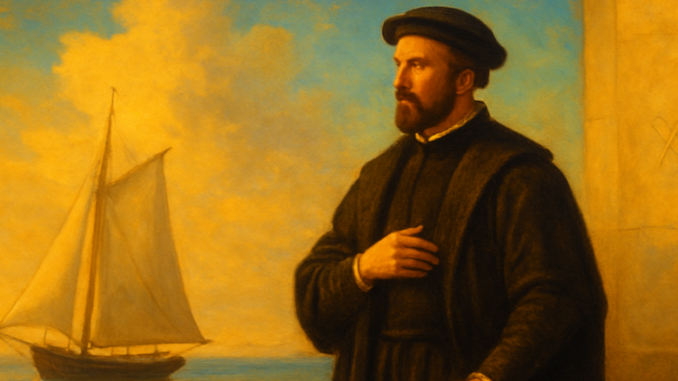
What elevates one person above another? Is it birth, wealth, or something more fundamental? In his thirty-seventh essay from the first book, Michel de Montaigne poses this question with characteristic sharpness and honesty. ‘On the Equality Among Us’ is a brief but powerful argument that examines and challenges the very foundations of human hierarchy. Written in the sixteenth century, its message still resonates today — perhaps nowhere more strongly than in Freemasonry, where brethren meet as equals regardless of their station in life.
The Central Thesis: Equality as a Natural State
Montaigne opens his essay with a provocative idea: despite all the outward differences between people, we are fundamentally equal. He argues that the distance between a king and a peasant is far smaller than we typically assume. Both are subject to the same human weaknesses, the same bodily needs, the same mortality. He cites classical writers to underscore his point, including Seneca, who likewise emphasized human equality regardless of social standing.
What makes Montaigne remarkable is his refusal to moralize. He simply observes that rank and status are human constructions that make no real difference to our fundamental humanity. A prince can fear death just as much as the poorest beggar. The wealthiest merchant is struck by fever just as easily as the humblest laborer. These are not moral prescriptions — they are observations born from unflinching honesty about the human condition.
Lessons from Classical Antiquity
To strengthen his argument, Montaigne draws extensively from classical literature. He references anecdotes about Roman emperors who, despite their near-divine status, suffered the same fears and doubts as ordinary mortals. He invokes Marcus Aurelius, whose Meditations bear witness to the inner struggles even the most powerful ruler must face. Plato also makes an appearance, with his conviction that true wisdom is not the exclusive domain of the elite.
Montaigne does not use these examples to argue that hierarchy is pointless. Rather, he demonstrates that hierarchy does not correspond to genuine human worth. A servant may be wiser than his master; a soldier may show greater courage than his general. External markers of status reveal nothing about the person within. This distinction — between outward position and inner value — lies at the heart of his essay and carries enormous implications for anyone interested in the nature of true equality.
The Illusion of Superiority
A central theme in this essay is Montaigne’s critique of human vanity. He observes how people are inclined to elevate themselves above others based on superficial attributes. Clothing, titles, possessions — these are all things we attach to ourselves to create a sense of superiority. But strip a person of these externals, and what remains? Precisely the same vulnerable, searching, uncertain beings we all are.
True equality does not lie in denying differences, but in recognizing that no difference negates our shared humanity.
This observation makes the essay timeless. The sixteenth-century aristocracy Montaigne refers to may have vanished, but the tendency to elevate ourselves persists. Whether through academic credentials, financial success, or social media influence, human beings continue to construct hierarchies that, upon closer examination, have little to do with intrinsic worth. Montaigne saw through this centuries ago, and his insight has lost none of its power.
The Lodge as the Great Equalizer
For Freemasons, this essay carries special resonance. The lodge is, by design, a space where societal distinctions are set aside. Whether someone is a company director or a carpenter outside the temple, within its walls brethren meet on the level. This principle, codified in the eighteenth century by James Anderson and Jean Théophile Désaguliers in the early constitutions of Freemasonry, mirrors precisely what Montaigne argued two centuries before.
The rituals and symbols of Freemasonry continually reinforce this equality. The blindfold during initiation, the divesting of metallic objects — these are all acts that strip the candidate of his external trappings and return him to his essence. Montaigne would undoubtedly have appreciated these practices as a concrete expression of his philosophical insights. The Masonic concept of meeting on the level is not merely a pleasant ideal; it is a lived practice rooted in the same understanding of human nature that Montaigne articulated so eloquently.
Equality and Self-Reflection
What distinguishes Montaigne’s essay from a simple plea for democracy or leveling is its emphasis on self-reflection. The philosopher does not ask his reader to treat others as equals out of moral obligation, but rather out of an honest examination of oneself. Anyone who truly looks inward will discover the same doubts, fears, and shortcomings they condemn in others. Equality thus becomes not something we grant to others, but something we discover within ourselves.
This approach aligns seamlessly with the Masonic ideal of self-knowledge. The maxim ‘Know Thyself,’ originating from the Oracle at Delphi and elevated to a philosophical principle by Socrates, forms the core of both traditions. He who knows himself also recognizes his equality with all other human beings. In Freemasonry, the rough ashlar — the unfinished stone that every Mason works to perfect — serves as a constant reminder that the work of self-improvement is universal, binding every brother in a shared endeavor.
Why This Matters Today
In an age when social media and public discourse are often dominated by attempts at self-promotion and one-upmanship, Montaigne’s essay offers a refreshing antidote. His message is not that all people are identical or that differences should be denied. On the contrary, he celebrates diversity — but refuses to attach a value judgment to it. The baker and the banker, the artist and the civil servant, they all share the same human condition.
For Freemasonry, this insight remains foundational. The lodge functions as a laboratory where this principle is put into practice, where men from diverse backgrounds come together to work toward shared ideals. Montaigne’s essay reminds us why that practice is so valuable: not as a utopian fantasy, but as an honest acknowledgment of who we truly are beneath the masks we wear in the outside world.
Michel de Montaigne’s essay on equality is more than a historical curiosity — it is a living document that speaks directly to the core values of Freemasonry. By stripping away pretension and confronting our shared vulnerability, Montaigne invites us to do what every Freemason aspires to: meet one another on the level, not because we are told to, but because honest self-examination reveals it to be the truth. In the lodge and in life, that recognition of our common humanity remains the most powerful foundation upon which to build.
Copyright text & image: devrijmetselaar.nl
Texts are based on the ideas and content of the author of devrijmetselaar.nl, reviewed, corrected, and supplemented with the assistance of OpenAI. Images are created based on the ideas of the author of devrijmetselaar.nl using OpenAI/DALL-E.

Be the first to comment