Open book with Masonic square and compasses symbolizing education and Freemasonry
Michel de Montaigne – Content & Summary

Montaigne on Education: The Art of Forming Free Minds

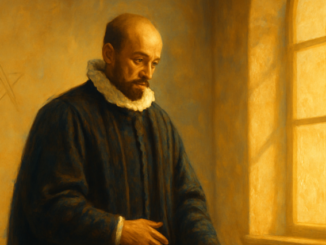
In 1580, Michel de Montaigne wrote a remarkable essay that turned the educational thinking of his time upside down. What began as a letter to the Countess Diane de Foix evolved into a fundamental critique of sixteenth-century schooling. While his contemporaries focused on rote transmission of knowledge, Montaigne argued for something radically different: the formation of a discerning, free, and morally strong individual. His ideas would go on to influence educators and philosophers for centuries — and, less widely known, they helped shape the Masonic ideal of the searching, self-improving human being. A World in Turmoil: The Historical Context The France in which Montaigne lived was torn apart by religious wars between Catholics and Huguenots. Education at universities and colleges was dominated by scholastic methods: students memorized vast quantities of texts without truly understanding them. Latin and Greek were the languages of instruction, and the primary goal was to produce scholars who could cite classical authorities on command. Montaigne had experienced this system firsthand at the Collège de Guyenne in Bordeaux, one of the finest schools of the era. Yet looking back, he found it deeply wanting. Montaigne’s father, Pierre Eyquem de Montaigne, had already taken an unconventional approach by […]

Masonic lodge illuminated by candlelight symbolizing walking in the light
Christianity

1 John and Freemasonry: Walking in the Light

Sometimes words written centuries ago strike with unexpected force, resonating with something deeply personal in your present experience. A sentence that cuts through the noise, an image that lingers long after you’ve read it. The First Epistle of John — a short but remarkably powerful text from the New Testament — has exactly that quality. It speaks of light and darkness, of genuine love and authentic community. These are themes that also lie at the very heart of Freemasonry, and they invite a deeper reflection on what it truly means to live a connected and meaningful life. The Essence of the First Epistle of John The First Epistle of John was most likely written toward the end of the first century, during a time when early Christian communities were grappling with internal divisions and questions about authenticity. The author, traditionally attributed to the Apostle John, addresses his readers with a message that is simple yet profoundly urgent: God is light, and those who walk in that light live in truth and love. The text wastes no words. It cuts directly to the essence of what it means to live among others. What stands out is the deliberate repetition of core […]

Rough ashlar stone symbolizing character building in Freemasonry
Personal Development & Leadership

Talent and Character: Masonic Lessons on True Greatness

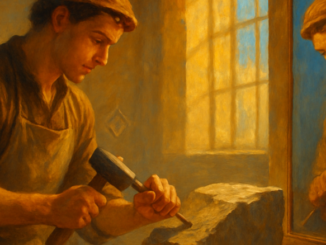
When a major European football club expresses interest in a young talent, a familiar question surfaces: is this player ready for the next step? Rarely is the answer found in technical skill alone. It comes down to character — to who someone truly is when the pressure mounts and temptation grows. The recent interest of a Champions League–winning club in a promising young attacker from Amsterdam invites a deeper, philosophical exploration of a question Freemasons have grappled with for centuries: what makes a person truly valuable, and how does adversity shape who we become? The Paradox of Talent and Character Here we encounter a paradox that sits at the heart of both the sporting world and Freemasonry. Talent is a gift — something bestowed upon a person without any effort on their part. Character, on the other hand, is a structure built stone by stone through choices, setbacks, and self-reflection. The question is not whether talent matters, but whether talent without character can ever lead to true greatness. The ancient Greeks understood this well. Aristotle drew a careful distinction between potentiality and actualization. A person may possess the innate capacity for excellence, but without the right formation, that capacity remains […]