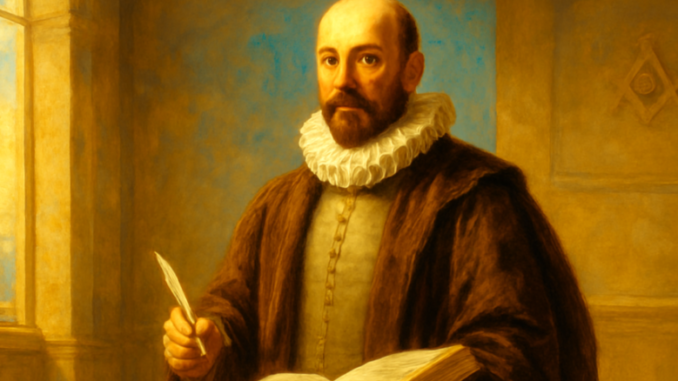
A letter is more than ink on paper. It is a mirror of the soul, a window into the inner world of its author. In his thirty-fourth essay from the first book, titled ‘A Consideration upon Cicero,’ Michel de Montaigne examines what letters and writings truly reveal about the people who compose them. He holds the famous Roman orator Marcus Tullius Cicero up against other great letter writers and raises fundamental questions about sincerity, vanity, and the real value of the written word.
The Starting Point: A Personal Habit
Montaigne opens this essay with a candid confession about his own writing habits. He admits that he rarely writes letters and that he would rather visit in person those to whom he ought to write. The written word, he acknowledges, is for him a necessary evil rather than a beloved pursuit. Yet this moment of self-reflection compels him to consider what letters actually are and what they mean in the broader context of human communication.
From this personal vantage point, Montaigne leaps back to classical antiquity. He discusses the collected letters of Cicero — the great Roman statesman, philosopher, and orator who lived from 106 to 43 BC. These letters, preserved across the centuries, offer a unique glimpse into the daily life and intellectual world of one of the most influential thinkers in Western history.
Cicero Under Scrutiny: Praise and Criticism
Montaigne admires Cicero for his eloquence and philosophical depth, but he does not shy away from criticism. He finds that Cicero’s letters are too preoccupied with self-glorification, that they constantly seem to seek recognition for his own achievements. The Roman orator writes at length about his political triumphs, his influence, and his desire for posthumous fame. For Montaigne, this is a sign of vanity that undermines the authenticity of the writing itself.
The written word reveals more than mere facts — it exposes the true nature of the writer, including their weaknesses and hidden desires.
Against Cicero, Montaigne sets the letters of Seneca and the correspondence between Epicurus and his followers. He values the greater sincerity he finds in these authors and the absence of ostentation. Where Cicero writes to impress, Seneca and Epicurus write to share and to connect. This distinction touches on a fundamental question: do we write for ourselves, for others, or for posterity?
The Letter as a Symbolic Tool
Viewed through a symbolic lens, the letter takes on a deeper significance in this essay. A letter is not merely a message; it is an imprint of the inner self, a materialisation of thoughts that would otherwise remain hidden. Just as the Freemason works upon the rough stone to shape it into something more perfect, the writer shapes thoughts into words that reflect an inner state of being.
The pen becomes, in this symbolism, the tool through which a person examines and expresses themselves. Every word that appears on paper is a choice — an act of consciousness. Montaigne seems to suggest that genuine self-knowledge requires us to purify our words of vanity and embellishment. A letter written solely for personal glory misses the very essence of true communication: the connection between souls.
This idea resonates powerfully within the Masonic tradition, where every tool carries symbolic weight and every act of labour is understood as part of a greater moral architecture. The pen, like the gavel or the chisel, is a means of refinement — not of outward appearance, but of inward character.
Fame and Remembrance
A central theme in this essay is the desire for posthumous fame. Cicero wrote explicitly about his hope that future generations would remember and praise him. Montaigne wonders whether this desire is in fact a weakness — an inability to find peace in the here and now. What does it mean to be remembered if you no longer exist to experience that remembrance?
This reflection touches upon fundamental questions of life that also play a role in Freemasonry. The idea that we labour on something greater than ourselves, that our deeds live on in the edifice of humanity, stands in sharp contrast to the personal craving for recognition. The difference lies in intention: are we building for the whole, or for our own monument?
It is a distinction that every Brother encounters on the path of self-improvement. The desire to leave a mark is natural, but the Masonic ideal calls us to work not for applause, but for the betterment of the craft and the community it serves.
The Art of Silence
Remarkably, Montaigne also reflects on what remains unwritten. He praises the restraint of certain great minds who chose not to commit their thoughts to paper. Sometimes, he suggests, silence is more eloquent than words. The truly wise person knows when to speak and when to listen, when to write and when to set the pen down.
In the symbolism of the written word, this means that the empty space also carries meaning. Just as the pause in music gives the notes their power, so restraint in writing lends weight to what is actually said. Montaigne invites us to consider not only what we write, but also why we write and for whom.
This principle finds its echo in Masonic ritual, where silence is not merely the absence of speech but a deliberate and meaningful practice. The candidate is taught to listen before speaking, to observe before acting. Montaigne, though not a Mason himself, articulates a truth that resonates deeply with the craft’s emphasis on measured, purposeful expression.
The Core Message: Authenticity and Self-Knowledge
The central message of this essay revolves around authenticity and self-knowledge. Montaigne uses Cicero as a mirror to show how vanity and the desire for recognition can taint our words. At the same time, he acknowledges the value of letters as documents that bring us closer to the person behind the text. A letter, provided it is written with sincerity, can be a precious gift to its recipient and to future generations.
Cicero is praised for his eloquence but criticised for his vanity. Seneca and Epicurus serve as examples of more sincere writing. The desire for posthumous fame is critically questioned. And the letter itself becomes a symbol — the materialisation of one’s inner world, subject to the same demands of honesty and integrity that govern all meaningful human endeavour.
Montaigne’s consideration of Cicero invites us to examine our own words and the motives behind them. Do we write to truly connect, or to elevate ourselves? The letter — this seemingly simple means of communication — becomes, in his hands, a symbol for the enduring search for sincerity. In an age where words are abundant and easily spent, Montaigne reminds us that authentic expression demands the same careful, honest labour that the Freemason brings to the rough stone. The real art of writing, like the real art of living, begins with the courage to know yourself — and to let your words reflect that knowledge without pretence.
Copyright text & image: devrijmetselaar.nl
Texts are based on the ideas and content of the author of devrijmetselaar.nl, reviewed, corrected, and supplemented with the assistance of OpenAI. Images are created based on the ideas of the author of devrijmetselaar.nl using OpenAI/DALL-E.


Be the first to comment