
What moves a thinker to place another person’s work at the heart of his own writings? Michel de Montaigne did exactly that when he included twenty-nine sonnets by his deceased friend Estienne de La Boétie in his celebrated Essays. This brief but deeply meaningful essay stands as a monument to a friendship that transcended death — and it invites us to consider a profound question: how do we honour those who have shaped us most?
Why Did Montaigne Publish Another Man’s Work?
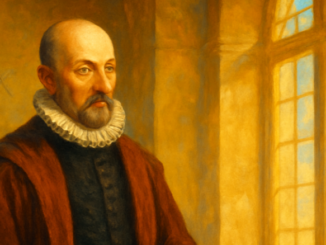
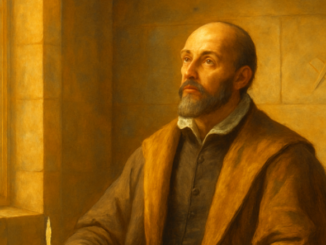
The answer lies in the extraordinary bond between two sixteenth-century intellectuals. Estienne de La Boétie — jurist, philosopher, and poet — died in 1563 at the age of just thirty-two. Montaigne was profoundly affected by this loss and would spend the rest of his life writing about a friendship he considered the most perfect union that could exist between two people. The twenty-nine sonnets he presented in this essay are love poems La Boétie composed, presumably for an unknown beloved.
Montaigne did not include these poems as a mere literary curiosity. He saw them as a window into his friend’s soul — a way of preserving La Boétie’s inner life for future generations. In his introduction, Montaigne makes clear that he chose the sonnets because they represented the ripest fruits of La Boétie’s mind, written during a period of youthful passion yet possessing a depth that far exceeded his years.
The Central Idea: Preservation and Tribute
At its core, this essay is about preservation and homage. Montaigne regarded himself as the steward of a precious inheritance. He believed that true friendship does not end with death but creates a responsibility to keep the best of the other person alive. In this sense, the essay functions as a literary memorial — a place where La Boétie’s voice can continue to resound across the centuries.
True friendship transcends death through what we preserve and pass on from those we loved.
At the same time, Montaigne reveals something important about his own character. By incorporating another person’s sonnets into his deeply personal Essays, he breaks the convention that an essayist writes only about himself. He demonstrates that self-examination is inseparable from the relationships that form us. Who am I, Montaigne implicitly asks, without the people who have touched my life?
What Themes Do the Sonnets Explore?
Together, the twenty-nine poems form a cycle about love in all its guises. La Boétie writes of longing, unrequited feelings, the ache of absence, and the joy of connection. The tone shifts between melancholy and hope, between self-torment and surrender. Following the tradition of Petrarch, La Boétie used the sonnet form to capture complex emotions within fourteen carefully chosen lines.
What stands out is the honesty with which La Boétie reveals his vulnerability. He idealises the beloved yet acknowledges his own shortcomings. This openness was precisely what Montaigne so valued in his friend. In an era when men were expected to be stoic and unmoved, La Boétie dared to lay bare his inner struggles through poetry — a courage that Montaigne clearly wished to honour and perpetuate.
Resonance with Masonic Brotherhood
For those familiar with the values of Freemasonry, this essay resonates in a particularly striking way. The bond between Montaigne and La Boétie displays qualities that are also cherished within the Craft: sincerity, mutual enrichment, and the duty to recognise and nurture the good in one another. Montaigne describes a friendship founded not on utility or pleasant company but on a deeper recognition of kindred souls.
His decision to publish La Boétie’s work can be understood as an act of brotherly fidelity that crosses the boundary between life and death. In Freemasonry, this kind of enduring bond is symbolised through rituals that place remembrance and legacy at their centre. Preserving wisdom and passing insights on to future generations is a core Masonic value — one that Montaigne practised in his own distinctive manner long before the formal establishment of the fraternity.
What Can We Learn from Montaigne’s Example?
This short essay invites us to reflect on our own relationships. Who are the people who have truly shaped us? And how do we honour them — during their lives and after? Montaigne shows that tribute need not be grand. Sometimes it is simply the act of preserving and sharing what someone has left behind, whether that be words, ideas, or memories.
Several enduring lessons emerge from this essay:
- Friendship as a spiritual connection that outlasts mortality
- The responsibility to preserve the best of those we have loved
- Vulnerability as a source of depth in both art and relationships
- Self-knowledge gained through the mirror of meaningful bonds
The twenty-nine sonnets no longer appear in most modern editions of the Essays, but their original presence tells us a great deal about Montaigne himself. He was not merely an observer of the human condition — he was a loyal friend who understood that our identity is woven from the threads that others have spun with us.
With this essay, Montaigne demonstrates that the greatest honour we can pay a loved one is to keep their voice alive. La Boétie’s sonnets are more than poems; they are a testament to a friendship that stands as a model for what true connection can mean. In a world that so often encourages superficial contact, this small but powerful essay reminds us of the strength of deep, formative relationships — and the sacred duty that flows from them. For Freemasons and thoughtful readers alike, Montaigne’s tribute remains a timeless call to cherish, remember, and pass on the light we receive from others.
Copyright text & image: devrijmetselaar.nl
Texts are based on the ideas and content of the author of devrijmetselaar.nl, reviewed, corrected, and supplemented with the assistance of OpenAI. Images are created based on the ideas of the author of devrijmetselaar.nl using OpenAI/DALL-E.
Frequently Asked Questions
Why did Montaigne include Estienne de La Boétie's sonnets in his Essays?
Montaigne included the twenty-nine sonnets as a tribute to his deceased friend and as a way to preserve La Boétie's inner life for future generations. He viewed the sonnets as a window into his friend's soul and believed they represented the finest fruits of La Boétie's mind. By doing so, Montaigne demonstrated that true friendship transcends death through what we preserve and pass on from those we loved.
What was the nature of the relationship between Montaigne and La Boétie?
Montaigne and La Boétie shared an extraordinary bond between two sixteenth-century intellectuals. La Boétie was a jurist, philosopher, and poet who died in 1563 at age thirty-two. Montaigne was profoundly affected by this loss and considered their friendship the most perfect union that could exist between two people, spending the rest of his life writing about it.
What is the broader significance of Montaigne's tribute to La Boétie?
This essay breaks the convention that an essayist writes only about themselves, demonstrating that self-examination is inseparable from the relationships that form us. Montaigne's inclusion of another person's work in his Essays reveals that true identity cannot be separated from those who have touched our lives, and shows how we honor those who have shaped us most.


Be the first to comment