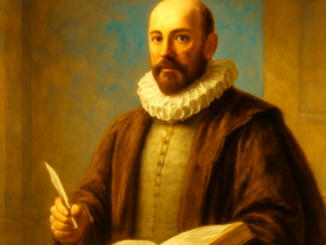
Quill pen and parchment letter symbolising Montaigne's reflections on Cicero
Michel de Montaigne – Content & Summary

Montaigne on Cicero: The Art of Sincere Writing

A letter is more than ink on paper. It is a mirror of the soul, a window into the inner world of its author. In his thirty-fourth essay from the first book, titled ‘A Consideration upon Cicero,’ Michel de Montaigne examines what letters and writings truly reveal about the people who compose them. He holds the famous Roman orator Marcus Tullius Cicero up against other great letter writers and raises fundamental questions about sincerity, vanity, and the real value of the written word. The Starting Point: A Personal Habit Montaigne opens this essay with a candid confession about his own writing habits. He admits that he rarely writes letters and that he would rather visit in person those to whom he ought to write. The written word, he acknowledges, is for him a necessary evil rather than a beloved pursuit. Yet this moment of self-reflection compels him to consider what letters actually are and what they mean in the broader context of human communication. From this personal vantage point, Montaigne leaps back to classical antiquity. He discusses the collected letters of Cicero — the great Roman statesman, philosopher, and orator who lived from 106 to 43 BC. These letters, preserved […]
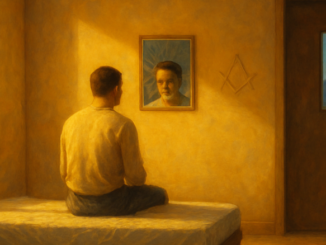
Solitary quarantine room symbolizing Masonic Chamber of Reflection
Personal Development & Leadership

Quarantine as Mirror: What Isolation Reveals About Character

A closed door. White walls. Silence. When five people are placed in quarantine after contact with an infected physician, something unexpected emerges — not a medical crisis, but a laboratory of the human soul. The virus itself is not the most revealing element. What truly comes to light is what happens when a person is thrown back upon themselves. The quarantine room becomes an unintended temple of self-knowledge, where personality shows itself without disguise to anyone brave enough to look. The Enclosed Space as Symbol A quarantine room is more than a medical necessity. It is a space stripped of distraction, free from the social masks we wear every day. In Freemasonry, we know the Chamber of Reflection — the dark room where the candidate dwells before initiation. There, in silence and darkness, he is confronted with himself. Quarantine carries the same symbolic weight: a separation that does not punish, but reveals. When the outside world falls away, only the inner world remains. The isolated person can no longer escape into busyness, into work, into shallow social interaction. He must dwell among his own thoughts, face his fears, and come to know his hopes. This is not an easy journey. […]