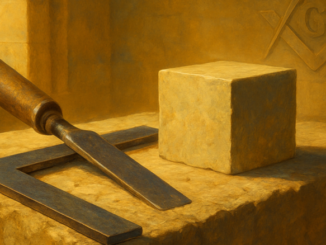
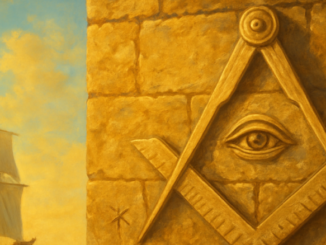
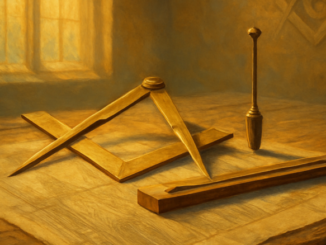
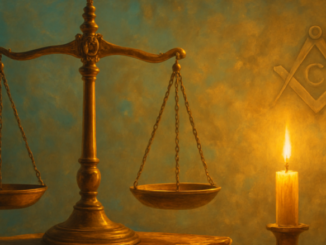
Square and compasses with the letter G — key symbols in Freemasonry
Symbolism & Rituals

Symbols in Freemasonry: Their Meaning and Background

Freemasonry is one of the oldest and most fascinating fraternities in the world, and its symbolism lies at the very heart of everything it stands for. The symbols in Freemasonry are not random decorations — they are carefully chosen images that embody deep moral, philosophical, and spiritual lessons. From the square and compasses to the All-Seeing Eye and the rough ashlar, each symbol invites the Freemason to engage in self-reflection, personal growth, and the pursuit of a better world. In this article, we explore the most important Masonic symbols, their historical origins, and what they mean within the Craft. The Historical Background of Masonic Symbols To truly understand the symbols in Freemasonry, it is essential to look back at the roots of the fraternity. Modern speculative Freemasonry as we know it was formally established on June 24, 1717, when four lodges in London united to form the first Grand Lodge of England. However, the symbolic traditions they inherited reach much further back — to the operative stonemasons and cathedral builders of the Middle Ages. These medieval craftsmen — the so-called operative masons — used tools like the compasses, the square, and the level in their daily work. When the fraternity […]
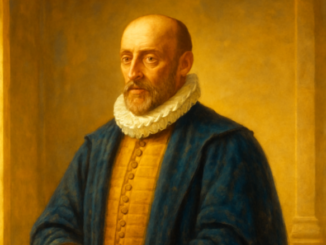

Montaigne essay on constancy and its connection to Masonic self-knowledge
Michel de Montaigne – Content & Summary

Montaigne on Constancy: What Essay 12 Teaches Us About Courage

Imagine standing at the threshold of a difficult decision. You feel the tension in your body, the doubt racing through your mind. How do you remain steadfast when circumstances seem to conspire against you? Michel de Montaigne wrestled with precisely this question when he wrote his twelfth essay. In ‘On Constancy,’ he examines what it truly means to be resolute — and why we should not be too quick to congratulate ourselves when we merely appear courageous. The Core Idea of the Essay In this brief but powerful essay, Montaigne poses a surprising question: is constancy really what we think it is? He argues that true constancy does not simply mean standing in the face of danger. What matters is how you respond inwardly to threat. You might appear brave as you stride toward a drawn sword, but if you are trembling with fear on the inside and only pressing forward out of shame, can that really be called courage? Montaigne draws a sharp distinction between outward behaviour and inner disposition. He observes that many people we regard as courageous actually act out of impulse, pride, or even ignorance of the danger they face. The true test of constancy lies […]

Open Bible showing the Epistle to the Romans with Masonic square and compasses
Christianity

The Epistle to the Romans: Practical Lessons for Your Inner Work

You’re facing a difficult choice. Everyone around you is doing things differently, but deep down you know there’s a better path. How do you find the courage to walk it? The Epistle to the Romans, written by the apostle Paul to the early community in Rome, offers surprisingly practical guidance for moments like these. As the sixth installment in our series on the New Testament, this article explores how the core message of Romans connects with principles that lie at the heart of Freemasonry: moral growth, inner transformation, and the ongoing work of building a better self. The Heart of Romans: Renewal From Within Paul wrote this letter around the year 57 AD to a community he had never visited. Yet the text contains his most fully developed thoughts on what it truly means to change. The central message is not about following rules — it’s about a fundamental reorientation of your inner compass. In chapter 12, Paul writes his famous exhortation about the renewing of the mind, so that you may discern what is truly good. This theme of inner transformation resonates immediately within Freemasonry. Where the rough ashlar symbolizes the unrefined self, the Epistle to the Romans points […]

Vrijmetselarij - Symbols in Freemasonry: Meaning and Background
Symbolism & Rituals

Symbols in Freemasonry: Meaning and Background

Freemasonry is one of the world’s oldest and most widely recognized fraternal organizations, and much of its enduring fascination lies in the rich visual language it employs. From the tools of the stonemason’s trade to ancient philosophical allegories, Masonic symbols serve as vehicles for moral instruction, spiritual reflection, and fraternal identity. Understanding the freemasonry symbols meaning requires a journey through centuries of history, philosophy, and tradition — a journey that reveals not secrets in the sensational sense, but a carefully constructed system of ethical teaching expressed through powerfully resonant imagery. Historical Background: The Origins of Masonic Symbolism To understand why Freemasonry uses the symbols it does, one must first appreciate the organization’s origins. The roots of modern speculative Freemasonry are typically traced to the operative stonemason guilds of medieval Europe. These guilds — composed of craftsmen who built the great cathedrals, castles, and civic buildings of the Middle Ages — developed their own customs, signs of recognition, and organizational structures to protect trade knowledge and maintain standards of craft. As the seventeenth century progressed, these operative lodges began admitting “accepted” or non-operative members — educated gentlemen, philosophers, and intellectuals who were drawn to the fraternal spirit and allegorical potential of […]

Vrijmetselarij - Symbols in Freemasonry: Meaning and Background
Symbolism & Rituals

Symbols in Freemasonry: Meaning and Background

Freemasonry is one of the world’s oldest and most widely recognized fraternal organizations, and at the heart of its tradition lies a rich and carefully constructed system of symbols. These symbols serve as a universal language within the brotherhood — communicating moral teachings, philosophical principles, and historical continuity across cultures and centuries. Understanding freemasonry symbols meaning requires more than a passing glance; it demands an appreciation of their historical roots, their layered interpretations, and the context in which they are used. From the stonemason’s working tools to celestial imagery and architectural motifs, Masonic symbolism offers a fascinating window into the values and worldview of the Craft. Historical Background of Masonic Symbolism The origins of Freemasonry as a formal institution are generally traced to the early eighteenth century, when the first Grand Lodge was established in London in 1717. However, the symbolic vocabulary of Freemasonry draws from a much deeper well — one that includes the traditions of operative stonemasons from the medieval guilds of Europe, the philosophical currents of the Renaissance, Hermetic and Neoplatonic thought, and the rich allegorical traditions of the ancient world. Medieval stonemasons — the “operative” masons who built cathedrals, castles, and civic structures — used tools […]

Ancient stone tools and rough ashlar symbolizing Freemasonry's journey toward justice
Symbolism & Rituals

Violence and Justice: A Historic Look at Human Darkness

In 1762, Cesare Beccaria published his groundbreaking treatise on crime and punishment, arguing for a more just approach to violence and retribution. When we are confronted today with atrocities that defy our imagination, a fundamental question arises: how should society respond to such evil? Freemasonry, with its centuries-old emphasis on moral improvement and justice, offers a historical framework for reflecting on these profound questions. The Enlightenment Ideal of Justice The eighteenth century brought a fundamental shift in how Western civilization thought about crime and punishment. Philosophers like Voltaire and Montesquieu railed against arbitrary and cruel penalties. They believed that civilization was best served by a legal system that pursued rehabilitation rather than revenge. Beccaria’s work became a source of inspiration for reformers across Europe, including many Freemasons who debated the ideal society within the walls of their lodges. During this period, a new awareness emerged: extreme acts of violence were not merely crimes against an individual but offenses against the entire human community. The ritual work of Freemasonry reflected this understanding. The symbolic journey from darkness to light represented the possibility of moral transformation — even in the darkest of circumstances. The Rough Ashlar and the Shadow Side of Humanity […]

Open book with candle light symbolizing Montaigne and Masonic search for truth
Michel de Montaigne – Freemasonry & Connection

Montaigne on Prophecy and the Masonic Search for Truth

Imagine standing at a crossroads. To your left, someone whispers that the stars determine your fate. To your right, another promises that dreams reveal your future. And straight ahead lies a path with no signposts, illuminated only by your own inner light. Michel de Montaigne stood at precisely this crossroads centuries ago. His essay on prophecy is far more than a historical document — it is an invitation to reflect on how we relate to uncertainty, to truth, and to our own capacity to discern what truly matters. The Skepticism of a Searching Mind In his eleventh essay of the first book, Montaigne examines the phenomenon of prophecy with the curiosity that defines his entire body of work. He discusses divination, dream interpretation, and omens — not to condemn or embrace them, but to investigate. He quotes Cicero, who observed that out of a thousand predictions, perhaps two come true, and that people conveniently forget the failures. Montaigne wonders why humans are so eager to believe in a predetermined fate when daily experience teaches them, again and again, that the future refuses to be captured. This attitude of critical inquiry without prejudgment feels remarkably modern. Montaigne does not reject the […]

Ancient pathway symbolizing the spiritual journey in Acts and Freemasonry
Christianity

Acts: Building Community Across Borders in Freemasonry

Have you ever wondered how a small group of people, scattered across different cities and cultures, managed to build a global movement — not through force or coercion, but through shared convictions, rituals, and mutual support? The Book of Acts tells exactly that kind of story. And for anyone familiar with the principles of Freemasonry, the parallels are striking. A Journey from Within The Book of Acts, written by the evangelist Luke, picks up where his Gospel leaves off. The disciples are still reeling from the crucifixion and resurrection of their teacher. Then the Spirit descends upon them, and everything changes. They speak in new tongues, they find the courage to bear witness, and they set out into the world. What Luke describes here is not merely a historical account — it is an inner transformation expressing itself through action. Think about that moment when something shifts inside you. When you stop merely contemplating ideals and begin to live them. Acts describes precisely that transition. The apostles go from fearful followers to courageous builders of a new community. Their journey is geographical — from Jerusalem to Rome — but above all, it is spiritual. The Early Church as a Workshop […]

Open books and classical philosophy texts in a Renaissance tower library
Michel de Montaigne – Philosophical Background

Montaigne’s Philosophical Sources on Divination and Prophecy

Have you ever wondered why some people swear by horoscopes while others dismiss them without a second thought? That tension between belief in predictions and healthy skepticism is nothing new. In the sixteenth century, the French thinker Michel de Montaigne grappled with exactly the same questions — and he did so by drawing on a rich tradition of classical philosophy, from the Roman Stoics to the Greek skeptics. In this article, we explore the philosophical sources that fed Montaigne’s thinking when he wrote his famous essay on divination and prophecy. The Renaissance Humanist in His Tower Library Picture Montaigne in his celebrated tower study, surrounded by thousands of books lining the walls from floor to ceiling. Each volume bore his handwritten inscriptions and annotations. This was no mere decoration — it was a living dialogue with the past. As a true Renaissance humanist, Montaigne believed that the wisdom of the ancients remained profoundly relevant to his own age. He was no passive reader: he questioned, compared, and drew conclusions that often feel strikingly modern. The humanism of the Renaissance was characterized by a return to classical sources. Where medieval scholars had often worked through commentaries and summaries, the humanists read […]

Open Bible at the Gospel of John illuminated by candlelight in a lodge
Christianity

The Gospel of John and the Light in the Darkness

A candle flickers softly in the dim light of the lodge room. A Freemason turns the worn pages of a Bible, open to the Fourth Gospel. His finger rests on the opening words: “In the beginning was the Word.” A quiet smile crosses his face, because he recognizes something — the same search for light, the same longing for truth that once led him to Freemasonry. What is it about this ancient text that continues to stir the imagination across centuries? An Opening That Says Everything The Gospel of John sets itself apart from the other three Gospels right from the start with its mystical opening lines. Where the other evangelists begin with genealogies or birth narratives, John opens with a cosmic vision. The Word — in Greek, “Logos” — existed before anything else. This Word brought light into the darkness, and the darkness could not overcome it. For anyone familiar with initiation rituals, this echoes a deeply recognizable journey: the passage from ignorance to knowledge, from blindness to sight. This prologue is no incidental literary flourish. John frames his entire narrative within a cosmic architecture in which light and darkness are not merely physical phenomena but symbols for the […]

Mosaic Pavement of black and white tiles symbolizing uncertainty and wisdom
Michel de Montaigne – Content & Summary

Montaigne on Predictions: The Wisdom of Uncertainty

In a dimly lit study, a man bends over a manuscript. Outside the wind howls, and somewhere in the distance an astrologer makes his calculations. The man at the desk smiles, sets his quill to paper, and writes: what can we truly know about tomorrow? Michel de Montaigne — the sixteenth-century philosopher who made himself the subject of his own study — turned his attention in his eleventh essay to a question that has haunted humanity for centuries: the value of predictions. The Heart of the Essay In this brief but provocative essay, Montaigne examines the deeply human desire to know the future. He poses a fundamental question: why are we so inclined to place our faith in predictions when the evidence for their reliability is so scarce? At its core, the essay explores the tension between our profound longing for certainty and the inescapable uncertainty of human existence. Montaigne opens with a characteristically sober observation: throughout the ages, people have devised all manner of methods to peer into the future. From studying the flight of birds to interpreting dreams, from reading entrails to casting astrological charts — every era has had its preferred forms of divination. But what, he […]

Ancient open book illuminated by candlelight symbolizing Masonic light and wisdom
Christianity

Luke and the Symbolism of Light: A Historical Perspective

Somewhere in the first century of the Common Era, a Greek-speaking physician sat down to undertake a remarkable task. He examined eyewitness accounts, gathered sources, and composed an orderly narrative about an itinerant teacher from Galilee. The work we know as the Gospel of Luke would go on to inspire readers for centuries with its emphasis on compassion, healing, and the search for what has been lost. For Freemasons, this ancient text opens a window onto timeless symbols that still resonate powerfully in the work of the lodge today. The Historical Context of a Physician-Writer Tradition identifies the author of this Gospel as a learned physician who traveled with the Apostle Paul. What stands out about his work is its scholarly approach: in his prologue, he speaks of careful investigation and the orderly arrangement of facts. This methodical character was unusual in the religious literature of the time. The writer addressed his work to a certain Theophilus — a name that literally means “friend of God.” Some scholars suspect this was not a specific individual but a stand-in for every seeker of divine wisdom. This historical context reveals something fundamental: even in antiquity, there existed a creative tension between faith […]

Open book of Montaigne's essays with Masonic symbols representing silence and wisdom
Michel de Montaigne – Freemasonry & Connection

Montaigne on Eloquence: The Masonic Art of the Right Word

In the sixteenth century, a French thinker penned a brief but striking essay on the art of speaking. His observations about eloquence and the speed with which people choose their words touch on something timeless. Centuries later, we can hear in his thoughts an echo of values that also stand at the heart of Freemasonry: the search for truth, the importance of self-reflection, and the understanding that true wisdom often resides in what we choose not to say. A Renaissance Thinker Speaks Michel de Montaigne lived from 1533 to 1592. After an active career in public life, he withdrew to his estate to write and to think. His collection of essays — written in an intensely personal, searching style — ranks among the most influential works in Western literature. In the tenth essay of his first book, he turned his attention to something seemingly simple: the way people speak. Some, he observed, speak quickly and rashly. Others weigh every word with care. Montaigne himself confessed to being one of the slower speakers, someone whose thoughts only reached full maturity after time had passed. This honest self-observation is characteristic of his method. He did not write to lecture others, but to […]

Open Gospel of Mark with Masonic symbols representing the inner journey
Christianity

Mark: The Gospel of Action and the Inner Journey

Why does the Gospel of Mark begin so abruptly — no birth narrative, no genealogy — just a voice crying out in the wilderness? And what does that raw, urgent opening have to do with the path walked by every seeker of truth? In this second installment of our series on sacred texts, we examine the Gospel of Mark through the lens of symbolism and inner transformation. What Makes Mark Different from the Other Gospels? It is a fair question. Where Matthew dwells on lineage and Luke on angelic announcements, Mark plunges straight into the story. No family tree, no shepherds, no wise men. Just a voice in the desert and a baptism in the river. This is the shortest gospel, the fastest, and the most action-driven. The Greek word euthys — meaning “immediately” or “at once” — appears dozens of times. Mark is less concerned with telling us who Jesus was than with showing us what he did. For those familiar with the symbolism of inner development, this emphasis on action is deeply significant. It is not about origin or theory — it is about the steps you take. The journey is the destination. And that journey begins, as […]

Open antique book with classical philosophical texts about rhetoric and speech
Michel de Montaigne – Philosophical Background

Montaigne and Rhetoric: Philosophical Roots of the Art of Speech

Why did a sixteenth-century French nobleman devote himself to writing about the art of speech? And perhaps more importantly, which thinkers were whispering in his ear as he put pen to paper? Michel de Montaigne was no isolated mind. He stood on the shoulders of ancient traditions — from Roman orators to Greek philosophers. In this article, we explore the philosophical sources that shaped his thinking on eloquence and the pace of speech, and consider why these ideas remain deeply relevant for those who value reflection, ritual, and the careful use of words. It Begins in the Library Where does such an inquiry begin? In the library, naturally. Montaigne’s famous tower room in his château in the Dordogne was lined with books. It was here that he read the classics, and here that he held conversations with the dead. His essay on eloquence and speed of speech did not emerge in a vacuum — it was born from a dialogue with centuries of rhetorical tradition. The question that presses itself upon us: which voices resonated most? Roman Rhetoric: Cicero and Quintilian as Living Companions To understand Montaigne’s thinking, we must return to the wellspring of Roman rhetoric. Cicero and Quintilian […]

Open Gospel of Matthew with Masonic square and compasses on a stone surface
Christianity

Matthew’s Gospel as a Blueprint for the Inner Temple

What if a sacred text was never primarily meant to be believed, but to be built? The Gospel according to Matthew — the opening book of the New Testament — presents itself on the surface as a historical account of a master and his disciples. But for those willing to look deeper, something else emerges: a layered blueprint for inner transformation, where words function as building stones and parables serve as tools for the spirit. The Paradox of the Foundation Matthew closes with an image that any builder will recognize immediately: the parable of the wise and the foolish builder. One constructs his house upon rock, the other upon sand. When the storms arrive, only the first house stands. There is a paradox here that demands reflection. What exactly is that foundation? Is it literal obedience to rules, or is it something subtler — something that arises only when one does not merely hear the words but truly integrates them? In Freemasonry, we often speak of the importance of a solid foundation before the greater edifice can be raised. The rough stone must first be worked before it fits into the whole. Matthew seems to suggest precisely the same idea: […]

Walkers on a long road symbolizing an initiatory journey in Freemasonry
Symbolism & Rituals

The Four Days Marches as an Initiatory Journey

Here is a paradox worth contemplating: can a four-day walking march achieve the same thing as an initiatory journey that has survived centuries? Recent stories about younger participants shattering the traditional image of the Nijmegen Four Days Marches as an older person’s event raise a deeper question. What exactly happens when generations ignite each other’s enthusiasm for a shared ordeal? And why does that process feel so familiar to anyone acquainted with Freemasonry? The Road as Teacher There is something remarkable about the simple act of walking. Unlike running, which propels us forward with urgency, or standing still, which holds us in place, walking occupies an in-between space. It creates a rhythm that allows reflection without coming to a halt. The Four Days Marches — the famous Vierdaagse held annually in Nijmegen, the Netherlands — compels participants to sustain this rhythm for four consecutive days, pushing through fatigue, past the point where quitting becomes deeply appealing. This is no accident. It is precisely the mechanism that makes transformation possible. Freemasonry recognizes a remarkably similar principle. The journey from Entered Apprentice to Fellow Craft to Master Mason is not a matter of accumulating knowledge. It is a process of undergoing — […]

Open book of Montaigne's essays with Masonic symbols and candlelight
Michel de Montaigne – Content & Summary

Montaigne on Eloquence: The Art of the Deliberate Word

Can words come too quickly? Michel de Montaigne, the sixteenth-century French philosopher, posed this very question in his tenth essay. In an era when rhetoric was considered the highest art, he dared to question whether fluent eloquence truly reflects wisdom. This short but powerful essay invites us to pause and consider a fundamental paradox: is the fastest speaker also the wisest, or does slowness in speech actually conceal greater depth? The Core Idea of the Essay In this tenth essay from his first book, Montaigne examines the relationship between eloquence and the speed at which someone speaks. He begins with a seemingly simple observation: some people speak slowly and searchingly, while others let words flow effortlessly. Yet Montaigne refuses to render a simple verdict on which is better. Instead, he shows that both ways of speaking have their own value and their own limitations. The philosopher candidly acknowledges that he himself belongs to the slower speakers. He needs time to organize his thoughts and find the right words. By his own admission, this makes him less suited to the courtroom or the political debate, where speed and improvisation are rewarded. But is that a shortcoming, he wonders, or rather a […]

A silversmith's crucible over fire symbolizing the refiner's purification
Christianity

Malachi: The Messenger Who Brings Refinement

A crucible sits upon the fire. The metal within begins to glow, impurities rise to the surface and are skimmed away. What remains is purer, stronger, more valuable. This image from the daily life of ancient craftsmen carries a timeless truth within it. The last book of the Hebrew prophets — Malachi — speaks precisely about this process, not of metal, but of the human soul. As the closing chapter of the Old Testament, this brief text forms a bridge between what was and what is to come, between outward ritual and inner transformation. The Crucible as Mirror At the heart of Malachi stands the image of the refiner. The prophet describes a coming messenger who will sit as a silversmith, refining and purifying silver. This is not a destructive fire but a transformative one — and the distinction is essential. Destruction annihilates what is flawed, but refinement separates the valuable from the worthless so that the former can truly shine. The crucible in the silversmith’s workshop is, in this light, a symbol of conscious self-improvement. The fire that melts the metal is not random; it is carefully controlled by a craftsman who knows precisely when the purification is complete. […]

Open book of Montaigne's Essays with Masonic square and compasses symbol
Michel de Montaigne – Freemasonry & Connection

Montaigne on Liars: Truth as the Foundation of Brotherhood

What does it truly mean to lie? And why does that question cut so deeply into the foundations of human connection? In his ninth essay from the first book of The Essays, Michel de Montaigne examines the phenomenon of lying with a sharpness that still resonates four centuries later. His observations touch unexpectedly on the very heart of what Freemasons strive for: a brotherhood built on trust, honesty, and the tireless pursuit of truth. The Paradox of Memory Montaigne opens his essay with a remarkable confession: he possesses an exceptionally poor memory. This personal shortcoming, he reasons, has actually shielded him from the temptation to lie. For anyone who lies, the philosopher argues, must possess an excellent memory. The liar must remember what he has fabricated, to whom he has told which story, and how all the loose threads must remain woven together. Here we encounter a curious paradox. Memory — typically regarded as a virtuous instrument for preserving knowledge — becomes a tool of deception when placed in the service of the lie. Truth, by contrast, requires no construction, no maintenance, no constant vigilance. It simply exists. This observation casts new light on the Masonic idea that truth is […]