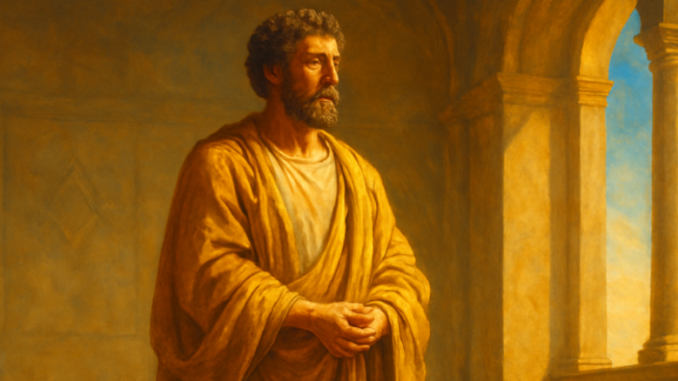
What if everything that happens to us — the good fortune and the misfortune alike — ultimately leads to the same point? In the seventh book of his Meditations, Marcus Aurelius examines the unpredictability of fate with a clear-eyed sobriety that still resonates nearly twenty centuries later. For Freemasons, his philosophy raises a familiar question: how do we relate to the inevitable changes of life, and what does our response reveal about the state of our inner selves?
The Paradox of Fate in Marcus Aurelius
Marcus Aurelius, the Roman emperor-philosopher who reigned from 161 to 180 AD, wrote his Meditations as private reflections — never intended for publication. In Book VII, he turns his attention to a fundamental paradox: fate appears random, yet the wise person can still adopt a meaningful stance toward it. The unpredictability of life is not an enemy to be conquered, but a teacher that compels self-examination.
He writes that the same events which destroy one person make another stronger. It is not the event that determines the outcome, but the way we receive it. This is not passive resignation — it is an active choice for inner sovereignty. The Stoic tradition in which Marcus Aurelius stood drew a sharp line between what lies within our power and what lies beyond it. Fate belongs to the second category, but our response to it belongs firmly to the first.
Freemasonry and the Rough Ashlar
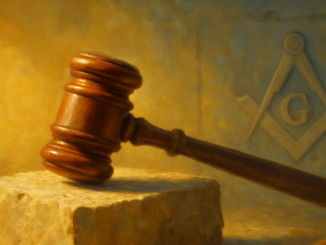
For Freemasons, the symbol of the rough ashlar is directly relevant to this theme. The rough ashlar represents the human being in an unrefined state — with all our imperfections and shortcomings. The Mason’s work consists of shaping this stone into a perfect ashlar, fit to be placed within the greater edifice. But how does this symbol relate to the unpredictability of fate?
The shaping of the stone does not happen in a vacuum. It is precisely the chisel blows of life — the setbacks, the unexpected turns — that serve as the tools with which we refine ourselves. Marcus Aurelius would have recognized this immediately: fate supplies the circumstances, but we determine whether those circumstances harden us or polish us. The Freemason who understands this sees every adversity as an opportunity for growth.
The unpredictability of fate is not the enemy of inner growth — it is the master teacher that forces us to choose who we want to become.
Brotherhood as an Anchor in Uncertain Times
What Marcus Aurelius addresses less explicitly, but what is essential for Freemasons, is the role of brotherhood in weathering life’s storms. Stoic philosophy tends toward an individual approach: the wise person finds strength within. Freemasonry adds a vital dimension by emphasizing that we do not stand alone in our search for meaning and self-improvement.
The Lodge functions as a space where brethren support one another when fate puts them to the test. This is not weakness — it is an honest acknowledgment of the human condition. Even Marcus Aurelius, despite his emphasis on inner independence, recognized the value of community and duty toward others. In Book VII, he writes about the interconnectedness of all people, as parts of one body. Freemasonry takes this abstract ideal and gives it concrete expression in the daily practice of brotherly care.
The Search for Light Amid Darkness
A central theme in Freemasonry is the search for light — for knowledge and insight. Marcus Aurelius would have recognized this as the philosophical endeavor par excellence. In Book VII, he warns against the temptation to regard fate as meaningless. The unpredictability of life can blind us, but it can also open our eyes to deeper truths.
The Freemason who is initiated in darkness and gradually led toward the light experiences symbolically what Marcus Aurelius describes philosophically. The path to insight does not run around difficulties — it cuts straight through them. The adversities of fate are not obstacles on the road to wisdom; they are the road itself.
Virtue as a Compass
Both Marcus Aurelius and Freemasonry place virtue at the center. For the Stoic, living virtuously is the only thing that truly matters, regardless of what fate brings. For the Freemason, moral perfection — however unattainable — is the ideal toward which one continually strives. These parallels are not coincidental. Both traditions recognize that external circumstances come and go, but character endures.
The four cardinal virtues that Marcus Aurelius inherited from his Stoic predecessors find a clear echo in Masonic tradition:
Justice: acting according to what is right, regardless of personal advantage.
Temperance: maintaining balance when fate tests us.
Fortitude: remaining steadfast amid uncertainty.
Wisdom: discerning what lies within our power and what does not.
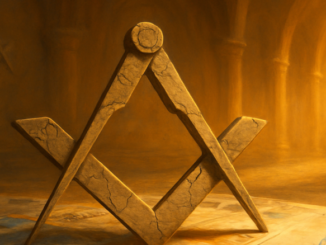
Together, these virtues form the compass by which a person can navigate the unpredictability of existence. They are not abstract ideals but practical guides — tools as real and functional as the working tools on a Lodge’s altar.
An Open Question
Yet a tension remains. Marcus Aurelius wrote from a position of immense power — as emperor of a world empire. His Stoic detachment may have been easier to achieve with the resources at his disposal. Freemasonry, with its emphasis on equality among brethren regardless of social standing, offers something of a corrective here. But does it resolve the tension entirely?
Can we truly remain indifferent to fate when it strikes those we love? Is inner peace genuinely accessible to everyone, or is it a privilege available mainly to those who already enjoy a degree of security? Marcus Aurelius might answer that asking whether fate is fair is the wrong question altogether. The real question is not whether fate is just — but how we can be just in the face of fate.
The Meditations of Marcus Aurelius endure because they pose questions that every generation must answer anew. For Freemasons, Book VII offers a particularly rich vein of reflection — one that runs parallel to the Craft’s own teachings on transformation, brotherhood, and the relentless pursuit of light. The rough ashlar does not shape itself. It requires the blows of circumstance and the steady hand of virtue. In learning to meet fate with equanimity and purpose, we do not merely endure life — we build something worthy of it.
Copyright text & image: devrijmetselaar.nl
Texts are based on the ideas and content of the author of devrijmetselaar.nl, reviewed, corrected, and supplemented with the assistance of OpenAI. Images are created based on the ideas of the author of devrijmetselaar.nl using OpenAI/DALL-E.

Be the first to comment