Vrijmetselarij - Inferno van Dan Brown: feit of fictie over Dante's symboliek?
Inferno

Dan Brown’s Inferno: Fact or Fiction About Dante’s Symbolism?

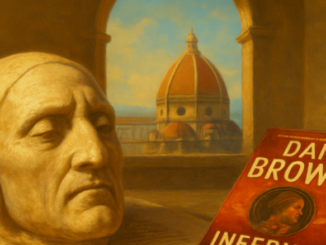
A man wakes up in a Florentine hospital, his memory erased, his pockets filled with riddles that trace back to a seven-hundred-year-old masterpiece. In Dan Brown’s thriller Inferno, Dante Alighieri’s Divine Comedy serves as the compass guiding the protagonist through a deadly maze. But how much of the Dante symbolism Brown employs is genuinely rooted in historical fact? And where does fiction take over from reality? The Historical Dante: Poet and Exile Let’s start at the source. Dante Alighieri lived from 1265 to 1321 and wrote his Divine Comedy during his exile from Florence. This is thoroughly documented history. The poet was banished in 1302 for political reasons and never returned to his birthplace. In Brown’s Inferno, Florence plays a central role, and the tension between Dante’s love for the city and his exile is accurately portrayed as historical background. Brown also correctly presents the three-part structure of Dante’s work: Hell, Purgatory, and Paradise. This division corresponds to medieval cosmology and theological views on the afterlife. The nine circles of Hell, which serve as puzzle pieces in the thriller, are authentic elements drawn directly from the original poem. The Death Mask: Between Legend and Reality A crucial object in Inferno […]
Vrijmetselarij - Origin van Dan Brown: feitencheck over technologie en geloof
Origin

Dan Brown’s Origin Fact-Checked: Technology, Faith & Truth

Rain hammers against the towering windows of a Spanish cathedral. Inside, a man stares at a screen where a computer program promises to reveal the origin of life itself. This is the opening premise of Dan Brown’s 2017 thriller Origin. But how much of the book’s spectacular claims are actually grounded in science and history? In this fact-check, we examine what is demonstrably true, what is dramatically exaggerated, and what turns out to be pure fiction. The Central Premise: Can Technology Replace Religion? In Origin, Dan Brown suggests that artificial intelligence will ultimately deliver the answers that religions have promised for centuries. This idea is far from new — it belongs to a long philosophical tradition. Thinkers like Auguste Comte predicted as early as the nineteenth century that science would take over the role of religion. Yet the question of whether technology can ever replace human meaning-making remains unanswered within the scientific community. Sociologists point out that religious practices often actually increase during periods of technological upheaval, as the sociologist of religion Peter Berger documented in his research on secularisation. What Dan Brown presents as an imminent revolution is, in reality, an ongoing philosophical debate with no definitive conclusion. The […]

Vrijmetselarij - Nulsomdenken en kunst: wat de Renaissance ons leert
Culture & Media

Zero-Sum Thinking and Art: Lessons from the Renaissance

In fifteenth-century Florence, something remarkable happened. While rival artists competed fiercely for commissions, a culture of mutual influence quietly emerged that would transform Western art forever. The key to this unprecedented flourishing was the breaking down of zero-sum thinking — the deeply held belief that one person’s gain must come at another’s expense. For Freemasons, this historical episode offers profound insights into the power of collaboration over competition. Guild Culture and the Zero-Sum Mindset of the Middle Ages Medieval guilds operated according to rigid hierarchies. A master craftsman would take on only a limited number of apprentices, and trade secrets were jealously guarded. The underlying logic was simple: sharing knowledge with others meant weakening your own position. This competitive mindset, in which every advance by a rival was perceived as a direct threat, defined artisan life for centuries. The building lodges of the great cathedrals were a subtle exception to this rule. Itinerant stonemasons shared their knowledge with selected brothers — not in spite of, but precisely because of the understanding that monumental structures could only be raised through cooperation. The foundations of what would later become Freemasonry were laid in this very insight: that some goals transcend individual interests. […]

Vrijmetselarij - Praag als mystieke stad: feit of fictie in The Secret of Secrets
Symbolism & Rituals

Prague as a Mystical City: Fact or Fiction in Secret of Secrets

In his thriller The Secret of Secrets, Dan Brown takes readers to Prague — a city he portrays as the beating heart of European esotericism. But how much of this mystical reputation is rooted in historical fact, and where does the novelist begin weaving his own narrative? This deep dive places the book’s claims alongside the real history of the Czech capital, exploring what holds up to scrutiny and what belongs firmly in the realm of fiction. The Novelist’s Perspective Dan Brown has built a career on a distinctive method: he interweaves historical facts with speculation and outright invention to create irresistible page-turners. In The Secret of Secrets, Prague takes center stage as a gathering place for alchemists, Hermeticists, and secret societies. The city appears as a kind of permanent treasure vault of hidden knowledge, where initiates guarded their mysteries for centuries. It’s a compelling image — but one that deserves careful examination against what historians can actually substantiate. From the perspective of a thriller writer, this kind of embellishment makes perfect sense. A novelist seeks drama and mystery, not academic nuance. Brown cherry-picks the most colorful episodes from the city’s history and connects them into a cohesive narrative of […]

Tree branches against the sky symbolizing patience and Masonic wisdom
Culture & Media

The Art of Waiting: Masonic Wisdom from a Treetop

Somewhere above the heathlands of the Netherlands, a military parachutist spent over an hour tangled in the branches of a tree. His jump had been calculated; his landing was not. While emergency services gathered below and the minutes crawled by, this soldier did something that has been considered one of the most difficult human skills for centuries: he waited. This seemingly mundane news story touches on a theme deeply rooted in Freemasonry and the arts — the noble art of patience and the surrender to what lies beyond our control. The Historical Roots of Patience as a Craft In the seventeenth century, when the first Grand Lodges were being formed in England and Scotland, patience was not an abstract virtue — it was a practical necessity. The operative masons who built the great cathedrals understood that haste was the enemy of craftsmanship. James Anderson, who compiled the Constitutions of Freemasonry in 1723, repeatedly stressed that true mastery could only be achieved through years of dedication. The Entered Apprentice had to wait before becoming a Fellow Craft; the Fellow Craft had to wait before being raised to Master Mason. This waiting was never a punishment. It was an education. The Renaissance […]

Ancient documents and magnifying glass symbolizing the Priory of Sion fact-check
Symbolism & Rituals

The Priory of Sion: Fact or Fiction? A Fact-Check

When Dan Brown published The Da Vinci Code in 2003, it became an international phenomenon almost overnight. Central to its plot was a centuries-old secret society called the Priory of Sion, allegedly founded in 1099 and led by grand masters including Leonardo da Vinci and Isaac Newton. The novel even opened with a page titled “Facts,” lending an air of historical authority to these claims. Millions of readers took them at face value. But what do historians and archivists actually have to say? It is time for a thorough fact-check. The Origin: Not Medieval, but Twentieth Century The real history of the Priory of Sion does not begin in 1099. It begins in 1956. That year, a Frenchman named Pierre Plantard registered an organization called the Prieuré de Sion with the French registry of associations. According to the official filing, its purpose was remarkably modest: a local civic group focused on housing improvement in the Annemasse region. There was no mention of crusaders, Knights Templar, or guardians of a sacred bloodline. Plantard himself turned out to be a figure with a deeply troubled past. French researchers have established that during the 1940s he was involved with antisemitic organizations under the […]

Ambigram design inspired by Dan Brown's Angels and Demons novel
Angels & Demons

Angels & Demons Ambigrams: Fact-Checking Dan Brown’s Symbols

The premise seems airtight at first glance: the ambigrams in Dan Brown’s thriller Angels & Demons prove the existence of an ancient secret society that concealed its messages through ingenious symbols. But what if this premise works in exactly the opposite direction? What if the symbols don’t confirm the fiction — but the fiction invented the symbols? This article examines the boundary between literary imagination and historical symbolism, and asks a question that is seldom posed aloud: what do we actually know about ambigrams, and what have we simply believed because a novel suggested it? The Claim: Ancient Secret Symbols In Angels & Demons, Dan Brown presents ambigrams as mysterious marks used by the Illuminati to signal their presence. The story suggests that these symmetrical word-images have existed for centuries and were recognized by initiates as signs of a hidden brotherhood. The protagonist discovers brands bearing words that are legible both right-side up and upside down. The implication is unmistakable: these are authentic historical artifacts of a secret society. And here is where the trouble begins. Historical reality tells an entirely different story. The ambigrams in the book were not unearthed from archives or excavated from old lodges. They were […]

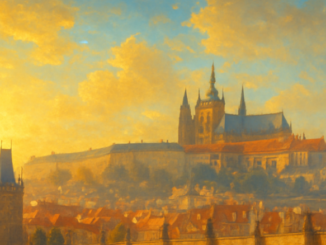
Mystical view of Prague with Charles Bridge and Prague Castle at dusk
Symbolism & Rituals

Prague as a Mystical City in The Secret of Secrets

Why did Dan Brown choose Prague as the setting for The Secret of Secrets? And what mystical claims does he make about a city that for centuries attracted alchemists, astronomers, and seekers of hidden truth? The novel paints the Bohemian capital as far more than a picturesque backdrop — it becomes a character in its own right, steeped in secrets. Let’s explore what the book suggests about Prague, and why those claims both fascinate and demand closer scrutiny. What Makes Prague So Special in the Story? In The Secret of Secrets, Dan Brown presents Prague not merely as scenery but as an active participant in the mystery. The novel positions the city as a kind of spiritual nexus where different esoteric traditions converge. Prague is portrayed as a place where the boundary between the visible and the hidden is thinner than anywhere else — a city built on secrets. Is there historical truth behind this? To some extent, yes. Under Emperor Rudolf II, who reigned from 1576 to 1612, Prague genuinely became a magnet for mystics, alchemists, and scholars. Johannes Kepler worked there on his astronomical calculations, while figures like John Dee and Edward Kelley sought the emperor’s favor with […]

Dan Brown's Origin novel with Masonic symbols representing science and faith
Origin

Dan Brown’s Origin: Technology, Faith, and Freemasonry

You know the moment: someone enthusiastically tells you about a book that “turns everything upside down” about religion and science. Chances are they’re talking about Dan Brown’s Origin. The sixth installment in the Robert Langdon series, published in 2017, sparked immediate debate. But what does the book actually claim? And how do its central ideas connect to lines of thought that Freemasonry has been exploring for centuries? In this article, we break down the core premise of Origin and offer practical ways to engage with its provocative themes yourself. The Central Question of Origin Origin revolves around two questions that have occupied humanity for millennia: where do we come from, and where are we going? Dan Brown places his protagonist Robert Langdon at the center of a scientific presentation that claims to answer both. The fictional scientist in the novel, Edmond Kirsch, says he has developed a computer simulation that explains the origin of life without any divine intervention. At the same time, this simulation predicts a future in which technology and humanity merge into one. The book suggests that artificial intelligence can not only explain how life began but also predict how religion will become obsolete. This is the […]

Dan Brown Inferno book with Masonic and Dante Alighieri symbolism
Inferno

Dan Brown’s Inferno: Symbolism Through Two Different Eyes

When Dan Brown brings the rich symbolic world of Dante Alighieri to life in his thriller Inferno, a fascinating question emerges: how differently do people read these layers of meaning? The casual reader sees an exciting story peppered with historical references. The Freemason may recognize a much deeper structure. Both perspectives deserve attention — and together, they reveal why symbolism has captivated humanity for centuries. The Outsider’s Perspective: Thrills and Historical Decoration For most readers of Inferno, the symbolism functions primarily as atmosphere. Dan Brown guides his protagonist Robert Langdon through the streets of Florence, Venice, and Istanbul, where he solves riddles rooted in Dante’s Divine Comedy. The casual reader experiences these symbols as decorative elements that enrich the narrative. The concentric circles of Hell, the mysterious death masks, and the hidden messages in artworks all serve to drive the plot forward. This type of reader enjoys the intellectual treasure hunt without necessarily seeking deeper layers of meaning. The symbols are puzzle pieces, not windows into inner transformation — and that is a perfectly valid way to read the book. Dan Brown himself has said in interviews that he deliberately uses symbols as narrative tools to make complex themes accessible […]

The Lost Symbol book with Masonic square and compasses symbolism
Symbolism & Rituals

The Lost Symbol: Dan Brown’s Claims About Masonic Rituals

When Dan Brown’s The Lost Symbol hit bookshelves in 2009, it instantly became a global bestseller — and placed Freemasonry squarely at the center of public conversation. Set against the monumental backdrop of Washington D.C., the thriller painted Masonic rituals as keys to an ancient mystery. But what exactly does Brown claim about these rituals? And how do his assertions hold up against the actual history and practice of Freemasonry? The Central Premise: Freemasonry as Guardian of Ancient Secrets The Lost Symbol presents Freemasonry as the custodian of an ancient mystery — a secret reaching back to the earliest human civilizations. Dan Brown portrays Masonic rituals not as quaint traditions or fraternal ceremonies, but as carriers of hidden knowledge. According to the novel, these symbolic acts contain a deeper truth about the human mind and its untapped potential. Freemasonry doesn’t serve as mere background scenery in the story; it is the engine that drives the entire plot. The rituals function as literal keys to deciphering a great secret concealed within the architecture and geography of the American capital. Brown suggests that Masonic rituals are symbolic echoes of a lost wisdom — one that originated in the ancient mystery schools of […]

Ancient manuscript and magnifying glass symbolizing the Priory of Sion mystery
Symbolism & Rituals

The Priory of Sion in The Da Vinci Code: Fact or Fiction?

You may have read the book or watched the movie: Dan Brown’s The Da Vinci Code spins a breathtaking tale about a secret organization that has supposedly guarded an explosive secret for centuries. The Priory of Sion sits at the very heart of the story. But what exactly does the book claim? And more importantly, how can you, as a critical reader, evaluate such claims for yourself? In this article, we unravel the central assertions of this bestselling novel and give you practical tools to separate fact from fiction. What Does The Da Vinci Code Claim About the Priory of Sion? In The Da Vinci Code, Dan Brown portrays the Priory of Sion as an ancient secret brotherhood dating back to the era of the Crusades. According to the story, this organization was founded to protect an explosive secret: the alleged bloodline of Jesus Christ and Mary Magdalene. The book suggests that famous historical figures such as Leonardo da Vinci, Isaac Newton, and Sandro Botticelli served as Grand Masters of the Priory. Brown presents a fascinating theory within his novel: through secret documents and symbols, the Priory supposedly passed this secret down through the centuries. Artworks, architecture, and hidden codes […]

Ambigram design illustrating the relationship between fiction and Masonic symbolism
Angels & Demons

Ambigrams in Angels & Demons: Fiction vs. Real Symbolism

Imagine a word that reads exactly the same when you flip it upside down — symmetrical, mysterious, and seemingly impossible. In Dan Brown’s bestselling thriller Angels & Demons, these typographic designs called ambigrams play a starring role as alleged secret symbols of an ancient brotherhood. But what does the novel actually claim? And how do those claims hold up against what we genuinely know about symbols, secret societies, and Freemasonry? What Exactly Are Ambigrams? Let’s start at the beginning. The word “ambigram” derives from the Latin ambi (both sides) and gramma (letter). An ambigram is a typographic design that can be read in more than one way — most commonly by rotating it 180 degrees. It is an art form that truly came into its own during the twentieth century, developed by graphic designers and calligraphers experimenting with symmetry and legibility. Here’s the critical question: if ambigrams are a modern invention, how could they possibly be the secret signs of an eighteenth-century secret society? That contradiction takes us straight to the heart of what the novel claims. What Does the Novel Actually Claim? In Angels & Demons, ambigrams are presented as authentic, historical symbols of the Illuminati — the Bavarian […]

Symbolic depiction of brotherhood, philosophy, and art in Freemasonry
Culture & Media

The Eighth Child as Philosopher and Brother: Art as Connection

The history of philosophy reveals a fascinating pattern: thinkers who grew up as the eighth child in large families often developed a remarkable sensitivity to brotherhood and human connection. These philosopher-brothers sought not only truth but also the art of living together. How does this perspective compare to Freemasonry, which likewise places the figure of the brother at its very center? And what can this comparison teach us about the role of art as a binding force between people? The Eighth Child: A Philosopher Shaped by Brotherhood In eighteenth-century France, Denis Diderot was born as the eighth child in a large household in Langres. His position in the family pecking order profoundly shaped his view of human relationships. As one of the youngest in a crowded home, he learned to share, to wait, and above all, to listen — skills that would define both his character and his life’s work. Diderot, the philosopher who grew up as a brother among many brothers and sisters, developed an encyclopedic way of thinking that sought to connect every field of knowledge. His magnum opus, the Encyclopédie, was never a solitary enterprise. It was a fraternal project in which dozens of thinkers collaborated. He […]

Sculptor chiseling a rough stone symbolizing Masonic personal growth
Culture & Media

The Art of Leaving Out: Finding Essence in Freemasonry

Imagine a radio studio at a quarter to six in the morning. The microphone is off, coffee steams in a mug, and the presenter flips through a stack of ideas for the hours ahead. But what happens when those hours are suddenly cut short? The news that a popular morning show will now run an hour shorter seems like a mere scheduling matter. Yet it touches on something far deeper: the art of omission, the process of distilling essence from abundance. In Freemasonry, we call this working the rough stone — sculpting meaning from raw material. The Microphone as Chisel Anyone who has worked in radio knows that every second counts. A presenter chooses words the way a sculptor chooses hammer blows: with intention, with a sense of rhythm, with an eye on what remains once the excess falls away. Michelangelo once wrote that in sculpting, he simply removed everything that was not David. This idea resonates across every art form — including the seemingly fleeting world of radio entertainment. When a morning show loses an hour, a creative challenge emerges that goes far beyond mere programming logistics. It forces the creators to reconsider: what is the core of what […]

Candlelit Masonic lodge with artistic tools and creative works by brethren
Culture & Media

The Eighth Child as Philosopher and Brother: Art in the Lodge

Candlelight flickers softly as a young man sets down his brush and stares at the canvas. As the eighth child in a large family, he learned early to observe, to listen, and above all, to wait his turn to be heard. Now, years later, he stands in a Masonic lodge where brethren have gathered around the art he has created. The story of the eighth child who becomes both philosopher and brother is a story about creativity born from necessity, wisdom cultivated in the shadows, and the art that emerges when a searching spirit finally finds a home. The Philosopher Who Grew Up as the Eighth Child Throughout the history of philosophy and the arts, we find a remarkable number of thinkers and artists who grew up among the youngest children in large families. The eighth child — whether literally or figuratively the youngest — learns early that the world does not revolve around him. This position creates a unique perspective on reality: observing, reflecting, and often developing a deep need to find meaning beyond the well-trodden path. Jean-Jacques Rousseau, the eighteenth-century philosopher whose ideas helped shape the Enlightenment, knew this experience of being an outsider. His philosophy about the […]

Famous Freemasons worldwide and the artistic legacy they left behind
Culture & Media

Famous Freemasons and Their Artistic Legacy Worldwide

Have you ever wondered why certain works of art move you so deeply? A symphony that sends shivers down your spine. A building that stops you in your tracks. An opera in which light and darkness engage in an unmistakable dance. Behind many of these masterpieces stand famous Freemasons worldwide — creators who wove their inner quest for truth into the very fabric of their art. Their work is more than aesthetics. It is an invitation to look, to feel, and to discover something within yourself. Famous Freemasons Worldwide in Music Consider the great composers of the eighteenth and nineteenth centuries. Many of them were members of a Masonic lodge. Their music was no random arrangement of notes — it was a deliberate attempt to make harmony audible. The Viennese composer who wrote The Magic Flute filled his opera with initiation rituals, with the tension between light and darkness, and with the journey from ignorance to wisdom. Every aria is a step along that path. What these composers had in common was their belief that music is far more than entertainment. They saw sound as a building block for an inner temple. Just as a lodge works toward the betterment […]

Pen and rough stone symbolizing essay writing as Masonic inner work
Culture & Media

Essay Writing: The Art of Personal Argument in Freemasonry

You probably know the feeling. Something stirs within you — a thought that won’t let go, a subject that captivates your mind. You want to write about it, but where do you begin? An essay offers precisely that space: a form where your personal voice is not only welcome but essential, where you’re allowed to explore and doubt, and where you ultimately reveal something of yourself. In Freemasonry, we call this kind of work “building” for good reason. Let’s explore together how to shape such a written piece of work. What Exactly Is an Essay? The word “essay” comes from the French essayer, meaning “to try” or “to attempt.” And that says everything about what an essay truly is. It’s not a scientific proof, not a journalistic report, and not fiction. It’s an attempt to explore a thought, to weigh it, to get to the heart of it. You try to understand something by writing about it — not by pinning it down definitively. In the sixteenth century, the French philosopher Michel de Montaigne began writing short pieces in which he reflected on everyday subjects: friendship, education, death, habits. He called them essais — attempts, trials. Since then, the essay […]

Rosewood Lane 2011 movie scene with dark symbolic imagery and mystery
Culture & Media

Rosewood Lane (2011): Symbolism and Mystery in a Dark Tale

Rosewood Lane (2011), directed by Victor Salva, is a psychological thriller that blends suspense with layers of hidden symbolism. The film explores the boundaries of paranoia, manipulation, and power — with subtle echoes of the secretive, structured world of organizations like Freemasonry. The Story: Danger Lurks Close to Home After the death of her father, Dr. Sonny Blake (Rose McGowan), a radio therapist, returns to her childhood home in a quiet suburban neighborhood. What initially seems like a safe haven quickly transforms into a nightmare. A mysterious newspaper delivery boy named Derek Barber begins terrorizing her and the other residents through manipulative games and sinister threats. Sonny finds herself drawn into a dangerous cat-and-mouse game in which her personal safety and mental well-being are increasingly at stake. As the tension escalates, she begins to suspect that something far more sinister lies beneath the surface of this seemingly normal community. Freemasonry and Hidden Symbolism While the film doesn’t explicitly reference Freemasonry, it contains elements that evoke the mystique of secret societies. Derek appears to possess an uncanny knowledge of deeply personal secrets belonging to his victims. This manipulative power draws clear parallels to the kind of influence and hidden knowledge often […]

The Da Vinci Code movie scene featuring symbolism and secret society themes
Culture & Media

The Da Vinci Code (2006): Symbolism, Secrets & Freemasonry

The Da Vinci Code (2006), directed by Ron Howard, is a thrilling adaptation of Dan Brown’s blockbuster novel. The film takes viewers on a gripping journey through hidden symbolism, ancient secrets, and the shadowy world of secret societies. Starring Tom Hanks as professor Robert Langdon and Audrey Tautou as cryptologist Sophie Neveu, it masterfully weaves together history and mystery in a way that continues to captivate audiences nearly two decades after its release. The Story: Unlocking Hidden Truths When the curator of the Louvre, Jacques Saunière, is mysteriously murdered, he leaves behind a trail of cryptic clues. Robert Langdon and Sophie Neveu are drawn into a dangerous quest to uncover a hidden truth — one that could shake the very foundations of Christianity. Their journey takes them through iconic locations and layers of historical secrets, revealing hidden symbolism and the workings of ancient secret societies. The tension escalates as they come into contact with powerful organizations such as the Priory of Sion and Opus Dei, each with their own agenda and centuries-old mission. Freemasonry Connections in The Da Vinci Code While the film focuses specifically on the Priory of Sion, there are unmistakable parallels with Freemasonry. Themes such as hidden […]