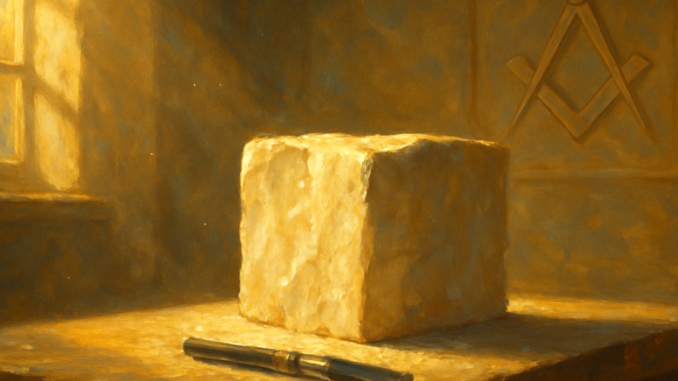
Imagine a radio studio at a quarter to six in the morning. The microphone is off, coffee steams in a mug, and the presenter flips through a stack of ideas for the hours ahead. But what happens when those hours are suddenly cut short? The news that a popular morning show will now run an hour shorter seems like a mere scheduling matter. Yet it touches on something far deeper: the art of omission, the process of distilling essence from abundance. In Freemasonry, we call this working the rough stone — sculpting meaning from raw material.
The Microphone as Chisel
Anyone who has worked in radio knows that every second counts. A presenter chooses words the way a sculptor chooses hammer blows: with intention, with a sense of rhythm, with an eye on what remains once the excess falls away. Michelangelo once wrote that in sculpting, he simply removed everything that was not David. This idea resonates across every art form — including the seemingly fleeting world of radio entertainment.
When a morning show loses an hour, a creative challenge emerges that goes far beyond mere programming logistics. It forces the creators to reconsider: what is the core of what we bring? Which segments truly contribute to the listener’s experience, and which have become filler out of habit? This process of critical self-reflection stands at the heart of Masonic thinking about personal growth and craftsmanship.
Empty Space as a Teacher
In Japanese aesthetics, there is the concept of ma: the meaningful emptiness between objects or moments. A pause in conversation can be more eloquent than words. A moment of silence on the radio — however uncomfortable it may feel to modern ears — can create space for reflection in the listener. The shortening of a program invites the rediscovery of such meaningful emptiness.
Wolfgang Amadeus Mozart, himself a Freemason and a master of musical composition, understood that the notes you do not play are just as important as the ones you do. His music breathes through what he chose to leave out. This principle applies to every artist, whether seated behind a piano or behind a mixing console in a radio studio. The space that opens up when excess disappears is not a loss — it is a gift.
Mastery Revealed Through Restraint
Johann Wolfgang von Goethe, who was also connected to Masonic lodges, wrote extensively about the tension between abundance and limitation in the creative process. His insight that the master reveals himself through restraint speaks directly to what creators experience when they are forced to concentrate their work. The goal is not to deliver less quality in less time, but to distill essence from a sea of possibilities.
True artistry lies not in what you add, but in what you dare to leave out without losing the soul of the work. This idea captures what both the radio presenter and the Freemason strive for: the ability to distinguish between appearance and substance, between noise and signal. In the lodge, brothers and sisters work symbolically on their inner temple. They learn that personal development is not about accumulating more knowledge or experiences, but about cultivating wisdom through reflection and selection.
Radio as Ritual Practice
A morning show has something ritualistic about it. Day after day, at fixed times, with recurring elements that become familiar to listeners. This rhythm creates connection and anticipation. When that ritual changes, space opens for a new kind of awareness. Listeners and creators alike are invited to reconsider what they are actually seeking in those hours of shared attention.
In Masonic rituals, repetition plays an equally crucial role. Symbols recur, words are repeated, actions follow established patterns. But within that repetition lies room for deepening. Each time a ritual is performed, the participant can discover something new in it — penetrating one layer further. In the same way, a shortened radio show, if thoughtfully crafted, can become more intense and meaningful than its longer predecessor.
The Paradox of Less and More
There is a paradox hidden in limitation: by doing less, you can achieve more. A painter who restricts their palette to three colours discovers nuances that would be lost in an abundance of pigments. A writer who imposes a word limit finds strength in precision. A radio presenter with less airtime must choose more sharply and may, as a result, come closer to the very core of communication.
This paradox reflects a deeper truth already explored by philosophers like Aristotle: the golden mean — the balance between too much and too little — forms the foundation of virtue. It is not the extremes that bring fulfillment, but finding the right measure. Whether it concerns radio airtime or personal development, the search for that right measure is a lifelong practice.
The Rough Stone and the Airtime
In the symbolic language of Freemasonry, the apprentice works on the rough stone — the unworked material of their own character. With patience and the right tools, that stone is shaped into something that fits within a greater whole. This process demands the ability to see what must be removed, which rough edges need smoothing, which corners need rounding. It is an art that is never finished, only ever refined.
Seen through this lens, the news of a shortened morning show is far more than a schedule change. It is an invitation to reflect on essence, on the art of leaving out, on the courage to do less so that what truly matters can shine. Whether you make radio, sculpt stone, or work on your own inner temple, the question remains the same: what is it that remains when everything unnecessary has been removed? That is the heart of true art.
The shortening of a popular morning show invites an unexpected contemplation. In the act of leaving out, there is no loss — only the possibility of deeper meaning. Just as Freemasons work patiently at the rough stone, chipping away at what does not serve the greater design, every creative constraint is an opportunity to discover what is truly essential. The next time you find yourself with less time, fewer words, or a smaller canvas, remember: mastery is not measured by what you include, but by what you have the wisdom and courage to leave behind.
Copyright text & image: devrijmetselaar.nl
Texts are based on the ideas and content of the author of devrijmetselaar.nl, reviewed, corrected, and supplemented with the assistance of OpenAI. Images are created based on the ideas of the author of devrijmetselaar.nl using OpenAI/DALL-E.
Frequently Asked Questions
What is the connection between Freemasonry and the art of omission discussed in this article?
The article draws a parallel between Masonic philosophy and the creative process of removing excess to reveal essence. Freemasonry emphasizes 'working the rough stone' — sculpting meaning from raw material — which mirrors the artistic principle of omission. Both involve critical self-reflection, intentional choices, and the recognition that what you leave out is as important as what you keep, reflecting personal growth and craftsmanship.
How does the concept of 'ma' from Japanese aesthetics relate to the shortening of a radio program?
Ma refers to meaningful emptiness or space between objects or moments. When a radio program is shortened, it creates opportunities for this kind of purposeful space — pauses and silence that allow listeners to reflect. Rather than being a loss, this empty space becomes a gift that can enhance the listener's experience by inviting deeper contemplation, much like Mozart and other masters understood in their own artistic disciplines.
Which famous Freemasons are mentioned in the article, and what do they teach us about restraint?
The article mentions Wolfgang Amadeus Mozart and Johann Wolfgang von Goethe, both connected to Masonic lodges. Mozart demonstrated through his music that the notes you do not play are as important as those you do, allowing his compositions to breathe through omission. Goethe wrote about the tension between abundance and limitation in the creative process, asserting that true mastery reveals itself through restraint rather than excess.


Be the first to comment