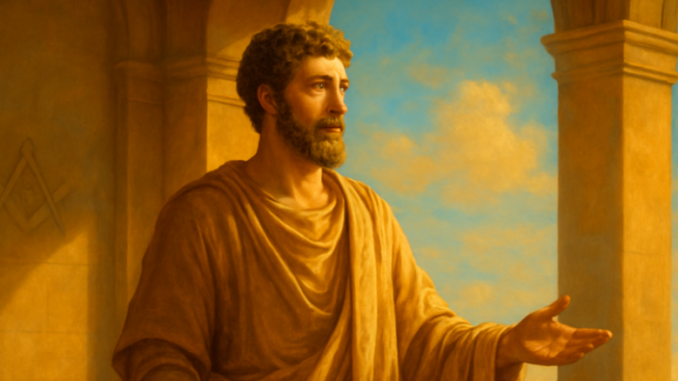
When you turn an hourglass, every grain of sand falls irreversibly downward. No single grain returns, no moment ever repeats itself. In the second book of his Meditations, Roman Emperor Marcus Aurelius confronts himself with this unforgiving truth. He wrote these reflections during a military campaign along the Danube, far from the comforts of Rome, surrounded by death and impermanence. It was precisely there, in those raw and unrelenting circumstances, that a philosophy crystallized — one that still resonates powerfully today: the art of being truly present in the only moment we ever possess.
The Morning as a Mirror of Life
Book II opens with a remarkable passage in which Marcus Aurelius mentally prepares himself for the day ahead. He warns himself that he will encounter difficult people — the meddlesome, the ungrateful, the jealous. But rather than arming himself with resentment, he chooses understanding. These people act the way they do out of ignorance about what is truly good and evil. With this morning reflection, Marcus sets the tone for the entire book: each new day is an exercise in conscious living.
This morning ritual takes on a symbolic dimension. Just as the sun appears on the horizon each day, so too does every person receive a fresh opportunity to shape their character. The morning becomes a threshold — a transition from unconsciousness to awareness. In Freemasonry, there is a comparable moment: the act of entering the Lodge, where one leaves the daily concerns of the outside world behind and steps into a space of reflection. Both moments require intention — a deliberate choice to be different from what habit would make us.
The Body as a Temporary Dwelling
One of the most striking themes in Book II is the transience of the body. Marcus Aurelius describes how flesh, bones, and breath are merely temporary forms on loan to us. The body is not who we truly are — it is a vehicle, an instrument. This thought can feel confronting, but Marcus does not intend it as a rejection of the physical. On the contrary: by acknowledging the body’s impermanence, attention is redirected toward what endures — the mind and character.
In the symbolic language of Freemasonry, we find this idea reflected in the image of the rough ashlar that must be worked and refined. The stone does not represent the outward self but the inner person who is shaped and perfected over time. Marcus Aurelius would have recognized this image immediately: the body decays, but the labor performed on the soul leaves traces that reach far beyond a single lifetime.
The River of the Present
At the heart of Book II lies the famous image of time as a river. Marcus writes that everything in existence is in constant motion, like a current that never stops. The past has vanished, the future is uncertain, and only the present is truly ours. This insight is not an invitation to indifference but to intense attention. Anyone who understands that each moment is unique and unrepeatable will not waste it on pointless worry or trivial distractions.
The only moment over which you have true dominion is the moment in which you are now breathing.
This river imagery resonates with the symbolism of water in many spiritual traditions. Water purifies, moves, and cannot be held. In Freemasonry, water plays a role in rituals of cleansing and transformation. The passage from one state to another is never static — it is a continuous flow, much like Marcus’ river of time.
Death as a Teacher
Marcus Aurelius does not shy away from the subject of death. In Book II, he names great figures from history who have been forgotten, powerful rulers whose empires have vanished. He mentions physicians who themselves fell ill and died, astrologers who failed to predict their own deaths. This is not morbid fascination — it is a philosophical tool. By contemplating death, life comes into sharper focus. What is truly important? How are you spending your precious time?
The memento mori — the reminder of mortality — is a well-known symbol in Freemasonry. The skull and the hourglass remind the Brother that his time is limited. Not to instill fear, but to help set the right priorities. Marcus Aurelius and the Freemason share the same wisdom here: only those who understand death can truly understand life.
The Power of the Inner Citadel
A recurring motif in Marcus Aurelius’ thought is the idea of the inner citadel — a place of calm and strength that no one can enter without your permission. External events, the opinions of others, even physical discomfort — none of these can reach this inner space unless you allow them to. This is not Stoic indifference but an active choice to maintain sovereignty over your own mind.
The Lodge as an enclosed space, separated from the outside world, can be seen as a physical manifestation of this inner citadel. Within the walls of the Lodge, a different order prevails, a different quality of attention. But the true citadel is not made of stone or wood — it resides in the consciousness of one who has learned to observe, to listen, and to choose deliberately.
The Web of Human Connection
Although Marcus Aurelius emphasizes inner strength, he is no solitary philosopher. Book II repeatedly stresses that all human beings are part of a greater whole. We are like limbs of the same body, he writes. What harms one harms all. This idea of cosmic interconnectedness — so characteristic of Stoic philosophy — finds a clear echo in the brotherhood of Freemasonry. The chain that Brothers form is not merely symbolic; it points to a deeper truth about human interdependence.
No man builds his temple alone. The rough ashlar is shaped not only by individual effort but through the bonds shared with others on the same path. Marcus understood that retreating into one’s inner citadel was not about isolation — it was about returning to the world better equipped to serve it.
Book II of the Meditations is far more than a historical document. It is a mirror that confronts us with fundamental questions: How do we spend our time? How do we treat others? How do we care for our inner selves? Marcus Aurelius did not write for publication or fame — he wrote for himself, in the solitude of a military camp, wrestling with the same challenges we face today. For Freemasons, his words carry an additional layer of meaning. The rough ashlar, the ritual of the morning, the memento mori, the chain of brotherhood — all find their philosophical counterpart in these ancient pages. The invitation Marcus extends is timeless: stop drifting, be present, and do the work that matters while the hourglass still runs.
Copyright text & image: devrijmetselaar.nl
Texts are based on the ideas and content of the author of devrijmetselaar.nl, reviewed, corrected, and supplemented with the assistance of OpenAI. Images are created based on the ideas of the author of devrijmetselaar.nl using OpenAI/DALL-E.
Frequently Asked Questions
What is the main message of Marcus Aurelius in Book II of Meditations?
Marcus Aurelius emphasizes the importance of living in the present moment with conscious intention. He wrote these reflections during a military campaign along the Danube, facing death and impermanence, and developed a philosophy centered on the art of being truly present in the only moment we ever possess. He uses the metaphor of an hourglass to illustrate how each moment is irreversible and unique.
How does Marcus Aurelius suggest we should begin each day?
Marcus Aurelius advocates for a morning ritual of mental preparation where one consciously prepares for the day ahead. Rather than approaching difficult people with resentment, he chooses understanding, recognizing that they act from ignorance about what is truly good and evil. This morning reflection serves as a threshold from unconsciousness to awareness, allowing each person to shape their character intentionally.
What does Marcus Aurelius teach about the body and its relationship to the self?
Marcus Aurelius teaches that the body is temporary and merely on loan to us. It is a vehicle or instrument, not the true self. By acknowledging the body's impermanence, he redirects attention toward what truly endures—the mind and character. This concept parallels the Masonic symbol of the rough ashlar, representing the inner person who must be shaped and refined over time.

Be the first to comment