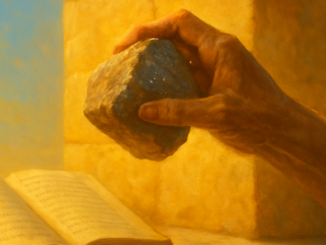
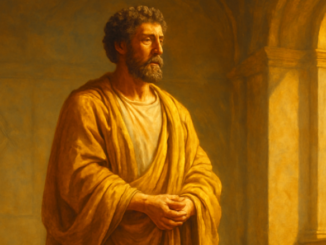
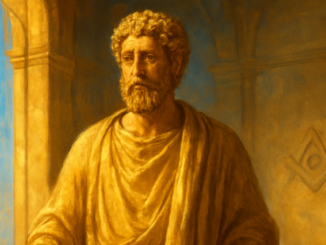
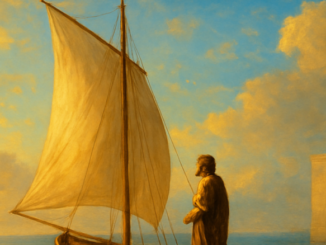
Marcus Aurelius meditating, symbolizing Stoic prayer and Freemasonry reflection
Marcus Aurelius – Meditations

Marcus Aurelius on Prayer: Stoic Roots of the Higher

In 175 AD, amid grueling military campaigns along the Danube frontier, Emperor Marcus Aurelius penned his private reflections on prayer and the human relationship with something greater. These passages from the ninth book of his Meditations are not a theological treatise but an inner dialogue rooted in centuries-old philosophical traditions. The question he posed to himself reverberates across the ages, reaching into the ritual spaces of modern lodges: what does it truly mean to direct yourself toward something larger than yourself? The Stoic View of the Divine To understand what Marcus Aurelius meant by prayer, we need to return to the foundations of Stoicism. This philosophical school, founded by Zeno of Citium around 300 BC, developed a distinctive vision of the divine. The Stoics did not believe in anthropomorphic gods who granted favors in response to supplication. Instead, they saw the universe as permeated by a rational principle — the logos — that ordered and connected all things. This principle was both immanent and transcendent: it operated within everything while simultaneously being the source of all order. For Marcus Aurelius, prayer was therefore never a request for personal gain. It was an exercise in attunement to this cosmic order. When […]
Ancient Roman bust of Marcus Aurelius with Masonic square and compasses
Marcus Aurelius – Content & Summary

Marcus Aurelius Book IX: Prayer and the Higher Self

In the year 170 AD, a Roman emperor sat in his tent along the Danube, surrounded by war and death, writing about how a human being should relate to the divine. Marcus Aurelius — the philosopher-emperor whose private notebooks we know as the Meditations — devoted the ninth book of this work to a subject that still resonates deeply today: the nature of prayer and our relationship to a higher order. Written for himself alone and never intended for publication, this text offers a surprisingly modern perspective on spirituality that can inspire Freemasons and seekers of wisdom alike. The Historical Context of Book IX When Marcus Aurelius was working on his ninth book, the Roman Empire was enduring one of its most difficult periods. The Marcomannic Wars raged along the northern frontier, plague decimated the legions, and the emperor found himself far removed from the comforts of Rome. In these circumstances of profound uncertainty and ever-present mortality, he turned to the Stoic philosophy he had learned as a young man from masters such as Epictetus and Junius Rusticus. Book IX bears the unmistakable marks of this context. It is saturated with reflections on impermanence, the proper attitude toward fate, and […]

Skull and philosophical symbols representing mortality in Freemasonry
Marcus Aurelius – Freemasonry & Connection

Marcus Aurelius on Death and Immortality: Two Perspectives

Death is the great mystery that every person must eventually face. In the ninth book of his Meditations, Marcus Aurelius writes about mortality with remarkable calm, reflecting on what remains after this life ends. His words, penned in the second century AD, prove surprisingly close to insights that Freemasons have cherished for centuries. How do these two perspectives relate to each other? And what can we, in our own search for meaning, learn from both? The Stoic View of Mortality For Marcus Aurelius, death was not an enemy to be feared but a natural transition to be accepted. In Book IX of the Meditations, he reflects on the impermanence of all things — fame, possessions, even the memory of who we once were. The philosopher-emperor saw death as a return to the elements from which we came. There is no drama in his words, only the sober recognition that everything alive is subject to change. This vision was rooted in the Stoic worldview, which sees the cosmos as a single living whole, permeated by a divine reason or logos. The individual soul is a spark of this greater whole. At death, that spark returns to its source. For Marcus Aurelius, […]

Ancient bust of Marcus Aurelius with Masonic symbols of mortality
Marcus Aurelius – Meditations

Marcus Aurelius on Death and Immortality: Philosophical Roots

Perhaps you’ve found yourself lying awake at night, trying to make peace with the fact that everything is temporary. Not as some abstract philosophical puzzle, but as something deeply personal — something that unsettles you. In Book IX of his Meditations, Marcus Aurelius wrestles with exactly these questions. As a Roman emperor who faced war, plague, and loss on a daily basis, he turned to ancient philosophical traditions for solace. What he found still resonates today, and touches on something that Freemasons will recognize in their own rituals around mortality and what lies beyond. The Stoic Legacy: Death as a Natural Process To understand what Marcus Aurelius writes about death and immortality, you first need to understand the tradition he inherited. Stoic philosophy, founded by Zeno of Citium around 300 BCE, formed the bedrock of his thinking. For the Stoics, death was not an enemy to be feared but a natural part of the cosmic order. Everything that comes into being eventually passes away — not as punishment, but as part of a greater whole they called the logos: the rational structure that pervades the entire universe. Marcus Aurelius drew directly from the teachings of Epictetus, the freed slave whose […]

Skull and crossbones memento mori symbol representing Stoic and Masonic wisdom
Marcus Aurelius – Content & Summary

Marcus Aurelius Book IX: Death, Immortality & Freemasonry

What does it truly mean to be mortal? And how can our mortality liberate us rather than confine us? In Book IX of his Meditations, Marcus Aurelius wrestles with these fundamental questions. As Roman Emperor, he wrote these private reflections not for publication but as an inner compass amid war, disease, and political turmoil. Book IX stands out as a particularly penetrating section in which the Stoic philosopher-emperor approaches death not as an enemy, but as a teacher — a perspective that resonates deeply with the Masonic tradition. The Core Idea: What Remains When Everything Passes? The central question running through Book IX is deceptively simple: if everything is transient, what remains of value? Marcus Aurelius answers by arguing that the very recognition of our finitude compels us to make essential choices. He does not see death as a dark endpoint but as a natural transformation within the cosmic order. The emperor reminds himself that countless rulers, philosophers, and ordinary citizens preceded him in death — and that this fact should not paralyze him but spur him toward virtuous action. This perspective aligns closely with the broader Stoic tradition in which Seneca and Epictetus also wrote. For all of them, […]

Rough ashlar stone and Stoic philosophy symbol representing Masonic self-improvement
Marcus Aurelius – Freemasonry & Connection

Marcus Aurelius on Judgment: Lessons for Freemasons

You are about to judge someone. Perhaps a colleague who is always late, a neighbor who neglects their yard, or a brother in the lodge who holds views different from your own. In that moment of judgment, it is not the other person who determines your state of mind — it is you. Marcus Aurelius understood this nearly two thousand years ago. In Book VIII of his Meditations, the Roman emperor reveals how our prejudices hold us captive and how we can set ourselves free. These insights find a remarkably direct application in Freemasonry, where the work of smoothing the rough ashlar begins with recognizing our own imperfections. The Core of Book VIII: You Are Your Judgment Marcus Aurelius writes in Book VIII that it is not events themselves that wound us, but the judgments we pass upon them. It sounds simple, but the implications are profound. When someone insults you, it is not the insult that causes pain — it is your own reaction to it. You choose to feel hurt. This core Stoic principle demands radical self-reflection: are you willing to put your own thinking under scrutiny? In practical terms, this means something very concrete. When you notice […]

Marble bust of Marcus Aurelius with Masonic square and compass symbolism
Marcus Aurelius – Meditations

Marcus Aurelius on Judgment: Philosophical Roots of Masonry

What if our worst enemy doesn’t dwell outside us, but inhabits the silent space between perception and conclusion? Marcus Aurelius — the Roman emperor who philosophized amid war and plague — proposed a radical thesis in the eighth book of his Meditations: it is not events that torment us, but the judgments we pass upon them. This idea, deceptively simple on the surface, carries the weight of centuries of philosophical tradition and casts a surprising light on the ethical quest that Freemasons know well. The Stoic Legacy of Judgment To understand the intellectual world of Marcus Aurelius, we must travel back to the Stoa of Zeno of Citium, the philosophical school that emerged in Athens around 300 BCE. The Stoics developed a psychology of judgment that was revolutionary for their time. They drew a sharp distinction between phantasia — the initial impression that reality makes upon us — and synkatathesis — the assent we choose to give or withhold from that impression. Epictetus, the freed slave whose lectures Marcus Aurelius studied as a young man, refined this doctrine into a practical art of living. His famous distinction between what lies within our power and what does not forms the backbone […]

Open book of Marcus Aurelius Meditations beside a rough and polished ashlar
Marcus Aurelius – Content & Summary

Marcus Aurelius Book VIII: On Judgment and Prejudice

A stone dropped into water sinks to the bottom. That is its nature. But what is the nature of human judgment? Marcus Aurelius, Roman emperor and Stoic philosopher, devoted a significant portion of his eighth book to this very question. In his private writings — now known to us as the Meditations — he examines how our prejudices and snap judgments can hold us captive. This article explores the heart of Book VIII and reveals why mastering our judgment is the key to genuine freedom. The Central Insight of Book VIII Throughout Book VIII, Marcus Aurelius returns again and again to one fundamental truth: it is not events themselves, but our judgments about those events, that determine our suffering or our peace. He writes to himself as a reminder — a kind of inner compass meant to steer him away from the pitfalls of thoughtless reaction. The emperor understood that even the most powerful man in the world can be enslaved by his own prejudices if he fails to question his first impressions. The central theme is best described as the art of suspension — not the suspension of action, but the suspension of judgment. Marcus Aurelius invites us to […]

Vrijmetselarij - Marcus Aurelius Boek VIII: de ware aard van de mens ontdekt
Marcus Aurelius – Freemasonry & Connection

Marcus Aurelius Book VIII: Discovering Our True Human Nature

What truly makes us human? Marcus Aurelius posed this question to himself nearly two thousand years ago while serving as Roman Emperor, surrounded by wars and political intrigue, quietly writing his most intimate reflections. In Book VIII of the Meditations, he examines the true nature of humanity — not as isolated individuals, but as beings fundamentally connected to one another and to a greater whole. For Freemasons, this perspective opens a rich dialogue between Stoic wisdom and the fraternal ideals cherished within the lodge. The Philosopher-Emperor on Human Connection Marcus Aurelius never wrote his Meditations for publication. They were inner exercises — private conversations with himself. Throughout Book VIII, he returns again and again to a central theme: no person is an island. He describes how all of us form part of one great organism, with humanity functioning as a single body in which every individual is a limb. When we harm others, we harm ourselves. When we serve the common good, we fulfill our true nature. This vision stands in sharp contrast to the popular image of the Stoic as an unmoved, emotionless figure. For Marcus Aurelius, genuine inner peace does not come from detachment but from the deep […]

Vrijmetselarij - Marcus Aurelius Boek VIII: De ware aard van de mens onthuld
Marcus Aurelius – Content & Summary

Marcus Aurelius Book VIII: The True Nature of Man Revealed

What makes a person who they truly are? Is it our position in the world, our deeds, or something deeper that lies beneath the surface? In Book VIII of his Meditations, the Roman Emperor Marcus Aurelius wrestles with precisely this question. He wrote these personal reflections not for publication, but as an inner dialogue with himself — a mirror in which he sought to know his own soul. Let us walk through this book together and explore what these Stoic insights still have to say to us today. What Is the Central Theme of Book VIII? At the heart of Book VIII lies a fundamental question: what is the true nature of man, and how can we live in harmony with that nature? Marcus Aurelius examines the relationship between individual consciousness and the greater whole of the cosmos. He does not see human beings as isolated creatures, but as inseparable threads in a universal fabric. The emperor emphasizes again and again that our true essence does not reside in our bodies or our possessions, but in what the Stoics called the hegemonikon — the ruling part of the soul that has the power to choose how it responds to the […]

Vrijmetselarij - Marcus Aurelius over de ware aard: filosofische bronnen
Marcus Aurelius – Meditations

Marcus Aurelius on True Nature: Philosophical Sources

A stone is more than mere matter. In the hands of a mason, it becomes a building block, a bearer of structure, a symbol of something greater than itself. Marcus Aurelius viewed the human soul in much the same way — not as an isolated phenomenon, but as part of a cosmic whole. In the eighth book of his Meditations, the Roman emperor examined what a person truly is, beyond the roles and masks of daily existence. To fully grasp his insights, we must understand the philosophical sources from which he drew. The Stoic Tradition as Foundation Marcus Aurelius did not write in a vacuum. He was the last great representative of a philosophical movement that had originated in Athens five centuries earlier. Zeno of Citium, the founder of Stoicism, taught that the cosmos was a living, rational whole. The human soul, he argued, was a spark of that same cosmic reason — the logos. This concept reverberates throughout Book VIII, where Marcus Aurelius repeatedly points to the connection between individual reason and the universal mind. The early Stoics — Cleanthes and Chrysippus — laid the theoretical groundwork. They developed a natural philosophy in which everything that exists forms part […]

Ancient Roman bust of Marcus Aurelius with Masonic square and compass symbols
Marcus Aurelius – Freemasonry & Connection

Marcus Aurelius Book VII: Fate and Masonic Wisdom

What if everything that happens to us — the good fortune and the misfortune alike — ultimately leads to the same point? In the seventh book of his Meditations, Marcus Aurelius examines the unpredictability of fate with a clear-eyed sobriety that still resonates nearly twenty centuries later. For Freemasons, his philosophy raises a familiar question: how do we relate to the inevitable changes of life, and what does our response reveal about the state of our inner selves? The Paradox of Fate in Marcus Aurelius Marcus Aurelius, the Roman emperor-philosopher who reigned from 161 to 180 AD, wrote his Meditations as private reflections — never intended for publication. In Book VII, he turns his attention to a fundamental paradox: fate appears random, yet the wise person can still adopt a meaningful stance toward it. The unpredictability of life is not an enemy to be conquered, but a teacher that compels self-examination. He writes that the same events which destroy one person make another stronger. It is not the event that determines the outcome, but the way we receive it. This is not passive resignation — it is an active choice for inner sovereignty. The Stoic tradition in which Marcus Aurelius […]

Ancient Roman bust of Marcus Aurelius symbolizing Stoic philosophy and fate
Marcus Aurelius – Meditations

Marcus Aurelius Book VII: Philosophical Roots of Fate

When a Roman emperor sat down by candlelight in the second century AD to record his private thoughts, he produced one of the most influential philosophical texts in Western history. Book VII of Marcus Aurelius’ Meditations tackles a theme that touches every human life: the unpredictability of existence. This essay explores the philosophical traditions that nourished these reflections and reveals a striking parallel with how Freemasonry approaches change, impermanence, and the shaping of character. The Stoic Legacy: From Zeno to the Imperial Age Stoicism was born around 300 BC in Athens, where Zeno of Citium taught his students in the Stoa Poikile — the painted colonnade that would give the school its name. The central idea was deceptively simple: while we cannot control external events, we can master our own responses to them. This philosophy was refined by thinkers such as Cleanthes and Chrysippus before reaching its Roman zenith in the works of Seneca, Epictetus, and ultimately Marcus Aurelius himself. In Book VII of the Meditations, we see Marcus Aurelius wrestling with the very questions that preoccupied his predecessors. The fickleness of fortune — what the Greeks called tyche — is not treated as an enemy but as a teacher. […]

Ancient Roman oil lamp illuminating a writing tablet symbolizing reflection
Marcus Aurelius – Content & Summary

Marcus Aurelius Book VII: On the Fickleness of Fortune

Deep in the night, the emperor picks up his writing tablet. Outside, wind howls past the legion tents along the Danube frontier. Inside, by the flickering light of an oil lamp, Marcus Aurelius bends over a question every human being knows: how do you remain steadfast when fortune turns against you? His answers, recorded in Book VII of the Meditations, still speak to anyone searching for inner peace amid uncertainty — and they carry a particular resonance for those who walk the path of self-improvement through Freemasonry. The Core Idea of Book VII The central theme of Book VII revolves around how we deal with change and adversity. Marcus Aurelius argues that external events are, in themselves, neutral. It is our judgment that turns them into disasters or blessings. This foundational Stoic principle receives a deeply personal and practical treatment in this book. The emperor does not write as an abstract philosopher but as a man who contends daily with illness, war, and political intrigue. What sets Book VII apart from the other books of the Meditations is its emphasis on the transience of all things. Marcus Aurelius reminds himself repeatedly that fame is fleeting, that bodies decay, and that […]

Open copy of Marcus Aurelius Meditations with Masonic square and compasses
Marcus Aurelius – Freemasonry & Connection

Marcus Aurelius on Evil: Book VII Wisdom for Freemasons

A candle flickers as a Freemason sits in silence after the evening’s labor. In his hands rests a worn copy of the Meditations. He reads a passage from Book VII — about people who do harm without realizing it — and recognizes something familiar, something discussed in lodge: how do you respond to injustice without losing your own inner balance? Marcus Aurelius, the Roman emperor-philosopher who lived nearly nineteen centuries ago, turns out to be remarkably relevant for anyone seeking moral clarity. The Heart of Book VII: Justice in the Face of Evil In the seventh book of his Meditations, Marcus Aurelius wrestles with a question that occupies every thoughtful person: how should you respond to those who do wrong? The emperor, who dealt daily with intrigue, betrayal, and human weakness, chose an unexpected path. Rather than anger or retaliation, he advocated understanding. Not because wrongdoing should be condoned, but because anger damages one’s own soul. Marcus Aurelius writes that those who do evil act out of ignorance about what is truly good. This idea, which traces back to Socrates and Plato, forms the backbone of his approach. Evil is not a deliberate choice of wrong over right, but a […]

Statue of Marcus Aurelius representing Stoic philosophy and justice
Marcus Aurelius – Meditations

Marcus Aurelius on Evil and Justice: Philosophical Roots

You’re facing a difficult decision. Someone has wronged you, and the urge to strike back burns hot. It’s precisely in moments like these that Book VII of Marcus Aurelius’ Meditations offers concrete guidance. But where did these insights originate? Which philosophical traditions shaped the thinking of this Roman emperor? And more importantly — how can you put this ancient wisdom to work in your life today? The Stoic Foundation: Mastering Your Reactions Marcus Aurelius wrote from within a tradition that began three centuries before his time. Around 300 BCE, Zeno of Citium founded the Stoic school in Athens. Its core principle was simple yet powerful: you have no control over what happens to you, but you have full control over how you respond. In Book VII, Marcus Aurelius applies this directly to questions of evil and justice. When someone insults or harms you, the event itself is neutral. It’s your judgment about it that turns it into something painful. This is not passivity. It’s an active choice to direct your energy toward what you can actually influence. Try it yourself: the next time someone’s behavior irritates you, ask yourself, “Can I change this?” If yes, take action. If not, accept […]

Marcus Aurelius statue symbolizing Stoic justice and Masonic inner temple
Marcus Aurelius – Content & Summary

Marcus Aurelius Book VII: On Evil and Justice

There may have been a moment in your life when someone wronged you and you felt anger rising like a tide. Or perhaps you recognize those times when your own thoughts tormented you more than the situation itself. Marcus Aurelius, the Roman emperor-philosopher, wrestled with exactly these questions. In Book VII of his Meditations, he examines what evil truly is, how justice guides our actions, and why inner peace never depends on the behavior of others. The Heart of Book VII: What Is True Evil? Marcus Aurelius opens Book VII with a radical proposition: the evil others inflict upon you does not damage your soul. What truly harms you is your own reaction to it. This is a foundational Stoic insight that he returns to again and again. When someone insults you, lies to you, or deceives you, the real danger lies not in the act itself but in how you choose to respond. If you allow yourself to be swept away by anger and resentment, you surrender your power. If you remain aligned with your inner compass, you preserve your freedom. The emperor wrote these reflections as private notes, never intended for publication. That is precisely what makes them […]

Ancient Roman bust of Marcus Aurelius symbolizing Masonic brotherhood and Stoic wisdom
Marcus Aurelius – Freemasonry & Connection

Marcus Aurelius Book VI: Brotherhood as the Art of Living

Have you ever wondered why certain ancient wisdom still strikes such a powerful chord? Nearly two thousand years ago, Marcus Aurelius wrote about the art of living among others, and his words feel as though they could have been penned yesterday. In Book VI of his Meditations, the Roman emperor-philosopher reveals what it truly means to live as a human being among human beings. For Freemasons, these reflections sound remarkably familiar — because the values Marcus Aurelius describes also form the very foundation of the Craft. Humanity as One Body Throughout Book VI, Marcus Aurelius returns again and again to the theme of human interconnectedness. He does not see humanity as a collection of isolated individuals, but as parts of a single great organism. Just as a hand or a foot only finds its purpose as part of the body, so too does a person discover meaning through relationship with others. This is not idle philosophical musing — it is a call to action. When you wake in the morning and feel annoyed at the people you will encounter that day, Marcus Aurelius reminds you that they are your kindred. Not because you share the same blood, but because you […]

Ancient Stoic philosophical texts symbolizing Masonic brotherhood and wisdom
Marcus Aurelius – Meditations

Marcus Aurelius Book VI: Philosophical Roots of Brotherhood

What drives a Roman emperor to write about the interconnectedness of all people while camped in a war zone? And why do those thoughts still resonate nineteen centuries later in the rituals of Masonic lodges around the world? The answers lie buried deep in the philosophical traditions that shaped Marcus Aurelius — traditions that continue to provide the foundations for fraternal bonds to this day. Where Did Marcus Aurelius Draw His Ideas From? This is perhaps the first question that arises when reading Book VI of the Meditations. Marcus Aurelius did not write in a vacuum. He stood on the shoulders of giants — generations of Stoic thinkers who had laid the groundwork before him. The Stoa, founded by Zeno of Citium around 300 BC, taught that all human beings are part of one cosmic community. This concept, the cosmopolis, forms the backbone of everything Marcus wrote about our obligations to one another. But the emperor did not limit himself to a single source. He drank from multiple philosophical rivers: the practical ethics of Epictetus, the letters of Seneca, and the moral biographies of Plutarch. Each of these thinkers contributed a unique stone to the edifice of his thought on […]

Statue of Marcus Aurelius representing Stoic brotherhood and philosophy
Marcus Aurelius – Content & Summary

Marcus Aurelius Book VI: On Brotherhood and Humanity

In the year 170 AD, amid grueling military campaigns along the Danube frontier, the Roman Emperor Marcus Aurelius sat down in the solitude of his army tent and wrote some of the most penetrating reflections ever composed on what it means to be connected to our fellow human beings. Book VI of his Meditations, nearly two thousand years later, still speaks powerfully to anyone who contemplates brotherhood, community, and the art of living together. The Historical Context of Book VI Marcus Aurelius ruled as emperor from 161 to 180 AD, a reign marked by wars, plagues, and political turmoil. Yet this philosopher-king found time to examine his inner life with remarkable honesty. Book VI was most likely composed during the Marcomannic Wars, when the emperor was confronted daily with the rawest dimensions of human existence — violence, betrayal, and death. It was precisely under these harsh conditions that he developed his deepest insights into human connection. The Stoic philosophy in which Marcus Aurelius had been educated by teachers such as Junius Rusticus and Apollonius of Chalcedon formed the bedrock of his thinking. The Stoics taught that all human beings are part of a single cosmic community, bound together by the […]