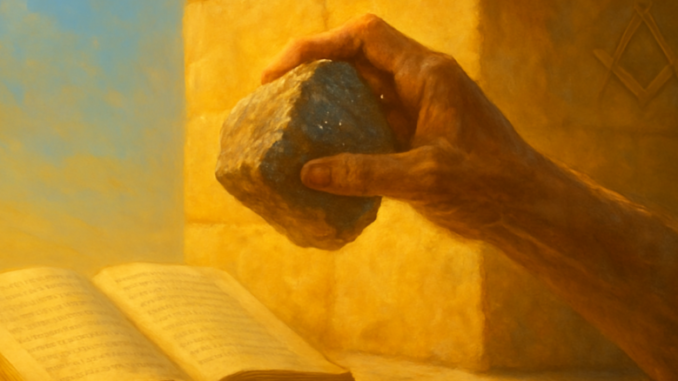
A stone is more than mere matter. In the hands of a mason, it becomes a building block, a bearer of structure, a symbol of something greater than itself. Marcus Aurelius viewed the human soul in much the same way — not as an isolated phenomenon, but as part of a cosmic whole. In the eighth book of his Meditations, the Roman emperor examined what a person truly is, beyond the roles and masks of daily existence. To fully grasp his insights, we must understand the philosophical sources from which he drew.
The Stoic Tradition as Foundation
Marcus Aurelius did not write in a vacuum. He was the last great representative of a philosophical movement that had originated in Athens five centuries earlier. Zeno of Citium, the founder of Stoicism, taught that the cosmos was a living, rational whole. The human soul, he argued, was a spark of that same cosmic reason — the logos. This concept reverberates throughout Book VIII, where Marcus Aurelius repeatedly points to the connection between individual reason and the universal mind.
The early Stoics — Cleanthes and Chrysippus — laid the theoretical groundwork. They developed a natural philosophy in which everything that exists forms part of one animate nature. Human virtue, in their view, consisted of living in harmony with that nature. Marcus Aurelius adopted this framework but gave it a more personal, introspective character. Where his predecessors wrote systematic treatises, he kept a journal in which he both admonished and encouraged himself.
Seneca and Epictetus: The Direct Teachers
Two thinkers exercised a particularly profound influence on Marcus Aurelius’ intellectual formation. Seneca, the Roman statesman and writer who had lived a century earlier, made Stoic ethics accessible to a broad audience. His letters to Lucilius addressed topics such as dealing with adversity, the proper attitude toward death, and what constitutes a good life. The tone Marcus Aurelius adopted — at once intimate and admonishing — reveals this influence clearly.
Even more direct was the influence of Epictetus, the former slave who ran a school of philosophy in Nicopolis. Marcus Aurelius studied his Enchiridion and Discourses intensively. From Epictetus he learned the crucial distinction between what lies within our power and what does not. In Book VIII, this theme resurfaces constantly: the true nature of a person lies not in external circumstances, but in the inner disposition with which we meet our fate.
The true nature of a person lies not in what happens to them, but in how they direct their inner life.
Platonic Echoes: The Soul and the Higher Realm
Although Marcus Aurelius was primarily a Stoic, Platonic elements are clearly recognizable in his work. Plato had described the soul as something that strives toward the higher — toward the world of Forms hidden behind sensory reality. This idea resonates in Book VIII when Marcus Aurelius writes about the hegemonikon, the ruling part of the soul that must orient itself toward what is truly valuable.
The notion that a deeper reality lies behind the surface connects Stoicism with the Platonic tradition. For Freemasons, this is a familiar idea. The rough ashlar worked into a perfect cube symbolizes the same journey: from outward appearance to inner essence. Marcus Aurelius would have immediately recognized this image as an expression of the philosophical labor of self-improvement.
Heraclitus and the Flowing Nature of Reality
Another thinker whose voice echoes throughout the Meditations is Heraclitus of Ephesus. This enigmatic sixth-century BC philosopher taught that everything flows — that change is the only constant. Marcus Aurelius cites him repeatedly and weaves his insights into his own reflections. In Book VIII, the idea of perpetual change serves as a tool for perspective: what seems monumental today will be forgotten tomorrow.
This awareness of impermanence is not pessimism but an invitation to focus on what is essential. If everything passes, what remains? For Marcus Aurelius, the answer is clear: the quality of our actions and thoughts in the present moment. The river of time washes everything away — except the virtue with which we have lived.
Historical Context: An Emperor Amid Chaos
To fully understand Book VIII, we must also consider the circumstances under which it was written. Marcus Aurelius ruled from 161 to 180 AD, a period marked by wars along the empire’s borders, devastating epidemics, and internal tensions. He wrote large portions of his Meditations in his military tent along the Danube, far from the comforts of Rome.
This context explains the urgent tone of his reflections. These were not abstract philosophical exercises but existential anchors in a world threatening to come undone. The question of humanity’s true nature was not an academic concern for him — it was a daily necessity. Surrounded by death and destruction, he searched for what was enduring, for the unchanging within the ever-changing.
Symbols of Inner Work
Freemasonry uses the symbol of the rough ashlar that, through continuous labor, is shaped into a perfect cube. This parallel with the Stoic ideal is no coincidence. Both traditions recognize that human nature is not simply given — it must be shaped through conscious effort. The compass and square measure and set boundaries, just as reason, in Marcus Aurelius’ philosophy, keeps the passions in check.
Behind the concrete tools lies a deeper truth: the individual is simultaneously the builder and the building. We are both the material being worked upon and the hand performing the work. This paradox runs through the Meditations as surely as it runs through the rituals of the lodge. It is an invitation to look beyond the surface, toward the hidden architecture of human existence.
The eighth book of the Meditations is not an isolated work but the product of centuries of philosophical inquiry. Marcus Aurelius drew from Stoics, Platonists, and pre-Socratic thinkers alike, forging their insights into a deeply personal guide for living with integrity. For Freemasons, his writings offer a remarkable mirror — a reminder that the work of shaping the self is ancient, universal, and never finished. The rough stone always awaits the hand willing to refine it.
Copyright text & image: devrijmetselaar.nl
Texts are based on the ideas and content of the author of devrijmetselaar.nl, reviewed, corrected, and supplemented with the assistance of OpenAI. Images are created based on the ideas of the author of devrijmetselaar.nl using OpenAI/DALL-E.
Frequently Asked Questions
What is the main philosophical tradition that influenced Marcus Aurelius' views on human nature?
Stoicism is the primary philosophical tradition that shaped Marcus Aurelius' thinking. Founded by Zeno of Citium five centuries before Marcus Aurelius, Stoicism taught that the cosmos is a living, rational whole and that the human soul is a spark of universal reason called the logos. Marcus Aurelius adopted this Stoic framework and applied it to his personal reflections in his Meditations.
Who were the key philosophers that directly influenced Marcus Aurelius?
Two thinkers had particularly profound influence on Marcus Aurelius: Seneca, a Roman statesman and writer who made Stoic ethics accessible through his letters to Lucilius, and Epictetus, a former slave philosopher whose Enchiridion and Discourses Marcus Aurelius studied intensively. From Epictetus especially, he learned the crucial distinction between what lies within our power and what does not.
What is the core insight about human nature presented in Marcus Aurelius' Book VIII?
According to Marcus Aurelius' Book VIII, the true nature of a person lies not in external circumstances or the roles and masks we wear in daily life, but rather in the inner disposition with which we meet our fate. He viewed the human soul as part of a cosmic whole connected to universal reason, similar to how a stone in a mason's hands becomes more than mere matter by serving a greater purpose.


Be the first to comment