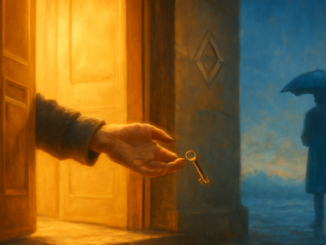
Open lodge door symbolizing Masonic hospitality and welcoming the stranger
Freemasonry & Society

Hospitality as a Life Skill: What the Lodge Teaches About Welcome

You probably know the feeling: you see a situation that calls for action, but you wait for someone else to step up. Or you quietly convince yourself that your contribution wouldn’t matter in the grand scheme of things. When communities fall short in providing shelter and welcome to those in need, it touches on something far deeper than policy or politics. It raises a fundamental question: how do we relate to the stranger at our door? Freemasonry, perhaps surprisingly, offers deeply practical guidance on this — rooted in centuries-old rituals of hospitality. The Threshold as a Sacred Boundary In Freemasonry, the threshold carries powerful symbolic weight. Anyone who enters a lodge building consciously crosses a boundary between the outside world and a space of reflection. But that threshold works in two directions: it protects what lies within, and it determines who is welcome. The question of whom we let in is therefore not a bureaucratic matter — it is an ethical exercise. Historically, operative lodges maintained strict customs around hospitality. Traveling craftsmen could count on shelter from fellow brothers in distant cities. This wasn’t charity born from pity — it was a practical system of mutual support. You helped the […]

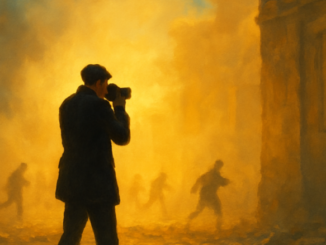
A journalist bearing witness in a conflict zone, symbolizing Masonic truth-seeking
Freemasonry & Society

Bearing Witness: The Courage to Look When Others Turn Away

On a dusty street, somewhere far away, a journalist raises his camera amid the chaos surrounding him. He knows danger is close, that every second could be his last. Yet he stays. He keeps filming. He keeps bearing witness. In that moment, he embodies something far deeper than his profession — an ancient duty to record the truth, even when that truth is painful beyond measure. The footage of a reporter struck by a drone while doing his work shocked the world. But behind the shock lies a question that concerns us all: what does it truly mean to bear witness? And why do some people choose to keep looking, keep documenting, when every fiber of their being screams at them to flee? The Journalist as a Modern Sentinel In Freemasonry, we know the symbol of the sentinel — the one who stands at the gate, who observes, who reports what he sees without personal bias or self-interest. A journalist in a conflict zone fulfills a strikingly similar role. He stands on the boundary between the known and the unknown, between safety and danger, between truth and propaganda. This position demands a particular kind of courage. Not the courage of […]

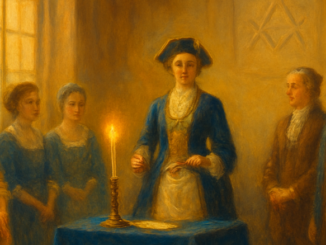
Woman in a leadership role symbolizing progress in Freemasonry and society
Freemasonry & Society

Women’s Leadership: From the Lodge to the Modern World

In June 2026, it was announced that a former elite athlete would become the first woman to lead the Dutch Olympic delegation. The news was accompanied by a telling remark: it was “about time.” Breakthroughs like these invite deeper reflection. Where do our ideas about leadership actually come from? And what can we learn from the way brotherhoods and societies have wrestled with the question of who gets to lead? The Eighteenth Century: Enlightenment Ideals and Their Limits When the first Grand Lodge was established in London in 1717, it was a revolutionary moment. Men from different social classes, religions, and backgrounds came together on a basis of equality — or at least a certain version of it. The Enlightenment philosophy that helped shape Freemasonry spoke of universal human dignity, of reason over birthright, of merit over privilege. Yet these principles initially applied only to men. This was hardly unique to the Craft. Eighteenth-century society as a whole enforced strict boundaries between what men and women were allowed to do. Even the most progressive thinkers of the age considered women’s leadership unthinkable — not out of malice, but because their imagination simply did not reach that far. The real question […]

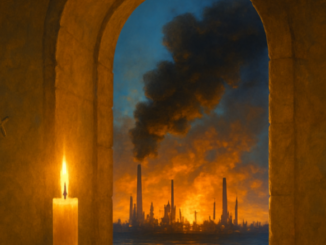
A candle flame burning on a Masonic altar symbolizing hope and renewal
Freemasonry & Society

Fire and Oil: On Destruction and the Courage to Rebuild

The old Master gazed at the candle on the altar. The flame danced restlessly, as though it had something to say. That morning, he had read the news — burning storage tanks, columns of smoke rising miles into the sky, a refinery consumed by fire. He reflected on the strange paradox of fire: the very element that illuminates the temple can also devour everything in its path. When Fire Destroys Instead of Illuminates This week, images emerged of a large-scale attack on an oil refinery near Moscow — reportedly the largest in the region. Massive walls of flame, thick black smoke, and the unmistakable sense of destruction that seems to seep through the screen itself. For many, this is simply another piece of war news to scroll past. But for those who look with a contemplative eye, there is more to see than strategic targets and economic damage. Fire has always carried a dual meaning in human history. It is the symbol of civilization — of warmth and community gathered around the hearth. But it is equally the instrument of devastation, of cities reduced to ash. In Freemasonry, fire stands as one of the most powerful symbols we know: the […]

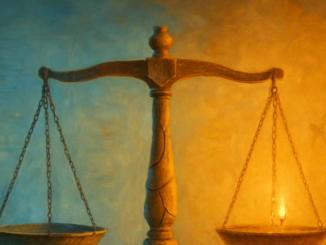
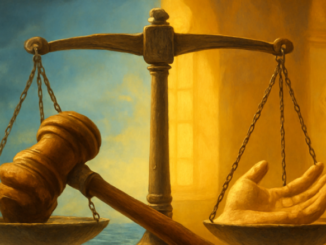
Scales of justice alongside Masonic square and compasses symbolizing balance
Freemasonry & Society

Justice Beyond Borders: Two Perspectives on Right and Law

When news breaks that suspects linked to a political assassination in a neighboring country have been arrested, it touches on fundamental questions about law, borders, and human dignity. A recent case involving the arrest of two individuals connected to the death of a critical voice in Poland invites deeper reflection — not about guilt or innocence, which belongs to the courts, but about the deeper layers of justice itself. How do the codified laws of nations relate to the unwritten laws of conscience? And what can we learn when we place two perspectives side by side: that of the secular legal order and that of the initiatory tradition? The Perspective of the Secular Order For the modern legal system, justice is a matter of procedures, burden of proof, and jurisdiction. When a crime is committed on the territory of one nation by individuals from another, a complex web of treaties, extradition agreements, and diplomatic negotiations comes into play. The rule of law operates according to written rules that are meant to apply equally to everyone. The suspect has rights, the victim has rights, and society has the right to protection. This system, imperfect as it may be, represents centuries of […]

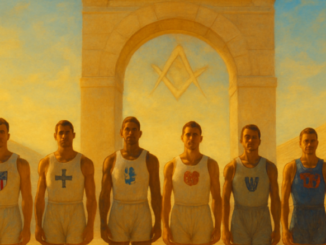
Athletes and Freemasons united in brotherhood across borders and centuries
Freemasonry & Society

When Nations Meet: Sport and Brotherhood Through the Ages

In 1896, athletes from thirteen different nations gathered in Athens for the first modern Olympic Games. Among them were men whose homelands had regarded each other as enemies just fifty years earlier. Yet there they stood, shoulder to shoulder on the field of play, united by a competition that transcended borders. Today, as international football matches once again bring political tensions to the surface, it is worth looking back at how sport has both united and divided throughout history — and what this teaches us about the deeply human yearning for brotherhood. The Olympic Ideal and Its Masonic Roots Few people realize that the revival of the Olympic Games was closely linked to ideals that were also cherished in Masonic lodges. The nineteenth-century movement that gave rise to the modern Games was steeped in universalist principles: the conviction that all people, regardless of origin or nationality, are capable of nobility and fair competition. This philosophy mirrors the Masonic ideal of the chain of brotherhood, in which men from vastly different backgrounds meet as equals. The first international sporting competitions emerged in the eighteenth century — a period when lodges were expanding rapidly across Europe. It is no coincidence that both […]

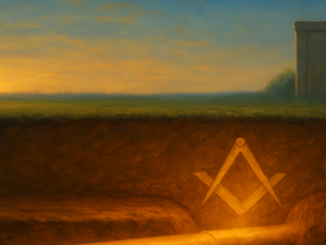
Underground gas pipeline symbolizing hidden Masonic connections and flowing energy
Freemasonry & Society

The Gas Pipeline as Symbol: When Energy Flows Freely Again

A pipe buried underground. Invisible, forgotten — until the news reminds us it exists. European gas prices drop following a peace agreement between the United States and Iran, and suddenly the pipeline becomes what it always was: a vein in the body of civilization. But what do we truly see when we look at that pipe? A piece of infrastructure? Or an invitation to reflect more deeply on what it means when energy flows freely once again? The Invisible Network Beneath our feet lies a world we rarely consider. Pipes, cables, conduits — they form a network that makes daily life possible without us sparing it a second thought. Only when the flow stops, when the warmth fails to arrive, do we realize how dependent we are on this hidden infrastructure. The peace accord now calming the energy markets makes visible something that was always there: our profound interconnectedness. Freemasonry has a rich tradition of contemplating what is hidden and what is revealed. The building of the Temple, so central to our symbolism, is not merely about stones and columns. It is about the invisible structures that support a building — the foundations no one sees, but without which nothing […]

Football supporters united in shared emotion, paralleling Masonic lodge rituals
Freemasonry & Society

From Stadium Atmosphere to Lodge: What Football Teaches Us

Thousands of supporters gather in squares and pubs to watch their national team play. With every goal, a wave of collective joy surges through the crowd. When the opposition scores a late equalizer, shared disappointment settles like a blanket over the masses. This pattern of celebrating together and suffering together is as old as humanity itself. The question Freemasons ask is this: what makes shared emotion so powerful, and what can it teach us about the enduring value of ritual? The Roman Origins of Collective Experience In ancient Rome, hundreds of thousands of citizens gathered in the Colosseum and at the circuses to witness spectacles together. This was no casual entertainment. The Roman poet Juvenal, writing around 100 AD, described how the people longed for panem et circenses — bread and circuses. But beneath this seemingly superficial observation lies a deeper truth: human beings have an innate need for shared experiences that lift them beyond the individual self. Roman arenas were carefully designed spaces where the collective became more important than the individual. The architecture, the ritual announcements, the shared tension — everything was orchestrated to bring thousands of people into a single emotional rhythm. Historians refer to this as […]

Masonic square and compasses symbolizing the balance of justice and wisdom
Freemasonry & Society

Justice and Retribution: Two Perspectives on Fairness

When news reaches us of a violent crime committed far from home, something ancient stirs within us. A life is taken, a suspect is arrested, and emotions ignite almost instantly. Calls for harsh punishment, outrage over injustice, a deep yearning for retribution. Yet alongside this visceral response, there exist traditions and communities that have looked at such moments differently for centuries — traditions that ask questions before passing judgment. This article explores two perspectives on justice: that of the outraged citizen and that of the searching Freemason. The Perspective of Outrage For most people, the first reaction to a violent crime is entirely understandable and deeply human: horror, anger, and an overwhelming desire for justice. When we hear that a fellow citizen has been killed in a distant land, we feel the pain as if the victim were someone we knew personally. The community closes ranks, the victim is given a face and a story, and the perpetrator becomes a symbol of the evil that must be fought. This perspective is rooted in a fundamental human need for order and safety. Society functions on the basis of shared agreements, and those who violate those agreements in the most horrific manner […]

A darkened chamber with Masonic symbols representing reflection and inner wisdom
Freemasonry & Society

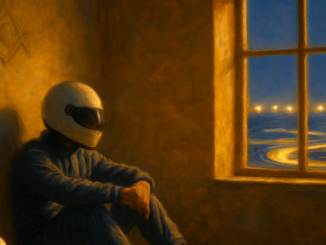
The Power of Departure: Why Walking Away Can Be the Best Move

A race car sits idle in the pit lane. The driver climbs out, leaves the circuit, and seeks silence. Hours later, he returns and delivers the qualifying lap of his lifetime. The story made headlines around the world yesterday: sometimes you have to leave in order to truly arrive. For those familiar with the symbolism of Freemasonry, an ancient truth resonates here — one that reaches far deeper than any racetrack. The Circuit as a Mirror of Society A racing circuit is more than asphalt and crash barriers. It is a closed system where pressure, expectation, and performance converge in a relentless rhythm. Lap after lap, second after second — everything is measured, compared, and judged. In many ways, this mirrors the society in which we all operate: a world of deadlines, targets, and the unceasing demand for more, faster, better. The driver who chose to temporarily step away from this system did something that defies every rule of our performance-driven culture. He stopped when pushing forward was expected. He sought distance when proximity was demanded. And yet, it was precisely this departure that became the key to his finest performance. The Chamber of Reflection: The Symbolism of Withdrawal In […]

Freemasons standing together symbolizing brotherhood during times of crisis
Freemasonry & Society

Epidemics and Brotherhood: What Crises Teach Freemasons

A rising line on a graph. Numbers climbing. Experts issuing warnings. When reports of potential disease outbreaks begin to circulate, something shifts in our collective consciousness. But what do these moments truly reveal about our society? And what can Freemasons — with their centuries-old emphasis on brotherhood and civic responsibility — contribute to the conversation about crises that affect us all? Why Do Predictions Unsettle Us So Deeply? It’s a question that demands attention every time we’re confronted with alarming charts and expert analyses. Why does our pulse quicken at the sight of an upward-trending curve? The answer may not lie solely in our fear of illness, but in something far more fundamental: our connection to one another. In these moments, we realize we are not isolated islands. What strikes one person can strike us all. That awareness, however uncomfortable, contains a profound truth that Freemasons have recognized for centuries: humanity forms one great chain, and every link matters. What Does History Teach Us About Brotherhood in Times of Crisis? Consider the great plague epidemics of the Middle Ages. Social structures collapsed. Fear drove people apart. And yet, some communities held firm — places where people continued to care for […]

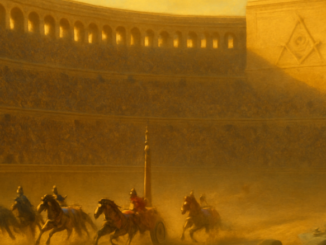
Ancient Roman chariot race arena symbolizing Masonic lessons on status and equality
Freemasonry & Society

Chariot Races as a Mirror: What Circuses Teach About Status

On a sweltering afternoon in Barcelona, drivers battled for the best starting position while thousands of spectators held their breath. The scene was strikingly reminiscent of one that played out two thousand years ago in Rome’s Circus Maximus: charioteers risking their lives under a blazing sun in pursuit of glory and honor. The parallels between ancient chariot racing and modern motorsport are remarkable — but what can these contests truly tell us about our views on status, community, and the society we live in? The Circus Maximus: Arena of Heroes and Symbols In ancient Rome, the Circus Maximus was the beating heart of public life. Up to 250,000 people would gather here to witness chariot races. The four racing stables, known as factiones, were identified by color: blue, green, red, and white. These colors represented far more than sporting rivalry — they symbolized the seasons, the elements, and the cosmic order. The race itself was a ritual, a symbolic battle between the forces of nature fought again and again in the dust of the arena. The charioteers, called aurigae, were often slaves or freedmen who could rise to the status of folk heroes through sheer courage and skill. Their position […]

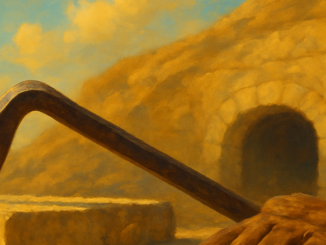
Crowbar as a Masonic symbol of breakthrough, leverage, and moral wisdom
Freemasonry & Society

The Crowbar as a Symbol of Breakthrough in Freemasonry

Among the oldest lever instruments known to humanity, the crowbar carries a symbolic weight that far exceeds its physical function. In the tradition of Freemasonry, where every tool holds a moral lesson, the crowbar stands as a compelling emblem of breakthrough — the art of opening what has become sealed, of creating passage where none existed before. But like every tool in the symbolic workshop, its meaning depends entirely on the hands that wield it and the intention behind the act. The Crowbar in Historical Perspective The crowbar belongs to the most ancient class of lever tools. Builders and craftsmen in antiquity relied on it to move massive stones and pry open tightly sealed joints. The English word “crowbar” itself derives from the tool’s split tip, which resembles a crow’s foot — a detail that reveals something essential about its nature. This is not a sledgehammer designed to shatter. It is an instrument of intelligence, one that seeks the right gap, the vulnerable point where minimal effort produces maximum effect. By the nineteenth century, the crowbar had become a symbol of the working class. Miners, railroad laborers, and construction workers carried it as their daily companion. It represented honest labor […]

Masonic level and gavel symbolizing patience and justice in Freemasonry
Freemasonry & Society

Patience as Foundation: What Slow Justice Teaches Freemasons

In an age where everything must happen faster, the slow grinding of the wheels of justice confronts us with an uncomfortable truth: some processes demand a kind of patience that runs directly counter to our expectations. As major court cases drag on for years, we are forced to ask what this means for our trust in societal institutions. Freemasonry, with its centuries-old emphasis on building slowly and deliberately, offers a surprisingly relevant perspective on this tension between haste and thoroughness. The Measure of Time When a court case is delayed for years, frustration is inevitable. Victims wait for acknowledgment, society demands a verdict, and our collective sense of justice feels eroded by endless postponement. Yet within this waiting lies something else entirely — the recognition that truth and justice cannot be forced by the clock. In Freemasonry, we speak of the rough ashlar that must be shaped into a perfect cube. This is not the work of days or weeks, but of years. The apprentice who chips away in haste destroys more than he creates. Seen through this lens, the slow pace of complex legal proceedings may not simply be a failure of efficiency — it may also reflect a […]

Compasses and square on a stone surface symbolizing Masonic trust and balance
Freemasonry & Society

Interest Rates as a Measure of Trust: A Masonic Perspective

When a central bank announces an interest rate hike, financial markets react, economists debate, and homeowners recalculate their budgets. But behind the numbers lies a deeper question that has fascinated Freemasons for centuries: what is the true nature of trust in a society, and how do we build foundations strong enough to endure when the winds change direction? The Invisible Architect of Value Money is, in essence, crystallized trust. A banknote has no intrinsic value — it is a promise, a symbol of collective belief in a system. When central banks adjust interest rates, they are turning dials designed to regulate that trust. Too much money in circulation undermines value; too little stifles growth. It is a delicate dance between abstract concepts that carries very real consequences for millions of people. For Freemasons, this terrain is not unfamiliar. The Craft has a rich symbolic language built around construction, measurement, and balance. The compasses and the square are not merely tools of the stonemason — they are metaphors for finding equilibrium and measuring proportions. In a broader societal context, they invite us to reflect: what invisible structures support our civilization, and who safeguards their integrity? Trust as the Foundation A rate […]

Masonic level and gavel symbolizing equality and fair judgment
Freemasonry & Society

Social Condemnation: Judgment Without a Gavel

When news breaks that a public figure has been accused of a serious crime, society often delivers its verdict long before any judge has spoken. We have seen this pattern play out time and again: allegations become public, and within hours a collective judgment has already formed. This phenomenon touches on fundamental questions about justice, human dignity, and how we as a society deal with guilt and innocence. And it is precisely on these matters that Freemasonry — with its centuries-old tradition of moral reflection — has a surprising amount to offer. The Court of Public Opinion In our age of instant news and social media, the court of public opinion is permanently in session. The moment an accusation becomes public, millions of people begin forming their judgment. This happens without access to the evidence, without hearing both sides, and without the nuance that a proper trial demands. Social condemnation moves at lightning speed and is often irreversible — even when an acquittal follows later. This raises an uncomfortable question: what does this rush to judgment say about us? Freemasonry teaches its members that forming a judgment about a fellow human being is one of the gravest responsibilities a person […]

Masonic square and compasses symbolizing foresight and community preparedness
Freemasonry & Society

Gas Shortages and Foresight: Masonic Lessons on Preparedness

Reports of dwindling gas reserves ahead of winter raise a fundamental question that reaches far beyond the energy sector. What does it truly mean for a society to look ahead? And what can we learn from a tradition that has placed preparation, responsibility, and community at its core for centuries? Freemasonry offers a surprisingly relevant perspective on this very modern challenge. The Art of Anticipation When a major energy authority publicly voices concerns about winter gas supplies, it touches on something deeper than statistics and cubic meters. It speaks to our collective ability — or inability — to look beyond the present moment and anticipate what lies ahead. This art of foresight has been a central theme in philosophical traditions for centuries, and Freemasonry is no exception. In the symbolic language of Freemasonry, the Master Builder plays a crucial role. A Master Builder does not simply start stacking stones. He first draws a plan, calculates the required materials, and accounts for the changing seasons. The great cathedrals of old were not built in a single year — they were raised over generations. That long-term vision, the capacity to labor on something whose fruits will only ripen far in the future, […]

February symbolism and purification represented through Freemasonry traditions
Freemasonry & Society

February Symbolism: Purification and Its Role in Society

February carries a depth of meaning that stretches back thousands of years, rooted in ancient traditions of purification, reflection, and societal renewal. The very name comes from the Latin word februare, meaning to cleanse. For the Romans, this was the month of purification — a time to settle old debts and prepare the community for a fresh start. This timeless symbolism resonates powerfully with Freemasonry, where the work of building a better society always begins with inner purification. The Origins of February: Symbolism of Cleansing The Roman festival of Februalia was devoted entirely to ritual purification. During this period, homes were scrubbed clean, offerings were made to the gods, and the city of Rome was swept clean — both literally and figuratively. This was no casual tradition. The Romans firmly believed that a society could only flourish when its members freed themselves of what no longer served them. In Freemasonry, we recognize this same principle in the concept of the rough ashlar. Every Freemason begins as an unworked stone and spends a lifetime chipping away at imperfections. This is not a selfish pursuit of perfection — it is a deeply social commitment. After all, how can we contribute to a […]

Vrijmetselarij - Vrijmetselarij en Maatschappij – Persoonlijke Groei met Impact op de Wereld om je Heen
Freemasonry & Society

Freemasonry and Society – Personal Growth With Real-World Impact

Freemasonry is often described as an inner journey — a path toward self-knowledge, moral depth, and ethical living. But that journey doesn’t end at the lodge door. In fact, that’s where it truly begins. Freemasonry and society are inseparably linked, because what good is personal growth if it has no positive influence on the world around you? Society as the Real Proving Ground Freemasonry is not an escape from reality. It’s a training ground for reality. Inside the lodge, you work on yourself: you learn to think symbolically, examine your own behavior, and sharpen your moral compass. Then you take those insights with you — into your workplace, your family, your friendships, and your community. Precisely because Freemasons engage in regular, structured self-reflection rooted in ethics and ideals, they tend to be conscious and engaged citizens. They continually ask themselves: How can I contribute? What can I improve? From Self-Awareness to Social Impact Freemasonry and civic engagement go hand in hand. The underlying idea is simple: by improving yourself, you also improve the world. This philosophy plays out in tangible ways: Freemasons frequently dedicate their time to community organizations, from local neighborhood initiatives to international humanitarian projects. Many lodges support […]

Historical Masonic refugee shelter symbolizing Freemason humanitarian aid
Freemasonry & Society

Refugee Relief – A Freemason Initiative Worth Remembering

The 19th and 20th centuries saw wave after wave of political and economic refugees, driven from their homelands by war, revolution, and persecution. In these turbulent times, organized aid was scarce and often inadequate. Freemasons — bound by their commitment to brotherhood and humanity — felt a deep obligation to act. Drawing on their resources, networks, and philosophical principles, they established shelters that offered not just a roof over people’s heads, but genuine hope for a better future. Freemasonry and the Call to Help Refugees The core ideals of Freemasonry aligned naturally with the cause of refugee relief. Brotherhood, one of the Craft’s most fundamental principles, holds that all human beings are equal and interconnected. Helping those who had been displaced was a direct expression of this universal vision. Charity — not as an abstract concept, but as hands-on, practical assistance — gave Freemasons a way to translate their beliefs into tangible action. And by supporting refugees in rebuilding their lives, Masons also contributed to strengthening the communities that welcomed them, embodying the Masonic dedication to building a better society. The Practical Role Freemasons Played Freemasons were instrumental in establishing and sustaining refugee shelters across Europe and beyond. Their contributions […]