
Imagine receiving a letter from a close friend — not just a casual note, but words that challenge you to examine how you treat the people around you. That is precisely what Lucius Annaeus Seneca did when he wrote his forty-eighth letter to his friend Lucilius some two thousand years ago. In this letter, the Roman Stoic philosopher takes on a theme that remains strikingly relevant today: what do we truly owe one another as fellow human beings journeying through life together?
The Heart of Letter XLVIII
In this relatively short but powerful letter, Seneca turns his attention to the question of mutual obligations. He criticizes the tendency to reduce friendship and generosity to a kind of bookkeeping transaction. You probably recognize the feeling: someone helps you, and you immediately sense the pressure to repay the favor. But is that truly friendship, or is it merely commerce?
Seneca argues that genuine connection is not about keeping a running tally. When you help a friend with the expectation of getting something in return, you are not really giving — you are investing. And treating people like stocks in a portfolio undermines the very essence of human connection. True generosity flows outward without conditions, and that unconditional quality is what transforms a simple act of kindness into something meaningful.
A Sharp Critique of Empty Wordplay
One of the most striking elements of this letter is Seneca’s pointed criticism of philosophers who lose themselves in logical puzzles and intellectual games. He specifically calls out the sophistic arguments that were fashionable in his time — clever riddles that may entertain the mind but do nothing to improve the soul. According to Seneca, these distractions pull us away from what truly matters: how to live a good life and how to relate to the people around us.
As Seneca puts it, true philosophy should not amuse the intellect but form the character and guide our actions. Philosophy must be practical. It should help you make better choices rather than sharpen your ability to debate while life passes you by. This insistence on applied wisdom over abstract speculation is one of the hallmarks of Stoic thinking, and it carries a powerful message for anyone seeking genuine self-improvement.
Friendship as a Mirror of Character
Seneca employs a striking image in this letter: friendship as a mirror. How you handle your obligations to others reveals who you truly are. Do you give because you want to give, or because you expect to receive? Do you help someone because you genuinely care, or because you want to see yourself as the kind of person who helps?
This mirror metaphor is remarkably powerful. It invites you to look honestly at yourself — not at the stories you tell about yourself, but at your actual motives. That kind of honesty can be uncomfortable, but Seneca sees it as the very path to wisdom. Self-knowledge, even when it stings, is the foundation upon which a virtuous life is built.
The Stoic View on Reciprocity
Stoic philosophy, of which Seneca is one of the most important representatives, takes a nuanced view of reciprocity. It is not about rejecting mutual help. On the contrary, the Stoics saw humanity as one great community, bound together by shared reason and common humanity. The key lies in how you approach the giving and receiving.
Give without placing conditions first. Receive with gratitude, free from guilt. See acts of help as expressions of connection rather than transactions. Let your actions spring from virtue, not from calculation. These principles form the heart of what Seneca tries to convey in Letter XLVIII. They sound simple enough, but they demand a fundamental shift in how you view your relationships with others.
Resonance with Fraternal and Masonic Values
The themes Seneca raises resonate deeply with the values at the core of Freemasonry and other fraternal traditions devoted to personal development. The idea of giving without expecting anything in return, of treating your fellow human being as an end and never merely as a means, forms the bedrock of genuine Brotherly Love. In Masonic tradition, where symbolic working tools and rituals serve as vehicles for moral instruction, this awareness of mutual duty is expressed through the shared labor of building something greater than oneself.
The mirror as a symbol returns here as well. When you stand in a Lodge surrounded by like-minded Brethren, you see in each other not a reflection of ego or worldly achievement, but of shared aspiration and potential. This mirroring invites self-reflection without self-condemnation — a cornerstone of Masonic practice. The Entered Apprentice learns early that the work on the rough ashlar is interior work, and Seneca’s letter serves as a timeless reminder that this inner labor begins with examining our motives in every relationship we hold.
What You Can Take Away from This Letter
Seneca wrote this letter to one person, but his words reach far beyond that single reader. They speak to anyone who has ever wondered why friendships sometimes feel more like obligations than gifts, or who has noticed that keeping score of who did what for whom slowly drains the joy from relationships.
Seneca’s invitation is clear: stop counting. Start giving. Not to appear to be a better person, but to actually become one. This is no lofty ideal floating in the clouds — it is a practical guideline you can put into practice today. In your family, at your workplace, in your Lodge, and in every community to which you belong.
Letter XLVIII by Seneca is far more than a historical document. It is an invitation to examine your own attitude toward giving and receiving. The Stoic wisdom woven through its lines reminds us that real connection does not arise from calculation, but from the willingness to show up for another person without conditions. For Freemasons and all seekers of moral truth, that lesson carries a special weight: the Craft teaches us that our greatest work is always the work we do upon ourselves, and the truest measure of that work is found in how we serve others. This lesson is two thousand years old and has not aged a single day.
Copyright text & image: devrijmetselaar.nl
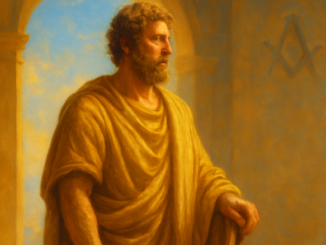
Texts are based on the ideas and content of the author of devrijmetselaar.nl, reviewed, corrected, and supplemented with the assistance of OpenAI. Images are created based on the ideas of the author of devrijmetselaar.nl using OpenAI/DALL-E.



Be the first to comment