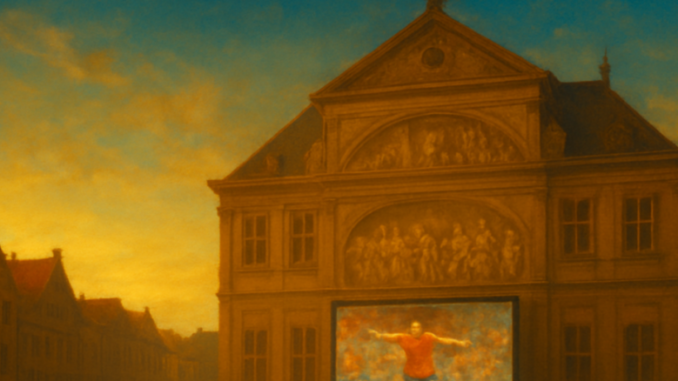
Thousands of supporters gather in squares and pubs to watch their national team play. With every goal, a wave of collective joy surges through the crowd. When the opposition scores a late equalizer, shared disappointment settles like a blanket over the masses. This pattern of celebrating together and suffering together is as old as humanity itself. The question Freemasons ask is this: what makes shared emotion so powerful, and what can it teach us about the enduring value of ritual?
The Roman Origins of Collective Experience
In ancient Rome, hundreds of thousands of citizens gathered in the Colosseum and at the circuses to witness spectacles together. This was no casual entertainment. The Roman poet Juvenal, writing around 100 AD, described how the people longed for panem et circenses — bread and circuses. But beneath this seemingly superficial observation lies a deeper truth: human beings have an innate need for shared experiences that lift them beyond the individual self.
Roman arenas were carefully designed spaces where the collective became more important than the individual. The architecture, the ritual announcements, the shared tension — everything was orchestrated to bring thousands of people into a single emotional rhythm. Historians refer to this as the phenomenon of collective effervescence, a concept that would not be formally named until centuries later by sociologists like Émile Durkheim.
Guilds and Lodges: Heirs to Ritual Spaces
When the Roman Empire fell, the human need for collective ritual did not vanish with it. The medieval guilds carried this tradition forward in a different form. Stonemasons, builders, and other craftsmen gathered in enclosed spaces where they shared not only professional knowledge but also performed rituals that strengthened their sense of brotherhood. The operative Freemasonry that emerged from these guilds inherited this tradition of deliberately crafted communal experience.
Around 1717, when the first Grand Lodge was established in London, Freemasons formalized their rituals. Not because they wanted to be secretive, but because they understood what the Romans already knew: a carefully designed space filled with shared symbols and actions creates bonds that run far deeper than superficial conversation.
The Stadium as a Modern Temple
When fans gather today to watch a match, they unknowingly enter a ritual space. The team colors they wear function as a uniform that temporarily dissolves individuality. The chants and songs are modern mantras that synchronize the group. The tension before kickoff, the eruption at a goal, the dejection after a conceded strike — all of it follows a predictable pattern that transcends generations.
The human being is a ritual creature. Without shared actions and symbols, we lose our connection to each other and to ourselves.
An eighteenth-century Freemason would immediately recognize the modern football experience as a form of ritual practice. The changing room serves as the preparation chamber. The pitch becomes sacred ground. The referee acts as the master of ceremonies. Even the late equalizer that brought so much disappointment fits the pattern perfectly: rituals always encompass both joy and loss, because it is the shared experience that matters — not the outcome.
What Freemasons Can Learn from This
In Freemasonry, we speak of the art of building — not just the construction of physical structures, but above all the building of inner temples and human connections. The parallel with the collective sports experience is instructive. Both traditions demonstrate that people truly grow only when they temporarily set aside their ego in service of something greater.
Shared symbols create recognition and a sense of belonging. Ritual spaces make deep emotions accessible and discussable. Collective experiences transcend the everyday. And both joy and disappointment strengthen the bonds between those who share them.
The supporters who celebrated and commiserated together experienced something that is becoming increasingly rare in our individualized society: the feeling of truly belonging. This is precisely what Freemasons have cherished in their lodges for centuries. It is not about winning or losing — it is about going through meaningful moments together.
From Past to Present: The Lasting Lesson
History teaches us that collective rituals are not mere traditions we can discard without consequence. From the Roman arenas to medieval guild halls, from the first Masonic lodges to modern stadiums, human beings continue to seek shared experience. The form changes; the essence remains.
For Freemasons, this historical thread offers a powerful affirmation of their practice. The rituals performed in the lodge are not archaic remnants of a bygone era. They answer a deeply human need — one that is still plainly visible today when thousands of people come together around a football match. Both forms of gathering remind us that we are more than isolated individuals who happen to occupy the same space.
The images of fans cheering together and mourning together are a reminder of something fundamental. Whether it happens in a stadium, on a city square, or inside a Masonic lodge, something precious emerges when people are willing to temporarily let go of their individuality and surrender to a shared ritual. A late equalizer may bring disappointment, but it also brings connection. And that connection, as history continually reminds us, is ultimately more valuable than any final score.
Copyright text & image: devrijmetselaar.nl
Texts are based on the ideas and content of the author of devrijmetselaar.nl, reviewed, corrected, and supplemented with the assistance of OpenAI. Images are created based on the ideas of the author of devrijmetselaar.nl using OpenAI/DALL-E.
Frequently Asked Questions
What does Freemasonry have to do with football or sports?
Freemasonry and football both tap into the same fundamental human need for shared experiences and collective ritual. The article explains that just as thousands of football fans gather to celebrate together, Freemasons have historically gathered in carefully designed spaces to participate in meaningful rituals that strengthen brotherhood. Both create powerful bonds through synchronized actions, symbols, and shared emotional experiences that connect individuals to something greater than themselves.
Why do Freemasons place so much emphasis on ritual?
Freemasons understand that ritual creates profound connections between people in ways that ordinary conversation cannot achieve. Like the Romans who gathered in the Colosseum, Freemasons recognize that carefully designed spaces, shared symbols, and coordinated actions produce what sociologists call 'collective effervescence'—a state where the group becomes more important than the individual. Rituals serve to strengthen brotherhood, transmit values across generations, and help members transcend their individual selves to become part of something meaningful and enduring.
Is Freemasonry just a secret club, or does it serve a deeper purpose?
Freemasonry is far more than a secret club; it serves the deep human purpose of creating meaningful communal experiences and fostering brotherhood. When Freemasons formalized their rituals around 1717, they did so not for secrecy but because they understood the transformative power of shared ritual and symbolism. Like the guilds and craftsmen before them, Freemasons deliberately create spaces where individuals can connect with others through shared values, symbols, and experiences that enrich both personal and collective life.
What can modern people learn from Freemasonry's approach to community?
Freemasonry teaches us that human beings are naturally 'ritual creatures' who need shared actions and symbols to maintain genuine connections with each other. In our increasingly digital world, Freemasonry offers a timeless model for creating in-person communities where people come together intentionally, participate in meaningful practices, and build bonds that transcend surface-level interaction. By understanding the power of ritual and collective experience, we can strengthen our communities and counter the isolation that many people feel today.
How old is the tradition of gathering together for shared experiences?
The tradition of gathering for shared experiences dates back to ancient Rome, where hundreds of thousands of citizens attended the Colosseum and circuses together. This human need for collective ritual is even older than recorded history, as evidenced by the fact that people throughout the ages—from Roman citizens to medieval craftsmen to modern football fans—have felt drawn to synchronized group experiences. Freemasonry inherits this ancient tradition and preserves it for modern times, ensuring that the powerful benefits of ritual community continue to enrich human life.

Be the first to comment