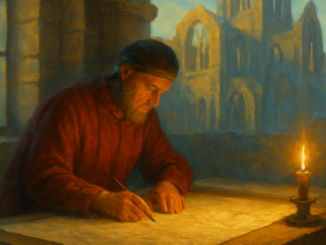
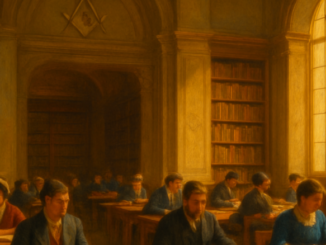
Historic library interior symbolizing Freemasonry's contribution to public education
Freemasonry & Society

Libraries and Cultural Centers Built by Freemasonry

Freemasonry has always maintained a profound connection with knowledge, education, and culture. In the Netherlands, this commitment led to the establishment of libraries and cultural centers that offered far more than books — they provided spaces for dialogue, intellectual growth, and community building. Often supported by Masonic lodges, these institutions played a crucial role in making literature, science, and the arts accessible to a broad public. The Importance of Libraries in the 19th Century In the 19th century, libraries were rare and often exclusively accessible to the wealthy and privileged. Freemasons viewed this inequality as a significant barrier to social progress and decided to take action. They founded libraries that were open to everyone, regardless of background or social standing. These libraries were far more than simple repositories for books. They functioned as centers of enlightenment where people could meet, share knowledge, and explore new ideas together. In an era when access to information was a luxury, these Masonic-supported institutions represented a radical commitment to intellectual freedom. The Role of Freemasonry in Promoting Knowledge and Culture Freemasonry played a key role in the founding of libraries and cultural centers, guided by several core principles. First and foremost was the belief […]

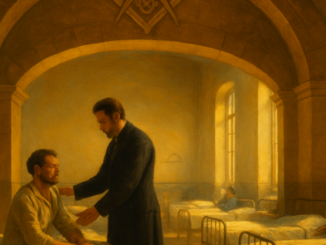
Historic hospital funded by Freemasons providing medical care to the poor
Freemasonry & Society

Freemasons and Medical Care for the Poor: A Legacy of Service

In an era when access to medical care was often a luxury reserved for the wealthy, Freemasons took it upon themselves to fund hospitals and clinics for those who could not afford treatment. Rooted in their core ideals of brotherhood and service to humanity, their commitment to improving public health laid the groundwork for a more inclusive approach to healthcare — one whose influence can still be felt today. Medical Care in the 19th Century During the 19th century, medical care was largely available only to those who could pay for it. Working-class families had little to no access to physicians, let alone specialized treatment. Freemasons recognized this as a grave failing of society and resolved to take action. They began raising funds to establish hospitals and clinics where people without financial means could receive treatment. These institutions did not merely provide basic medical assistance — they often served as pioneers in public health initiatives and medical education, pushing the boundaries of what charitable healthcare could achieve. Freemasonry and the Values of Healthcare The philosophy of Freemasonry aligns closely with the fundamental values of healthcare. At its heart lies a deep commitment to principles that naturally extend to caring for […]

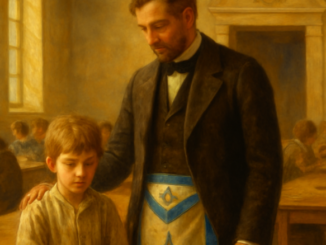
Historic Masonic orphanage providing care and education for vulnerable children
Freemasonry & Society

Freemasonry and Orphanages: Caring for Vulnerable Children

In an era when social safety nets were virtually nonexistent, orphanages were often the only lifeline for children who had lost their parents or were trapped in poverty. Freemasons played a crucial role in establishing and sustaining orphanages and child care institutions — particularly in the Netherlands, but also across the broader Western world. Their ideals of compassion, brotherhood, and social responsibility laid the foundation for initiatives aimed at providing safety, education, and hope to society’s most vulnerable members. The Origins of Orphanages Orphanages have existed since the Middle Ages, but it was not until the 19th century that serious attention was paid to the quality of care these institutions provided. Many early orphanages were little more than warehouses for children, with scant regard for their emotional well-being or educational development. Freemasons sought to change this by creating institutions where children could not only survive but genuinely grow and flourish. At the heart of this effort was the Masonic conviction that children represent the future of society. Protecting and educating orphans was not seen as mere charity — it was understood as a profound social responsibility that aligned with the Craft’s deepest values. Masonic Principles Behind Child Care Freemasons viewed […]

Historic school building representing Freemasonry's contribution to education
Freemasonry & Society

Freemasonry and Education: Building Schools for Everyone

In an era when education was a privilege reserved for the few, Freemasons stepped forward as champions of universal learning. Driven by ideals of enlightenment, equality, and personal growth, they viewed education as the very foundation of a just and progressive society. Their efforts to establish schools and training centers — particularly in the Netherlands — left a lasting mark on how we think about access to knowledge today. The Origins of Educational Reform During the 19th century, access to education was largely confined to the upper classes. Children from working-class families had little opportunity to attend school and were often forced into labor at a young age. For Freemasons — who placed immense value on enlightenment and self-improvement — this was a profound injustice. They took it upon themselves to establish schools that would be open to children from all social backgrounds, regardless of wealth or status. Freemasons envisioned a holistic model of education. Beyond teaching basic reading, writing, and arithmetic, they sought to cultivate values such as critical thinking, tolerance, and brotherhood. This approach was deeply rooted in their broader philosophy of universal human progress — the belief that an enlightened individual contributes to the betterment of society […]

Historical people's bank building symbolizing Freemasonry and financial equality
Freemasonry & Society

People’s Banks and Freemasonry – Finance for the Common Man

In an era when access to financial resources was largely reserved for the wealthy elite, people‘s banks represented nothing short of a revolution. These institutions, founded to support small entrepreneurs and laborers, found powerful allies in Freemasons — men driven by ideals of equality and brotherhood. Together, they helped establish people’s banks across the Netherlands, contributing to economic emancipation and self-reliance for those who needed it most. The Origins of People’s Banks People’s banks emerged during the 19th century, a period marked by stark economic inequality. Small business owners and working-class laborers had little or no access to traditional banking services. Instead, they were forced to rely on moneylenders who charged exorbitant interest rates. The concept behind people’s banks was straightforward: provide individuals with limited means access to affordable loans and savings facilities. Freemasons, long known for their involvement in social reform, recognized people’s banks as a powerful vehicle for promoting economic equality. They leveraged their networks and organizational expertise to help establish these banks and ensure they operated successfully. Freemasonry and Economic Emancipation The support Freemasons offered to people’s banks was deeply rooted in their core values. Equality stood at the forefront — Freemasons envisioned a society where everyone […]

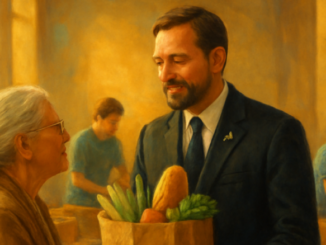
Historical soup kitchen supported by Freemasons serving meals to those in need
Freemasonry & Society

Soup Kitchens and Freemasonry: Food Aid in Times of Need

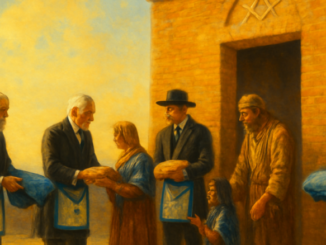
In the 19th century, as poverty and economic inequality gripped much of Europe, soup kitchens became a lifeline for thousands of desperate families. These kitchens — offering free or affordable meals to the destitute — often meant the difference between survival and starvation. What many people don’t realize is that Freemasons, driven by their deep-rooted ideals of solidarity and charity, were among the pioneers who established and sustained these vital food relief efforts, particularly in the Netherlands. The Origins of Soup Kitchens The Industrial Revolution brought unprecedented economic growth, but it also widened the gap between rich and poor to alarming extremes. Urban areas swelled with workers who faced chronic unemployment, appalling living conditions, and persistent hunger. The concept of communal soup kitchens emerged as a practical response to these dire circumstances — a way to alleviate the worst consequences of widespread poverty. Freemasons, who had long been involved in charitable endeavors, were among the first to take organized action. Their lodges served as natural hubs for coordinating food relief, mobilizing funds, recruiting volunteers, and securing the resources needed to prepare and distribute meals to those in greatest need. For these Brethren, feeding the hungry was not merely an act […]

Historic rescue boat symbolizing Freemasonry's contribution to lifesaving services
Freemasonry & Society

Rescue Services and Freemasonry – A Legacy of Aid in Need

Freemasonry has long been associated with the pursuit of a better world through solidarity, knowledge, and practical action. One of the most tangible contributions Freemasons have made — particularly in the Netherlands — is their pivotal role in establishing organized rescue services. Born out of a response to natural disasters and life-threatening emergencies, these efforts reflect the Masonic ideals of brotherhood and care for one’s fellow human beings in their most powerful form. The Origins of Organized Rescue Services The Dutch rescue services trace their roots to the 19th century, a period when devastating storms and floods regularly claimed lives and caused widespread destruction. During this era, there were no official disaster relief organizations. Instead, local communities and philanthropic networks stepped in to fill the void — and Freemasons were at the forefront of these efforts. Masonic lodges established funds, organized training for volunteers, and procured essential rescue equipment such as boats and other lifesaving tools. These grassroots actions, driven by a genuine sense of duty and compassion, laid the groundwork for what would eventually become the modern, professional rescue infrastructure we know today. Masonic Ideals at the Heart of Lifesaving The connection between Freemasonry and rescue work is no […]

Symbolic representation of Freemasonry's role in developing the probation system
Freemasonry & Society

Probation and Freemasonry – A Foundation for Rehabilitation

Probation is now an integral part of the Dutch justice system, offering people who have run afoul of the law a second chance and a path back into society. What many people don’t realize is that Freemasonry played a significant role in the development of probation services in the Netherlands. Driven by ideals of humanity and justice, Freemasons helped establish a system focused on rehabilitation rather than punishment alone. The Origins of Probation in the Netherlands The probation system as we know it today traces its roots to the 19th century. This was an era in which social reformers — many of them Freemasons — pushed back against the harsh punishments that dominated the justice system. They believed that people who had made mistakes deserved not only to face consequences but also to receive help in rebuilding their lives. Freemasons took an active role in establishing organizations that supported prisoners after they had served their sentences. These initiatives were rooted in the Masonic principle of the improvement of the individual. The goal wasn’t simply to help individuals; it was to strengthen society as a whole by reducing reoffending and giving former prisoners a realistic path forward. The Philosophy Behind Probation […]

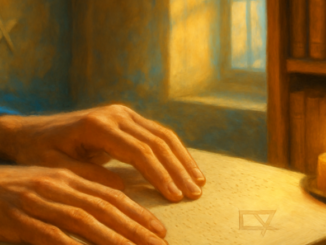
Historic braille books symbolizing the Masonic Library for the Blind
Freemasonry & Society

The Library for the Blind and Freemasonry – Light in Darkness

Freemasonry has long been associated with philanthropic efforts that promote knowledge, inclusion, and the betterment of society. One of the most remarkable — and often overlooked — examples of this commitment is the founding of the Library for the Blind. This institution, which made literature accessible to people with visual impairments, stands as a powerful symbol of the Masonic ideals of enlightenment and empowerment. The Origins of the Library for the Blind In the late 19th and early 20th centuries, society paid little attention to the needs of people with visual impairments. Access to literature and education was almost entirely out of reach for blind and partially sighted individuals. Freemasons, driven by their core commitment to the advancement of knowledge and personal growth, recognized this glaring gap. They took the initiative to establish a library where blind and visually impaired people could borrow books — first in braille, and later in spoken-word formats. The Library for the Blind started as a modest project, but it grew rapidly thanks to the dedication of Freemasons who contributed not just funds, but also their time, energy, and resources to the cause. The Masonic Philosophy Behind the Library In Freemasonry, light is one of […]

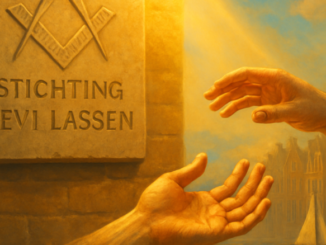
The Levi Lassen Foundation symbolizing Masonic philanthropy and social justice
Freemasonry & Society

The Levi Lassen Foundation and Freemasonry: A Bond of Justice

Freemasonry in the Netherlands has a long and rich tradition of supporting philanthropic causes. Among the most notable examples is the Levi Lassen Foundation — an organization dedicated to advancing social justice and uplifting communities in need. The foundation stands as a powerful testament to the core ideals of the Craft: brotherhood, solidarity, and the pursuit of universal justice. The Origins of the Levi Lassen Foundation The Levi Lassen Foundation was established with a clear mission: to support vulnerable communities and promote social equality. Freemasonry played a central role in its creation — not only through financial backing, but also by providing a philosophical framework. The belief that every human being deserves opportunity and dignity lies at the heart of both the foundation’s goals and Masonic values. The founder, Louis Levi Lassen, was a philanthropist with deep ties to the Craft. His commitment to justice and community building reflected the Masonic conviction that improving society is a shared responsibility — one that extends far beyond the walls of the lodge. The Philosophy Behind the Foundation Freemasons have long held the belief that social inequality must be actively confronted. This conviction is clearly visible in the work of the Levi Lassen […]

Historic building associated with Koninklijke Visio and Freemasonry in the Netherlands
Freemasonry & Society

Visio and Freemasonry – A Remarkable Historical Connection

Freemasonry, a fraternity built on the ideals of equality, brotherhood, and enlightenment, has supported countless social initiatives throughout the centuries. One of the most remarkable examples in the Netherlands is the involvement of Freemasons in the founding and ongoing support of Koninklijke Visio — an organization dedicated to helping people with visual impairments. Its success owes much to the philanthropic efforts of members of the Craft. The Origins of Koninklijke Visio Visio, officially known as Koninklijke Visio (Royal Visio), started as a modest institution for the education of the blind and gradually grew into a nationwide organization supporting people with visual disabilities. Its roots stretch back to the nineteenth century, an era in which philanthropy was essential for addressing societal needs that governments often overlooked. Freemasons, with their emphasis on individual development and the betterment of society, played a significant role in establishing institutions like these. Members of the fraternity saw it as their duty to provide blind and visually impaired individuals with access to education and the skills they needed to participate meaningfully in society. This mission aligned perfectly with core Masonic values: personal growth and collective responsibility. The Philosophy Behind the Support Freemasons have long been involved in […]