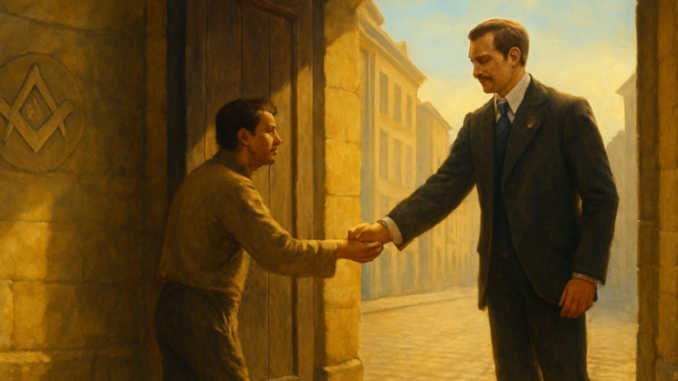
Probation is now an integral part of the Dutch justice system, offering people who have run afoul of the law a second chance and a path back into society. What many people don’t realize is that Freemasonry played a significant role in the development of probation services in the Netherlands. Driven by ideals of humanity and justice, Freemasons helped establish a system focused on rehabilitation rather than punishment alone.
The Origins of Probation in the Netherlands
The probation system as we know it today traces its roots to the 19th century. This was an era in which social reformers — many of them Freemasons — pushed back against the harsh punishments that dominated the justice system. They believed that people who had made mistakes deserved not only to face consequences but also to receive help in rebuilding their lives.
Freemasons took an active role in establishing organizations that supported prisoners after they had served their sentences. These initiatives were rooted in the Masonic principle of the improvement of the individual. The goal wasn’t simply to help individuals; it was to strengthen society as a whole by reducing reoffending and giving former prisoners a realistic path forward.
The Philosophy Behind Probation and Freemasonry
The philosophy of Freemasonry shares a great deal of common ground with the principles underpinning probation. Both are built on ideas that continue to resonate today:
Self-reflection and personal growth: Probation helps individuals understand what went wrong and how they can improve themselves — a concept that lies at the very heart of Masonic practice. In the lodge, Freemasons are constantly encouraged to examine their own conduct and strive for self-improvement, a discipline that translates naturally into the rehabilitative process.
Brotherhood and support: Probation workers provide a network of guidance and encouragement, much like the way lodge brothers support one another. This sense of community and accountability is essential to helping people reintegrate successfully.
Reintegration into society: Just as Freemasonry aims to improve the world one person at a time, probation strives to strengthen communities by giving individuals a genuine second chance. Both share the conviction that no one is beyond redemption.
How Freemasons Contributed to the Probation System
Freemasons contributed to the founding and development of probation services in several concrete ways:
Fundraising: Freemasons organized collections and charity events to finance organizations that assisted former prisoners in their transition back to civilian life.
Policy and reform: Many Freemasons were involved in political movements advocating for a more humane justice system — one that balanced accountability with compassion.
Mentorship: Individual Freemasons served as mentors to former inmates, offering personal guidance and practical support to help them find their footing again.
A System Built on Restoration
Over the decades, the Dutch probation system has evolved into a model admired around the world. It provides tailored guidance through programs focused on employment, education, and behavioral change. This approach reflects the Masonic ideals of restoration and enlightenment — the belief that every person has the potential for growth and that society benefits when that potential is nurtured rather than suppressed.
The Lasting Legacy of Freemasonry
Although the direct involvement of Freemasonry in probation services is less visible today than it once was, the ideals of brotherhood and rehabilitation remain clearly embedded in the system. Freemasonry’s lasting influence can be seen in the way compassion and responsibility have been woven into the fabric of the Dutch justice system. The Craft didn’t just advocate for change — it helped build the institutions that made change possible.
Inspiration for the Future
The role Freemasonry played in establishing probation services is a powerful example of how ideals can be transformed into tangible results. It demonstrates that humanity and justice can serve as the foundation for a system that aims not only to punish but also to heal. For future generations, this legacy offers enduring inspiration to keep improving justice systems and to continue building a more compassionate and equitable world.
The connection between Freemasonry and the development of probation reminds us that meaningful social change often begins with a set of deeply held principles. The Masonic commitment to self-improvement, brotherhood, and the betterment of society helped lay the groundwork for a justice system that values restoration alongside accountability. It is a legacy that continues to inspire — and a reminder that when ideals are put into action, they can reshape entire institutions for the better.
Copyright text & image: devrijmetselaar.nl
Texts are based on the ideas and content of the author of devrijmetselaar.nl, reviewed, corrected, and supplemented with the assistance of OpenAI. Images are created based on the ideas of the author of devrijmetselaar.nl using OpenAI/DALL-E.
Frequently Asked Questions
What role did Freemasonry play in developing the Dutch probation system?
Freemasons were instrumental in establishing probation services in the Netherlands during the 19th century, driven by ideals of humanity and justice. They actively contributed through fundraising, advocating for criminal justice reform, and serving as mentors to former inmates, helping create a system focused on rehabilitation rather than punishment alone.
How do Masonic principles align with probation philosophy?
Both Freemasonry and probation are built on the principles of self-reflection, personal growth, and brotherhood. Freemasons believe in improving the individual through discipline and self-examination, which naturally translates to the rehabilitative process of probation and helps people successfully reintegrate into society.
Did individual Freemasons help former prisoners directly?
Yes, individual Freemasons served as mentors and advocates for former inmates, offering personal guidance and practical support to help them transition back to civilian life. Their involvement demonstrated the Masonic commitment to improving the world one person at a time through genuine human connection and support.
Why was the probation system important to Freemasons in the 19th century?
Freemasons believed that people who had made mistakes deserved both consequences and an opportunity to rebuild their lives, viewing rehabilitation as essential to strengthening society as a whole. By reducing reoffending and offering a realistic path forward, they helped create a more humane and effective justice system aligned with their core values of redemption and improvement.


Be the first to comment