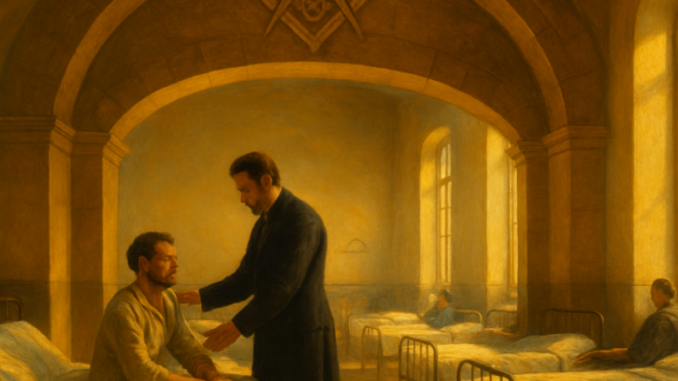
In an era when access to medical care was often a luxury reserved for the wealthy, Freemasons took it upon themselves to fund hospitals and clinics for those who could not afford treatment. Rooted in their core ideals of brotherhood and service to humanity, their commitment to improving public health laid the groundwork for a more inclusive approach to healthcare — one whose influence can still be felt today.
Medical Care in the 19th Century
During the 19th century, medical care was largely available only to those who could pay for it. Working-class families had little to no access to physicians, let alone specialized treatment. Freemasons recognized this as a grave failing of society and resolved to take action.
They began raising funds to establish hospitals and clinics where people without financial means could receive treatment. These institutions did not merely provide basic medical assistance — they often served as pioneers in public health initiatives and medical education, pushing the boundaries of what charitable healthcare could achieve.
Freemasonry and the Values of Healthcare
The philosophy of Freemasonry aligns closely with the fundamental values of healthcare. At its heart lies a deep commitment to principles that naturally extend to caring for the sick and the vulnerable:
Humanity: The conviction that every person deserves a healthy and dignified life, regardless of their social standing or financial circumstances.
Solidarity: The drive to strengthen communities by caring for their most vulnerable members, ensuring that no one is left behind.
Sharing Knowledge: Many Freemasons — including physicians, surgeons, and scientists — played an active role in spreading medical knowledge and advancing public understanding of health and disease.
Beyond financial contributions, Freemasons also organized educational programs aimed at disease prevention and public health awareness, recognizing that true healthcare extends far beyond the walls of a hospital.
Practical Contributions of Freemasons to Healthcare
Freemasons supported medical care in a variety of tangible and impactful ways:
Founding Hospitals: Lodges financed the construction of hospitals and clinics that provided free care to those in need. These institutions became vital lifelines for entire communities that had previously been shut out of the healthcare system.
Medicine Funds: Lodges established dedicated funds to purchase medications for people who could not afford them, ensuring that financial hardship did not become a death sentence.
Supporting Medical Professionals: Freemasons provided training, resources, and financial support to doctors and nurses, enabling them to carry out their work more effectively and reach more patients.
The Lasting Impact on Public Health
While the direct role of Freemasons in healthcare may be less visible today, their efforts have had a lasting and profound impact. Many of the hospitals they helped establish went on to form the foundation of modern healthcare institutions. Their unwavering focus on inclusive care contributed significantly to the now widely held belief that healthcare is a fundamental right — not merely a privilege for the wealthy.
The principles they championed — equal access, community responsibility, and the moral obligation to care for the less fortunate — continue to shape healthcare policy and charitable medical work around the world.
The involvement of Freemasons in medical care stands as a powerful example of how ideals can be transformed into concrete, life-saving action. By founding hospitals, establishing medicine funds, and supporting medical professionals, they saved countless lives and strengthened entire communities. In a world where access to healthcare remains a pressing global challenge, their legacy offers both inspiration and a reminder that solidarity and service can drive meaningful change.
Copyright text & image: devrijmetselaar.nl
Texts are based on the ideas and content of the author of devrijmetselaar.nl, reviewed, corrected, and supplemented with the assistance of OpenAI. Images are created based on the ideas of the author of devrijmetselaar.nl using OpenAI/DALL-E.
Frequently Asked Questions
What did Freemasons do to help poor people access medical care?
Freemasons raised funds to establish hospitals and clinics where people without financial means could receive free treatment during the 19th century, when medical care was largely only available to the wealthy. They also created medicine funds to purchase medications for those who couldn't afford them and provided support to medical professionals, ensuring healthcare reached entire communities that had previously been shut out of the system.
Why were Freemasons interested in supporting healthcare?
Freemasonry's core ideals of brotherhood and service to humanity naturally aligned with caring for the sick and vulnerable. Freemasons believed that every person deserves a healthy and dignified life regardless of their social standing or financial circumstances, and they were committed to strengthening communities by ensuring no one was left behind.
Did Freemasons only provide money for hospitals?
No, Freemasons contributed in many ways beyond financial donations. They organized educational programs focused on disease prevention and public health awareness, supported medical professionals with training and resources, and shared medical knowledge through their members who were physicians, surgeons, and scientists. Their comprehensive approach recognized that true healthcare extends far beyond hospital walls.
What is the lasting impact of Freemasonry's healthcare contributions?
Many hospitals founded with Masonic support became the foundation of modern healthcare systems that continue to serve communities today. Though their direct role may be less visible now, Freemasons' pioneering efforts in charitable healthcare and public health initiatives set the groundwork for the more inclusive and equitable approach to medicine that we benefit from in contemporary society.

Be the first to comment