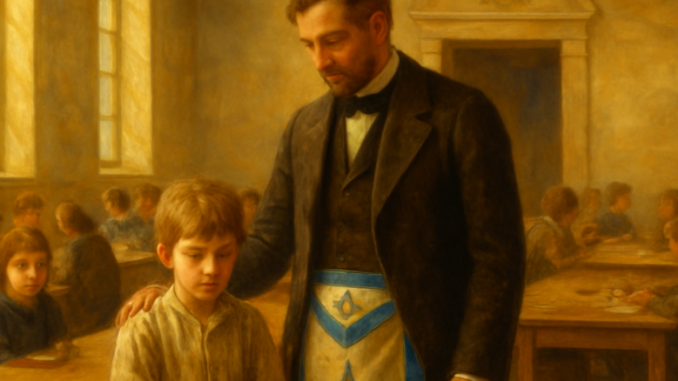
In an era when social safety nets were virtually nonexistent, orphanages were often the only lifeline for children who had lost their parents or were trapped in poverty. Freemasons played a crucial role in establishing and sustaining orphanages and child care institutions — particularly in the Netherlands, but also across the broader Western world. Their ideals of compassion, brotherhood, and social responsibility laid the foundation for initiatives aimed at providing safety, education, and hope to society’s most vulnerable members.
The Origins of Orphanages
Orphanages have existed since the Middle Ages, but it was not until the 19th century that serious attention was paid to the quality of care these institutions provided. Many early orphanages were little more than warehouses for children, with scant regard for their emotional well-being or educational development. Freemasons sought to change this by creating institutions where children could not only survive but genuinely grow and flourish.
At the heart of this effort was the Masonic conviction that children represent the future of society. Protecting and educating orphans was not seen as mere charity — it was understood as a profound social responsibility that aligned with the Craft’s deepest values.
Masonic Principles Behind Child Care
Freemasons viewed the care of vulnerable children as a duty rooted in their core ideals of brotherhood and charity. Several key principles guided their approach:
Brotherhood: The belief that every person bears responsibility for the welfare of others — especially those who cannot protect themselves. This extended naturally to children without parents or guardians.
Self-development: Freemasons did not want to merely shelter children. They aimed to provide education and opportunity, giving each child the tools to develop their potential and build a meaningful life.
Structural solutions: Rather than offering temporary relief, Masons established orphanages built on sustainable care models — institutions designed to provide long-term stability and genuine nurturing.
This philosophy resulted in orphanages that offered far more than a roof over a child’s head. They provided a home and, most importantly, a future.
How Freemasons Contributed in Practice
The contributions of Freemasons to orphanages and child welfare took many practical forms:
Funding: Lodges organized fundraising efforts to finance the construction of buildings and the employment of qualified staff. Individual Masons also made generous personal donations to sustain these institutions.
Governance and oversight: Many Freemasons served as administrators and board members of orphanages, ensuring that daily operations adhered to ethical principles and that children received proper care.
Education: Masons supported educational programs within orphanages, recognizing that schooling was the most powerful tool for lifting children out of poverty. Vocational training and literacy programs were common features of Masonic-supported institutions.
A Lasting Influence on Modern Child Care
While traditional orphanages in the Netherlands and across much of the Western world have largely been replaced by modern forms of foster care and child welfare services, the influence of Freemasonry endures. Many of the principles that Masons introduced — individualized attention, education as a pathway out of hardship, and emotional support alongside physical care — have become cornerstones of contemporary child welfare models.
The Masonic legacy is visible in the ongoing societal commitment to protecting vulnerable children and in the systems that have been established to support them. The standards of care that Freemasons championed helped shape expectations that we now take for granted.
A Legacy of Hope
The work of Freemasons in orphanages and child care serves as a powerful reminder that compassion, when paired with organization and commitment, can create lasting change. Their efforts transformed individual lives and contributed to a broader culture in which caring for children is recognized as a shared responsibility rather than a private burden.
In a time when child poverty and vulnerability remain pressing challenges around the world, the history of Masonic orphanages continues to serve as a source of inspiration for social innovation and collective action.
The Masonic tradition of caring for vulnerable children reminds us that some of the most meaningful legacies are not built in stone but in the lives we help shape. From the founding of orphanages centuries ago to the principles embedded in modern child welfare, Freemasonry’s commitment to brotherhood and compassion has left an enduring mark — one that continues to inspire all who believe that every child deserves safety, education, and hope.
Copyright text & image: devrijmetselaar.nl
Texts are based on the ideas and content of the author of devrijmetselaar.nl, reviewed, corrected, and supplemented with the assistance of OpenAI. Images are created based on the ideas of the author of devrijmetselaar.nl using OpenAI/DALL-E.
Frequently Asked Questions
What role did Freemasons play in establishing orphanages?
Freemasons were instrumental in establishing and sustaining orphanages, particularly in the Netherlands and across the Western world. They transformed these institutions from mere shelters into places where children could genuinely grow and flourish through education, care, and opportunity. Their Masonic ideals of compassion, brotherhood, and social responsibility drove them to create sustainable, nurturing environments for society's most vulnerable children.
How did Masonic principles influence their approach to child care?
Freemasons viewed child care through three core principles: brotherhood (the belief that all members bear responsibility for those who cannot protect themselves), self-development (providing education and tools for children to reach their potential), and structural solutions (building long-term institutions rather than offering temporary relief). This philosophy resulted in orphanages that provided not just shelter, but genuine homes and futures for vulnerable children.
What practical contributions did Freemasons make to orphanages?
Freemasons contributed to orphanages in multiple practical ways, including organizing fundraising efforts to finance buildings and staff, serving as administrators and board members to ensure ethical operations, and supporting educational and vocational training programs. These contributions recognized that education was the most powerful tool for lifting children out of poverty and toward meaningful lives.
How were Masonic orphanages different from other institutions of that era?
Unlike many early orphanages that functioned as mere warehouses with little regard for children's emotional or educational development, Masonic orphanages were founded on the conviction that children represent society's future. Masons created institutions focused on genuine growth, offering education, vocational training, literacy programs, and nurturing care that helped children develop their full potential.

Be the first to comment