When a central bank announces an interest rate hike, financial markets react, economists debate, and homeowners recalculate their budgets. But behind the numbers lies a deeper question that has fascinated Freemasons for centuries: what is the true nature of trust in a society, and how do we build foundations strong enough to endure when the winds change direction?
The Invisible Architect of Value
Money is, in essence, crystallized trust. A banknote has no intrinsic value — it is a promise, a symbol of collective belief in a system. When central banks adjust interest rates, they are turning dials designed to regulate that trust. Too much money in circulation undermines value; too little stifles growth. It is a delicate dance between abstract concepts that carries very real consequences for millions of people.
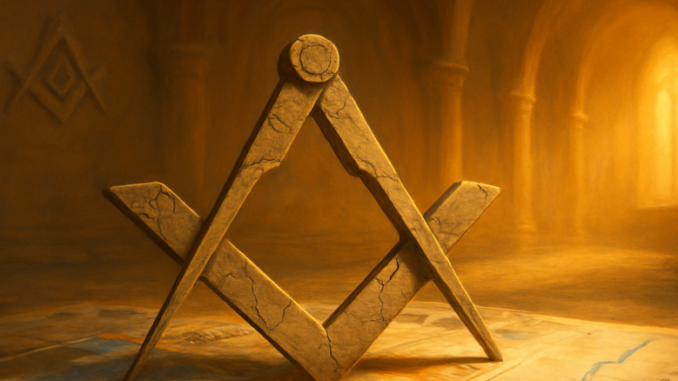
For Freemasons, this terrain is not unfamiliar. The Craft has a rich symbolic language built around construction, measurement, and balance. The compasses and the square are not merely tools of the stonemason — they are metaphors for finding equilibrium and measuring proportions. In a broader societal context, they invite us to reflect: what invisible structures support our civilization, and who safeguards their integrity?
Trust as the Foundation
A rate hike is fundamentally a signal. The central bank is communicating that it intends to curb inflation, protect purchasing power, and that it believes in the economy’s resilience to bear higher borrowing costs. It is an act of trust in the future, wrapped in a technical decision.
“The true measure of a civilization is not its wealth, but the mutual trust between its citizens.”
This idea, expressed in various forms throughout the ages, strikes at the very heart of Freemasonry. In the lodge, brothers and sisters practice building trust through discretion, honesty, and the keeping of promises. Not because these are prescribed rules, but because they come to understand that without trust, no genuine connection is possible. The temple that Freemasons symbolically construct is one of human relationships, with reliability as its cornerstone.
The Exchange Rate of Values
Economists speak of interest rates, inflation figures, and growth forecasts. Freemasons speak of wisdom, strength, and beauty. At first glance, these vocabularies seem worlds apart. Yet they share a common question: how do we assign value to what truly matters?
In an age when financial indicators dominate the headlines, the Masonic tradition invites a broader perspective. What is the interest rate on friendship? How do we measure the return on a meaningful conversation, a helping hand, or a moment of quiet reflection? These questions are not meant to deny economic realities, but to place them within a richer context.
Consider three pillars of trust that hold up any functioning society:
- Financial trust rests on institutional reliability
- Personal trust grows through individual integrity
- Social trust requires shared values
Building Stability in Uncertain Times
Interest rate decisions are often responses to economic uncertainty. Prices rise, energy costs fluctuate, and geopolitical tensions disrupt trade and production. In times like these, people search for something to hold onto — anchors in the storm.
The Masonic lodge offers such an anchor, though of a different kind. Not by promising economic security, but by creating a space where people can come together to reflect on what drives and connects them. The lodge does not debate monetary policy, but it does explore how a person can contribute to a more just society, how to act with integrity when pressure mounts, and how to build something greater than self-interest.
Individual Responsibility and the Rough Ashlar
One lesson that interest rate changes reinforce is that collective systems ultimately rest on individual choices. Every mortgage decision, every savings account, every purchase is a vote within the economic fabric. The same holds true in the social domain: every act of honesty or dishonesty, of care or indifference, contributes to the greater whole.
Freemasonry reminds us that societal change begins with personal transformation. Not by lecturing others, but by leading through example. By working the rough ashlar of one’s own character into a fitting part of a larger structure. This is the daily labor of the Craft — quiet, persistent, and deeply personal.
While economists analyze the consequences of rate decisions and policymakers weigh their next moves, we would do well to pause and consider the deeper layers of these events. Trust, as both economics and the Masonic tradition teach us, is not a given — it is an ongoing commitment. It is not dictated by central banks or by lodges, but built by individuals who choose, day after day, to act with integrity, to foster connection, and to serve the greater good. In that sense, every interest rate adjustment is also an invitation: to reflect on the foundations upon which we build together, and to reconsider our own contribution to that enduring edifice.
Copyright text & image: devrijmetselaar.nl
Texts are based on the ideas and content of the author of devrijmetselaar.nl, reviewed, corrected, and supplemented with the assistance of OpenAI. Images are created based on the ideas of the author of devrijmetselaar.nl using OpenAI/DALL-E.
Frequently Asked Questions
What does the article mean by 'money is crystallized trust'?
The article explains that money has value not because of any physical property, but because society collectively believes in and trusts the system that stands behind it. Just as a banknote is a promise rather than something intrinsically valuable, a functioning economy depends on citizens trusting in their financial institutions and each other. This concept of trust as a foundation is central to both economics and Freemasonry.
How do Masonic symbols like the compass and square relate to interest rates and economics?
The compass and square are traditional tools that symbolize measurement, balance, and equilibrium—concepts that apply directly to central banking decisions about interest rates. Just as a stonemason uses these tools to construct a sturdy building, central banks use interest rate adjustments to maintain balance in the economy and protect the purchasing power of currency. Both activities require careful measurement and proportion to create lasting stability.
What three pillars of trust does Freemasonry emphasize in society?
According to the article, functioning societies rest on three pillars: financial trust built on institutional reliability, personal trust developed through individual integrity, and social trust created through shared values. Freemasonry teaches that all three pillars are essential and interconnected, and that Masons have a responsibility to strengthen trust in their communities through honesty, discretion, and keeping their promises.
How does Freemasonry's approach to trust differ from a purely economic one?
While economists focus on measurable indicators like interest rates and inflation, Freemasonry invites reflection on immeasurable but vital values such as friendship, integrity, and meaningful human connection. The article suggests that the Masonic perspective doesn't deny economic realities, but rather places them within a richer, more holistic context that recognizes what truly matters in building a strong civilization.

Be the first to comment