Masonic brotherhood as an antidote to threatening language in the modern world
Personal Development & Leadership

When Threats Set the Tone: Brotherhood vs. Verbal Violence

You may have read the headlines and felt a pang of unease. A world leader threatening to “bomb an ally into oblivion” if they refuse to cooperate. The words linger — heavy, menacing. And as you set down the newspaper or put away your phone, you might find yourself wondering: is this where we’re headed? A world where threats become the norm and alliances crumble under the weight of power displays? In Freemasonry, we know a different compass. Not one of intimidation, but one of brotherhood. The Echo of Threatening Language When a head of state openly threatens destruction, it touches something fundamental. It goes beyond geopolitics or strategic interests around the Strait of Hormuz. It raises the question of how we as human beings relate to one another. Words create realities. They can build bridges or erect walls. They can invite dialogue or pave the way for conflict. The Greek philosopher Aristotle understood that language is never neutral. In his Rhetoric, he described how words stir emotions, persuade, but also manipulate. Threatening language on the world stage is not an abstraction. It seeps into the way all of us handle disagreement — in our communities, our workplaces, our homes. […]

City bus passengers symbolizing shared community trust and vulnerability
Freemasonry & Society

Building Safety Together: A Masonic Reflection on Trust

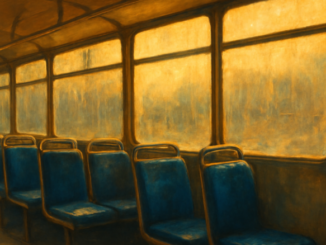
It’s early morning. On a city bus in Rotterdam, people sit side by side: a mother with her child, a student wearing headphones, an elderly man carrying groceries. They share the same space, the same journey, the same vulnerability. Then shots ring out. Today’s news confronts us with a question Freemasons have been asking for centuries: how do we build a world in which strangers can trust one another? The Bus as a Mirror of Society A city bus is more than a means of transportation. It is one of the few remaining places where every layer of society literally sits side by side. Rich and poor, young and old, people from vastly different backgrounds and life stories. No one chooses their fellow passengers, yet everyone shares a common destination. This forced proximity makes the bus a powerful symbol of what society truly is: a collection of individuals who depend on each other’s goodwill. When violence invades that shared space, it doesn’t only harm those directly involved. It shakes the very foundation of communal life — the basic trust that we can be safe among strangers. For Freemasons, this trust is never taken for granted. It is a structure that […]

Referee whistle symbolizing judgment and Masonic self-reflection
Freemasonry & Society

The Referee’s Whistle: When the Crowd Becomes the Judge

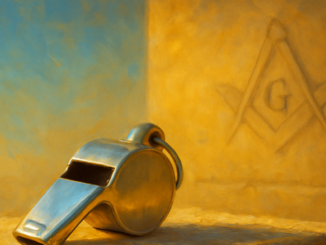
A match ends. The ball rolls to a stop. And then something erupts that has nothing to do with sport. The recent decision by a national football association to file complaints against hateful messages directed at players after a World Cup elimination reveals a deeper societal issue. How is it that people who were cheering moments ago can transform, in the blink of an eye, into judges who strip fellow human beings of their dignity? Behind this phenomenon lies a symbolic truth that Freemasons have explored for centuries: the struggle between the lower and higher self, and the choice that every moment demands of us. The Whistle as a Symbol of Final Judgment A referee’s whistle is a small object. Metal, simple, functional. Yet it carries an enormous symbolic weight. The moment it sounds, a match is frozen into a result. Win or lose. Hero or scapegoat. The complexity of ninety minutes of effort, dozens of decisions, and countless variables is reduced to a single number. This is the paradox of every judgment: it brings clarity, but it sacrifices nuance. In Freemasonry, we know a comparable symbol: the gavel. The Worshipful Master strikes it at decisive moments — not to […]

Compasses and square on a stone surface symbolizing Masonic trust and balance
Freemasonry & Society

Interest Rates as a Measure of Trust: A Masonic Perspective

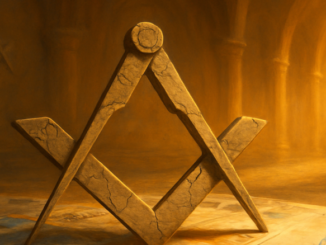
When a central bank announces an interest rate hike, financial markets react, economists debate, and homeowners recalculate their budgets. But behind the numbers lies a deeper question that has fascinated Freemasons for centuries: what is the true nature of trust in a society, and how do we build foundations strong enough to endure when the winds change direction? The Invisible Architect of Value Money is, in essence, crystallized trust. A banknote has no intrinsic value — it is a promise, a symbol of collective belief in a system. When central banks adjust interest rates, they are turning dials designed to regulate that trust. Too much money in circulation undermines value; too little stifles growth. It is a delicate dance between abstract concepts that carries very real consequences for millions of people. For Freemasons, this terrain is not unfamiliar. The Craft has a rich symbolic language built around construction, measurement, and balance. The compasses and the square are not merely tools of the stonemason — they are metaphors for finding equilibrium and measuring proportions. In a broader societal context, they invite us to reflect: what invisible structures support our civilization, and who safeguards their integrity? Trust as the Foundation A rate […]

Masonic square and compasses symbolizing foresight and community preparedness
Freemasonry & Society

Gas Shortages and Foresight: Masonic Lessons on Preparedness

Reports of dwindling gas reserves ahead of winter raise a fundamental question that reaches far beyond the energy sector. What does it truly mean for a society to look ahead? And what can we learn from a tradition that has placed preparation, responsibility, and community at its core for centuries? Freemasonry offers a surprisingly relevant perspective on this very modern challenge. The Art of Anticipation When a major energy authority publicly voices concerns about winter gas supplies, it touches on something deeper than statistics and cubic meters. It speaks to our collective ability — or inability — to look beyond the present moment and anticipate what lies ahead. This art of foresight has been a central theme in philosophical traditions for centuries, and Freemasonry is no exception. In the symbolic language of Freemasonry, the Master Builder plays a crucial role. A Master Builder does not simply start stacking stones. He first draws a plan, calculates the required materials, and accounts for the changing seasons. The great cathedrals of old were not built in a single year — they were raised over generations. That long-term vision, the capacity to labor on something whose fruits will only ripen far in the future, […]

February symbolism and purification represented through Freemasonry traditions
Freemasonry & Society

February Symbolism: Purification and Its Role in Society

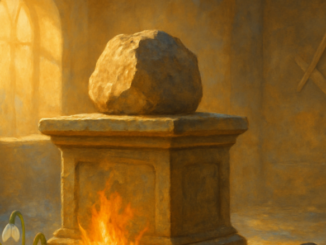
February carries a depth of meaning that stretches back thousands of years, rooted in ancient traditions of purification, reflection, and societal renewal. The very name comes from the Latin word februare, meaning to cleanse. For the Romans, this was the month of purification — a time to settle old debts and prepare the community for a fresh start. This timeless symbolism resonates powerfully with Freemasonry, where the work of building a better society always begins with inner purification. The Origins of February: Symbolism of Cleansing The Roman festival of Februalia was devoted entirely to ritual purification. During this period, homes were scrubbed clean, offerings were made to the gods, and the city of Rome was swept clean — both literally and figuratively. This was no casual tradition. The Romans firmly believed that a society could only flourish when its members freed themselves of what no longer served them. In Freemasonry, we recognize this same principle in the concept of the rough ashlar. Every Freemason begins as an unworked stone and spends a lifetime chipping away at imperfections. This is not a selfish pursuit of perfection — it is a deeply social commitment. After all, how can we contribute to a […]

Vrijmetselarij - Vrijmetselarij en Maatschappij – Persoonlijke Groei met Impact op de Wereld om je Heen
Freemasonry & Society

Freemasonry and Society – Personal Growth With Real-World Impact

Freemasonry is often described as an inner journey — a path toward self-knowledge, moral depth, and ethical living. But that journey doesn’t end at the lodge door. In fact, that’s where it truly begins. Freemasonry and society are inseparably linked, because what good is personal growth if it has no positive influence on the world around you? Society as the Real Proving Ground Freemasonry is not an escape from reality. It’s a training ground for reality. Inside the lodge, you work on yourself: you learn to think symbolically, examine your own behavior, and sharpen your moral compass. Then you take those insights with you — into your workplace, your family, your friendships, and your community. Precisely because Freemasons engage in regular, structured self-reflection rooted in ethics and ideals, they tend to be conscious and engaged citizens. They continually ask themselves: How can I contribute? What can I improve? From Self-Awareness to Social Impact Freemasonry and civic engagement go hand in hand. The underlying idea is simple: by improving yourself, you also improve the world. This philosophy plays out in tangible ways: Freemasons frequently dedicate their time to community organizations, from local neighborhood initiatives to international humanitarian projects. Many lodges support […]