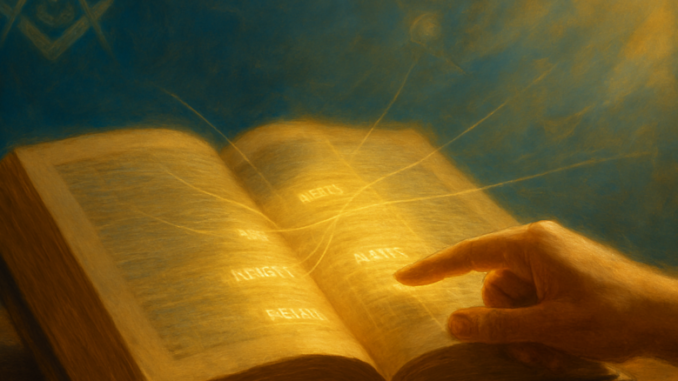
When we speak of the allusive meaning of words and images, we enter a fascinating realm where nothing is said directly, yet everything is suggested. Allusion is the art of the hint — a reference to something greater without ever naming it outright. In Freemasonry, this way of communicating forms the beating heart of symbolic language. Where others seek direct answers, the Freemason embraces the power of what remains unspoken.
What Does “Allusive” Actually Mean?
The word “allusive” derives from the Latin alludere, which literally means to play toward something or to refer to it indirectly. An allusive expression never states its meaning outright — instead, it plays with references that the listener or reader must decipher. This demands active engagement, a willingness to look beneath the surface. In everyday language, we use allusions far more often than we realize. When someone speaks of an “Achilles’ heel” or a “stumbling block,” they are referencing stories that resonate far deeper than the words themselves.
Allusive meaning distinguishes itself from literal meaning by drawing on shared knowledge, experience, or culture. It creates a bond between speaker and listener — an invisible thread of understanding that exists only for those who recognize the reference. This makes allusive language simultaneously inclusive and exclusive: it connects those who are initiated while inviting outsiders to dig deeper.
Allusive Meaning in Masonic Symbolism
Freemasonry has elevated allusive speech to a true art form. Consider the square and compasses, the most widely recognized symbols of the Craft. These tools do not simply refer to construction equipment — they allude to abstract concepts such as measure, balance, and the relationship between spirit and matter. The compasses draw circles, suggesting boundlessness, while the square creates right angles, alluding to uprightness and moral rectitude. None of these meanings are ever stated literally. They are suggested, hinted at, and left to the contemplation of the searching mind.
The symbol does not speak — it whispers. And those who listen hear more than words could ever convey.
This allusive approach serves a deeper function than secrecy alone. It compels personal interpretation and inner work. Where a direct explanation can be received passively, an allusion demands active participation. The Freemason does not receive ready-made truths but is given tools to forge meaning for himself.
The Rough Ashlar: A Masterclass in Allusion
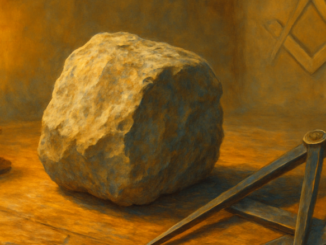
One of the most striking examples of allusive symbolism in Freemasonry is the rough ashlar — the unworked stone that occupies a central place in the lodge. Taken literally, it is nothing more than an uncut piece of rock. But its allusive meaning extends into the very fabric of human existence. The rough ashlar refers to the individual in an unpolished state, full of sharp edges and imperfections. The working of this stone — a recurring motif throughout Masonic ritual — alludes to self-improvement, to the lifelong journey toward a more refined version of ourselves.
What makes this symbolism so powerful is that it never prescribes what that improvement should look like. The allusion opens possibilities rather than closing them off. Every Freemason may contemplate his own rough ashlar and determine for himself which edges most need attention. This openness makes the symbolic language universally accessible, regardless of personal background or belief system.
Light and Darkness: An Allusive Pairing
The interplay between light and darkness in Freemasonry is saturated with allusive meaning. Light is never defined as mere physical illumination — it alludes to knowledge, insight, and awareness. The journey from darkness to light, which every Freemason symbolically undertakes, refers to the universal human quest for understanding. This allusion resonates across countless traditions and cultures worldwide, underscoring the universal power of such suggestive speech.
The candidate who enters the lodge in darkness and moves toward the light is not simply walking across a room. He is enacting an ancient metaphor that connects him to seekers throughout history — from Plato’s cave to the Enlightenment itself. The allusion binds the personal experience to something far greater, without ever needing to explain the connection explicitly.
Why Allusive Communication Still Matters Today
In an age of information overload where directness is prized above all, allusive communication might seem old-fashioned. Yet there is a timeless wisdom embedded in this indirectness. Allusion invites reflection, encourages us to draw our own connections, and fosters a personal relationship with truth. Where direct language promotes consumption, allusive speech stimulates creation.
Consider these principles at work in Masonic practice:
- Allusions demand active interpretation and self-examination.
- Symbols remain relevant because their meaning grows alongside the observer.
- Indirect communication creates space for nuance and multiplicity of meaning.
- Veiled speech connects generations through shared references and traditions.
Freemasonry, through its symbolic language, preserves a method of transmitting knowledge that reaches beyond the purely intellectual. It speaks to the imagination, touches the emotions, and leaves room for the mystery that surrounds every human life. In this sense, allusive meaning is not a detour on the road to truth — it is the royal road, one that transforms the traveler into an active co-creator of insight.
The allusive meaning of symbols builds a bridge between the visible and the invisible, between what is said and what is intended. For the Freemason, this is not a game of concealment but an invitation to reveal. Every symbol displayed in the lodge, every allusion woven into ritual, carries within it the promise of deeper understanding for those willing to seek. And in that seeking lies perhaps the greatest allusion of all: that the path to wisdom begins with acknowledging what we do not yet know — and finding the courage to travel onward.
Copyright text & image: devrijmetselaar.nl
Texts are based on the ideas and content of the author of devrijmetselaar.nl, reviewed, corrected, and supplemented with the assistance of OpenAI. Images are created based on the ideas of the author of devrijmetselaar.nl using OpenAI/DALL-E.
Frequently Asked Questions
What does 'allusive meaning' mean in Freemasonry?
Allusive meaning refers to indirect or veiled communication where ideas are suggested rather than stated directly. In Freemasonry, this technique uses symbols and hints to invite personal interpretation and deeper understanding, creating a bond between those who recognize the references. This approach encourages active mental engagement rather than passive reception of information.
Why does Freemasonry use symbolic and allusive language instead of direct explanations?
Allusive symbolism in Freemasonry compels personal reflection and inner work, allowing each member to forge their own meaning and understanding. Direct explanations can be received passively, but symbols that allude to deeper truths demand active participation and contemplation, which leads to more profound personal growth and spiritual development.
Can you give an example of allusive meaning in Masonic symbols?
The square and compasses, Freemasonry's most recognized symbols, exemplify allusive meaning perfectly. Rather than simply representing tools, they allude to abstract concepts like measure, balance, moral rectitude, and the relationship between spirit and matter. The compasses suggest boundlessness through their circles, while the square alludes to uprightness through its right angles—meanings that are whispered rather than explicitly stated.
What is the significance of the rough ashlar in Masonic symbolism?
The rough ashlar is a masterclass in allusive symbolism, representing far more than an unworked stone. It alludes to the individual in an unpolished state, with rough edges and imperfections, while its working throughout Masonic ritual symbolizes self-improvement and the refinement of one's character. This symbol invites Freemasons to contemplate their own personal development and transformation.
How does allusive language create connection among Freemasons?
Allusive language creates an invisible thread of understanding between those who recognize its references, making it simultaneously inclusive for initiates and inviting for those seeking deeper knowledge. This shared language and symbolism connects Freemasons across time and geography, fostering a sense of brotherhood based on mutual understanding and common spiritual pursuit.


Be the first to comment