
You’ve been there before: sitting in a meeting, a team, or a community where everyone has the best of intentions, yet genuine connection never materializes. Everyone talks, but nobody builds. The Epistle to the Ephesians, written in the first century, speaks directly to this challenge. And remarkably, this ancient text resonates deeply with what Freemasons have been striving to do for centuries — building a community that goes far beyond words alone.
The Heart of the Epistle to the Ephesians
The Epistle to the Ephesians, traditionally attributed to the Apostle Paul, was addressed to the faith community in Ephesus, a thriving port city in what is now modern-day Turkey. Unlike some other letters in the New Testament, this epistle doesn’t revolve around specific conflicts or misconduct. Its central theme is the unity of all believers, regardless of background. The author employs a powerful metaphor that any Freemason will immediately recognize: the community as a building, a temple under construction, with Christ as the cornerstone.
What makes this letter truly remarkable is its emphasis on the concrete and practical. Rather than offering abstract theological musings, it provides actionable guidance for daily life. How do you handle anger? How do you speak the truth? How do you contribute to a community larger than yourself? These are not rhetorical questions — they are invitations to act.
The Temple as a Symbol of Growth
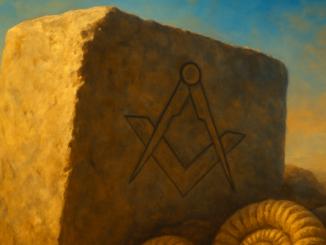
In Chapter 2, the author describes how believers are built up into a holy temple. This image speaks directly to the Masonic experience. In the lodge, building the inner temple is the central pursuit. You work on your rough ashlar day by day, shaping it so that it may eventually fit into a greater structure. The Epistle to the Ephesians conveys something strikingly similar: you are not an isolated element, but part of a living edifice that is constantly growing.
Unity is not a state you arrive at — it is a structure you build daily through small, deliberate actions.
This building symbolism traces back to King Solomon and the construction of the First Temple in Jerusalem. Freemasonry draws its foundational narratives from this tradition, including the legend of Master Builder Hiram Abiff. What the Epistle to the Ephesians adds is an emphasis on living stones: it is people who form this building, not inert matter. And those people must work together, set aside their egos, and serve something greater than themselves.
Practical Lessons for Everyday Life
The epistle contains practical instructions you can apply starting today. Chapter 4 includes a passage that will resonate with every Freemason: “Speak the truth, but in love.” This is not a license to share unfiltered opinions. It is a call to honesty that simultaneously builds connection. In the lodge, this is exactly what you practice — learning to communicate in a way that does not wound but uplifts.
Another practical lesson concerns the handling of anger. The text instructs: “Do not let the sun go down on your wrath.” Translated into everyday terms, this means: resolve conflicts quickly and do not allow resentment to fester. In brotherhoods, whether Masonic lodges or other communities, this advice is worth its weight in gold. Unspoken frustrations poison every form of collaboration.
Three Steps to Building Unity
Drawing from the wisdom of Ephesians, here are three actionable steps you can implement immediately:
1. Speak honestly, but always ask yourself: does this build up or tear down? Before speaking, pause and consider the impact of your words. Truth delivered without compassion is just another form of destruction.
2. Resolve small conflicts the same day, before they grow into walls. A minor misunderstanding left unaddressed can become an insurmountable barrier within weeks. Address it while it’s still small.
3. See yourself as part of a greater whole, and ask: what can I contribute? Shift your perspective from what you can get to what you can give. This single change transforms every group you belong to.
The Armor: Protection Against Inner Adversaries
Chapter 6 contains the famous passage about the spiritual armor of God. The author lists elements such as the belt of truth, the breastplate of righteousness, and the shield of faith. To the modern reader, this imagery may sound archaic, but the underlying message is timeless. This is not about physical combat — it is about inner protection against the forces that pull you off course: doubt, dishonesty, and shortsightedness.
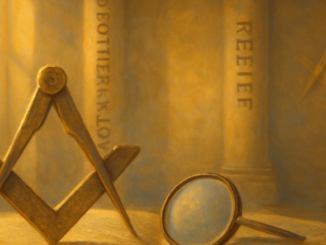
Freemasonry employs remarkably similar symbolism. The working tools you receive — the square, the compasses, the gavel — are not physical instruments for literal construction. They represent inner qualities that you cultivate over time. The Epistle to the Ephesians does precisely the same thing: it offers a symbolic framework through which you can shape and protect yourself against moral and spiritual erosion.
Unity in Diversity
One of the most striking aspects of the Epistle to the Ephesians is its emphasis on unity despite differences. The author writes to a community composed of people from vastly different backgrounds: Jews and Gentiles, slaves and free people, men and women. The message is clear: these differences do not disappear, but they are transcended by a shared purpose.
This resonates powerfully with Freemasonry, which welcomes people of all religions and backgrounds. In the lodge, individuals meet who might never cross paths outside that sacred space. The shared language of symbols and rituals makes that encounter possible. The Epistle to the Ephesians describes a remarkably similar ideal: a space where differences do not vanish but contribute to a richer, more complete whole.
From Text to Action
Reading ancient texts is valuable, but real transformation happens only in their application. The Epistle to the Ephesians invites concrete action. This week, start with just one element: consciously choose to speak the truth in a conversation in a way that builds rather than breaks. Or resolve a lingering conflict before the day ends. Pay attention to what shifts — in your relationships and within yourself.
Freemasonry teaches that you improve the world by first working on yourself. The Epistle to the Ephesians says something strikingly similar: renewal begins from within and radiates outward. The edifice you build is not for yourself alone. It is a temple that welcomes and shelters others.
The Epistle to the Ephesians offers far more than theological reflection. It is a practical handbook for anyone who wants to build genuine community. The symbols of the temple, the armor, and the living stones speak directly to the Masonic heart. Whether you encounter these ideas in a lodge, a place of worship, or simply in the pages of this ancient letter, the invitation remains the same: stop merely talking about unity and start building it — one stone, one honest word, one resolved conflict at a time.
Copyright text & image: devrijmetselaar.nl
Texts are based on the ideas and content of the author of devrijmetselaar.nl, reviewed, corrected, and supplemented with the assistance of OpenAI. Images are created based on the ideas of the author of devrijmetselaar.nl using OpenAI/DALL-E.
Frequently Asked Questions
What is the connection between the Epistle to the Ephesians and Freemasonry?
Both emphasize building unity and community through practical, deliberate action rather than abstract ideals. The Epistle's central metaphor of believers as 'living stones' constructing a holy temple directly parallels the Masonic concept of refining the self (the rough ashlar) to fit into a greater fraternal structure. This shared vision shows how ancient wisdom and Masonic teachings work together to create meaningful communities.
How does Freemasonry apply the principle of 'speaking truth in love' from Ephesians?
In the lodge, Masons practice honest communication that uplifts rather than wounds, embodying the biblical principle that truth-telling should strengthen bonds rather than damage them. This balanced approach helps create a safe space where members can be authentic while maintaining respect and brotherhood. It's a cornerstone of how Masonic communities build genuine connection and trust.
What does the temple symbolism mean in both Freemasonry and the Epistle to the Ephesians?
In both traditions, the temple represents personal and collective growth built through daily effort and dedication. Masons work on shaping their 'rough ashlar' (themselves) to eventually fit into the larger fraternal structure, just as Ephesians describes believers becoming 'living stones' in a holy temple. This metaphor reminds us that unity is not a destination but an ongoing practice of improvement and service to something greater than ourselves.
Can non-Masons benefit from understanding these connections between Ephesians and Freemasonry?
Absolutely—the practical lessons about building genuine community, managing anger constructively, and speaking truthfully with compassion are universally valuable. Whether you're in a workplace, family, or civic organization, these principles help create stronger, more authentic connections among people. Freemasonry demonstrates that these ancient teachings remain powerfully relevant for anyone seeking to build meaningful unity in their communities today.


Be the first to comment