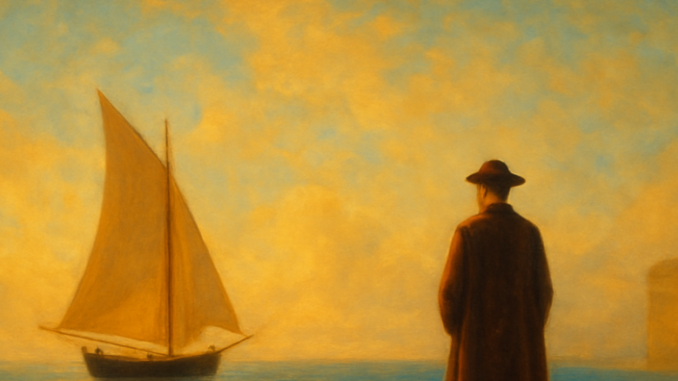
In the sixteenth century, a French nobleman wrote an essay that still challenges the way we think about death, fame, and the memory we leave behind. Michel de Montaigne explored, in the third essay of his first book, how human emotions stretch toward times and places we will never experience. Centuries later, his questions still resonate — perhaps nowhere more deeply than in the symbolic world of Freemasonry, where mortality and eternity stand as central themes of reflection and ritual.
The Core Idea of the Essay
Montaigne opens with a deceptively simple observation: we concern ourselves with matters that lie far beyond our own existence. We worry about our reputation after death, about what will happen to our bodies, about the memory we leave behind. But can we truly feel anything about events that take place when we no longer exist? This is the central paradox Montaigne investigates. He argues that our emotions extend into domains our consciousness can never reach — and he wonders whether this makes any sense at all.
Historical Examples as Mirrors
As is typical of his essays, Montaigne draws liberally from classical antiquity. He cites Roman generals and Greek philosophers who were intensely preoccupied with their legacy. Some demanded magnificent tombs; others feared their bodies would be left unburied. Montaigne describes how these anxieties and desires gripped the living, while the dead themselves could no longer experience any of it.
One particularly striking example concerns the desire for a dignified burial. In the ancient world, it was considered a great disgrace for a body to be left exposed to the elements. Families went to extraordinary lengths to give their loved ones a proper grave. But Montaigne asks the essential question: for whom is all this effort, really? The deceased feels nothing. It is the living who seek comfort in the ritual, who attach meaning to the gesture.
The Symbolism of Mortality in Freemasonry
Here, Montaigne‘s reasoning touches a deeper truth that Freemasonry also holds dear. Death is not merely a biological fact — it is a symbol that gives life itself its meaning. In Masonic ritual, the confrontation with mortality plays a profound role. The skull, the hourglass, the memento mori: these are not macabre decorations but deliberate reminders of our finitude, urging us to live with awareness and intention.
We prepare ourselves for what is to come by understanding what has passed, and by accepting what is inevitable.
Montaigne would have understood this symbolic approach. His essay suggests that our feelings about death are not irrational but are expressions of a deep longing for coherence and meaning. We want our lives to matter, even when we are no longer here to witness their impact. This desire for continuity — for a legacy that transcends us — is profoundly human.
Fame and Vanity
Montaigne examines the desire for fame with a mixture of understanding and irony. He acknowledges that the thought of a lasting reputation can be comforting, but he also points to its vanity. What does fame mean to someone who no longer exists to enjoy it? The praise of future generations never reaches our ears. Yet countless people chase this fleeting form of immortality as though their happiness depended on it.
In Freemasonry, this tension is addressed through the emphasis on inner values over outward display. The true building is not the monument we leave behind but the character we shape during our lifetime. The rough ashlar we work upon is our own being. This symbolism invites humility: it is not fame that counts, but the quality of our actions in the here and now.
The Lesson for Today
What can we learn from Montaigne‘s reflections in the twenty-first century? In an age where social media constantly invites us to curate our digital legacy, his question is more relevant than ever. We post, share, and archive as though our online presence offers a kind of immortality. But just like those Roman tombs, these digital monuments will eventually be forgotten too.
Montaigne invites us to reconsider our priorities. If our feelings truly reach beyond ourselves, let us direct them toward what holds real value: the connections we forge, the wisdom we pass on, the kindness we show. These are the things that, though impermanent, leave a genuine trace in the lives of others.
Our worries about the future say more about the present than about what is to come. Rituals surrounding death serve the living, not the dead. True immortality lies not in fame, but in the influence we have on others. And the confrontation with our own mortality deepens our understanding of life itself.
A Timeless Invitation to Self-Reflection
Montaigne’s third essay is more than a philosophical exercise — it is an invitation to look inward. By examining how our feelings extend toward the unknowable, we learn something essential about ourselves. Freemasonry, with its rich symbolism surrounding life, death, and rebirth, offers a framework within which these questions can be explored. Not to find definitive answers, but to honor the questions themselves as part of the human search for meaning.
Michel de Montaigne leaves us with a paradox that is both unsettling and liberating. Our feelings reach further than we can follow — and that is precisely what makes us human. Recognizing this reach, while accepting our limits, may be the very essence of wisdom. In the symbolic language of Freemasonry: we do not build for eternity, but the act of building itself is what truly matters.
Copyright text & image: devrijmetselaar.nl
Texts are based on the ideas and content of the author of devrijmetselaar.nl, reviewed, corrected, and supplemented with the assistance of OpenAI. Images are created based on the ideas of the author of devrijmetselaar.nl using OpenAI/DALL-E.
Frequently Asked Questions
What is the connection between Montaigne's essay and Freemasonry?
Montaigne's exploration of how human emotions extend beyond our existence parallels Freemasonry's central teachings about mortality and legacy. Both traditions use reflection on death and finitude as tools for living more meaningfully and purposefully.
Why does Freemasonry use symbols like skulls and hourglasses?
These symbols serve as intentional reminders of our finite nature, encouraging members to live with greater awareness and intention. Rather than being morbid, they help Masons understand that confronting mortality gives life deeper meaning and purpose.
How does Montaigne's paradox about feelings after death relate to Masonic practice?
Montaigne questions whether we can truly feel concern about events after we're gone, yet Masons embrace rituals around legacy and remembrance. Freemasonry teaches that this desire for continuity and meaningful impact is not illogical but reflects a profound human need to contribute to something greater than ourselves.
What does Montaigne mean by emotions reaching beyond ourselves?
Montaigne observes that we concern ourselves with reputation, burial, and memory long after we die—emotions extending to times we'll never experience. Freemasonry honors this insight by recognizing that the meaning we create through our actions and legacy transcends our individual existence.


Be the first to comment