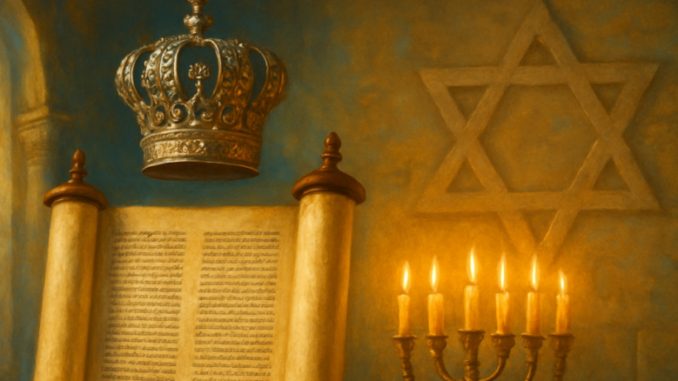
In a hushed lodge room, a voice reads out names. Not just any names, but names of generations — of ancestors, of people who built and who fell, who knew bondage and who found freedom. The Mason listening feels how each spoken word carries weight, how a name is far more than a collection of letters. This is the essence of Shemot, the second book of the Torah, which opens in the Jewish tradition with the words “And these are the names.” It is a book about liberation, about building something sacred, and about the transformation of a people learning what it truly means to be free.
What Lies Behind a Name?
In the Hebrew language, every word carries a deeper resonance. Shemot — literally “names” — does not begin with dramatic events but with a simple enumeration of the sons of Jacob who descended into Egypt. On the surface, this reads like a dry genealogy. But in the rabbinical tradition, it conveys a fundamental lesson: every person counts, and every name carries an entire world within it. Jewish wisdom teaches that a name reveals someone’s essence — their destiny and character.
For Freemasons, this resonates deeply. The act of naming plays a central role in Masonic ritual. When a candidate enters a lodge, he is asked for his name. This is no mere formality — it is a moment of recognition: you are not an anonymous figure, but a human being with a unique calling. Just as the Israelites in Egypt preserved their identity by holding fast to their names, so too does the Freemason maintain his inner compass by knowing who he truly is.
The Journey from Slavery to Freedom
At the heart of Shemot lies the Exodus from Egypt — the liberation of an oppressed people. This story has inspired countless individuals through the centuries, from philosophers like Spinoza reflecting on political freedom to spiritual traditions that interpret the Exodus as an inner journey. The Hebrew word for Egypt, Mitzrayim, literally means “narrow places” or “constrictions.” The Exodus is therefore not merely a geographical movement but a powerful symbol for every liberation from confining circumstances.
True freedom does not begin with leaving a physical place. It begins with breaking the inner chains that hold us captive.
Freemasonry embodies this same dynamic. Initiation is often described as a passage from darkness to light, from ignorance to knowledge, from captivity to liberation. The candidate who enters the lodge blindfolded is symbolically dwelling in his own Egypt. When the light is revealed to him, his personal exodus begins. But as the Jewish people discovered, the wilderness beyond Egypt is not a final destination — it is a path of learning and growth.
Moses: Master Builder of a People
The figure of Moses dominates Shemot. Born into oppression, raised at Pharaoh’s court, forced to flee, and ultimately returning as a liberator — his story is one of the most compelling in human history. His leadership, however, was not that of a warrior but of a teacher and a master builder. He received the Torah on Mount Sinai, gave structure and law to a chaotic multitude, and guided the construction of the Tabernacle.
The rabbinical tradition describes Moses as the most humble person who ever lived. His greatness lay not in his ego but in his capacity to serve. This ideal finds a powerful echo in Freemasonry, where leadership is understood as servanthood. The Worshipful Master of a lodge is not a ruler but a facilitator of growth — someone who helps others build their own inner temple.
The Tabernacle: Building a Sanctuary in the Wilderness
A significant portion of Shemot is devoted to detailed instructions for building the Tabernacle — the portable sanctuary that accompanied the Israelites through the desert. Every detail is specified: the types of wood, the fabrics, the measurements, the gold and silver. To a casual reader, these passages might seem tedious. But in Jewish mysticism, these details reveal profound truths about the structure of the cosmos and the human soul.
Freemasons will immediately recognize their own symbolism of building here. The lodge is often compared to King Solomon’s Temple, which was itself inspired by the Tabernacle. The act of building is never purely physical. Every stone laid represents a virtue; every wall, an aspect of character. The craftsman who worked on the Tabernacle did so with devotion and precision, knowing that his labor contributed to something far greater than himself.
Consider the layers of meaning embedded in this image: the Tabernacle as a symbol of the inner temple within every person; craftsmanship as a spiritual discipline; the wilderness as a place of transformation and learning; and the building of community through shared labor. Each of these themes speaks directly to the Masonic experience.
Receiving Light on the Mountain
The revelation at Mount Sinai is the spiritual climax of Shemot. The people stand at the foot of the mountain, enveloped in thunder and lightning, while Moses ascends to receive the divine teaching. This moment of encounter between the human and the transcendent forms the very core of Jewish identity. Tradition holds that not only Moses but all of Israel — and indeed all future souls — were present at Sinai.
The theme of receiving light is universal and finds resonance across many traditions, Freemasonry included. The search for knowledge, the aspiration to be enlightened, the moment when the blindfold is removed — these are echoes of the same fundamental human experience. The light of Sinai is not exclusive. It points toward a truth that can awaken in every sincere seeker.
The Living Lesson of Shemot
Shemot does not speak only of the past. This ancient book reminds us that liberation is a continuous process, that building never ceases, and that every name matters. In a world that often promotes anonymity and superficiality, these timeless texts offer a powerful countervoice. Know yourself. Honor your origins. Work toward your inner freedom. And contribute to building something greater than yourself.
Shemot invites us to truly understand our own name, to undertake our personal exodus, and to help build a sanctuary — not one of stone, but of spirit and community. For Freemasons and seekers alike, these ancient words carry a living message: every name is sacred, every liberation is earned, and every act of building brings us closer to the light we are all called to seek.
Copyright text & image: devrijmetselaar.nl
Texts are based on the ideas and content of the author of devrijmetselaar.nl, reviewed, corrected, and supplemented with the assistance of OpenAI. Images are created based on the ideas of the author of devrijmetselaar.nl using OpenAI/DALL-E.
Frequently Asked Questions
What is the connection between Shemot and Freemasonry?
Both Shemot and Freemasonry emphasize the power of names and personal identity, as well as the journey from darkness to light and from bondage to liberation. In Shemot, names carry the essence and destiny of individuals, while in Freemasonry, a candidate's name is recognized as a moment of acknowledging their unique calling. Both traditions use the Exodus narrative as a symbol for spiritual and inner transformation.
What does the Hebrew word 'Mitzrayim' mean and why is it significant?
Mitzrayim, the Hebrew word for Egypt, literally means 'narrow places' or 'constrictions.' This meaning is significant because it represents more than just a physical location—it symbolizes any confining circumstances or inner chains that hold people captive. The Exodus from Mitzrayim therefore represents liberation not just geographically, but from all forms of bondage and limitation.
How does Masonic initiation relate to the concept of freedom in Shemot?
Masonic initiation mirrors the Exodus journey from bondage to freedom. A candidate entering the lodge blindfolded symbolically dwells in his own 'Egypt' of ignorance and darkness. The initiation process represents a passage from darkness to light, from ignorance to knowledge, and from captivity to liberation—the same transformation of consciousness that the Exodus represents in the Shemot narrative.

Be the first to comment