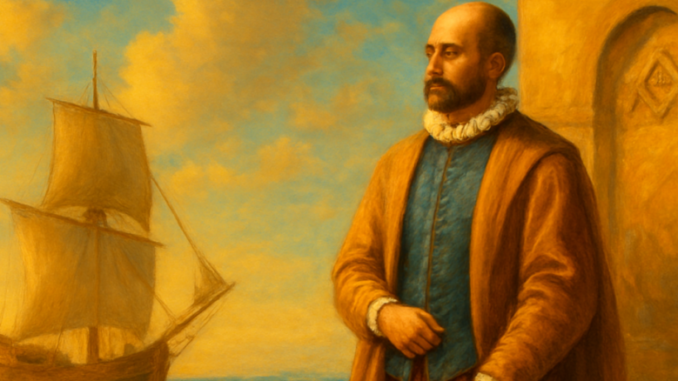
Can a person rightfully choose the moment of their own departure? It is a question that has divided philosophers, theologians, and lawmakers for centuries. Michel de Montaigne took it up in his Essays, and in the third essay of the second book he gave it a treatment of uncommon honesty and depth. In “A Custom of the Isle of Cea,” he examines voluntary death not as an abstract moral problem but as a profoundly human question — viewed through the eyes of countless historical figures who faced that very choice.
The Core Idea: Sovereignty Over One’s Own Life
The essay takes its title from the island of Kea (known in antiquity as Cea), a Greek island where, according to ancient sources, a remarkable custom existed. Elderly inhabitants who felt their life was complete would drink a cup of poison during a ceremonial gathering, consciously taking their leave. Montaigne uses this practice as a starting point for a much broader inquiry: Under what circumstances is a person permitted to end their own life? And who ultimately holds authority over that decision?
Montaigne approaches the matter without dogma. He piles up examples, counterexamples, and considerations, faithful to his method of weighing and balancing. It is precisely this openness that makes the essay so remarkable. He refuses to deliver a definitive verdict and instead invites the reader to think along with him, rather than accept a ready-made answer.
A Procession of Historical Examples
What makes this essay so characteristic within Montaigne’s body of work is the sheer richness of its historical cases. He brings forward an impressive procession of figures who chose voluntary death or deliberated on it. Seneca, the Stoic philosopher who opened his own veins on Emperor Nero’s orders, plays a prominent role. But Cato the Younger also receives extensive attention — the man who took his own life after his defeat by Julius Caesar, refusing to live under a tyrant. Montaigne admires Cato’s unyielding resolve, yet simultaneously places that admiration in perspective.
Beyond these, Montaigne refers to Cleombrotus of Ambracia, who according to tradition leaped from a wall after reading Plato’s dialogue on the immortality of the soul, and to the Stoic teacher Cleanthes, who starved himself to death. The death of Socrates — who accepted the hemlock without attempting to flee — also resonates throughout the essay. Each example serves not as proof of a single position but as an illustration of the question’s immense complexity.
The Stoic Tradition and Its Limits
Stoic philosophy forms the primary philosophical backdrop of the essay. For thinkers like Seneca and Epictetus, voluntary death was not an act of despair but an ultimate expression of inner freedom. Those who no longer found life meaningful or bearable had the right to step away — much as a guest leaves a banquet when it no longer pleases him. Montaigne gives this position ample room, but he also lets the counterarguments speak.
He references Aristotle, who regarded voluntary death as a form of cowardice when it sprang from fleeing pain or adversity. The Christian tradition, which views life as a divine gift over which humans hold no personal authority, also finds its place in the discussion. Montaigne is acutely aware of the tension between these perspectives and deliberately chooses to elevate neither to the status of absolute truth.
In this essay, Montaigne does not seek a definitive answer to whether voluntary death is permissible. What he seeks is the courage to pose the question honestly, without looking away.
Montaigne’s Philosophical Method
What this essay reveals about Montaigne’s method of thinking is at least as valuable as its substantive conclusions. He writes not as a systematic philosopher proving theses but as an essayist in the most literal sense of the word — someone who tries, who weighs, who gropes. The French verb essayer means, after all, “to try.” Montaigne tries out positions, holds them up to the light, and then sets them down again. This is what makes his work both timeless and strikingly modern.
In this essay, we see that quality with particular clarity. He begins with an exotic custom on a distant island, broadens the perspective to encompass the entire Greco-Roman world, touches on theological debates, and ultimately returns to the individual confronted with their own mortality. It is a movement from the general to the personal, from the cultural to the existential.
The Key Themes at a Glance
Several powerful themes weave through this essay. First, there is the sovereignty of the individual over their own life and death. Then comes the tension between the Stoic conception of death as liberation and the Christian view of life as a sacred gift. Closely related are the roles of courage, honor, and dignity at the end of life — and the crucial distinction between death as an act of flight and death as a conscious, deliberate choice. Finally, threading through all of these, is Montaigne’s conviction that inquiring thought is worth more than dogmatic judgment.
An Essay That Continues to Resonate
Montaigne wrote “A Custom of the Isle of Cea” in an era when its subject was at once taboo and omnipresent — present in every classical text that any literate European read. His achievement is not that he broke the taboo, but that he did so with a rare combination of intellectual honesty and human warmth. He does not condemn, nor does he glorify. He observes, he listens, he reflects.
For anyone reading Montaigne’s Essays as a whole, this piece forms a crucial link. It touches on the same themes he addresses elsewhere — the confrontation with fear, the search for self-knowledge, and the question of how a person can live with dignity. In his essay on drunkenness, Montaigne explored how a person loses themselves. Here he investigates the opposite: how a person finds themselves again at the moment everything ends.
“A Custom of the Isle of Cea” is an essay that does not answer — it asks. And in that asking lies its enduring power. Montaigne reminds us that the most important questions about life and death are not ones to be settled once and for all, but rather ones to be carried with us, examined in the light of experience and reflection. It is a text that speaks as clearly today as it did in the sixteenth century, inviting each reader to engage not with ready-made certainties but with the living, breathing practice of thought itself.
Copyright text & image: devrijmetselaar.nl
Texts are based on the ideas and content of the author of devrijmetselaar.nl, reviewed, corrected, and supplemented with the assistance of OpenAI. Images are created based on the ideas of the author of devrijmetselaar.nl using OpenAI/DALL-E.
Frequently Asked Questions
What is the main topic of Montaigne's essay 'A Custom of the Isle of Cea'?
Montaigne's essay examines the question of voluntary death and whether a person has the right to choose the moment of their own departure. He uses the ancient Greek custom from the island of Kea, where elderly inhabitants would drink poison during ceremonial gatherings, as a starting point for exploring who ultimately holds authority over life and death decisions.
What is Montaigne's approach to answering the question of voluntary death?
Rather than delivering a definitive verdict, Montaigne approaches the matter without dogma by accumulating numerous historical examples, counterexamples, and considerations. He invites readers to think along with him and weigh the evidence themselves, refusing to impose a ready-made answer on the question.
Which historical figures does Montaigne reference in his discussion of voluntary death?
Montaigne draws upon a rich array of historical examples including Seneca (who opened his own veins under Nero's orders), Cato the Younger (who took his own life after defeat by Julius Caesar), Cleombrotus of Ambracia (who leaped from a wall after reading Plato), Cleanthes (who starved himself), and Socrates (who accepted hemlock without fleeing). Each example illustrates different dimensions of the question rather than proving a single position.


Be the first to comment