
What happens when a messenger carries out his orders to the letter, without stopping to consider whether circumstances have changed? Michel de Montaigne poses this question in his brief but provocative essay ‘On the Custom of Some Ambassadors.’ His answer touches on a fundamental tension that resonates deeply within Freemasonry: the balance between obedience and personal judgment.
What Is This Essay Really About?
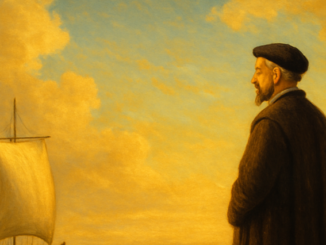
In the sixteenth essay of Book One of his Essays, Montaigne examines the role of envoys and ambassadors in diplomatic missions. Though it is one of his shorter reflections, the central question is far from simple. Montaigne asks to what extent an envoy has the right — or even the duty — to deviate from his literal instructions when the situation demands it. Should a messenger obey blindly, or should he use his own insight to better serve the intentions of the one who sent him?
The essay was written in an age when diplomacy was a perilous affair. Communication was slow, decisions often had to be made on the spot, and a single miscalculation could mean the difference between war and peace. Montaigne knew this world from the inside. As a former mayor of Bordeaux and a mediator in religious conflicts, he understood how heavy the burden of representation could weigh.
The Examples Montaigne Uses
Montaigne draws on classical antiquity to illustrate his point. He refers to Roman envoys who, confronted with unforeseen developments, had to choose between the letter of their orders and the spirit behind them. Some clung rigidly to their instructions, with disastrous consequences. Others took the risk of acting independently and were either rewarded or punished, depending on the outcome.
Particularly striking is his observation that rulers often select envoys who are capable enough to deliver a message, but not capable enough to exercise independent judgment. This creates a paradox: the envoy is held responsible for the success of the mission, yet is not given the freedom to fulfill that responsibility. Montaigne sees in this a fundamental flaw in how we think about leadership and representation.
The Core Insight
True obedience does not require switching off the mind — it requires putting the mind to work in service of a higher purpose.
Montaigne’s central argument is that mechanical obedience rarely leads to good outcomes. An envoy who merely repeats what he has been told, without accounting for new information or changed circumstances, fails at his actual task. The purpose of a diplomatic mission is not to deliver words verbatim, but to achieve a particular result. Whoever loses sight of that becomes a slave to form rather than a servant of substance.
At the same time, Montaigne acknowledges the risks of too much freedom. An envoy who acts entirely on his own initiative may embarrass or even betray the one he represents. The art lies in finding a balance: remaining faithful to the intention behind the assignment while staying flexible enough to respond to reality as it unfolds.
How Does This Connect to Freemasonry?
For Freemasons, this essay resonates in a distinctive way. Within the lodge, the tension between tradition and personal insight plays out constantly. Rituals are carefully handed down from generation to generation, and symbols are shared according to established patterns. But does this mean a Freemason is merely a passive recipient of what is placed before him? Montaigne would say no.
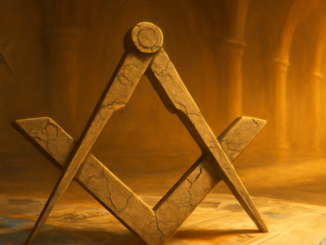
The symbolism of Freemasonry demands active interpretation. The compasses and the square are not empty signs to be passed along mechanically. They are invitations to reflect: what does it mean to seek the proper balance between reason and feeling? How do I relate to inherited wisdom, and where does my own life’s path call for a personal application? The envoy who merely parrots his instructions misses the point. The Freemason who performs rituals without inner engagement likewise misses the essence.
What Can We Learn From This?
Montaigne’s reflection on envoys is ultimately a meditation on responsibility. Anyone who acts on behalf of another — whether that other is a sovereign, an organization, or an ideal — carries a double burden. He must be loyal to what has been entrusted to him, but also courageous enough to exercise his own judgment when the moment requires it.
This demands a certain kind of character. Montaigne does not describe it explicitly, but reading between the lines, an ideal emerges: the person who thinks deeply before acting, who knows his own limitations, but who does not shrink from taking responsibility. In Masonic terms, one might say: the rough ashlar that allows itself to be shaped, yet must ultimately find its own place in the building.
Why Does This Essay Still Matter?
In an age of protocols, procedures, and algorithms, Montaigne’s question may be more relevant than ever. How much room do we leave for human judgment? How much trust do we place in those who act on our behalf? And do we ourselves dare to take on the responsibility that comes with our own capacity for discernment?
Michel de Montaigne does not offer a definitive answer. That was never his style. But he opens a conversation that still needs to be had — in lodges, in boardrooms, and in our own conscience.
The essay ‘On the Custom of Some Ambassadors’ may be short, but the questions it raises are anything but. Montaigne reminds us that true loyalty does not lie in blind obedience, but in the courageous use of our intellect in service of a greater whole. For Freemasons, this is a familiar truth: the symbols and rituals are not ends in themselves, but tools that demand the full engagement of heart and mind. The rough stone must be worked — but it is we who must decide where it fits in the edifice we are building together.
Copyright text & image: devrijmetselaar.nl
Texts are based on the ideas and content of the author of devrijmetselaar.nl, reviewed, corrected, and supplemented with the assistance of OpenAI. Images are created based on the ideas of the author of devrijmetselaar.nl using OpenAI/DALL-E.
Frequently Asked Questions
What is Montaigne's main argument about obedience and judgment in his essay 'On the Custom of Some Ambassadors'?
Montaigne argues that true obedience does not require blind adherence to orders, but rather using one's mind in service of a higher purpose. He contends that mechanical obedience without considering changed circumstances or new information actually fails to accomplish the true mission. Envoys should exercise independent judgment when situations demand it, balancing literal instructions with the spirit behind them.
How does this essay relate to Freemasonry?
The essay resonates with Freemasonry by addressing a fundamental tension between obedience and personal judgment. The balance between following guidance and exercising individual discernment is a core theme in Masonic philosophy and practice, making Montaigne's exploration of when blind obedience falls short highly relevant to Masonic teachings.
What paradox does Montaigne identify in how rulers select and use envoys?
Montaigne observes that rulers often choose envoys who are capable enough to deliver a message but not capable enough to exercise independent judgment. This creates a problematic paradox: the envoy is held responsible for the mission's success, yet is denied the freedom necessary to fulfill that responsibility effectively. This represents a fundamental flaw in how leadership and representation are typically structured.

Be the first to comment