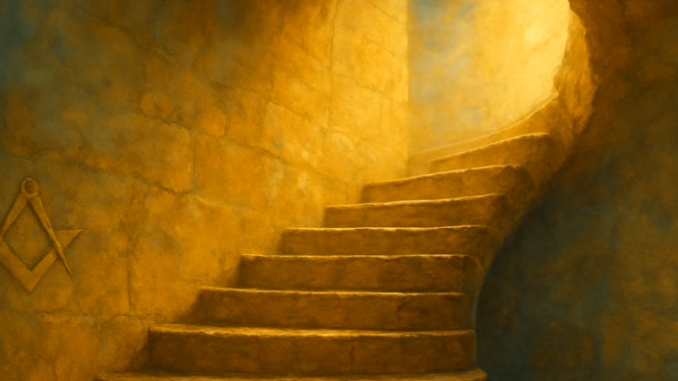
The 33rd degree fascinates people — even those who know very little about Freemasonry. But what does this highest point in the Scottish Rite actually mean for a person’s character and inner life? Is it a crowning achievement of intellect, of moral fiber, or of something else entirely? Let’s explore this together, as though sitting across a table, asking questions and searching for answers.
Why Does the 33rd Degree Capture the Imagination?
Why has this particular number taken on such a mystical charge? Within the Ancient and Accepted Scottish Rite, the 33rd degree is the highest level a Freemason can attain. It is not a degree you apply for or campaign to receive. It is conferred upon those who have rendered extraordinary service to the Order, to society, or to both.
But there is a subtlety here that is often overlooked. This is not about status in the conventional sense. Albert Pike, the nineteenth-century reformer of the Scottish Rite in America, emphasized that the degrees do not form a ladder of power. They represent, instead, a deepening of understanding. Each degree offers a new perspective — a different lens through which the Mason can examine himself and the world around him.
What Does the 33rd Degree Have to Do with Personality?
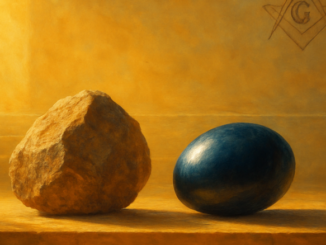
This may be the central question. If the 33rd degree is not about external recognition, what does it reveal about a person’s inner development? The answer lies in what Freemasons call the “rough ashlar.” Every Brother begins as unworked material — full of sharp edges and irregularities. The Freemason’s lifelong task is to polish that stone, day after day, year after year.
The personality of someone who reaches the highest degrees is not necessarily more pleasant or more sociable than anyone else’s. What sets them apart is depth — a willingness to keep looking in the mirror. Goethe, himself a Freemason, wrote that a person only truly matures when he learns to accept his own shortcomings without resigning himself to them. This is precisely what the degrees aim to cultivate: not perfection, but the courage to keep building, always.
The 33rd degree is not a crown placed upon a finished personality. It is a recognition of the willingness to never stop working on yourself.
Is There a Typical Personality Profile for the 33rd Degree?
Could there be an ideal candidate profile? History points in a surprising direction. Among those who have received this degree, we find vastly different characters: diplomats and artists, scientists and philanthropists, introverted thinkers and charismatic orators. Mozart was a Freemason. So was Voltaire. The two could hardly have been more different in temperament, yet both were driven by a search for beauty and truth.
What unites them is not a personality type in the psychological sense, but rather an attitude. A willingness to serve without expecting praise. The ability to listen before speaking. The discipline to see rituals not as empty formalities, but as tools for inner transformation.
The Role of Humility
One quality that consistently emerges in descriptions of Brethren who have reached the highest degrees is humility. Not the false modesty that is really disguised pride, but a genuine recognition of one’s own limitations. Aristotle called this the golden mean — neither self-aggrandizement nor self-deprecation, but a clear-eyed understanding of who you are and how much you still have to learn.
This kind of humility is not weakness. It is, in many ways, the hardest quality to cultivate. It requires an ongoing honesty with oneself that most people find deeply uncomfortable. And yet, it is this very discomfort that fuels genuine growth.
How Does Ritual Shape Personality?
This is an aspect that outsiders often struggle to understand. Masonic ritual is not theater. It is not a performance staged for an audience. It is a method — a pedagogical instrument that operates on levels deeper than the purely intellectual.
As a Freemason progresses through the successive degrees, he experiences symbolic death and rebirth again and again. He is confronted with questions about loyalty, about truth, about the meaning of his own mortality. These experiences leave their mark on the personality. They do not make a person morally superior, but they do make him more conscious of the choices he makes every day.
The effects of ritual engagement on personality are varied and profound:
- Self-knowledge through confrontation with archetypal imagery
- Patience developed through repetition and contemplation
- Brotherhood experienced through shared ritual
- Responsibility learned by fulfilling symbolic roles
Is the 33rd Degree an Endpoint or a New Beginning?
Here we encounter a paradox that is deeply characteristic of Freemasonry. The 33rd degree is formally the highest level within the Scottish Rite. And yet, those who have received it often emphasize that they felt more like apprentices afterward than ever before. It is as though the climb to the summit reveals a view of even higher mountains — mountains no person could scale in a single lifetime.
This realization shapes personality in a remarkable way. It guards against complacency. It keeps the mind young and receptive. Plato wrote that the philosopher is distinguished by knowing that he knows nothing. The Freemason who reaches the highest degree experiences something similar: the more he learns, the more he realizes how much remains to be discovered.
The 33rd degree, then, is not the culmination of a completed personality but a milestone on a road without end. It acknowledges not who someone is, but who he continually strives to become. In this sense, Freemasonry is a way of life that does not fix the personality in place but keeps it open to growth. This conversation ends here, but the questions it has raised continue to resonate — and that is exactly the point.
Copyright text & image: devrijmetselaar.nl
Texts are based on the ideas and content of the author of devrijmetselaar.nl, reviewed, corrected, and supplemented with the assistance of OpenAI. Images are created based on the ideas of the author of devrijmetselaar.nl using OpenAI/DALL-E.
Frequently Asked Questions
What does it mean to attain the 33rd degree in Freemasonry?
The 33rd degree is the highest level in the Scottish Rite of Freemasonry. It is not applied for or campaigned for, but rather conferred upon those who have rendered extraordinary service to the Order and society. However, it is important to understand that the degrees do not form a ladder of power, but rather represent a deepening of understanding and perspective.
Does reaching the 33rd degree change a person's personality?
The 33rd degree does not necessarily make a person more pleasant or sociable. What sets those who reach this degree apart is depth and a willingness to continuously examine themselves. It reflects a commitment to self-improvement rather than achieving perfection. As Goethe wrote, true maturity comes from accepting one's shortcomings without accepting defeat.
Is there a typical personality type for someone who receives the 33rd degree?
No. History shows that those who have received the 33rd degree have vastly different characters and backgrounds, including diplomats, artists, scientists, and philanthropists. The degree is not tied to a specific personality profile, but rather to a person's willingness and dedication to continuous self-improvement and service.

Be the first to comment