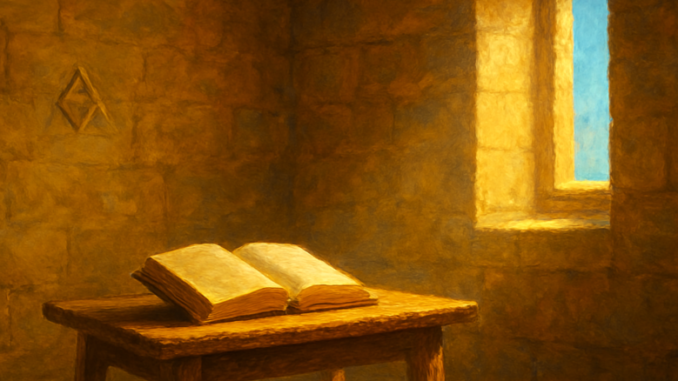
Imagine standing before the mirror one morning, asking yourself what you truly want to contribute to the world today. That brief moment of reflection — however fleeting — touches on something that medieval Cathar spiritual practitioners understood centuries ago. They sought purity in a world saturated with distraction and material temptation. Although their movement was crushed in the thirteenth century, their insights into inner growth remain remarkably relevant. For Freemasons, who likewise devote themselves to personal refinement, these ancient practices offer concrete tools for everyday life.
Who Were the Cathars and What Made Them Spiritually Remarkable?
The Cathars — sometimes called “the Pure Ones” — were a religious movement that flourished between the eleventh and fourteenth centuries in southern France and northern Italy. Unlike the mainstream Christianity of their era, they placed personal spiritual experience above ecclesiastical authority. Their central conviction was that the material world stood as an obstacle to spiritual growth. This belief translated into an ascetic way of life built on simplicity, honesty, and compassion.
What stands out about Cathar spirituality is its practical approach. It was never about abstract theological debate but about daily choices. What do you eat? How do you speak to others? What thoughts do you entertain? This focus on concrete action makes their legacy accessible to anyone working on self-improvement today, regardless of religious background.
Three Practical Principles from Cathar Spirituality
From the Cathar tradition, we can distill three core principles that are immediately applicable to modern life.
First: Conscious Simplicity. The Cathars did not avoid excess out of poverty — they did so out of insight. By owning less, space opens up for what truly matters. You can put this into practice by giving away one possession each week, or by letting go of one habit that no longer serves you.
Second: Radical Honesty. The perfecti, the initiated Cathars, were known for their refusal to lie — even when their lives depended on it. For us, this does not mean becoming martyrs. It means practicing truthfulness when it feels uncomfortable. Start with small moments: give honest feedback to a colleague, or own up to a mistake with a friend.
Third: Daily Reflection. Cathars began and ended their day with prayer and meditation. This ritual of taking stock — examining what you did well and where you fell short — forms a natural bridge to the Masonic habit of self-examination. Set aside five minutes every evening to answer three questions: What did I contribute today? Where did I fall short? What can I do better tomorrow?
The Connection Between Cathar Spirituality and Freemasonry
Freemasonry and the Cathar tradition share a fundamental conviction: the human being is capable of self-improvement through conscious effort. Where the Cathars spoke of purifying the soul, Freemasons use the image of the rough ashlar being shaped into a perfect cube. Both traditions acknowledge that growth does not happen by itself — it demands active participation.
Spiritual growth is not a matter of passively waiting for enlightenment. It is the daily work of conscious choices and honest self-knowledge.
In the lodge, the Freemason works with rituals and symbols that aid self-reflection. The Cathars used comparable mechanisms: their consolamentum, the consoling ritual of initiation, marked a conscious surrender to a life of purity. Both traditions understand that external rituals can support internal transformation — provided they are practiced with sincerity.
Five Practical Exercises for a Cathar-Inspired Life
How do you translate these insights into your own week? Here are five practical exercises you can start today:
1. Morning Intention: Begin each morning with one minute of silence in which you formulate your intention for the day.
2. Simple Meal: Choose one meal per week that is deliberately simple — bread, vegetables, water.
3. Speak a Truth: Once a day, express a truth you would normally keep to yourself.
4. Let Go of Possessions: Each month, give away something you own but do not need.
5. Evening Journal: Keep a brief evening journal in which you answer the three reflection questions mentioned above.
These exercises are not religious obligations — they are tools. Just as a mason selects the right hammer and chisel for a specific piece of work, you choose the exercise that fits your current challenge. The Cathars understood that spiritual growth is not a theoretical matter but a practice anchored in the body and in daily habits.
When the Work Gets Difficult
Every serious spiritual practice encounters resistance. The Cathars called this the struggle between light and darkness within the self. There will be days when the exercises seem pointless, when you slip back into old patterns. This is not failure — it is proof that you are engaged in real work. The Masonic tradition teaches us that the rough stone is not shaped in a single blow. Every strike of the hammer counts, even the ones that seem to miss their mark.
Montaigne, the essayist who made himself the subject of his own investigation, wrote extensively about the fickleness of the human mind. His honesty about his own shortcomings offers comfort: no one achieves purity in a single lifetime. What matters is the direction, not the arrival.
The Cathars may have disappeared eight hundred years ago, but their spiritual legacy lives on in everyone who consciously works toward inner growth. Their practical approach to purification — simplicity, honesty, and daily reflection — aligns seamlessly with the Masonic path of self-improvement. Start today with one small exercise. Not because you must, but because you know that every conscious choice brings you closer to the version of yourself you want to become. The stone awaits the chisel.
Copyright text & image: devrijmetselaar.nl
Texts are based on the ideas and content of the author of devrijmetselaar.nl, reviewed, corrected, and supplemented with the assistance of OpenAI. Images are created based on the ideas of the author of devrijmetselaar.nl using OpenAI/DALL-E.
Frequently Asked Questions
What is the connection between Cathar spirituality and Freemasonry?
Both traditions share the fundamental belief that human beings are capable of self-improvement through conscious effort and personal refinement. Where the Cathars focused on purifying the soul through ascetic practices, Freemasons use the symbolic image of the rough ashlar to represent the journey of polishing and perfecting oneself. These parallel approaches make Cathar insights particularly valuable for Masons seeking practical tools for their own spiritual development.
How can I apply Cathar principles to my daily life as a Freemason?
You can practice the three core Cathar principles immediately: embrace conscious simplicity by releasing possessions or habits that no longer serve you, cultivate radical honesty by speaking truthfully even when uncomfortable, and establish daily reflection by spending five minutes each evening examining your actions and contributions. These practices align naturally with Masonic self-examination and create a concrete pathway for inner purification that complements your Masonic journey.
Were the Cathars a religious group, and do I need to share their beliefs to benefit from their teachings?
The Cathars were a medieval spiritual movement that emphasized personal experience over institutional authority, making their practical wisdom accessible to people of all religious backgrounds and beliefs. Their focus on everyday choices—what you eat, how you speak, and what thoughts you entertain—offers universal principles for self-improvement that Freemasons and others can apply without adopting their specific theology.
What does 'radical honesty' mean, and how is it relevant to Freemasonry?
Radical honesty means practicing truthfulness even when it feels uncomfortable or risky, as the medieval Cathars did throughout their lives. For modern Freemasons, this doesn't require becoming a martyr but rather cultivating courage and integrity in small moments—giving honest feedback, admitting mistakes, and speaking truthfully in daily interactions. This virtue directly supports Masonic values of integrity and personal character development.
How much time do I need to dedicate to Cathar-inspired spiritual practices?
The beauty of Cathar principles is that they require minimal time investment while yielding profound results. A simple daily practice involves just five minutes of evening reflection and incorporating conscious choices throughout your day, such as releasing one possession weekly or practicing honest communication in routine interactions. These manageable practices fit easily into modern life while supporting the deeper spiritual work that Freemasonry cultivates.



Be the first to comment