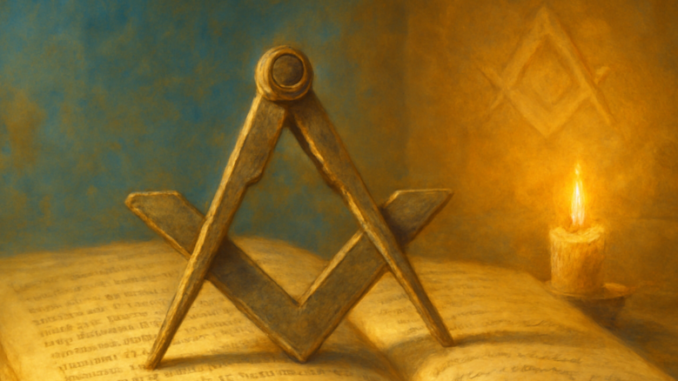
Freemasonry is far more than a fraternal organization with elaborate rituals and symbolic regalia. At its heart, it is a philosophical and ethical system — a structured approach to self-improvement, moral reasoning, and the pursuit of truth. The intersection of freemasonry philosophy ethics has shaped some of the most thoughtful minds in Western history, offering its members a framework through which to examine their place in the world, their duties to their fellow human beings, and the nature of virtue itself. This pillar page explores the deep philosophical roots of Freemasonry, its core ethical principles, the thinkers and traditions that have influenced it, and why its moral teachings remain profoundly relevant in the modern world.
Historical Background: Philosophy and the Origins of Freemasonry
To understand the ethical foundations of Freemasonry, one must first appreciate the historical context in which the fraternity emerged and evolved. Although the precise origins of Freemasonry are debated by historians, the formation of the first Grand Lodge in London in 1717 marks the beginning of what is known as “speculative” Freemasonry — a practice that drew on the symbolic tools and language of medieval stonemasons to construct a philosophical and moral edifice rather than a physical one.
The founding generation of Freemasons were deeply immersed in the intellectual currents of the Enlightenment. Figures such as James Anderson, whose Constitutions of the Free-Masons (1723) laid out the moral framework of the fraternity, were influenced by the rationalist and humanist thought of their time. Anderson’s Constitutions explicitly called for Masons to be “good Men and true, or Men of Honour and Honesty,” placing moral character at the very centre of membership.
The Enlightenment provided fertile ground for Masonic philosophy to flourish. The period celebrated reason, tolerance, and the dignity of the individual — values that Freemasonry adopted and institutionalized. Philosophers such as John Locke, whose ideas about natural rights and civil society circulated widely in Masonic circles, provided intellectual scaffolding for the fraternity’s ethical worldview. The notion that all human beings possess inherent worth and deserve to be treated with respect is embedded in Masonic teaching from its earliest documented history.
Ancient Philosophical Influences
Freemasonry did not emerge in a vacuum. Its philosophical vocabulary draws extensively from the ancient world, particularly from Greek and Hellenistic philosophy. The seven liberal arts — grammar, rhetoric, logic, arithmetic, geometry, music, and astronomy — are celebrated in Masonic ritual as tools of the enlightened mind. Geometry holds a place of particular honour, symbolizing the rational order underlying the universe and the capacity of human reason to perceive it.
Platonic philosophy exerted a profound influence on Masonic thought. Plato’s concept of the ideal Forms — the notion that there exist perfect, eternal truths beyond the material world — resonates with Freemasonry’s symbolic journey from ignorance toward light and understanding. Similarly, the Stoic philosophy of thinkers like Marcus Aurelius and Epictetus — with its emphasis on virtue, self-discipline, and the brotherhood of all humanity — finds clear echoes in the ethical teachings of the lodge.
Pythagorean thought is also deeply woven into Masonic symbolism. Pythagoras himself is frequently referenced in Masonic ritual, and his belief in the mathematical harmony of the universe underpins the symbolic importance of geometry and proportion in the fraternity’s teachings. The Pythagorean emphasis on a moral community united by shared principles — what some historians describe as an early model of the philosophical brotherhood — anticipates the structure of the Masonic lodge itself.
Core Ethical Principles of Freemasonry
The ethical system at the heart of freemasonry philosophy ethics rests on several foundational principles. These are not arbitrary rules but carefully considered moral imperatives derived from centuries of philosophical reflection. They can be grouped under a few central themes: brotherly love, relief, truth, and the cultivation of personal virtue.
Brotherly Love
Brotherly love — known in many Masonic jurisdictions as one of the three Great Principles alongside Relief and Truth — is perhaps the most publicly recognized of Masonic virtues. But within the philosophical tradition of the fraternity, it carries a rich meaning that goes well beyond simple friendliness. It is rooted in the concept of agape — a universal, unconditional care for the well-being of others — combined with the Stoic idea of the brotherhood of all rational beings.
Freemasons are taught to regard every human being as a potential brother, regardless of nationality, religion, or social station. This universalism was radical at the time of Freemasonry’s formation and remains an ethically significant commitment today. The Masonic lodge is deliberately designed as a space where distinctions of class and creed are set aside, and members engage with one another simply as moral beings in pursuit of common ideals.
Relief and the Ethics of Charity
Relief — the duty to aid those in need — translates the abstract principle of brotherly love into concrete ethical action. Masonic lodges around the world have historically been significant engines of charitable giving and social support. But the philosophical significance of relief extends beyond philanthropy. It represents the Masonic conviction that an ethical life must be lived in service to others, not merely in private contemplation of virtue.
This emphasis on active benevolence aligns Freemasonry with a broad tradition of ethical thought that stretches from Aristotle’s concept of eudaimonia (flourishing through virtuous action in community) to the Kantian moral imperative to treat others as ends in themselves, never merely as means. The Masonic Mason is not called to be virtuous in isolation but to express that virtue through engagement with the world.
Truth and the Pursuit of Enlightenment
Truth is the third of the Great Principles, and it operates on multiple levels within Masonic philosophy. At the most immediate level, it demands honesty and integrity in all dealings — with fellow Masons, with family, and with society at large. But at a deeper philosophical level, Truth in Freemasonry signifies the ongoing quest for understanding: the desire to penetrate beneath the surface of appearances and discover the underlying realities of existence.
This quest is symbolized in Masonic ritual by the journey from darkness to light — from the state of ignorance in which a candidate is received into the lodge, to the progressive illumination granted through the degrees of initiation. The philosophical resonance with Plato’s Allegory of the Cave is unmistakable: both describe a movement from shadow and illusion toward clarity and genuine knowledge.
The Four Cardinal Virtues
Freemasonry also places great emphasis on the four Cardinal Virtues drawn from classical philosophy: Prudence, Fortitude, Temperance, and Justice. These virtues, systematized by Plato and later elaborated by Aristotle and the Stoics, are presented in Masonic ritual as the pillars of the moral life.
Prudence — practical wisdom, the ability to discern the right course of action in complex situations — is the guiding virtue of the Masonic mind. Fortitude is the courage to act rightly even in the face of difficulty or opposition. Temperance calls for moderation in all things, the rational governance of desire and appetite. Justice — perhaps the most socially significant of the four — demands that each person receive their due and that moral distinctions be made fairly and impartially.
Together, these four virtues form an integrated ethical character. Freemasonry does not present them as a checklist to be mechanically followed but as ideals to be internalized and expressed through a lifetime of moral effort. This virtue-based ethics, rooted in the philosophical tradition of ancient Greece and refined through centuries of Western thought, gives Masonic moral teaching its depth and coherence.
Freemasonry, the Enlightenment, and Moral Universalism
The relationship between freemasonry philosophy ethics and the Enlightenment deserves closer examination, because it was during the seventeenth and eighteenth centuries that Masonic thought achieved its fullest philosophical expression. The Enlightenment project — the application of reason to the problems of human life, society, and governance — found in Freemasonry both an institutional home and a practical expression.
Notable Enlightenment figures who were Freemasons include Voltaire, initiated just weeks before his death in 1778, and Benjamin Franklin, who was active in French and American Masonic lodges. Wolfgang Amadeus Mozart was a committed Freemason whose opera The Magic Flute is widely understood as a Masonic allegory of the soul’s journey toward wisdom and light. Frederick the Great of Prussia was a notable patron of both Enlightenment philosophy and Freemasonry. These men did not merely belong to the fraternity as a social convenience; many found in its philosophical structure a coherent expression of their deepest convictions about reason, tolerance, and the improvement of humanity.
The Masonic ideal of moral universalism — the conviction that ethical principles apply equally to all human beings regardless of their particular cultural or religious identity — was genuinely progressive in an era of religious wars and political absolutism. The lodge offered a model of civil society based on rational agreement and mutual respect, anticipating many of the political ideals that would be enshrined in documents like the American Declaration of Independence and the French Declaration of the Rights of Man and Citizen.
Symbolism as Philosophical Language
One of the most distinctive features of Masonic philosophy is its use of symbolism as a vehicle for ethical and philosophical teaching. Rather than presenting moral principles in the form of abstract propositions, Freemasonry embeds them in a rich symbolic vocabulary drawn from the arts and crafts of the stonemason.
The square and compasses — the most recognized Masonic symbols — represent the ethical discipline of keeping one’s actions within proper moral bounds. The square signifies the moral rectitude of conduct: living “on the square” means dealing honestly and justly with all. The compasses symbolize the restraint of passion and desire, the wisdom to contain one’s ambitions within the circle of duty and virtue.
The rough ashlar and the perfect ashlar — unworked and finished stones — serve as powerful images of moral development. Every Mason, upon entering the lodge, is symbolically a rough ashlar: a human being with natural gifts but also with flaws, imperfections, and undeveloped capacities. The work of Masonic life is to apply the tools of moral philosophy to that rough stone, progressively refining character until it approaches the ideal of the perfect ashlar.
The plumb, level, and trowel each carry their own ethical resonances. The plumb calls for upright conduct; the level reminds Masons of the fundamental equality of all human beings; the trowel urges the spreading of the cement of brotherly love and affection. Through this symbolic architecture, freemasonry philosophy ethics is made tangible, memorable, and experiential rather than merely intellectual.
Freemasonry and Religious Philosophy
A frequent question about Masonic ethics concerns its relationship to religion. Freemasonry requires belief in a Supreme Being — referred to in many jurisdictions as the Great Architect of the Universe — but it does not prescribe any particular theological doctrine. This position reflects a deliberate philosophical stance: that there is a common moral foundation shared by all the great religious traditions, and that this common ground is sufficient for the purposes of the fraternity.
This approach, sometimes described as “natural religion” or philosophical theism, draws on a tradition of thought that includes figures like Lord Herbert of Cherbury in the seventeenth century and was elaborated by Enlightenment deists such as John Toland. The idea is that reason alone, independent of any particular scriptural revelation, can arrive at the moral truths necessary for a good life and a just society. Freemasonry institutionalizes this conviction by welcoming men of all faiths into the same moral community.
Importantly, this is not a form of relativism. Freemasonry does not suggest that all beliefs are equally valid or that moral distinctions cannot be made. Rather, it holds that the ethical core of human life — the commitment to virtue, truth, and the service of others — transcends the boundaries of any single religious tradition and belongs to humanity as a whole.
The Philosophy of Self-Improvement
Central to the freemasonry philosophy ethics tradition is a commitment to ongoing self-improvement. This is not merely personal development in the modern sense of acquiring new skills or advancing one’s career. It is a profoundly philosophical project: the Socratic ideal of the examined life, pursued with the tools provided by the Masonic ritual and philosophical tradition.
Socrates famously declared that the unexamined life is not worth living. Freemasonry institutionalizes this conviction by building into its ritual a constant call to reflection — on one’s conduct, one’s relationships, one’s use of time and talent, and one’s progress toward the ideal of the perfect ashlar. The three degrees of Craft Masonry — Entered Apprentice, Fellow Craft, and Master Mason — each correspond to a stage of this philosophical journey, from the initial awakening of moral consciousness to the full integration of Masonic values into a mature ethical character.
This developmental model of ethics distinguishes Freemasonry from systems that simply enumerate rules to be followed. A Masonic Mason is not merely compliant with a moral code; they are engaged in an active, lifelong project of becoming a more virtuous person. This process-oriented ethics, with its emphasis on growth, effort, and aspiration, gives Masonic moral teaching a dynamic quality that resonates across centuries.
Frequently Asked Questions
What is the philosophical foundation of Freemasonry?
The philosophical foundation of Freemasonry rests on a combination of classical Greek virtue ethics, Enlightenment rationalism, and a universalist moral humanism. Drawing from Platonic, Stoic, and Pythagorean traditions, as well as from the intellectual currents of the seventeenth and eighteenth centuries, Freemasonry presents an integrated system of moral philosophy centred on the cultivation of personal virtue, the duty of service to others, and the pursuit of truth. The freemasonry philosophy ethics tradition emphasizes that good character is not given but developed through sustained moral effort and reflection.
Is Freemasonry a religion or a philosophical system?
Freemasonry is not a religion, nor does it seek to replace religion. It is a philosophical and ethical system that complements the religious beliefs of its members without substituting for them. While it requires belief in a Supreme Being as a condition of membership, it does not prescribe any specific theological doctrine or form of worship. Its moral teachings are grounded in philosophical reasoning accessible to men of all faiths, making it a genuinely universalist ethical institution rather than a sectarian one.
How does Freemasonry define virtue?
Freemasonry defines virtue in the classical sense: as a stable disposition of character that enables a person to act well and live well. Drawing primarily on the four Cardinal Virtues of Prudence, Fortitude, Temperance, and Justice — inherited from Greek philosophy and transmitted through the Western philosophical tradition — Freemasonry presents virtue not as a single quality but as an integrated set of excellences to be cultivated over a lifetime. The symbolic tools of the lodge — the square, compasses, plumb, level, and trowel — each represent aspects of this broader moral character.
What role does symbolism play in Masonic ethics?
Symbolism is the primary language through which Masonic philosophy conveys its ethical teachings. Rather than presenting moral principles as abstract propositions, Freemasonry embeds them in a vivid symbolic vocabulary derived from the tools and practices of the stonemason. This approach draws on a long tradition of symbolic philosophy — from Pythagorean number symbolism to Platonic myth — and reflects the conviction that moral truths are best transmitted not through argument alone but through experience, image, and narrative. The symbolic form of Masonic teaching engages imagination and emotion as well as reason, making its ethical messages more deeply and durably received.
Why is Freemasonry’s ethical tradition still relevant today?
The ethical tradition of Freemasonry addresses perennial human questions: How should I live? What do I owe to others? How do I cultivate genuine virtue rather than merely conforming to social expectations? These questions are no less pressing in the twenty-first century than they were in ancient Athens or Enlightenment London. In a world of rapid change, moral complexity, and cultural fragmentation, the Masonic commitment to universal brotherhood, rational ethics, and the lifelong project of self-improvement offers a stable and meaningful framework for living well. Its emphasis on tolerance, service, and the fundamental dignity of every human being speaks powerfully to the moral challenges of our time.
Read more about this topic
- All articles in this category: Philosophy & Ethics
- The Art of Interpretation: Finding Meaning in Life and Lodge
- Responsibility and Punishment: Ancient Lessons on Human Failing
- Grieving a Colleague: What Loss Teaches Us About Ethics
- Allusive Speech: The Hidden Art of Meaning in the Lodge
- Agnosticism in Practice: How Doubt Can Enrich Your Life
Frequently Asked Questions
What is the main philosophical purpose of Freemasonry?
Freemasonry is fundamentally a philosophical and ethical system designed for self-improvement, moral reasoning, and the pursuit of truth. Rather than being solely a fraternal organization with rituals, it provides members with a structured framework to examine their place in the world, understand their duties to others, and develop virtue and ethical character.
How does Freemasonry connect to Enlightenment philosophy?
Freemasonry emerged during the Enlightenment period and was deeply influenced by its emphasis on reason, tolerance, and the dignity of the individual. Founding figures like James Anderson incorporated rationalist and humanist thought into Masonic teachings, while philosophers such as John Locke provided intellectual support for the fraternity's ethical worldview centered on natural rights and human worth.
What ancient philosophical traditions influenced Freemasonry?
Freemasonry drew extensively from ancient Greek and Hellenistic philosophy, particularly incorporating the seven liberal arts (grammar, rhetoric, logic, arithmetic, geometry, music, and astronomy) as tools of enlightened thinking. Platonic philosophy, especially Plato's concept of ideal Forms, exerted a profound influence on how Masonic thought approaches eternal truths and moral principles.
What does the Masonic emphasis on geometry represent philosophically?
Geometry holds special significance in Masonic philosophy as it symbolizes the rational order underlying the universe and humanity's capacity to perceive and understand that order through reason. It represents the cornerstone of the fraternity's belief in the power of human intellect to discover truth and beauty in the world.
Are Masonic ethical principles still relevant today?
Yes, Masonic moral teachings remain profoundly relevant in the modern world. The fraternity's core principles of treating all people with respect and dignity, pursuing truth through reason, and developing moral character address timeless human concerns that continue to resonate with thoughtful individuals seeking to live ethically and meaningfully.

Be the first to comment