Explore the philosophical foundations of Freemasonry through our Enlightenment collection. Discover how reason, ethics, and intellectual pursuit shape Masonic thought and practice.
Symbolism & Rituals
Voltaire’s Micromégas and the Masonic Lesson of Humility
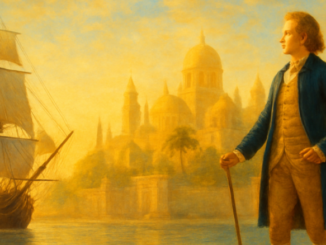
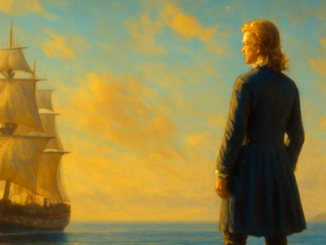
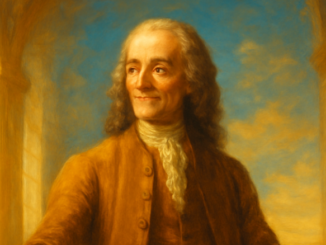
In 1752, Voltaire published a remarkably short story that continues to captivate philosophers and readers to this day. Micromégas tells the tale of an enormous being who descends from the stars to visit Earth and encounters humanity. What Voltaire achieved with this seemingly lighthearted adventure was nothing less than a radical reassessment of our human self-image — a philosophical fairy tale that forced his contemporaries to reconsider their assumed greatness. For Freemasons, the story holds a particular resonance: humility and self-knowledge stand at the very heart of the Masonic tradition. A Giant from Sirius Visits Earth The story opens with the introduction of Micromégas, an inhabitant of a planet orbiting the star Sirius. This being stands an astonishing 120,000 feet tall — a height utterly beyond our comprehension. Voltaire describes how Micromégas travels the universe driven by scientific curiosity and philosophical inquiry. Along the way, he meets a resident of Saturn who, at 6,000 feet, is considerably smaller but still gigantic by earthly standards. Together, these two beings journey to our planet. When they reach Earth, they initially see nothing remarkable. The oceans appear as tiny puddles, the mountains as insignificant hillocks. Only after a lengthy search, using a magnifying […]