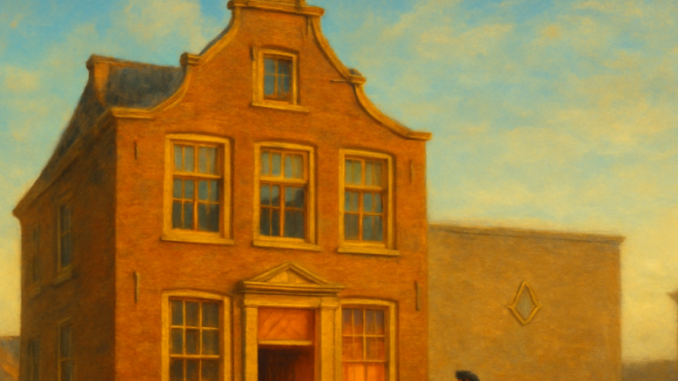
The history of Freemasonry in the Netherlands is a fascinating journey through centuries of intellectual curiosity, civic engagement, and brotherhood. Since the first Dutch lodge was established in the early eighteenth century, Freemasonry has woven itself into the cultural, philosophical, and social fabric of the Low Countries. From the Golden Age salons of The Hague to the clandestine wartime meetings during the German occupation, Dutch Freemasonry has endured and evolved — shaped by enlightenment ideals, political upheaval, and an enduring commitment to the moral and spiritual development of its members. Understanding this history offers valuable insight not only into the Craft itself, but also into the broader story of Dutch society.
The Origins of Freemasonry in the Netherlands
To understand the history of Freemasonry in the Netherlands, one must first appreciate the broader European context from which it emerged. Modern speculative Freemasonry traces its institutional origins to the founding of the United Grand Lodge of England in London in 1717. The movement spread rapidly across Europe, carried by merchants, diplomats, military officers, and intellectuals who were drawn to its emphasis on reason, tolerance, and fraternal virtue.
The Netherlands — a mercantile republic with strong ties to England and a tradition of relative religious tolerance — proved fertile ground for the new fraternity. The close commercial and diplomatic relationships between Britain and the Dutch Republic meant that English lodges and their members frequently traveled through Dutch cities, bringing Masonic ideas and rituals with them. The cosmopolitan atmosphere of cities like Amsterdam, The Hague, and Rotterdam, where educated men of various faiths and nationalities mingled freely, made the establishment of lodges a natural development.
The First Dutch Lodge: La Bien Aimée (1734)
The first documented Masonic lodge in the Netherlands was La Bien Aimée (The Beloved), established in Amsterdam in 1734. The lodge was founded largely by French-speaking members, reflecting the dominant role of French culture and language among the European educated elite of the time. It received its warrant from the Grand Lodge of England, formally linking Dutch Freemasonry to the English institutional tradition from its very inception.
Within a few years, several other lodges appeared in Dutch cities. L’Union Royale and La Paix were among the early foundations, and by the 1740s, Freemasonry had taken root in Amsterdam, The Hague, Leiden, and beyond. These early lodges attracted lawyers, physicians, artists, merchants, and aristocrats — the thinking class of Dutch society — who found in Freemasonry a unique space for philosophical reflection and brotherly fellowship beyond the boundaries of church and state.
The Grand Orient of the Netherlands
The growth of Dutch Freemasonry necessitated a central governing body. In 1756, the Groote Loge der Zeven Vereenigde Nederlanden (Grand Lodge of the Seven United Netherlands) was formally established, providing organizational structure to the growing number of lodges across the republic. This body underwent various transformations over the following decades, reflecting the turbulent political history of the Netherlands itself.
A pivotal moment came during the Napoleonic era. When the French Empire brought the Netherlands firmly under its political orbit, King Louis Napoleon — who ruled the Kingdom of Holland from 1806 to 1810 — became Grand Master of the Dutch Masonic order in 1808. Under his leadership, the organization was restructured along French lines and renamed the Grand Orient des Pays-Bas, or in Dutch, the Grootoosten der Nederlanden. This reorganization brought Dutch Freemasonry in line with the centralized model of the French Grand Orient, with a clear hierarchy of degrees and a more formalized administrative structure.
The appointment of a royal Grand Master lent the fraternity considerable prestige and social legitimacy. Membership in the lodges of the Grand Orient became fashionable among the Dutch elite, and the order expanded significantly during the early nineteenth century. After the fall of Napoleon and the restoration of Dutch sovereignty, the Grand Orient retained its structure and continued to function as the premier Masonic body in the Netherlands — a role it holds to this day.
King William I and Royal Patronage
The tradition of royal association with Dutch Freemasonry continued after the Napoleonic period. King William I of the Netherlands, who founded the modern Kingdom of the Netherlands in 1815, maintained a favorable relationship with the fraternity. Several members of the Dutch royal house became associated with Freemasonry over the generations, and this royal connection helped ensure the order’s continued respectability in Dutch society throughout the nineteenth century.
Freemasonry During the Enlightenment and the Dutch Golden Age Legacy
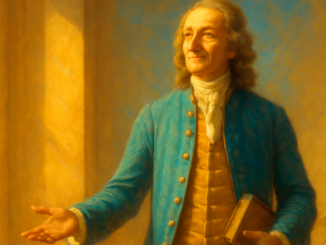
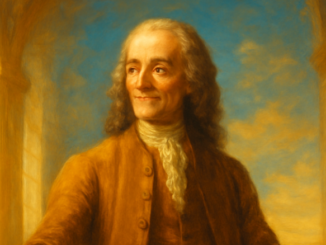
The intellectual climate in which Dutch Freemasonry flourished was deeply shaped by the legacy of the Dutch Golden Age and the European Enlightenment. The Netherlands had long been a center of humanist scholarship, scientific inquiry, and religious tolerance. Thinkers such as Baruch Spinoza, Hugo Grotius, and later the naturalist Jan Swammerdam had helped establish a tradition of free inquiry in the Low Countries that resonated powerfully with Masonic values.
Within the lodges, members engaged in philosophical debate, studied natural philosophy and science, and practiced the moral teachings embedded in Masonic ritual. The lodge was understood as a laboratory for self-improvement and a school for civic virtue. Dutch Freemasons of the eighteenth century saw no contradiction between their Masonic commitments and their religious faith; rather, they viewed the Craft as a complement to religion — a system of ethical discipline that transcended denominational boundaries.
This ecumenical quality was particularly valuable in the Netherlands, where Calvinist Protestants, Catholics, Jews, and members of other communities had long negotiated a form of peaceful coexistence. The lodge provided a rare neutral ground where men of different confessions could meet as brothers and equals. It is noteworthy that some of Amsterdam’s early Masonic lodges included members from the Sephardic Jewish community, reflecting the inclusive spirit that distinguished Dutch Freemasonry from its counterparts in more confessionally rigid countries.
The Nineteenth Century: Growth, Structure, and Social Influence
The nineteenth century was a period of steady expansion for Freemasonry in the Netherlands. New lodges were founded in provincial cities and towns, bringing the fraternity beyond the major urban centers. The Grand Orient of the Netherlands regularized the system of Masonic degrees and established clearer standards for initiation and lodge governance. Membership rolls grew, and the lodges became important nodes in the social networks of the Dutch professional and intellectual classes.
Dutch Freemasons of this era were active in philanthropy, education, and social reform. Many lodges established charitable funds that provided support to members and their families in times of need. Some lodges sponsored schools, libraries, and cultural institutions. The emphasis on education and self-improvement within Masonic philosophy aligned naturally with the broader reformist currents of nineteenth-century Dutch liberalism.
Notable Dutch Freemasons of the Nineteenth Century
Several prominent figures in nineteenth-century Dutch public life were known Freemasons. Johan Rudolf Thorbecke, the great liberal statesman who authored the Dutch constitution of 1848 and transformed the Netherlands into a modern constitutional monarchy, was associated with Masonic circles. The artist and writer Multatuli (Eduard Douwes Dekker), whose novel Max Havelaar exposed the injustices of Dutch colonial rule in the East Indies, was also connected to Masonic networks, though his relationship with the institution was complex. These associations illustrate the extent to which Freemasonry intersected with the leading intellectual and political currents of the day.
Freemasonry and the Dutch Colonial World
An important and often overlooked dimension of the history of Freemasonry in the Netherlands concerns its presence in the Dutch colonial empire. Lodges were established in the Dutch East Indies (present-day Indonesia), Suriname, and the Dutch Caribbean islands, reflecting the global reach of the Dutch commercial and administrative networks.
In Batavia (now Jakarta), Masonic lodges were active from the eighteenth century onward, bringing together Dutch colonial administrators, merchants, and military officers. These colonial lodges functioned as social and intellectual hubs in isolated outpost communities, providing a sense of brotherhood and connection to European cultural life. Some lodges in the colonial world also admitted local members, though the degree of inclusivity varied considerably depending on time, place, and social context.
The relationship between Freemasonry and Dutch colonialism is nuanced. While the lodges were in many respects instruments of colonial society, the egalitarian and universalist ideals of Freemasonry sometimes generated tensions with the hierarchical realities of colonial rule. Some Dutch Freemasons were among the voices calling for more humane treatment of colonial subjects, reflecting the reformist potential that Masonic philosophy could inspire.
The Second World War: Suppression and Resilience
The darkest chapter in the history of Freemasonry in the Netherlands — as in so much of Europe — came with the German occupation during the Second World War. When Nazi Germany occupied the Netherlands in May 1940, Freemasonry was among the organizations targeted for immediate suppression. The Nazi regime viewed Freemasonry as a threat, associating it with the ideals of liberal democracy, Jewish emancipation, and internationalism that National Socialism sought to destroy.
In October 1940, the German occupying authorities ordered the dissolution of all Masonic lodges in the Netherlands. Lodge properties were confiscated, archives were seized, and Masonic symbols were banned. Members faced surveillance, harassment, and in some cases deportation and imprisonment. The Kloppenburg Collection — a significant portion of Dutch Masonic archival material — was looted and transported to Germany, where it was later recovered after the war’s end.
Despite the occupation’s brutal suppression of organized Masonic activity, many Dutch Freemasons maintained their fraternal bonds in informal ways, meeting quietly in private homes, maintaining correspondence, and upholding their Masonic principles in their personal conduct. The values of courage, integrity, and brotherly love that Freemasonry cultivates proved sustaining resources during these years of oppression. After the liberation of the Netherlands in 1945, the lodges were reconstituted with remarkable speed, demonstrating the deep roots that Freemasonry had established in Dutch society.
Post-War Revival and Modern Dutch Freemasonry
The decades following the Second World War saw a gradual revival of Masonic activity in the Netherlands. The Grand Orient of the Netherlands re-established itself as the central governing body of Dutch Freemasonry, and lodges were progressively re-founded across the country. Membership grew steadily through the 1950s and 1960s, as a generation shaped by the experiences of war and occupation found in Freemasonry a meaningful framework for reflection on moral responsibility, civic duty, and human solidarity.
In the later twentieth century, Dutch Freemasonry — like its counterparts in other Western countries — navigated the challenges of a changing society. Declining church attendance, shifting social patterns, and the rise of alternative forms of community and self-expression all influenced membership trends. Nevertheless, the Grand Orient of the Netherlands and its associated bodies continued to maintain an active network of lodges, and the fraternity adapted thoughtfully to new cultural realities.
Co-Freemasonry and the Order of Women Freemasons in the Netherlands
An important development in the modern history of Freemasonry in the Netherlands has been the growth of mixed and women’s Masonic orders. The Grand Orient of the Netherlands, in keeping with the mainstream tradition inherited from the Grand Lodge of England, initiates only men. However, the Netherlands has also been home to significant co-Masonic (mixed-gender) organizations and lodges that work under the Order of International Co-Freemasonry (Le Droit Humain), which was founded in France in 1893 and was pioneering in admitting both women and men on equal terms.
The presence of co-Masonic orders in the Netherlands reflects the country’s strong tradition of progressive social thought and its openness to innovation in matters of gender equality. These organizations have contributed to broadening the Masonic conversation and attracting members who might not otherwise have engaged with the fraternity.
Dutch Masonic Culture: Symbolism, Ritual, and Philosophy
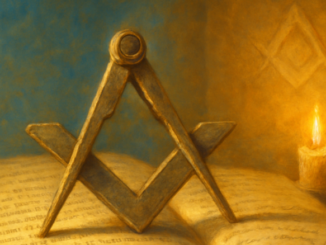
Understanding the history of Freemasonry in the Netherlands also requires some appreciation of the cultural and philosophical dimensions of Dutch Masonic practice. Like Freemasonry everywhere, Dutch lodges conduct their work through a rich system of symbolic ritual derived from the traditions of operative stonemasons. The tools of the builder — the square, the compass, the plumb line, and the level — serve as moral allegories pointing toward the cultivation of virtue and the perfection of character.
Dutch Masonic lodges typically work in the three degrees of Craft Masonry: Entered Apprentice, Fellow Craft, and Master Mason. Many lodges also offer access to higher degrees through associated bodies. Lodge meetings combine ritual work with lectures, philosophical discussion, and music. The Dutch Masonic tradition has always placed a strong emphasis on intellectual engagement, reflecting the country’s broader cultural heritage of scholarship and free inquiry.
The journal Thoth, published by the Grand Orient of the Netherlands, has for decades served as a platform for Masonic philosophy, history, and culture. It stands as evidence of the seriousness with which Dutch Freemasons approach their intellectual and spiritual formation.
The Grand Orient Today
Today, the Grand Orient of the Netherlands (Grootoosten der Nederlanden) remains the principal Masonic obedience in the country, overseeing a network of lodges spread across the Netherlands and its overseas territories. Its headquarters, the historic Vrijmetselaarshuis (Masonic House) in The Hague, serves as a center for Masonic education, cultural events, and administrative functions. The building itself is a living piece of the history of Freemasonry in the Netherlands, housing archives, a library, and ceremonial spaces that connect present-day Masons to their predecessors.
The Grand Orient maintains fraternal relations with many other grand lodges and Masonic bodies around the world, participating in the global brotherhood that has been a defining feature of Freemasonry since its earliest days. At the same time, it continues to engage with contemporary Dutch society, contributing to charitable causes, cultural initiatives, and civic life in ways that reflect the enduring vitality of the Masonic mission.
Frequently Asked Questions
When was Freemasonry introduced to the Netherlands?
Freemasonry was introduced to the Netherlands in the early eighteenth century, with the first documented lodge — La Bien Aimée — established in Amsterdam in 1734. The lodge received its warrant from the Grand Lodge of England, making Dutch Freemasonry one of the earliest continental extensions of the English Masonic tradition. Within two decades, lodges had been founded in several Dutch cities, reflecting the rapid enthusiasm with which Dutch intellectual society embraced the fraternity.
What happened to Dutch Freemasonry during the Second World War?
When Germany occupied the Netherlands in 1940, the Nazi authorities ordered the suppression of all Masonic organizations. Lodge properties were confiscated, archives were looted, and members faced persecution. Despite this, many Dutch Freemasons maintained their bonds of brotherhood informally during the occupation. After liberation in 1945, the lodges were swiftly re-established, and the Grand Orient of the Netherlands resumed its activities, demonstrating the remarkable resilience of the Masonic community.
Is the Dutch Grand Orient recognized internationally?
Yes. The Grand Orient of the Netherlands maintains fraternal relations with numerous grand lodges and Masonic bodies around the world. It is widely recognized as a legitimate and respected Masonic obedience and participates actively in international Masonic dialogue and cooperation. Its long history — stretching back to the mid-eighteenth century — gives it significant standing within the global Masonic community.
Were there Masonic lodges in the Dutch colonies?
Yes, Masonic lodges were established in various parts of the Dutch colonial empire, including the Dutch East Indies (present-day Indonesia), Suriname, and the Dutch Caribbean islands. These lodges served as social and intellectual centers for Dutch expatriates and colonial officials, and some admitted local members as well. Colonial Freemasonry was an important, if complex, dimension of the broader history of Freemasonry in the Netherlands and its global networks.
Can women join Freemasonry in the Netherlands?
The Grand Orient of the Netherlands, like most mainstream grand lodges, initiates men only in its regular Craft lodges. However, the Netherlands is also home to co-Masonic organizations, most notably lodges affiliated with the International Order of Co-Freemasonry (Le Droit Humain), which admit both women and men on equal terms. These bodies have a long-established presence in the country and offer a fully developed Masonic path for those who seek a mixed-gender fraternal experience.
Read more about this topic
- All articles in this category: History
- The Enlightenment and Freemasonry: Two Related Movements
- Charles of Sweden and Zutphen: Two Worlds, One Quest
- End of Life and the Art of Living: Two Perspectives
- When Time Catches Up: Lessons From Vanished Worlds
- When Statesmen Pass: History and the Empty Chair
Frequently Asked Questions
When was the first Masonic lodge established in the Netherlands?
The first documented Masonic lodge in the Netherlands was La Bien Aimée (The Beloved), established in Amsterdam in 1734. This lodge was founded by French-speaking members and received its warrant from the Grand Lodge of England, formally linking Dutch Freemasonry to the English institutional tradition from its very beginning.
Why did Freemasonry become popular in the Netherlands?
The Netherlands, as a mercantile republic with strong ties to England and a tradition of religious tolerance, proved to be ideal ground for Freemasonry's growth. The cosmopolitan atmosphere of cities like Amsterdam, The Hague, and Rotterdam, where educated men of various faiths and nationalities mingled freely, made the establishment of lodges a natural development that appealed to the thinking class of Dutch society.
What types of people were attracted to Dutch Freemasonry in its early years?
Early Dutch lodges attracted lawyers, physicians, artists, merchants, and aristocrats—the intellectual and educated class of Dutch society. These members were drawn to Freemasonry because it offered a unique space for philosophical reflection and brotherly fellowship beyond the boundaries of church and state.
How did Dutch Freemasonry survive during difficult historical periods?
Dutch Freemasonry demonstrated remarkable resilience throughout its history, including during the German occupation when members held clandestine wartime meetings. The fraternity's commitment to enlightenment ideals, moral and spiritual development, and enduring brotherhood allowed it to not only survive but evolve through political upheaval and changing times.
What was the purpose of establishing a Grand Lodge for the Netherlands?
As Dutch Freemasonry grew throughout the 1740s with multiple lodges appearing across cities like Amsterdam, The Hague, and Leiden, a central governing body became necessary to coordinate the movement. In 1756, the Groote Loge der Zeven Vereenigde Nederlanden (Grand Lodge) was established to provide unified leadership and oversight of Freemasonry in the Netherlands.

Be the first to comment