
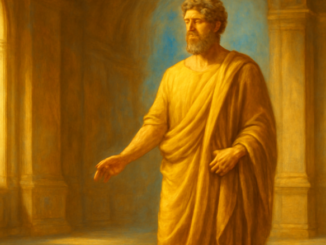
In the year 62 AD, Lucius Annaeus Seneca wrote a letter to his friend Lucilius that still provokes deep reflection nearly two thousand years later. In Letter LXXXVIII, the Stoic philosopher examined the value of the so-called liberal arts — grammar, geometry, astronomy, and music. His conclusion was revolutionary then, and it remains strikingly relevant for anyone familiar with Freemasonry: knowledge alone does not make a person better. Only when study leads to virtue and inner growth does genuine connection between human beings become possible.
The Roman Teacher and His Critical Eye
Seneca lived in an era when wealthy Romans sent their sons to schools of rhetoric and boasted about the learning of their household slaves. The liberal arts served as status symbols rather than pathways to wisdom. In his eighty-eighth letter to Lucilius, Seneca took aim at this superficiality. He acknowledged that grammar, music, and geometry could be useful, but he warned that they merely prepare the mind for something greater. They are like the vestibule of a temple — necessary for entry, but never the destination itself.
This sober view of education was deeply rooted in the Stoic tradition to which Seneca belonged. For Stoics like Marcus Aurelius and Epictetus, the ultimate purpose of all knowledge was always the same: cultivating a virtuous character. Seneca put it sharply — what good does it do a man to calculate the movements of the stars if he cannot govern his own passions?
Knowledge as Preparation, Virtue as the Goal
The distinction Seneca drew between useful knowledge and true wisdom strikes at the heart of what Freemasonry pursues. The working tools that serve as symbols within the lodge — the compasses and the square — are geometric instruments. Yet they do not point toward the technique of measurement. Instead, they represent the ability to set boundaries on one’s own conduct and to deal justly with others. Geometry thus becomes a language for moral development.
The liberal arts truly liberate only when they guide a person toward virtue and brotherly connection.
Seneca would likely have applauded this symbolic transformation of craft knowledge. In his letter, he emphasized that only those studies may rightly be called “liberal” that inwardly free a person from fear, greed, and ignorance. The compasses a stonemason uses to measure blocks of stone become, in the hands of a Freemason, a reminder of self-discipline and temperance.
The Seven Arts and the Brotherhood
During the Middle Ages, the liberal arts were divided into the trivium (grammar, dialectic, rhetoric) and the quadrivium (arithmetic, geometry, music, astronomy). These seven disciplines formed the foundation of university education and were regarded as the path to enlightened citizenship. Eighteenth-century Freemasons such as James Anderson and John Theophilus Desaguliers were steeped in this classical ideal when they drafted the first constitutions of the fraternity.
Yet Freemasonry went beyond the medieval curriculum. Where universities transmitted knowledge, the lodge created a space for collective reflection. Brethren gathered not to outshine one another in learning but to work together on moral refinement. This aligns perfectly with what Seneca meant when he wrote that philosophy is not a matter of words but of deeds.
From Seneca to the Lodge: A Historical Thread
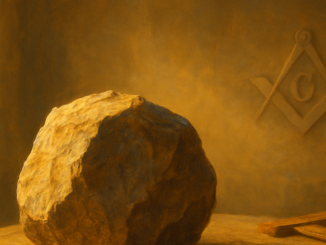
The influence of Stoic thinkers on the European Enlightenment is well documented. Philosophers such as Montaigne drew heavily on Seneca for their essays on self-reflection and human dignity. These Renaissance writers in turn shaped the intellectual circles from which speculative Freemasonry emerged. The emphasis on inner labor — on working the rough ashlar of one’s own character — directly echoes what Seneca argued in Letter LXXXVIII.
Consider these parallel principles: Seneca taught that knowledge must lead to virtue, or else it remains vanity. Freemasonry teaches that working tools are symbols for moral self-development. Both traditions hold that true connection arises from shared values, not from shared facts.
It is no coincidence that many eighteenth-century Freemasons — including Voltaire and Johann Wolfgang von Goethe — referenced Seneca in their correspondence. They recognized in his letters a timeless lesson: a civilized person is shaped not by what he knows, but by who he is in relation to others.
What We Can Learn Today
In an age of endless information streams and digital distractions, Seneca’s message is more relevant than ever. The modern individual can effortlessly access virtually all the knowledge ever accumulated, yet often struggles with the question of what that knowledge is for. Freemasonry offers an answer Seneca would recognize: knowledge becomes meaningful only when it forms the foundation for ethical action and sincere connection with others.
The lodge is neither a classroom nor a debating society. It is a workshop where brethren help one another elevate the liberal arts into something Seneca alone would truly call free — the art of the virtuous life, practiced in brotherhood.
Nearly two thousand years ago, Seneca warned his friend Lucilius that knowledge without virtue remains an empty shell. That warning still resonates in lodges where Freemasons meet today. The compasses and the square remind them that geometry, music, and the other arts become truly liberal only when they connect a person to his fellow human beings and to his own higher self. In that connection lies the lasting legacy of both Stoic wisdom and Freemasonry.
Copyright text & image: devrijmetselaar.nl
Texts are based on the ideas and content of the author of devrijmetselaar.nl, reviewed, corrected, and supplemented with the assistance of OpenAI. Images are created based on the ideas of the author of devrijmetselaar.nl using OpenAI/DALL-E.
Frequently Asked Questions
What was Seneca's main criticism of the liberal arts in his time?
Seneca criticized that the liberal arts were used as status symbols by wealthy Romans rather than as genuine pathways to wisdom and virtue. He acknowledged their usefulness but warned that they merely prepare the mind for something greater, like a vestibule to a temple. He emphasized that knowledge alone does not make a person better; only when study leads to virtue and inner growth does it have true value.
How do Masonic symbols relate to Seneca's philosophy of the liberal arts?
In Freemasonry, working tools like the compasses and square are geometric instruments that symbolically represent moral development rather than mere technical measurement. The compasses represent self-discipline and setting boundaries on one's conduct, while the square symbolizes dealing justly with others. This mirrors Seneca's belief that the liberal arts should liberate a person from fear, greed, and ignorance by guiding them toward virtue and brotherly connection.
What is the connection between Stoicism and Freemasonry according to this article?
Both Stoicism and Freemasonry share the belief that the ultimate purpose of knowledge is cultivating virtuous character and inner growth. Seneca, following the Stoic tradition, taught that genuine wisdom and brotherly connection only become possible when intellectual study leads to moral development. This philosophical foundation aligns with Freemasonry's pursuit of using symbolic tools and learning to develop better human beings.

Be the first to comment