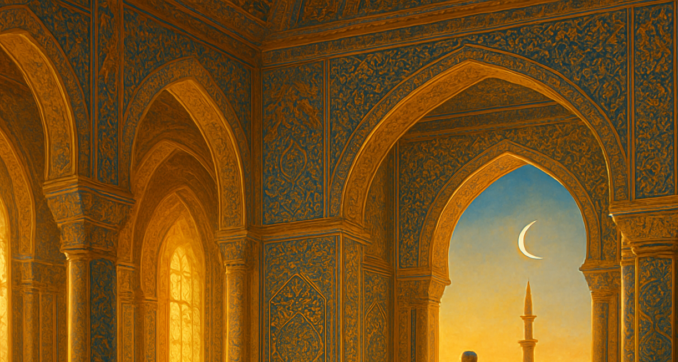
Why do people gather at a fixed moment, week after week, to do together what they could seemingly do alone? This question echoes through both mosques and Masonic lodges. The sixty-second surah of the Quran, titled Al-Jumu’ah — The Friday Prayer — invites a profound reflection on the power of communal ritual and the spiritual significance of coming together.
What Is the Essence of This Surah?
Surah 62 is one of the shorter chapters of the Quran, consisting of just eleven verses. Its central commandment is clear: when the call to Friday prayer sounds, set aside your trade and hasten to the remembrance of God. After the prayer, believers may disperse across the earth and resume their daily affairs. But why this emphasis on interruption?
The surah opens with a glorification of God as the Holy, the Almighty, the Wise. It then describes the Prophet as one sent among the people to teach them the Book and wisdom. This teaching is not a private matter — it takes place in community. The emphasis falls squarely on collective elevation through shared knowledge and devotion.
Why Is Gathering Together So Important?
Here the Islamic tradition touches upon a universal human longing. The Friday prayer is more than a religious obligation. It is a weekly anchor point where the believer steps out of the current of daily life to reorient toward what truly matters. The physical act of standing beside others, bowing together, and speaking words in unison creates a bond that runs deeper than language alone.
In Freemasonry, we recognize this same mechanism. A lodge convenes according to a fixed rhythm — not because its content could not be studied individually, but because the shared experience of ritual adds something that solitary reflection cannot achieve. The presence of brethren transforms symbols and words into living experience.
The ritual of gathering is itself the lesson: we remind each other that spiritual growth is not a solo endeavor.
What Does This Surah Teach About the Sacred and the Worldly?
A striking element in Surah 62 is its explicit acknowledgment that people return to their trade and daily occupations after the prayer. No ascetic withdrawal is demanded. The sacred moment is an interruption, not a replacement of everyday life. This realistic view of human nature is deeply compelling.
For Freemasons, this is immediately recognizable. The labor in the lodge is temporary. The gavel that opens the work also closes it. Afterward, the brother returns to the outside world — but with a renewed perspective. The point is not to escape the profane, but to periodically recalibrate. Voltaire once wrote that man was not made for idleness, but neither was he made for endless activity without reflection. That balance is precisely what this surah breathes.
How Does Knowledge Relate to Community?
The surah emphasizes that the Prophet was sent to teach. Knowledge is not presented here as something you acquire in isolation, but as something transmitted and deepened within community. The verses even warn against those who carry knowledge without truly integrating it — likened to a donkey carrying books without understanding what it bears.
This image resonates powerfully with the Masonic emphasis on genuine transformation. It is not enough to know the symbols or to recite the texts. The question is always: what do you do with them? How do you build yourself and your community? Spinoza, who deeply explored the relationship between knowledge and ethical action, would have recognized this thought: knowledge without application is incomplete.
What Symbolism Connects These Traditions?
The Friday prayer takes place at a fixed moment, as the sun approaches its zenith. This timing symbolizes clarity and heightened awareness. In Freemasonry, light plays an equally central role as a symbol of truth and insight. The choice of a specific moment to gather is not arbitrary in either tradition — it carries meaning.
Several symbolic threads run through both practices: the interruption of daily activity to make room for the higher; the physical proximity of others as an amplifier of inner experience; the rhythm of weekly or monthly repetition as an anchor for spiritual discipline; and the return to the world with renewed intention.
What Can We Learn From This?
The sixty-second surah reminds us that spirituality need not be a private project. The power of communal ritual lies not in the specific words spoken, but in the shared intention to pause and reflect on what transcends us. For the Muslim, this is the Friday prayer; for the Freemason, it is the gathering in the lodge.
Both traditions acknowledge that human beings are inclined to become absorbed in the busyness of daily life. The ritual of coming together functions as a corrective mechanism — a weekly or monthly reminder that there is more than what meets the eye. Goethe, himself a Freemason, spoke of the necessity of regularly returning to the wellsprings of inspiration. Surah 62 embodies precisely that thought.
The Friday Prayer of the Quran and the ritual gatherings of Freemasons share a deep conviction: that coming together is itself a spiritual act. By interrupting ordinary life at fixed moments, we create space for reflection, connection, and growth. The question is not whether we have time to gather, but whether we can afford not to.
Copyright text & image: devrijmetselaar.nl
Texts are based on the ideas and content of the author of devrijmetselaar.nl, reviewed, corrected, and supplemented with the assistance of OpenAI. Images are created based on the ideas of the author of devrijmetselaar.nl using OpenAI/DALL-E.
Frequently Asked Questions
What is Surah Al-Jumu'ah and why is it significant?
Surah 62 (Al-Jumu'ah or The Friday Prayer) is a chapter in the Quran consisting of eleven verses. Its central commandment directs believers to set aside their trade and hasten to Friday prayer when the call sounds. The surah emphasizes collective elevation through shared knowledge and devotion, describing the Prophet as one sent to teach people the Book and wisdom within a community setting rather than in private.
How does the Islamic concept of Friday prayer relate to Freemasonry?
Both traditions recognize the power of communal ritual and gathering. Just as Friday prayer provides a weekly anchor point where believers step out of daily life to reorient spiritually, a Masonic lodge convenes according to a fixed rhythm. The shared experience of ritual in both traditions adds something that solitary reflection cannot achieve, transforming symbols and words into living experience and creating bonds deeper than language alone.
Does Surah 62 require believers to abandon their worldly occupations?
No. A striking element of Surah Al-Jumu'ah is its explicit acknowledgment that people return to their trade and daily occupations after prayer. No ascetic withdrawal is demanded. The sacred moment serves as an interruption and reorientation, not a replacement of everyday life. This realistic view is also reflected in Freemasonry, where the labor in the lodge is temporary and brothers return to the outside world after the gavel closes the work.



Be the first to comment