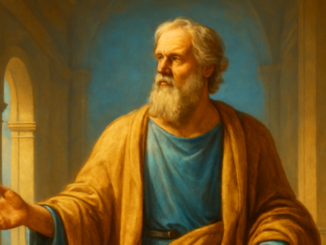
Ancient Greek temple columns symbolizing Plato's philosophy and Freemasonry
Plato – Philosophical Background

Plato’s Protagoras and the Masonic Quest for Virtue

In fifth-century Athens, an intellectual battle was raging that would permanently reshape Western civilization. On one side stood the Sophists — traveling teachers of wisdom who claimed they could teach virtue for a fee. On the other stood Socrates, a man who questioned every certainty. Their clash, immortalized by Plato in the dialogue Protagoras, touches on a question that remains central to Freemasonry today: can a person truly learn to become virtuous, or is moral excellence something that must grow from within? The Sophists and the Teaching of Virtue To understand the Protagoras, we need to return to Greece around 450 BCE. Athenian democracy was flourishing, and with it arose a new demand: citizens wanted to learn the arts of rhetoric, persuasion, and political participation. The Sophists stepped in to fill this gap. Protagoras of Abdera was the most famous among them. He openly claimed that he could teach young men political virtue — the art of good citizenship. This was revolutionary. Traditionally, the Greeks believed that virtue was inherited through noble birth or bestowed by the gods. Protagoras broke with this view entirely. He argued that virtue was a skill, comparable to carpentry or playing music, that anyone could […]
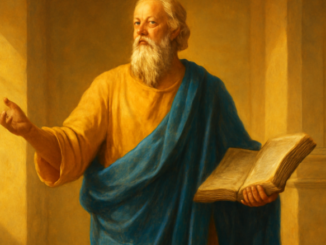

Ancient Greek philosophical dialogue symbolizing Masonic search for virtue
Plato – Freemasonry & Connection

Plato’s Meno and Freemasonry: Discovering Virtue by Asking

Picture yourself in lodge after an initiation ceremony. A brother turns to you and asks: what is virtue, really? You open your mouth to answer — and then realize you don’t quite know. This moment of not-knowing is exactly where Plato’s dialogue Meno begins, and where the Freemason’s most important work can take place. A Question That Changes Everything In the Meno, the Thessalian nobleman Meno poses a seemingly simple question to Socrates: can virtue be taught? Socrates responds with a counter-question that drives the entire dialogue: how can we teach something if we don’t even know what it is? This question isn’t meant to frustrate. It opens the door to deeper understanding. For the Freemason, this dynamic is deeply familiar. With every degree advancement, you encounter symbols and rituals whose meaning is never directly explained. You must search for yourself, ask questions, and discover that the question is often more important than the answer. Plato called this the method of elenchus — the systematic examination of what you think you know, until you discover what you truly know. Knowledge Already Within You One of the most celebrated passages in the Meno is the exchange between Socrates and a young […]

Leader serving a community symbolizing Masonic ideals of servant leadership
Freemasonry & Society

Service to the Whole: Leadership as a Calling in Freemasonry

When someone declares, after years away from the spotlight, that they remain willing to serve whenever called upon, it touches on something deeply fundamental. Recent remarks by a well-known football manager about his readiness to take on a national coaching role again — regardless of personal circumstances — raise questions that extend far beyond the world of sport. What does it truly mean to place yourself in service of something greater? And how do two very different worldviews — the public arena and the Masonic tradition — understand this concept of service? The Public View of Leadership In today’s society, leadership is overwhelmingly measured by results. A coach is judged by matches won, an executive by quarterly earnings, a politician by policies enacted. The question the outside world invariably asks is: what have you achieved? This perspective is understandable. It provides a sense of certainty in a complex world where we crave measurable success. When an experienced leader offers to step back into a demanding role, the public arena tends to analyze the move in terms of ego, ambition, or even vanity. Why would someone who has already reached the pinnacle volunteer to step into the line of fire once […]