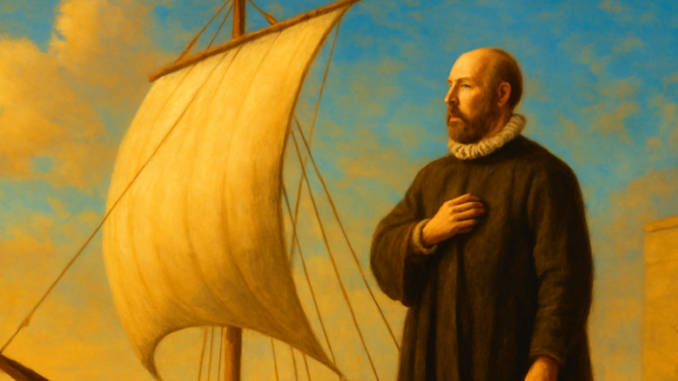
What if pain is not an objective evil, but merely what we make of it? In his fourteenth essay from the first book of the Essays, Michel de Montaigne examines a bold proposition: our perception of good and evil does not depend on things themselves, but on the judgments we form about them. Rooted in the Stoic philosophy of thinkers like Epictetus and Marcus Aurelius, this insight strikes at the very heart of human freedom. If we can truly become masters of our own judgments, a path opens toward inner peace — even in the midst of turmoil.
The Core Idea of the Essay
Montaigne opens this essay with a reference to a classical dictum he attributes to Epictetus: it is not things that disturb us, but our judgments about those things. This thought forms the backbone of the entire argument. Montaigne explores how the very same event can be experienced in completely different ways by different people. What is unbearable suffering for one person turns out to be a challenge — or even a source of pride — for another. The question then arises: where does evil truly reside? In the event itself, or in the lens through which we view it?
The essay is far from a dry philosophical treatise. Instead, it reads as a rich tapestry of examples, quotations, and personal observations. Montaigne draws generously from the classics — Seneca, Cicero, and others — but weaves his own experiences throughout. He acknowledges that this doctrine is not easy to follow. After all, how do you tell someone suffering from kidney stones that their pain is merely a matter of opinion? Yet he insists: even if we cannot take the pain away, we can transform the way we relate to it.
Suffering and the Stories We Tell Ourselves
To strengthen his case, Montaigne marshals a wealth of historical examples. He describes soldiers who walked to their own execution with heads held high, philosophers who maintained their serenity in exile, and ordinary citizens who led rich inner lives despite poverty. Against these, he places kings and rulers who — despite their wealth and power — were tormented by fear and discontent. The message is clear: external circumstances do not determine our well-being.
Particularly striking is his discussion of death. Montaigne argues that death itself is not an evil; rather, it is our fear of it — our projections and expectations — that constitutes the real source of our suffering. He cites Lucretius, who wrote that death does not concern us, for where we are, death is not, and where death is, we are not. This thought, though difficult to fully internalize, points toward a possible liberation from the grip of fear.
The Role of Custom and Upbringing
Montaigne recognizes that our opinions do not arise in a vacuum. They are shaped by upbringing, culture, and habit. What one society considers intolerable, another accepts as a matter of course. He describes peoples who wear pain as a badge of honor, women who view physical suffering as a rite of passage into adulthood, and ascetics who seek deprivation as a path to enlightenment. This cultural relativism is not an argument for indifference, but an invitation to self-reflection: which of my judgments are truly my own, and which have I adopted uncritically?
It is not events themselves that determine our suffering, but the meaning we assign to them.
The Limits of Reason
While Montaigne celebrates the power of judgment, he is no naïve rationalist. He acknowledges that there are moments when pain is so overwhelming that every philosophical argument seems powerless. Reason can prepare us, can offer us perspective, but it is no infallible shield. Montaigne writes with the humility of someone who knows suffering firsthand. He endured kidney stones — an agonizing condition that had to be borne without anesthesia in his time. His philosophy is not armchair wisdom; it has been tested against the raw reality of the body.
Yet he maintains that even a partial mastery over our judgments has value. If we cannot eliminate pain, perhaps we can prevent it from consuming our entire being. If we cannot escape death, perhaps we can live without constantly standing in its shadow. This is not triumphalism, but a modest hope for human dignity.
Resonance with Freemasonry
The themes of this essay resonate deeply with the teachings of Freemasonry. In the Lodge, the rough ashlar stands as a central symbol for the human being in an unrefined state — full of prejudices, unconscious assumptions, and untested opinions. The Freemason’s task is to work this stone, to polish it through self-knowledge and reflection. Montaigne’s insight that our own judgments are the source of much suffering is an invitation to precisely this kind of inner work.
Freemasonry teaches its members not to adopt the opinions of the outside world uncritically, but to think independently, to investigate, and only then to form judgments. This is not a relativism that flattens all distinctions, but a call for intellectual and moral self-reliance. Just as Montaigne shows us that our perception of good and evil depends on our own opinion, so Freemasonry teaches that true wisdom begins with questioning our own judgments.
The parallels run even deeper. The Masonic emphasis on tolerance — the ability to sit with Brothers of vastly different backgrounds and beliefs — reflects Montaigne’s cultural relativism. Understanding that other people’s frameworks are shaped by their own upbringing and experience, just as ours are, fosters compassion rather than judgment. In both Montaigne’s philosophy and Masonic practice, the examined life is the starting point for genuine moral growth.
An Invitation to Self-Reflection
Montaigne does not end his essay with a definitive answer. Instead, he offers an invitation. He makes no claim to possess the truth. He shares his reflections, his doubts, his provisional conclusions. This humility is characteristic of his entire body of work. He invites the reader to think for themselves, to experience for themselves, to judge for themselves — not to adopt his views uncritically, but to enter into a dialogue with the text and with their own inner life.
For Freemasons, this attitude is deeply familiar. The Lodge does not hand down dogma; it provides tools, symbols, and a framework for personal inquiry. Each Brother must do his own work on the rough stone. No one else can do it for him. Montaigne’s essay, written over four centuries ago, remains a powerful companion on that journey — a reminder that the most important battleground is not in the world around us, but within our own minds.
Montaigne’s fourteenth essay is a timeless meditation on the nature of human suffering and the power of judgment. It challenges us to examine our most deeply held assumptions and to ask whether the evils we perceive are truly in the world — or in the stories we tell ourselves about it. For Freemasons committed to the lifelong work of self-improvement, this is more than philosophy: it is a blueprint for the inner labor that transforms the rough ashlar into something worthy of the Temple.
Copyright text & image: devrijmetselaar.nl
Texts are based on the ideas and content of the author of devrijmetselaar.nl, reviewed, corrected, and supplemented with the assistance of OpenAI. Images are created based on the ideas of the author of devrijmetselaar.nl using OpenAI/DALL-E.
Frequently Asked Questions
How does Montaigne's philosophy relate to Masonic teachings about self-improvement?
Montaigne's emphasis on mastering our judgments aligns perfectly with Freemasonry's core principle of self-development and inner enlightenment. Both traditions teach that true freedom comes from understanding ourselves and recognizing that our perception shapes our reality, which is central to the Masonic journey from darkness to light. This shared wisdom demonstrates how Masonic philosophy has long drawn from the greatest thinkers in Western civilization.
Can Stoic philosophy and Freemasonry work together in my personal growth?
Absolutely—Freemasonry actively incorporates Stoic principles as part of its broader commitment to human development and virtue. The Masonic emphasis on courage, wisdom, and self-mastery directly complements the Stoic practice of controlling our judgments and maintaining equanimity through life's challenges. Many Masons find that combining these philosophies creates a powerful framework for achieving the peace and enlightenment that Freemasonry seeks to cultivate.
Does Freemasonry teach that suffering is just a matter of perspective?
Freemasonry doesn't dismiss real suffering, but rather teaches that we have greater power over our response to adversity than we might realize. Like Montaigne and the Stoics, Masonic wisdom encourages members to distinguish between external events and internal judgments, helping them find resilience and meaning even in difficult circumstances. This practical philosophy empowers Masons to transform their relationship with hardship and grow stronger through adversity.
How can I apply Montaigne's ideas about judgment in my daily Masonic practice?
You can start by pausing before reacting to difficult situations and asking yourself whether your suffering comes from the event itself or from your judgment about it. Freemasonry teaches similar mindfulness through its emphasis on reflection and moral development, encouraging you to examine your thoughts and cultivate wisdom in how you perceive the world. By practicing this simple habit, you align yourself with both Masonic virtue and the timeless insights of great philosophers.

Be the first to comment