
Freemasonry has long been associated with philanthropic efforts that promote knowledge, inclusion, and the betterment of society. One of the most remarkable — and often overlooked — examples of this commitment is the founding of the Library for the Blind. This institution, which made literature accessible to people with visual impairments, stands as a powerful symbol of the Masonic ideals of enlightenment and empowerment.
The Origins of the Library for the Blind
In the late 19th and early 20th centuries, society paid little attention to the needs of people with visual impairments. Access to literature and education was almost entirely out of reach for blind and partially sighted individuals. Freemasons, driven by their core commitment to the advancement of knowledge and personal growth, recognized this glaring gap. They took the initiative to establish a library where blind and visually impaired people could borrow books — first in braille, and later in spoken-word formats.
The Library for the Blind started as a modest project, but it grew rapidly thanks to the dedication of Freemasons who contributed not just funds, but also their time, energy, and resources to the cause.
The Masonic Philosophy Behind the Library
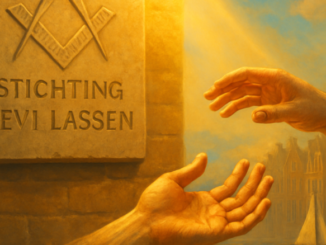
In Freemasonry, light is one of the most powerful symbols. It represents knowledge, understanding, and the eternal pursuit of truth. The Library for the Blind was founded on the deeply held conviction that no one should be excluded from accessing these sources of light, regardless of physical limitations. By creating access to books in braille and other adapted formats, Freemasons offered more than practical support — they gave blind individuals the opportunity to participate fully in education, employment, and cultural life.
This project reflected a broader Masonic vision: that through inclusive initiatives, society can be shaped into something more just, more equitable, and more harmonious. It was philanthropy with purpose — a tangible expression of the idea that light belongs to everyone.
Growth and Lasting Impact
What began as a small initiative quickly developed into a nationally recognized institution that played a crucial role in the lives of thousands. Among its most significant contributions were:
Braille books: The library built an extensive collection of literature in braille, enabling blind readers to enjoy books independently for the first time.
Spoken-word books: Volunteers recorded books and made them available on cassette tapes, and eventually in digital formats — anticipating the audiobook revolution by decades.
Educational resources: The library supported educational programs by providing textbooks and study materials in accessible formats, opening doors to formal education that had previously been closed.
These initiatives helped generations of blind and partially sighted people become more independent and empowered to develop their talents to the fullest.
Freemasonry as a Driving Force
Freemasons worked closely with local communities and national organizations to sustain and expand the Library for the Blind. The collaboration between individual lodges and broader fraternal networks was essential to the project’s success. For many Masons, the library was seen as a natural extension of their core beliefs — that enlightenment and self-development are the cornerstones of a better world, and that these opportunities must be made available to all.
The project also demonstrated the power of collective Masonic action. While individual lodges contributed locally, the combined effort created something far greater than any single group could have achieved alone.
A Legacy That Endures
Today, the Library for the Blind has been absorbed into larger organizations — in the Netherlands, it became part of Royal Visio, the national expertise center for blind and partially sighted people. Yet its impact continues to be felt. The Masonic role in its founding serves as a powerful reminder of the importance of supporting vulnerable communities with resources that enable them to reach their full potential.
Inspiration for New Generations
The story of the Library for the Blind remains a compelling example of what can be achieved when idealism and philanthropy come together with purpose and persistence. It demonstrates that access to knowledge and education are universal rights that should never be limited by physical circumstances. For Freemasons and non-Masons alike, this legacy challenges us to ask: where is light still needed, and what can we do to bring it?
The Library for the Blind stands as one of the most meaningful philanthropic achievements in the history of Freemasonry. Born from the Masonic conviction that light — knowledge, understanding, truth — must be accessible to all, it transformed the lives of countless individuals who had been left in the margins. As we look to the future, this remarkable initiative reminds us that true enlightenment is never exclusive. It is something we share, something we build together, and something that shines brightest when it reaches those who need it most.
Copyright text & image: devrijmetselaar.nl
Texts are based on the ideas and content of the author of devrijmetselaar.nl, reviewed, corrected, and supplemented with the assistance of OpenAI. Images are created based on the ideas of the author of devrijmetselaar.nl using OpenAI/DALL-E.
Frequently Asked Questions
What role did Freemasonry play in founding the Library for the Blind?
Freemasons recognized that people with visual impairments had little access to literature and education, and took the initiative to establish a library to address this gap. Driven by their core commitment to knowledge and personal growth, Masons contributed funds, time, and resources to create an institution that made books accessible through braille and spoken-word formats. This philanthropic effort reflected the Masonic ideal that light—representing knowledge and truth—should belong to everyone, regardless of physical limitations.
How does the Library for the Blind connect to Masonic principles?
In Freemasonry, light symbolizes knowledge, understanding, and the pursuit of truth. The Library for the Blind was founded on the conviction that no one should be excluded from accessing these sources of enlightenment. By providing inclusive access to education and literature, the library embodied the Masonic vision of creating a more just and equitable society through tangible, purposeful philanthropy.
What types of services did the Library for the Blind provide?
The library offered an extensive collection of braille books, volunteer-recorded audiobooks on cassette tapes and digital formats, and educational resources including textbooks and study materials in accessible formats. These services helped generations of blind and partially sighted people become more independent, participate in education and employment, and develop their talents fully.
Why is the Library for the Blind considered an overlooked example of Masonic philanthropy?
While Freemasonry is known for its charitable work, the Library for the Blind stands out as a particularly remarkable but often underrecognized achievement that transformed the lives of thousands. It demonstrated how Masons anticipated modern accessibility solutions like audiobooks and adapted formats decades before they became mainstream, making it a powerful testament to the organization's long-standing commitment to inclusion and enlightenment.

Be the first to comment