Ancient stone tools and rough ashlar symbolizing Freemasonry's journey toward justice
Symbolism & Rituals

Violence and Justice: A Historic Look at Human Darkness

In 1762, Cesare Beccaria published his groundbreaking treatise on crime and punishment, arguing for a more just approach to violence and retribution. When we are confronted today with atrocities that defy our imagination, a fundamental question arises: how should society respond to such evil? Freemasonry, with its centuries-old emphasis on moral improvement and justice, offers a historical framework for reflecting on these profound questions. The Enlightenment Ideal of Justice The eighteenth century brought a fundamental shift in how Western civilization thought about crime and punishment. Philosophers like Voltaire and Montesquieu railed against arbitrary and cruel penalties. They believed that civilization was best served by a legal system that pursued rehabilitation rather than revenge. Beccaria’s work became a source of inspiration for reformers across Europe, including many Freemasons who debated the ideal society within the walls of their lodges. During this period, a new awareness emerged: extreme acts of violence were not merely crimes against an individual but offenses against the entire human community. The ritual work of Freemasonry reflected this understanding. The symbolic journey from darkness to light represented the possibility of moral transformation — even in the darkest of circumstances. The Rough Ashlar and the Shadow Side of Humanity […]
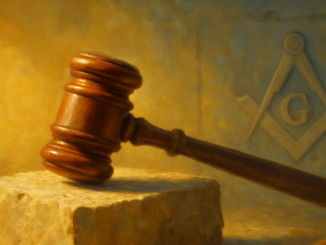
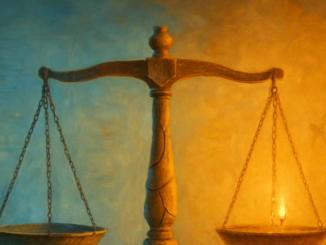
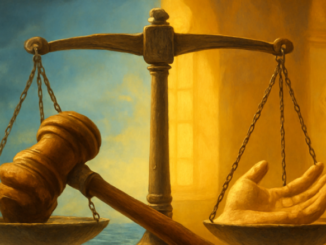
Masonic gavel resting on a rough ashlar stone symbolizing justice and growth
Philosophy & Ethics

The Judge’s Gavel: Justice as an Inner Building Stone

A courtroom delivers its verdict. Twenty years in prison for an act of irreversible violence. The gavel strikes wood, and in that single blow, something resonates far beyond legal statutes and procedural formality. What does justice truly mean when we look beyond the courtroom walls? In Freemasonry, the gavel is one of the most powerful working tools — not wielded to condemn, but to shape. A recent high-profile sentencing invites us to reflect on the deeper layers of guilt, restoration, and the moral responsibility every human being carries within. The Gavel: An Instrument of Judgment and Formation In the courtroom, the judge wields a gavel to affirm a ruling. It marks a moment of finality — a decisive conclusion. But look a little longer at this gesture, and you’ll discover that the same instrument carries an entirely different meaning in other contexts. The stonemason uses his mallet to work rough stone, slowly and deliberately shaping something that is not yet finished. In the Masonic tradition, this gavel symbolizes the willpower with which we shape ourselves, chipping away at the imperfections of our character — not through force, but through patience and self-awareness. A twenty-year prison sentence for a violent crime […]

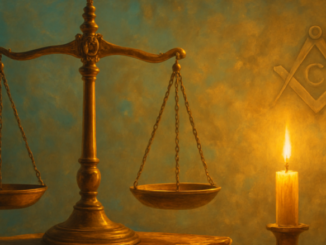
Scales of justice alongside Masonic square and compasses symbolizing balance
Freemasonry & Society

Justice Beyond Borders: Two Perspectives on Right and Law

When news breaks that suspects linked to a political assassination in a neighboring country have been arrested, it touches on fundamental questions about law, borders, and human dignity. A recent case involving the arrest of two individuals connected to the death of a critical voice in Poland invites deeper reflection — not about guilt or innocence, which belongs to the courts, but about the deeper layers of justice itself. How do the codified laws of nations relate to the unwritten laws of conscience? And what can we learn when we place two perspectives side by side: that of the secular legal order and that of the initiatory tradition? The Perspective of the Secular Order For the modern legal system, justice is a matter of procedures, burden of proof, and jurisdiction. When a crime is committed on the territory of one nation by individuals from another, a complex web of treaties, extradition agreements, and diplomatic negotiations comes into play. The rule of law operates according to written rules that are meant to apply equally to everyone. The suspect has rights, the victim has rights, and society has the right to protection. This system, imperfect as it may be, represents centuries of […]

Masonic square and compasses symbolizing the balance of justice and wisdom
Freemasonry & Society

Justice and Retribution: Two Perspectives on Fairness

When news reaches us of a violent crime committed far from home, something ancient stirs within us. A life is taken, a suspect is arrested, and emotions ignite almost instantly. Calls for harsh punishment, outrage over injustice, a deep yearning for retribution. Yet alongside this visceral response, there exist traditions and communities that have looked at such moments differently for centuries — traditions that ask questions before passing judgment. This article explores two perspectives on justice: that of the outraged citizen and that of the searching Freemason. The Perspective of Outrage For most people, the first reaction to a violent crime is entirely understandable and deeply human: horror, anger, and an overwhelming desire for justice. When we hear that a fellow citizen has been killed in a distant land, we feel the pain as if the victim were someone we knew personally. The community closes ranks, the victim is given a face and a story, and the perpetrator becomes a symbol of the evil that must be fought. This perspective is rooted in a fundamental human need for order and safety. Society functions on the basis of shared agreements, and those who violate those agreements in the most horrific manner […]

Masonic level and gavel symbolizing equality and fair judgment
Freemasonry & Society

Social Condemnation: Judgment Without a Gavel

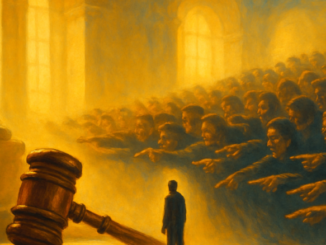
When news breaks that a public figure has been accused of a serious crime, society often delivers its verdict long before any judge has spoken. We have seen this pattern play out time and again: allegations become public, and within hours a collective judgment has already formed. This phenomenon touches on fundamental questions about justice, human dignity, and how we as a society deal with guilt and innocence. And it is precisely on these matters that Freemasonry — with its centuries-old tradition of moral reflection — has a surprising amount to offer. The Court of Public Opinion In our age of instant news and social media, the court of public opinion is permanently in session. The moment an accusation becomes public, millions of people begin forming their judgment. This happens without access to the evidence, without hearing both sides, and without the nuance that a proper trial demands. Social condemnation moves at lightning speed and is often irreversible — even when an acquittal follows later. This raises an uncomfortable question: what does this rush to judgment say about us? Freemasonry teaches its members that forming a judgment about a fellow human being is one of the gravest responsibilities a person […]

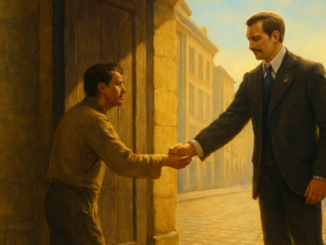
Symbolic representation of Freemasonry's role in developing the probation system
Freemasonry & Society

Probation and Freemasonry – A Foundation for Rehabilitation

Probation is now an integral part of the Dutch justice system, offering people who have run afoul of the law a second chance and a path back into society. What many people don’t realize is that Freemasonry played a significant role in the development of probation services in the Netherlands. Driven by ideals of humanity and justice, Freemasons helped establish a system focused on rehabilitation rather than punishment alone. The Origins of Probation in the Netherlands The probation system as we know it today traces its roots to the 19th century. This was an era in which social reformers — many of them Freemasons — pushed back against the harsh punishments that dominated the justice system. They believed that people who had made mistakes deserved not only to face consequences but also to receive help in rebuilding their lives. Freemasons took an active role in establishing organizations that supported prisoners after they had served their sentences. These initiatives were rooted in the Masonic principle of the improvement of the individual. The goal wasn’t simply to help individuals; it was to strengthen society as a whole by reducing reoffending and giving former prisoners a realistic path forward. The Philosophy Behind Probation […]