Empty cup on a bare table symbolizing Montaigne's philosophy of inner completeness
Michel de Montaigne – Content & Summary

Montaigne: That We Lack Nothing – Summary & Masonic Reflection

An empty table, a simple meal, a glass of water. For most people in the sixteenth century, this was daily life. Yet in his fortieth essay of the first book, Michel de Montaigne articulated an insight that remains uncomfortably relevant in our age of abundance: we lack nothing. Not because we possess everything, but because nature has already equipped us with all that is truly necessary. Modest in length but profound in scope, this essay invites us to look beyond the surface of material possession and discover the wealth already hidden within us. The Core Idea: Nature as the Perfect Provider In That We Lack Nothing, Montaigne argues that human beings naturally possess everything they need to live a good life. Nature, he insists, did not equip us half-heartedly. She gave us a body capable of withstanding cold and heat, a mind suited for reflection, and senses that connect us to the world around us. The problem is not that we have received too little. The problem is that we have manufactured artificial needs that blind us to our original completeness. Montaigne is responding here to a complaint common among his contemporaries — and one that stretches back to antiquity. […]
An open handwritten letter beside Masonic square and compasses symbolizing connection
Michel de Montaigne – Freemasonry & Connection

Montaigne on Cicero: The Letter as a Bridge Between Souls

There are two ways to look at a letter. The first is the way of the rhetorician: a letter as a stage, a vehicle for persuading the world of your own brilliance. The second is the way of the brother: a letter as an outstretched hand, a quiet acknowledgment that no person is complete without the other. In his thirty-ninth essay, “A Consideration Upon Cicero,” Michel de Montaigne places these two attitudes in sharp contrast — and it is precisely in that contrast that a surprising kinship with Freemasonry reveals itself. The Rhetorician: Cicero and the Letter as Display Marcus Tullius Cicero was undeniably one of the greatest orators the ancient world ever produced. His letters — more than eight hundred of them — remain among the most studied correspondence from the Roman world. But Montaigne reads them with a critical eye. What strikes him is that Cicero often used his letters as extensions of the political stage. They breathe ambition, self-justification, and a longing for recognition by posterity. The letter becomes a monument to the writer himself, rather than a genuine reaching out to the recipient. This is the perspective of the rhetorician. The words are carefully chosen, but […]

Open book with Montaigne essays and Masonic square and compass on a desk
Michel de Montaigne – Philosophical Background

Montaigne on Cicero: Philosophical Roots of an Essay

Imagine sitting at your desk, pen in hand, asking yourself what it truly means to write honestly. Not to impress, not to burnish your reputation, but to reveal something genuine about who you are. That is precisely the question Michel de Montaigne wrestled with when he composed his thirty-ninth essay — a reflection on Marcus Tullius Cicero. Behind that seemingly simple question lies a rich web of philosophical traditions, from Stoicism to Renaissance humanism, that connects with surprising directness to the way Freemasons pursue self-knowledge and ethical growth today. The Question That Drove Montaigne In his “Consideration upon Cicero,” Montaigne focuses on what appears to be a minor subject: the letters Cicero left behind and the vanity that shines through them. But beneath that critique lies a deeper philosophical inquiry. Montaigne wanted to know: how does a writer relate to his own honesty? Is it possible to speak about yourself without sliding into self-glorification? These questions did not arise from nowhere. They were nourished by decades of reading, reflection, and — above all — by the philosophical traditions Montaigne had absorbed like a sponge in his tower library in the Dordogne. Seneca and the Stoic Demand for Sincerity The most […]

Open book with quill pen symbolizing Montaigne's sincere writing philosophy
Michel de Montaigne – Content & Summary

Montaigne on Cicero: The Art of Sincere Writing

You have probably caught yourself doing it: drafting a message and choosing words designed to impress rather than to communicate. You reach for the elegant phrase when a simple one would do. Michel de Montaigne recognized exactly this trap when he reflected on the letters of Marcus Tullius Cicero — the celebrated Roman orator and statesman. In his thirty-ninth essay of the first book of the Essays, titled A Consideration upon Cicero, Montaigne examines what letters and writings reveal about the person behind them. The result is a remarkably honest meditation on vanity, authenticity, and the courage to show yourself as you truly are — themes that resonate deeply within the Masonic tradition of self-knowledge and moral integrity. What Is This Essay Really About? In A Consideration upon Cicero, Montaigne turns his attention to the personal correspondence of several towering figures from antiquity. At the center stand Cicero’s letters, but those of Pliny the Younger and Seneca also come under scrutiny. Montaigne uses these letters as a mirror: what do they tell us about the writer? Are they sincere, or were they composed with one eye on publication and posterity? At first glance the essay appears to be a literary […]

A dimly lit contemplative space symbolizing Masonic reflection and solitude
Michel de Montaigne – Freemasonry & Connection

Montaigne on Solitude and the Power of Connection

Imagine stepping away from the noise of everyday life. You close the door, put your phone aside, and sit alone with your thoughts. Does that feel like liberation — or confrontation? In the sixteenth century, Michel de Montaigne wrote a remarkable essay on precisely this theme. His conclusion was surprising: true solitude has little to do with physical isolation and everything to do with the freedom of your own mind. Understanding this reveals a connection that resonates deeply with the very heart of Freemasonry. What Montaigne Really Meant by Being Alone In his thirty-eighth essay, titled ‘On Solitude,’ Montaigne does not advocate fleeing from society. Quite the opposite — he warns against the illusion that you can escape inner turmoil simply by retreating to the countryside or a monastery. ‘The soul carries its torments with it,’ he writes. In doing so, he touches on something fundamental: solitude is not a matter of location but of inner disposition. You can feel lonelier in a crowd than in an empty room, and conversely, in silence you can be deeply connected to yourself and the world. Montaigne builds on the thinking of Seneca and Marcus Aurelius, Stoic philosophers who likewise emphasized the importance […]

Empty chair in a quiet room symbolizing Montaigne's philosophy of solitude
Michel de Montaigne – Philosophical Background

Montaigne on Solitude: The Philosophical Roots

There is a chair in an empty room. No table, no book, no other person — just a chair and silence. For most people, this image stirs discomfort, perhaps even dread. But for Michel de Montaigne, that empty room was the starting point of one of his most penetrating essays: the thirty-eighth piece in the first book of his Essays, titled “On Solitude.” Behind that deceptively simple title lies a rich philosophical heritage stretching from the Roman Stoics to Renaissance humanism — one that shares surprisingly deep parallels with the inner work that Freemasonry asks of its members. The Chair as a Mirror of the Inner Self Imagine the empty chair not as a piece of furniture waiting to be used, but as a ritual object — an invitation. Whoever sits down in silence ultimately meets themselves. Montaigne understood this better than most. When he withdrew to his château in the Dordogne in 1571 and took up residence in his famous tower library, he was doing more than making a personal lifestyle choice. He was joining an ancient philosophical tradition that regarded solitude as the necessary precondition for self-knowledge. That tradition drew from many sources, and Montaigne drank deeply from […]

Open book of Montaigne's Essays in a quiet tower library setting
Michel de Montaigne – Content & Summary

Montaigne on Solitude: What True Retreat Really Means

In 1571, Michel de Montaigne retired to the tower library of his château in the Dordogne. He was thirty-eight years old, had completed a career as a magistrate, and resolved to devote the rest of his life to reading, thinking, and writing. That decision gave rise to one of his most penetrating essays: On Solitude. In this thirty-eighth essay from the first book of the Essays, Montaigne examines what it truly means to withdraw from the world — and why most people who attempt it fail miserably. The Historical Context: Why Montaigne Withdrew Sixteenth-century France was a nation in turmoil. The Wars of Religion between Catholics and Huguenots were tearing apart the social fabric. As a councillor at the Parliament of Bordeaux, Montaigne had witnessed firsthand how political and religious conflict poisoned public life. The loss of his dear friend Étienne de La Boétie in 1563 had also affected him profoundly. When he arrived at his estate, he had a Latin inscription placed on the wall of his study: he declared himself weary of the slavery of the court and public duties, and from that point forward dedicated himself to rest and freedom. It was from this deeply personal experience […]

Symbolic representation of Montaigne's philosophy and Freemasonic equality
Michel de Montaigne – Freemasonry & Connection

Montaigne and Freemasonry: Equality as a Unifying Force

In 1580, Michel de Montaigne published his famous Essays — a collection of introspective reflections that would permanently shape Western philosophy. In one remarkable essay, “On Equality Among Us,” he made an observation that still resonates today: beneath all outward differences between people lies a fundamental equality that connects us. Written in a tower study in the Dordogne more than four centuries ago, this idea proves strikingly relevant when placed alongside the principles that would come to define Freemasonry over a hundred years later. Montaigne’s Sixteenth-Century Insight Montaigne wrote his essay during an era of deep social inequality. French society was rigidly stratified into estates — the nobility, the clergy, and the common people. Yet this nobleman had the audacity to argue that even the most powerful prince and the humblest peasant shared the same fundamental human condition. Both experience hunger, fatigue, fear, and joy. Both will eventually die. In his time, this insight was nothing short of revolutionary, though Montaigne chose to present it not as a political manifesto but as a personal observation. Montaigne drew heavily on classical sources. The Stoics — particularly Seneca and Marcus Aurelius — had already written about universal human nature. Aristotle explored what […]

Montaigne's essays alongside Masonic symbols of equality and brotherhood
Michel de Montaigne – Freemasonry & Connection

Montaigne on Equality: How the Renaissance Shaped Brotherhood

In 1580, Michel de Montaigne published a remarkable essay that exposed the apparent inequality between people as little more than an illusion of outward appearances. Nearly a century and a half later, the first Masonic lodges would emerge in London, rooted in the very same conviction: that beneath the surface of rank, wealth, and lineage lies a fundamental equality shared by all. What connects this sixteenth-century thinker to a tradition that would not reach its full expression until much later? The answer lies not in direct influence, but in a shared quest to discover what truly makes us human. A Castle Lord Who Sought His Equals Michel de Montaigne was no revolutionary in the conventional sense. As a nobleman and lord of a château in southwestern France, he belonged to the privileged class of his era. Yet in his essay “On the Equality Among Us,” he turned his back on the conventions of his social standing. He observed how kings, popes, and emperors draped themselves in splendor and ceremony, but how those very same people — stripped bare by illness, nakedness, or fear — were utterly indistinguishable from the poorest peasant. For the sixteenth century, this was a radical observation: […]

Montaigne's philosophical sources on equality illustrated with ancient texts
Michel de Montaigne – Philosophical Background

Montaigne on Equality: Discovering the Philosophical Sources

When you first encounter Montaigne’s thoughts on human equality, there is a flash of recognition. His ideas feel strikingly modern, as though they could have been written yesterday. But behind that apparent simplicity lies a rich intellectual heritage. Stoic philosophers, Greek biographers, and Renaissance humanists all left their mark on this brief but powerful essay. Understanding these philosophical sources not only deepens your appreciation of Montaigne — it also offers practical tools for applying his insights on equality in your own life and, for those who walk the Masonic path, within the Lodge. The Stoic Foundation of Human Worth Montaigne was an avid reader of the Roman Stoics, and Seneca served as his foremost guide. In Seneca’s letters to Lucilius, the same message appears again and again: fortune, birth, and social standing are external trappings that reveal nothing about a person’s inner worth. Seneca wrote that a slave could be morally superior to his master — a remarkably radical idea in the first century AD. Montaigne absorbed this insight and applied it to his own era, where the lines between nobility and common citizenry were sharply drawn. Marcus Aurelius, the philosopher-emperor, likewise emphasized in his Meditations that all human beings […]

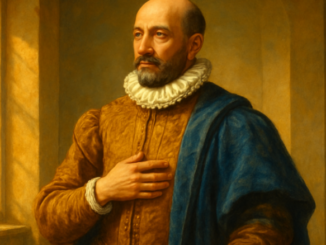
Portrait of Michel de Montaigne symbolizing equality in Freemasonry
Michel de Montaigne – Content & Summary

Montaigne on Equality: What Freemasonry Can Learn From Him

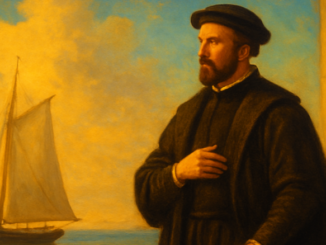
What elevates one person above another? Is it birth, wealth, or something more fundamental? In his thirty-seventh essay from the first book, Michel de Montaigne poses this question with characteristic sharpness and honesty. ‘On the Equality Among Us’ is a brief but powerful argument that examines and challenges the very foundations of human hierarchy. Written in the sixteenth century, its message still resonates today — perhaps nowhere more strongly than in Freemasonry, where brethren meet as equals regardless of their station in life. The Central Thesis: Equality as a Natural State Montaigne opens his essay with a provocative idea: despite all the outward differences between people, we are fundamentally equal. He argues that the distance between a king and a peasant is far smaller than we typically assume. Both are subject to the same human weaknesses, the same bodily needs, the same mortality. He cites classical writers to underscore his point, including Seneca, who likewise emphasized human equality regardless of social standing. What makes Montaigne remarkable is his refusal to moralize. He simply observes that rank and status are human constructions that make no real difference to our fundamental humanity. A prince can fear death just as much as the […]

Masonic handshake symbolizing ritual gesture and fraternal connection
Michel de Montaigne – Freemasonry & Connection

Montaigne on Thumbs: Gesture and Connection in Freemasonry

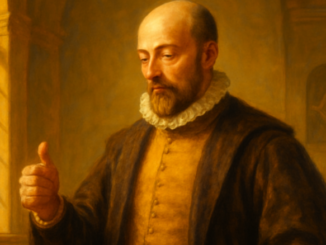
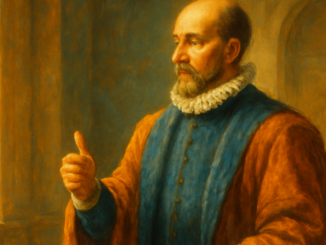
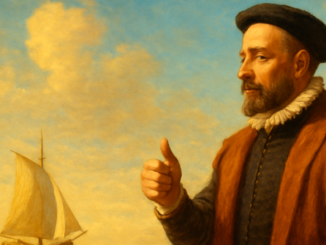
Why would a sixteenth-century French philosopher devote an entire essay to something as ordinary as the thumb? And what could this small body part possibly have to do with the way Freemasons recognize and connect with one another? Michel de Montaigne’s curious meditation on thumbs turns out to resonate deeply with the ritual gestures and fraternal values at the heart of Freemasonry — in ways that are both surprising and profoundly illuminating. Why Would Anyone Write About Thumbs? It sounds almost like a joke: an essay about thumbs. But anyone familiar with Michel de Montaigne knows that he had a gift for finding the profound within the mundane. In his short text Of Thumbs, he explores how this single body part has been charged with meaning throughout history. Roman emperors decided the fate of gladiators with a turn of the thumb. Soldiers cut off their thumbs to escape military service. Rings were worn on thumbs as markers of status and authority. What fascinated Montaigne was the way cultures invest the body with meaning. The thumb is not a neutral piece of anatomy — it is a vehicle for communication, power, and connection. And it is precisely here that his observation […]

Open book with Montaigne's essays and Masonic square and compasses on a desk
Michel de Montaigne – Philosophical Background

Montaigne on Thumbs: Philosophical Roots of a Small Essay

Why would a sixteenth-century philosopher devote an entire essay to the thumb? And what could such a seemingly trivial subject possibly have to do with the great questions of existence? In his essay “Of Thumbs,” Michel de Montaigne wrote no anatomical treatise but rather a philosophical meditation on power, custom, and human vulnerability. To understand what Montaigne is truly saying, we need to trace the sources that nourished him: Plutarch, the Roman Stoics, and the Renaissance humanism that coloured his world. Which Classical Sources Inspired This Essay? Montaigne was a voracious reader of classical texts. For this short essay, he drew primarily from the work of Plutarch, the Greek philosopher and biographer whose Moralia and Parallel Lives lay on Montaigne’s desk like daily bread. Plutarch described how Roman emperors decided life and death in the arena with a simple movement of the thumb. Montaigne seized upon this detail — not to condemn Roman cruelty, but to show how small the gesture is by which human beings decide on matters of the greatest magnitude. Alongside Plutarch, the voices of Seneca and other Stoic thinkers resonate throughout this essay. Seneca wrote extensively about the arbitrariness of fortune and the necessity of accepting […]

Open hand showing a thumb, symbolizing small gestures with deep meaning
Michel de Montaigne – Content & Summary

Montaigne on Thumbs: An Essay on Small Gestures and Symbolism

What if the most unassuming parts of the human body carry the greatest meaning? In his thirty-sixth essay of the first book, Michel de Montaigne devotes a short but fascinating reflection to the thumb. What seems like a trivial topic opens a window into how cultures charge body parts with symbolism, power, and ritual significance. It is precisely this attention to the small and the everyday that makes Montaigne a timeless thinker — and one whose insights resonate deeply with the symbolic traditions of Freemasonry. The Paradox of the Insignificant If someone asked you to name the least important part of your body, chances are the thumb would not even cross your mind. Its presence is so self-evident that we rarely think about it. Yet Montaigne opens his essay with a striking observation: the Romans assigned the thumb a special status far beyond its physical function. In the amphitheater, a thumb turned up or down determined life and death. A gesture so small, so commonplace, carried the weight of a verdict. This paradox lies at the heart of Montaigne’s argument. He invites us to examine why cultures attach great meaning to small, seemingly insignificant things. Is it not remarkable that […]

Masonic apron symbolizing equality and brotherhood in Freemasonry
Michel de Montaigne – Freemasonry & Connection

Montaigne on Clothing and Freemasonry: The Power of Connection

Imagine walking into a room where everyone is dressed the same. No expensive suits, no designer labels, no outward signs of status. What happens to the way you see people? You start looking into their eyes instead of at their shoes. This is precisely what Michel de Montaigne philosophized about in his thirty-fifth essay — and it is also the daily practice in every Masonic lodge around the world. In this article, we explore how Montaigne’s reflections on clothing speak directly to the Masonic pursuit of brotherhood and genuine human connection. What Montaigne Teaches Us About Clothing In his short but thought-provoking essay “On the Custom of Wearing Clothes,” Montaigne poses a deceptively simple question: why do humans wear clothes at all? He observes that nature did not equip us with fur or scales like other animals. Yet he doubts whether clothing is purely functional. In his characteristically curious style, he notes how dress takes radically different forms across cultures — from full coverage to next to nothing. His conclusion is surprisingly practical: clothing is largely a matter of habit, not necessity. And habit, as Montaigne well understood, is a creeping force that often blinds us to who we truly […]

Masonic apron and simple clothing symbolizing philosophy of appearance
Michel de Montaigne – Philosophical Background

Montaigne on Clothing: Philosophical Roots of a Masonic Essay

When you stand in front of your wardrobe each morning, you probably don’t consider the centuries-old philosophical traditions shaping your clothing choices. Yet that is precisely what Michel de Montaigne did when he wrote his essay ‘On the Custom of Wearing Clothes’ in the sixteenth century. This short but remarkably layered essay draws on a rich intellectual heritage stretching back to the Stoics, the Skeptics, and classical antiquity. For Freemasons, it holds up a surprising mirror: what do we conceal with our outward appearance, and what do we reveal when we strip that layer away? The Stoic Foundation: Nature as the Standard Montaigne’s thinking about clothing is deeply rooted in Stoic philosophy. Seneca and Epictetus — two thinkers Montaigne studied intensively — both emphasized that nature provides us with everything we truly need. In this tradition, clothing arose not from natural necessity but from human vanity and cultural convention. In his letters to Lucilius, Seneca wrote that true wealth lies in limiting our needs, not in multiplying our possessions. Montaigne takes this insight quite literally: if some peoples can live without clothing, why have we become so utterly dependent on textiles and fashion? Marcus Aurelius added that anything nature does […]

Symbolic layers of clothing representing self-knowledge and Masonic contemplation
Michel de Montaigne – Content & Summary

Montaigne on Clothing: The Nakedness Behind What We Wear

Every morning we choose what to put on. It seems like the simplest of acts — routine, unremarkable, hardly worth a second thought. Yet behind this daily ritual lies a world of meaning. Michel de Montaigne, the sixteenth-century philosopher who essentially invented the personal essay as a tool of self-examination, turned his penetrating gaze on this very subject. In his brief but provocative essay ‘On the Custom of Wearing Clothes,’ he asks why human beings clothe themselves at all — and what this seemingly trivial question reveals about our nature, our habits, and the layers we place between ourselves and the world. The Core Question: Why Do We Dress at All? Montaigne opens with a question so elementary that most of us never bother to ask it: is clothing truly a natural necessity, or merely a learned habit? He observes that many peoples around the world live perfectly well without garments, even in climates that we would consider far too harsh for bare skin. We are born naked, he reminds us, and could presumably survive without textiles if custom allowed it. This is not a manifesto for nudism. It is a philosophical exercise — a deliberate provocation designed to wake […]

Montaigne and Cicero letters symbolizing Masonic connection and communication
Michel de Montaigne – Freemasonry & Connection

Montaigne on Cicero: Letters as Bridges to True Connection

In the thirty-fourth essay of his first book, Michel de Montaigne casts a critical eye on the correspondence of Marcus Tullius Cicero. Where the Roman orator filled his letters with political intrigue and personal vanity, Montaigne saw a missed opportunity — the possibility of genuine human connection. Written in the sixteenth century, this essay touches on themes that are strikingly relevant to Freemasonry: How do we communicate authentically with our fellow human beings? What transforms a letter, a conversation, or an encounter into a true bridge between two souls? The Letter as a Mirror of Character Montaigne did not approach Cicero’s letters as historical documents. He treated them as windows into the soul of their author — and what he found there left him unimpressed. The Roman statesman used his correspondence primarily to burnish his own reputation, forge political alliances, and secure his name for posterity. The content was often superficial, the intention self-serving. Montaigne poses a fundamental question: do we write to be seen, or to truly connect? For the Freemason, this question resonates deeply. In the lodge, one learns that words carry weight, that communication possesses a ritual dimension. It is no coincidence that silence plays an important […]

Open book with classical letters symbolizing Montaigne's philosophical essay
Michel de Montaigne – Philosophical Background

Montaigne on Cicero: The Philosophical Roots of the Essay

A letter is more than ink on paper. For Michel de Montaigne, a letter was a mirror of the soul — a window into the inner life of its writer. In his essay ‘A Consideration upon Cicero,’ he examines what letters reveal about character and authenticity. Behind this seemingly simple reflection lies a rich philosophical tradition stretching from the Roman Stoa to Renaissance humanism. Understanding the sources of Montaigne’s thought unlocks a timeless wisdom about sincerity and self-knowledge — one that speaks directly to the Masonic pursuit of inner truth. The Legacy of Classical Rhetoric Montaigne grew up speaking Latin as his first language — a deliberate choice by his father, who immersed him in the classical world from birth. For Renaissance thinkers, Marcus Tullius Cicero was the supreme model of eloquence and wisdom. His letters to Atticus were celebrated as masterworks of personal correspondence. Yet Montaigne questions their sincerity. Was Cicero truly as candid as he appeared, or was he performing for posterity? This question of authenticity connects Montaigne to the Skeptical tradition. The Pyrrhonists, followers of Pyrrho of Elis, taught that certainty about the true nature of things lies beyond our reach. Sextus Empiricus, whose work Montaigne knew […]

Quill pen and parchment letter symbolising Montaigne's reflections on Cicero
Michel de Montaigne – Content & Summary

Montaigne on Cicero: The Art of Sincere Writing

A letter is more than ink on paper. It is a mirror of the soul, a window into the inner world of its author. In his thirty-fourth essay from the first book, titled ‘A Consideration upon Cicero,’ Michel de Montaigne examines what letters and writings truly reveal about the people who compose them. He holds the famous Roman orator Marcus Tullius Cicero up against other great letter writers and raises fundamental questions about sincerity, vanity, and the real value of the written word. The Starting Point: A Personal Habit Montaigne opens this essay with a candid confession about his own writing habits. He admits that he rarely writes letters and that he would rather visit in person those to whom he ought to write. The written word, he acknowledges, is for him a necessary evil rather than a beloved pursuit. Yet this moment of self-reflection compels him to consider what letters actually are and what they mean in the broader context of human communication. From this personal vantage point, Montaigne leaps back to classical antiquity. He discusses the collected letters of Cicero — the great Roman statesman, philosopher, and orator who lived from 106 to 43 BC. These letters, preserved […]